
 Isabel Parker
12 Things You Should Never Say to a Woman—Ever

Words carry more weight than most people realize, especially when they’re directed at someone you care about.
Certain phrases, even when meant innocently, can leave a lasting sting that’s hard to shake off.
Knowing what not to say is just as important as knowing what to say.
Here are 12 things you should never say to a woman—ever.
1. “You Look Tired”

Few comments sting quite like being told you look tired when you walked in feeling perfectly fine.
What sounds like concern often lands as a quiet critique of someone’s appearance.
Suddenly, she’s self-conscious about shadows under her eyes or the way she styled her hair.
Instead of offering comfort, this phrase shifts the focus to how she looks rather than how she feels.
If you genuinely want to check in, try asking, “How are you doing today?”
That small change opens a caring conversation without making anyone feel like they need to rush to a mirror.
2. “You’re Too Emotional”

Labeling someone as “too emotional” is one of the fastest ways to shut down a real conversation.
It takes a valid, complex reaction and reduces it to a stereotype, suggesting her feelings are excessive rather than human.
That kind of dismissal stings deeply.
Everyone processes things differently, and emotions are a natural part of communication—not a flaw to be corrected.
When you use this phrase, you send the message that her perspective doesn’t deserve space.
Choosing words like “I can see you feel strongly about this” shows respect and actually moves the conversation forward in a meaningful way.
3. “You’re Overreacting”

Telling someone they’re overreacting rarely solves anything—it usually makes things worse.
Instead of addressing the actual issue on the table, this phrase redirects attention to how she’s responding.
It implies her reaction is the problem, not the situation that triggered it.
Real emotions are rarely exaggerated without reason.
Behind every strong reaction is usually a concern worth hearing.
Brushing it off with “you’re overreacting” signals that her feelings are inconvenient rather than valid.
A better approach?
Ask what’s really bothering her.
Listening without judgment can defuse tension far more effectively than telling someone their response is out of proportion.
4. “You Should Smile More”

Here’s something worth thinking about: nobody tells a man to smile more during a business meeting.
Yet women hear this comment regularly, in offices, on the street, and even from people they know.
It places an unspoken demand on her mood and appearance at any given moment.
Her expression is her own, and it doesn’t exist for anyone else’s comfort.
Saying this, even casually, can feel intrusive and controlling.
If she’s not smiling, maybe she’s focused, tired, or simply neutral—all perfectly valid states of being.
Let people wear their own faces without unsolicited direction about how they should look.
5. “Calm Down”
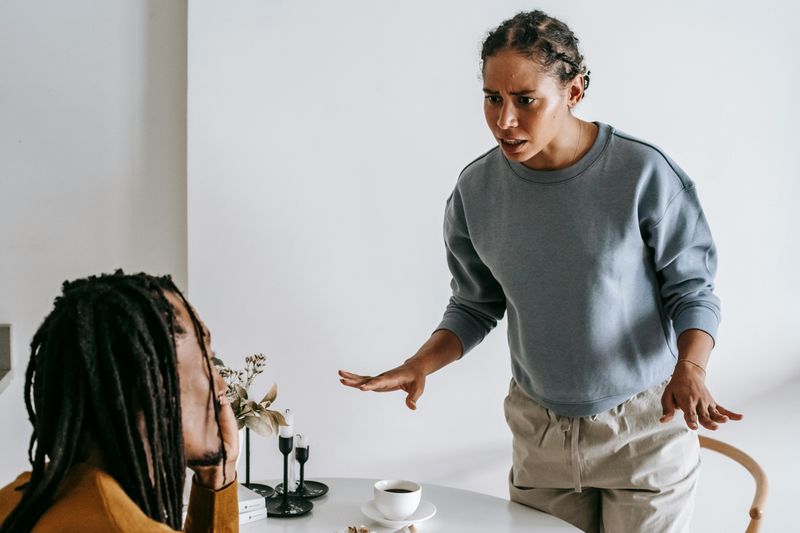
Two words, zero results.
“Calm down” almost never achieves what it’s intended to do—instead, it tends to fan the flames of an already tense moment.
It comes across as condescending, like her feelings are an inconvenience that need to be switched off on command.
When someone is genuinely upset, being told to calm down feels dismissive and patronizing.
It suggests her emotions are excessive rather than understandable.
A far more effective approach is to acknowledge what she’s feeling before anything else.
Something as simple as “I hear you” can lower the temperature of a conversation faster than any demand for calmness ever could.
6. “Are You on Your Period?”

Reducing a woman’s opinion, frustration, or strong emotion to a hormonal cycle is both dismissive and disrespectful.
This question implies that her perspective isn’t based on logic or real experience—it’s just biology talking.
That assumption is not only wrong, it’s insulting.
People of all genders have strong reactions, make bold statements, and feel deeply about things.
Singling out a woman’s emotions as hormone-driven undermines her credibility in a way that feels deeply unfair.
If she’s upset or passionate about something, the real question to ask is what caused it—not what time of the month it is.
7. “You Don’t Look Like a Mom”

At first glance, this might seem like a compliment—but look a little closer and you’ll find a hidden assumption packed inside it.
Saying someone doesn’t look like a mom implies there’s a specific way mothers are supposed to appear: tired, frumpy, or somehow different from who she actually is.
Motherhood doesn’t come with a dress code or a standard look, and suggesting otherwise—even with good intentions—reinforces a stereotype that many women find limiting.
Mothers come in every shape, style, and personality.
If you want to compliment her, try something that focuses on her directly, not on what she supposedly defies.
8. “You’d Be Prettier If You…”

No matter how it ends, this sentence starts with a problem.
Wrapping a critique of someone’s appearance inside the promise of a compliment doesn’t make it kind—it makes it sneaky.
She didn’t ask for a makeover suggestion, and offering one uninvited says more about the speaker than the listener.
Comments like these chip away at confidence slowly, like water wearing down stone.
She might laugh it off in the moment, but it tends to linger.
Everyone deserves to feel good in their own skin without unsolicited advice about how to improve it.
Real compliments don’t come with conditions attached to them.
9. “Why Are You Still Single?”

Few questions feel more like an ambush at a family dinner than this one.
“Why are you still single?” sounds casual, but it carries a loaded assumption underneath: that being unpartnered is a problem in need of an explanation.
It’s not—it’s simply a life circumstance.
Being single can be a deliberate choice, a current season of life, or something in between.
Asking why it’s still the case implies something must be wrong or missing, which can feel both invasive and judgmental.
Relationship status is a deeply personal topic.
Unless she’s brought it up herself, it’s genuinely not anyone else’s business to question.
10. “You’re Lucky I Put Up With You”
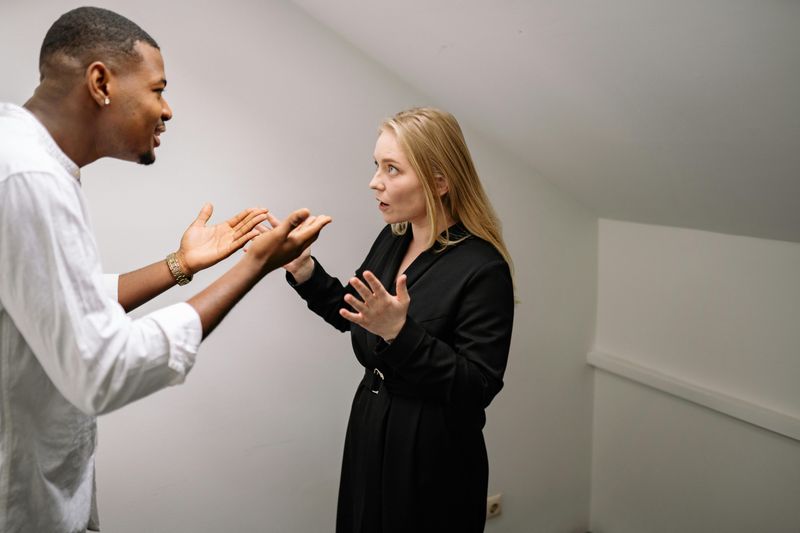
Whether it’s delivered as a joke or said in the heat of an argument, this statement does real damage.
It frames her as a burden—someone difficult to love, someone the other person is tolerating out of charity.
That’s not a foundation for any healthy relationship.
Words like these, even spoken lightly, can plant seeds of self-doubt that grow over time.
Nobody should feel like they’re a problem someone else is managing.
A relationship built on mutual respect doesn’t involve scorecards or reminders of who is doing whom a favor.
If this phrase has slipped out before, it’s worth reflecting seriously on why.
11. “That’s Not Very Ladylike”

Somewhere along the way, “ladylike” became a measuring stick used to keep women within a very narrow lane of acceptable behavior.
Laughing too loudly, speaking too directly, or simply taking up space in a way someone else finds inconvenient—suddenly it’s “not ladylike.”
This phrase doesn’t offer constructive feedback.
It enforces outdated expectations about how women should act, sit, speak, and exist.
It tells her that being herself is somehow wrong if it doesn’t fit a certain mold.
Individuality isn’t a character flaw, and no one should be made to feel judged for simply living authentically without worrying about fitting a centuries-old script.
12. “You’re Pretty for Your Age”
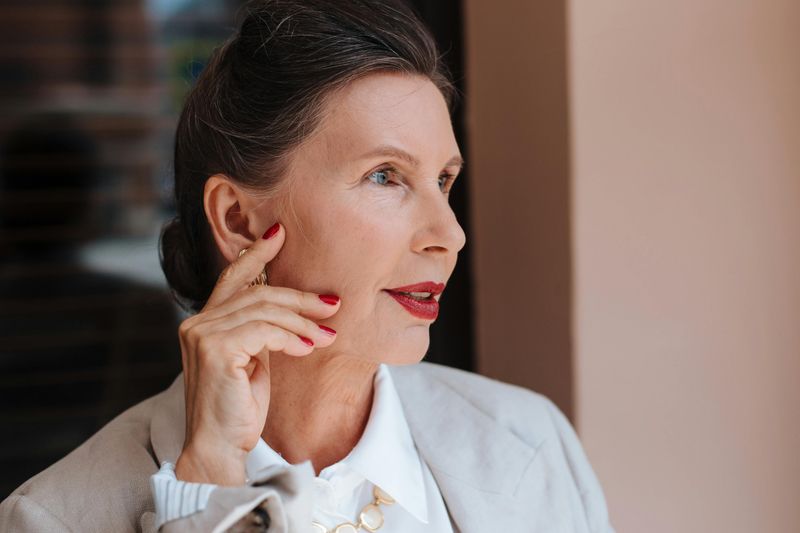
Adding “for your age” to a compliment quietly cancels it out.
What sounds like praise is actually saying: attractiveness at your age is surprising, almost unexpected.
It turns what could have been a genuine moment of kindness into something that highlights a limitation instead.
Women of every age are worthy of straightforward, sincere compliments—no qualifiers needed.
Phrases like this suggest that beauty has an expiration date, which is both untrue and unkind.
If someone looks wonderful, just say so.
Drop the footnote.
A compliment that requires an asterisk isn’t really a compliment at all—it’s a comparison dressed up in polite clothing.
Comments
Loading…