
 Hailey Watson
11 Common Habits of Men With Poor Emotional Intelligence

Emotional intelligence is the ability to understand, manage, and express feelings in healthy ways. Some men grow up without learning these skills, which can lead to habits that hurt their relationships and mental health.
Recognizing these patterns is the first step toward real change. Whether you see these habits in yourself or someone you care about, understanding them can make a huge difference.
1. Shutting Down During Conflict

Picture this: a tough conversation starts, and suddenly the room goes silent because one person has completely checked out.
Men with low emotional intelligence often shut down when conflict arises, a behavior called stonewalling.
Instead of working through disagreement, they go quiet or walk away.
This habit leaves the other person feeling ignored and unimportant.
Over time, it builds a wall between people that gets harder and harder to break down.
Emotions do not disappear just because someone refuses to talk about them.
Learning to stay present during tough conversations, even briefly, can completely transform a relationship for the better.
2. Blaming Others for Their Feelings

“You made me feel this way” is one of the most common phrases used by men who struggle with emotional intelligence.
Blaming others for personal emotions is a sign that someone has not yet learned to take ownership of their inner world.
It feels easier to point outward than to look inward.
The truth is, no one can force a feeling onto another person.
How we respond to situations is always a personal choice, even when it does not feel that way.
Accountability is a powerful tool.
Taking responsibility for emotions, rather than assigning blame, builds deeper trust and stronger connections with others.
3. Struggling to Name Their Emotions

Ask some men how they feel, and you might get a shrug, a grunt, or just the word “fine.”
Emotional illiteracy, the inability to identify and name specific feelings, is surprisingly common among men raised in environments where emotions were rarely discussed.
It is not a flaw; it is a gap in learning.
When someone cannot name what they feel, they cannot manage it either.
Anger might actually be fear.
Irritability might be loneliness.
The feelings pile up without any outlet.
Building an emotional vocabulary, even learning just a few new feeling words, can be a genuinely life-changing starting point.
4. Reacting With Anger Instead of Vulnerability
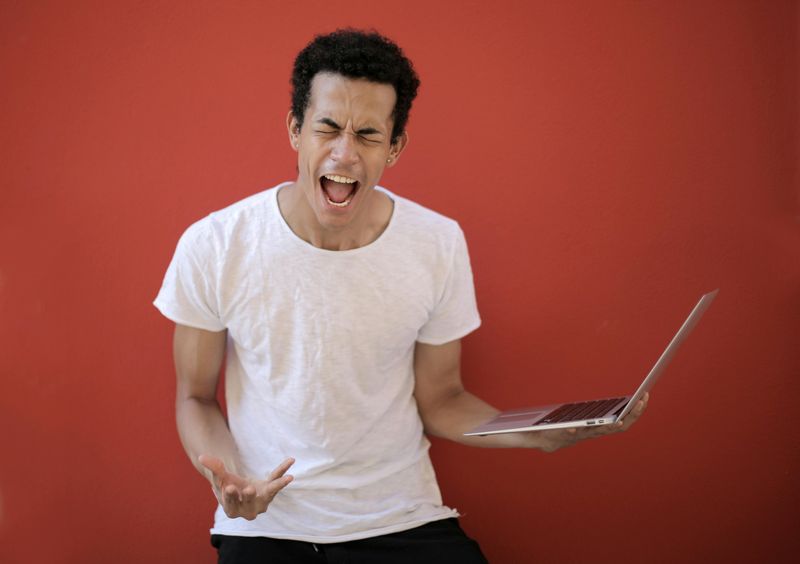
Anger is often called a secondary emotion because it usually covers up something softer underneath, like hurt, shame, or fear.
Men with poor emotional intelligence frequently default to anger because it feels stronger and safer than admitting vulnerability.
Society has long taught men that softness equals weakness.
But this habit pushes people away fast.
Yelling or snapping at others rarely solves the root problem; it just adds another layer of damage to fix later.
The people closest to them end up walking on eggshells.
Choosing honesty over defensiveness, even when it feels uncomfortable, opens the door to real emotional connection.
5. Dismissing Other People’s Emotions

“You’re overreacting” and “just calm down” are phrases that do a lot of damage.
Men who lack emotional intelligence often minimize or dismiss what others are feeling, sometimes without even realizing they are doing it.
It comes across as cold, even when that is not the intention.
Dismissing emotions sends a clear message: your feelings do not matter here.
That kind of invalidation erodes trust quickly and makes people feel deeply alone, even in a relationship.
Nobody wants to share their heart with someone who shrugs it off.
Listening without judgment, even for just a few minutes, is one of the most powerful gifts anyone can offer.
6. Avoiding Serious or Deep Conversations

Some men are hilarious at a party but completely disappear the moment a conversation gets real.
Avoiding depth is a classic sign of low emotional intelligence.
Serious topics like feelings, future plans, or personal struggles feel uncomfortable, so they get redirected or brushed aside with humor.
While keeping things light has its place, relationships need depth to grow.
Constantly dodging meaningful conversations leaves partners and friends feeling like they never truly know the person.
Closeness requires more than just surface-level chat.
Making space for honest, heartfelt talks, even just occasionally, builds the kind of trust that lasts through difficult seasons.
7. Lacking Empathy in Relationships

Empathy is the ability to step into someone else’s shoes and genuinely understand how they feel.
Without it, relationships become very one-sided.
Men with low emotional intelligence often focus heavily on logic and solutions, missing the emotional experience of the people around them entirely.
A friend vents about a hard day, and instead of listening, he immediately offers a five-step fix.
His partner cries, and he wonders why she cannot just think more rationally.
These responses, though well-meaning, feel cold.
Empathy is a skill that can actually be practiced and strengthened over time, making every relationship noticeably warmer and more connected.
8. Using Silence as a Weapon

The silent treatment might feel like self-control, but it is often a form of emotional punishment.
Men who struggle with emotional intelligence sometimes use silence to express anger or frustration without having to communicate directly.
It sends a message while avoiding any real conversation.
This habit creates anxiety and confusion for the person on the receiving end.
They are left guessing what went wrong and how to fix it, which is an exhausting and unfair position to be in.
Silence used this way is a power move, not a healthy pause.
Healthy communication means expressing needs clearly, even when the words feel difficult to say out loud.
9. Struggling to Apologize Sincerely

A genuine apology requires admitting fault, and that demands a level of humility that men with low emotional intelligence often find genuinely painful.
Instead of a real “I’m sorry,” they offer half-hearted phrases like “I’m sorry you feel that way” or “I was just joking.” These non-apologies often make things worse.
The inability to apologize comes from a fear of looking weak or incompetent.
But real strength shows up in the willingness to own a mistake and make it right.
That takes far more courage than staying defensive.
Practicing sincere apologies, even for small things, gradually builds emotional maturity and earns lasting respect.
10. Needing to Always Be Right

For some men, losing an argument feels like losing a piece of themselves.
The desperate need to always be right is deeply tied to insecurity and a lack of emotional self-awareness.
When being correct matters more than being kind, relationships suffer in quiet but significant ways.
This habit shuts down honest dialogue and makes others feel unheard and undervalued.
People stop sharing their thoughts because they already know the outcome: a debate, not a conversation.
That isolation grows slowly but steadily.
Curiosity is a far better tool than certainty.
Asking “help me understand your view” changes the entire energy of any conversation.
11. Minimizing Their Own Emotional Needs

Here is something that does not get talked about enough: many men with poor emotional intelligence do not just dismiss other people’s feelings.
They dismiss their own too.
They push through exhaustion, grief, loneliness, and stress as if those things do not apply to them.
Toughness becomes a mask.
Ignoring emotional needs does not make them go away; it sends them underground, where they show up as burnout, irritability, or physical illness.
The body always keeps score, even when the mind refuses to acknowledge the pain.
Recognizing personal emotional needs is not weakness.
It is actually the foundation of every healthy, sustainable relationship and a well-lived life.
Comments
Loading…