
 Hailey Watson
How to Recognize a Female Psychopath: 12 Key Signs

Most people picture a psychopath as a dangerous man from a crime movie, but female psychopaths exist too — and they can be much harder to spot. They often appear charming, caring, and completely normal on the surface, which makes recognizing the warning signs so important.
Understanding these traits can help protect you, your friendships, and your mental health. Here are 12 key signs that may help you identify a female psychopath in your life.
1. Superficial Charm That Feels Too Perfect

She walks into a room and everyone instantly loves her — but something feels slightly off.
Female psychopaths are often masters of first impressions, turning on warmth and charisma like a switch.
Their charm feels rehearsed rather than genuine.
Pay attention to whether her friendliness changes drastically depending on who is watching.
When no audience is present, the warmth tends to disappear quickly.
Real charm is consistent and comes naturally.
If someone always seems to know exactly the right thing to say, almost too perfectly, that polished performance might be worth a second look.
2. Lack of Real Empathy
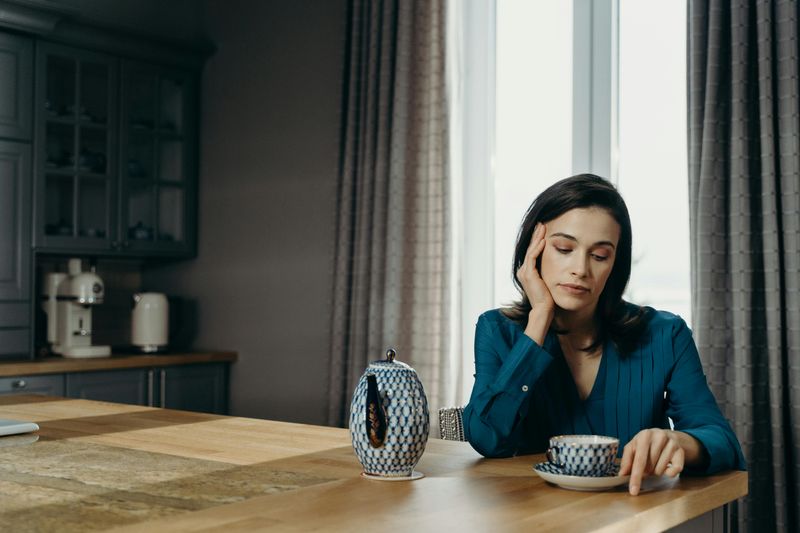
Empathy is what allows us to feel another person’s pain — and for female psychopaths, that ability is largely absent.
They may say the right words when someone is hurting, but their eyes and body language tell a different story.
Watch how she responds when a friend shares bad news.
Does she quickly redirect the conversation back to herself?
That self-centered reaction is a telling pattern.
Researchers have found that psychopaths can mimic empathy through observation and learning, which makes this sign tricky to detect.
Look for consistency in caring behavior over time, not just isolated moments.
3. Habitual and Effortless Lying

For most people, lying causes some level of discomfort — a racing heart, avoiding eye contact, or stumbling over words.
Female psychopaths, however, lie with remarkable ease and almost zero visible stress.
Small lies, big lies, unnecessary lies — the pattern is constant.
Even when caught, they rarely show guilt.
Instead, they might twist the story, blame someone else, or act confused.
Did you know researchers call this “pathological lying,” a hallmark trait of psychopathy?
If someone in your life seems to lie reflexively, even when the truth would have been perfectly fine, that is a serious red flag worth noting.
4. Manipulating Others for Personal Gain

Manipulation is the female psychopath’s most powerful tool.
She studies the people around her, identifies their weaknesses, and uses that knowledge to get exactly what she wants.
This can look like guilt-tripping a partner, playing the victim to gain sympathy, or spreading just enough information to turn friends against each other.
The moves are calculated, not emotional.
What makes this especially dangerous is how invisible it can feel.
Victims often blame themselves before realizing what happened.
If you frequently feel confused, guilty, or responsible for someone else’s problems without a clear reason, manipulation may be at play.
5. Shallow or Short-Lived Relationships

Friendships take effort, vulnerability, and time — three things a female psychopath has little interest in investing.
Her relationships tend to be surface-level, lasting only as long as they serve a purpose.
You might notice she has a long history of falling out with close friends, ex-partners, or coworkers.
Each story paints her as the innocent victim, never the cause of the conflict.
Healthy relationships have depth, history, and mutual care.
If someone you know cycles through people rapidly and never seems to form lasting bonds, it could be a sign that she struggles to connect on a genuinely human level.
6. No Guilt or Remorse After Hurting Others

Most of us feel awful after hurting someone we care about — that guilt is part of being human.
Female psychopaths, however, experience little to no remorse, even after causing serious emotional pain.
After an argument or betrayal, she might seem surprisingly calm or even cheerful.
Apologies, when they come, often feel hollow or are used strategically to regain control of the situation.
Remorse is one of the clearest signs of a healthy conscience.
Someone who consistently shows zero guilt after hurting others — and never seems to genuinely change their behavior — is showing one of the most defining traits of psychopathy.
7. Extreme Need for Control

Control is oxygen for a female psychopath — without it, she becomes visibly uncomfortable or even aggressive.
This need shows up in relationships, workplaces, friendships, and even casual conversations.
She may insist on making all the decisions, become irritated when plans change unexpectedly, or undermine others who challenge her authority.
Subtle power moves are her specialty.
Unlike a natural leader who empowers others, her version of control is about dominance, not collaboration.
People around her often feel like they are walking on eggshells.
That constant tension and anxiety in a relationship or group setting is frequently a warning sign of controlling psychopathic behavior.
8. Playing the Victim Constantly

Victimhood is a strategy, not a state, for the female psychopath.
She has an impressive talent for positioning herself as the wronged party in every single situation, no matter what actually happened.
This tactic earns her sympathy, deflects accountability, and keeps others feeling responsible for her emotional state.
Over time, people around her start walking on eggshells to avoid triggering her next “crisis.”
Look at the pattern across multiple situations.
Everyone has bad days, but if someone is always the victim — in work drama, family conflict, and friendships alike — and nothing ever seems to be her fault, that pattern speaks volumes.
9. Impulsive and Reckless Behavior

Living in the moment sounds exciting until it becomes a pattern of poor decisions with real consequences.
Female psychopaths often act impulsively, chasing stimulation without thinking about how their choices affect others.
This might look like sudden job changes, reckless spending, or jumping between romantic partners without hesitation.
She rarely seems to learn from past mistakes the way most people do.
Interestingly, psychopathy research links this impulsivity to the brain’s reward system functioning differently than average.
If someone in your life consistently makes chaotic, self-destructive choices and shows no concern for the fallout, impulsivity may be a key piece of the puzzle.
10. Envy and Resentment Toward Others

Success in others rarely inspires a female psychopath — instead, it triggers something much darker.
Envy runs deep, and she often resents people who have things she wants, whether that is love, status, money, or attention.
She might subtly undermine a friend’s achievement, spread rumors about a successful coworker, or make cutting remarks disguised as jokes.
The goal is to bring others down rather than lift herself up.
What makes this tricky is how disguised it can be.
Sarcastic compliments, backhanded praise, and quiet sabotage are her tools of choice.
Over time, people around her begin to feel oddly deflated after every interaction.
11. Parasitic Financial Behavior

Money tends to flow in one direction when a female psychopath is involved — toward her.
She may rely on partners, friends, or family for financial support while contributing very little in return, and she rarely feels guilty about it.
This is sometimes called parasitic lifestyle behavior in clinical psychology.
It is not simply being broke — it is a deliberate pattern of using others as financial resources while avoiding personal responsibility.
Watch for someone who consistently borrows money without repaying it, expects others to cover her expenses, or uses romantic relationships primarily for financial security.
Those patterns, especially when repeated, are meaningful warning signs.
12. Switching Between Personas Depending on the Audience

Chameleon-like behavior is one of the most disorienting signs of a female psychopath.
She can be warm and funny with one person, cold and cutting with another, and completely different again with a third — all within the same hour.
This is not just being adaptable in social situations.
It is a calculated performance, shifting masks to best manipulate whoever she is dealing with at that moment.
People who witness both sides often feel confused or even gaslit.
Trust your gut when something feels inconsistent.
If you notice someone’s personality shifts dramatically depending on who is watching, and those shifts feel strategic rather than natural, it is a pattern worth paying close attention to.
Comments
Loading…