
 Isabel Parker
Some of the strongest people you’ll ever meet don’t shout about it or wear it like a badge.
Their strength shows up quietly, in the small choices they make every single day.
Whether it’s how they handle a tough moment or how they treat themselves after a mistake, these habits speak volumes.
Here are 9 subtle signs that someone carries real inner strength.
1. Staying Calm Under Pressure

Picture someone whose phone is blowing up, deadlines are piling on, and everything seems to be going sideways — yet they take one slow breath and start making a plan.
That quiet pause is a superpower.
Research on psychological resilience shows that emotionally strong people regulate their reactions instead of letting stress take the wheel.
Rather than snapping or shutting down, they assess what’s actually happening and respond with intention.
This skill isn’t about being emotionless.
It’s about choosing your response wisely, which leads to smarter decisions and healthier coping when life gets genuinely hard.
2. Viewing Failure as a Learning Opportunity
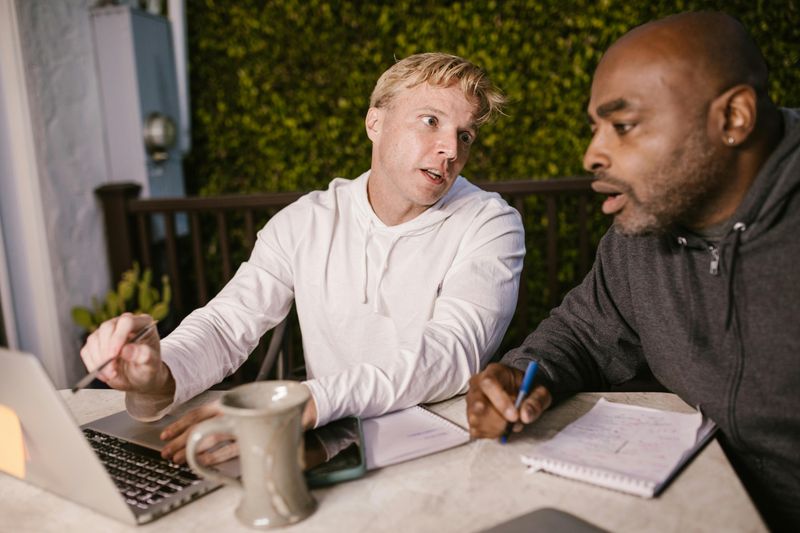
Every stumble tells a story — and mentally strong people actually listen to it.
Psychologists consistently find that resilient individuals treat setbacks as feedback rather than proof they aren’t good enough.
This powerful shift in thinking is often called a growth mindset.
Instead of spiraling into self-doubt after a mistake, they ask: “What can I learn from this?”
Then they adjust and try again. It sounds simple, but it takes real courage to face failure without flinching.
Over time, this habit builds unshakable confidence because each challenge becomes a stepping stone rather than a dead end.
3. Practicing Self-Compassion

Most people are far kinder to their friends than they are to themselves.
Research in positive psychology shows that treating yourself with the same warmth you’d offer a close friend during hard times actually strengthens resilience.
Strong people aren’t perfect — but they don’t punish themselves endlessly for imperfections either.
When they mess up, they acknowledge it, learn from it, and move on without the harsh inner voice that keeps replaying the moment.
Self-compassion isn’t weakness or making excuses.
It’s emotional first aid that helps people recover faster and show up better the next time life throws a curveball their way.
4. Maintaining Realistic Optimism

There’s a big difference between blind positivity and realistic optimism — and strong people know it well.
Studies on learned optimism show that mentally tough individuals see difficulties as temporary and solvable rather than permanent and catastrophic.
They don’t pretend problems don’t exist.
Instead, they acknowledge the challenge while holding onto the belief that things can improve.
That balanced outlook keeps motivation alive even when progress feels slow.
Think of it like navigating a storm: a realistic optimist doesn’t ignore the rain, but they also never forget that the sun comes back out eventually.
That steady hope is a quiet form of strength.
5. Finding Meaning in Difficult Experiences

Hardship has a way of either breaking people or building them — and much of that depends on whether they search for meaning within the struggle.
Studies on post-traumatic growth reveal that some individuals actually emerge from their toughest experiences with a deeper sense of purpose and stronger personal values.
Reflecting on what a painful chapter taught you isn’t the same as pretending it was fine.
It’s an active choice to extract something valuable from something difficult.
People who develop this habit don’t just survive their hardships — they use them as raw material to grow wiser, more empathetic, and more grounded in who they are.
6. Adapting to Changing Circumstances

When the plan falls apart, what happens next reveals everything.
Cognitive flexibility — the ability to shift your thinking when conditions change — is one of the most important traits in psychological resilience research.
Mentally strong people don’t cling stubbornly to a strategy that clearly isn’t working.
They step back, reassess, and find a new path forward.
This doesn’t mean they give up easily.
It means they’re smart enough to know when a pivot is necessary.
Life rarely goes exactly as planned, and those who can adapt without losing their footing tend to handle uncertainty far better than those who resist change at every turn.
7. Persisting Despite Obstacles

Quiet persistence might be the least glamorous form of strength — but it’s one of the most powerful.
Studies link sustained effort and determination with higher long-term achievement, proving that inner strength often shows up not in dramatic moments, but in the daily decision to keep going when quitting would be so much easier.
Setbacks don’t stop persistent people; they slow them down temporarily.
There’s no flashy announcement, no audience watching.
Just someone waking up the next morning and trying again.
That kind of steady, unshakeable determination is what separates people who reach their goals from those who abandon them when things get uncomfortable.
8. Building and Maintaining Supportive Relationships

Strength doesn’t mean going it alone — and the most resilient people seem to understand that better than anyone.
Research consistently shows that strong social connections are one of the biggest predictors of emotional resilience.
People with genuine inner strength invest time and energy into relationships that offer real support, honesty, and encouragement.
They also show up for others in return.
These aren’t surface-level connections built on small talk.
They’re built on trust and mutual care.
When life gets hard, having even one or two people who truly have your back can make the difference between feeling completely overwhelmed and feeling like you can handle it.
9. Cultivating Gratitude and Positive Emotions

Gratitude isn’t just a feel-good habit — it’s backed by serious science.
Positive psychology research and the broaden-and-build theory suggest that regularly experiencing gratitude and positive emotions actually expands your thinking patterns and strengthens your ability to cope long-term.
In plain terms, appreciating what you have trains your brain to look for possibility instead of problems.
Strong people make this a daily practice, not just something they do when life is going well.
Even during rough patches, finding one small thing worth appreciating keeps perspective alive.
Over time, this habit quietly builds a mental foundation that makes resilience feel less like a struggle and more like a natural response.
Comments
Loading…