
 Hailey Watson
These 10 Phrases Usually Mean You Weren’t the Favorite Growing Up

Growing up, the words we hear from our parents shape how we see ourselves and the world around us.
Some phrases, though they might seem harmless at the time, can leave lasting marks on our confidence and emotional health.
If you heard certain statements repeatedly as a child, they might reveal you weren’t treated as the favorite in your family, and recognizing them now can be the first step toward healing.
1. Because I Said So

Ever ask a question only to hear this phrase shut you down?
Parents who relied on this response taught you that your curiosity didn’t matter.
Your thoughts and questions were seen as challenges rather than opportunities for connection.
Children who hear this often grow up feeling their opinions hold no value.
They learn to stop asking questions altogether.
Instead of encouraging critical thinking, this phrase demands blind obedience without explanation.
Favorite children typically received thoughtful answers that validated their curiosity.
If you got this dismissive response regularly, it likely meant your parent didn’t prioritize your emotional or intellectual needs the same way.
2. Stop Crying or I’ll Give You Something to Cry About
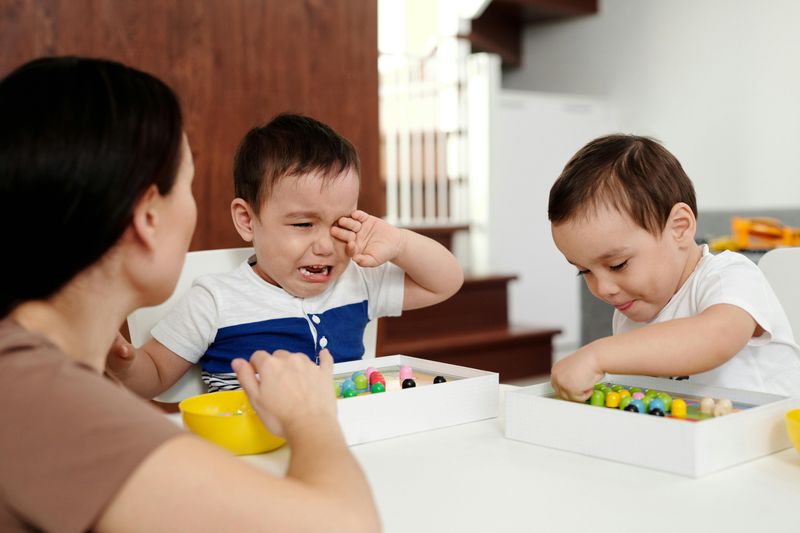
Nothing silences a child’s emotions faster than this threat.
When your tears were met with anger instead of comfort, you learned that expressing feelings was dangerous.
Your pain became something to hide rather than share.
This phrase teaches emotional suppression from an early age.
Kids who heard this regularly often struggle with vulnerability as adults.
They bottle up their feelings because showing emotion once meant facing punishment or ridicule.
Favored children usually received hugs and reassurance when upset.
If your tears triggered threats instead, your caregiver was telling you that your emotions were inconvenient, teaching you to disconnect from your own feelings to avoid conflict.
3. You’re Too Sensitive

Hearing this repeatedly made you question your own reality.
Your feelings were labeled as excessive, teaching you that your emotional responses were wrong.
Over time, you learned to doubt yourself and suppress natural reactions.
Sensitivity isn’t a flaw—it’s part of being human.
But when caregivers dismiss your emotions with this label, they’re refusing to validate your experience.
They’re essentially saying your feelings are a problem they don’t want to deal with.
Did you know?
Research shows that emotionally sensitive children often become highly empathetic adults.
If your sensitivity was criticized instead of nurtured, it signaled you weren’t receiving the emotional support favored children typically get.
4. Why Can’t You Be More Like Your Sibling?

Ouch.
Few phrases sting quite like this one.
Being directly compared to a brother or sister creates instant resentment and crushes self-esteem.
You were essentially told that who you are isn’t good enough.
Comparisons breed competition instead of connection between siblings.
When parents pit children against each other, nobody wins.
The unfavored child feels inadequate, while the favored one carries pressure to maintain their status.
Healthy parents celebrate each child’s unique qualities rather than measuring them against each other.
If you regularly heard this comparison, it was a clear signal that you fell short in your parent’s eyes, making you feel less valued and loved.
5. You Ruined My Life

Carrying the weight of believing you destroyed someone’s happiness.
This cruel statement places adult problems squarely on a child’s shoulders.
You became the scapegoat for your parent’s unhappiness and unfulfilled dreams.
Kids aren’t responsible for their parents’ life choices or satisfaction.
When caregivers blame children for their circumstances, they create deep-seated guilt that can last decades.
You may still struggle with feeling like a burden to others.
No child should ever hear these words.
Favored children are typically seen as blessings, while unfavored ones become convenient targets for blame.
If you heard this, your parent failed to take responsibility for their own life, unfairly making you the villain.
6. Do as I Say, Not as I Do

Talk about confusing!
This hypocritical phrase taught you that rules only applied to you, not the adults making them.
You witnessed your parents doing exactly what they punished you for, creating distrust and resentment.
Children learn more from what parents do than what they say.
When actions and words don’t match, kids feel manipulated and disrespected.
You were expected to follow standards your caregivers couldn’t meet themselves.
Consistency matters in parenting.
Favored children often receive more understanding and flexibility, while unfavored ones face strict rules without explanation.
If you heard this regularly, it revealed your parent’s unwillingness to model the behavior they demanded, showing their authority mattered more than your respect.
7. You Made Me Do This

Nobody makes another person lose control.
When parents blame children for their own reactions, they’re refusing accountability.
You learned that you were somehow responsible for adult behavior, which is manipulative and wrong.
This phrase shifts responsibility from the parent to the child.
Whether it preceded punishment or an angry outburst, you internalized the message that you caused their actions.
This creates a pattern where you feel responsible for others’ emotions.
Healthy adults own their responses and reactions.
If you frequently heard this, your parent was emotionally manipulating you to avoid facing their own issues.
Favored children typically receive apologies and explanations, while you got blame for things beyond your control.
8. I Gave You Everything; You Should Be Grateful

Gratitude shouldn’t come with strings attached.
When parents constantly remind children of their sacrifices, they’re using guilt as a weapon.
Love became transactional—you owed them something for doing their job as a parent.
Providing for children is a basic parental responsibility, not a favor requiring endless appreciation.
This phrase makes kids feel indebted and unworthy.
Your needs were framed as burdens rather than natural parts of childhood.
Here’s the truth: children don’t ask to be born.
If you heard this often, your parent was holding their choices over your head.
Favored children receive without guilt, while you were made to feel your existence was costly and inconvenient, eroding genuine affection.
9. You’re Embarrassing Me

Your parent’s image mattered more than your well-being when you heard this.
Instead of guidance or understanding, you received shame.
You learned that being yourself was problematic if it reflected poorly on them.
Kids make mistakes—that’s how they learn.
But when parents prioritize their reputation over their child’s growth, they teach self-suppression.
You began hiding parts of yourself to avoid causing embarrassment, losing authenticity in the process.
Favored children often receive patience and private correction, while unfavored ones face public shame.
If you regularly heard this, especially in front of others, it showed your parent cared more about appearances than your feelings, making you feel like a prop rather than a person.
10. You Always Ruin Everything

Always?
Really?
This exaggeration creates a permanent label that sticks.
When mistakes are treated as proof of your fundamental flaws, you stop trying.
Why bother when you’re convinced you’ll mess up anyway?
Constant blame erodes self-esteem and agency.
You began seeing yourself through this negative lens, believing you truly were a problem.
This phrase doesn’t address specific behavior—it attacks your entire character and worth.
Everyone makes mistakes, but they shouldn’t define us.
Favored children receive constructive feedback focused on specific actions, not character assassination.
If you heard this repeatedly, your parent was scapegoating you for problems, teaching you that you were inherently defective rather than simply human and learning.
Comments
Loading…