
 Hailey Watson
If You Often Feel These 10 Things, You’re in a Toxic Relationship

Relationships are supposed to make you feel safe, loved, and supported.
But sometimes, what looks like love on the outside can actually be hurting you on the inside.
Toxic relationships can sneak up on you slowly, making it hard to recognize what’s really going on.
If any of these feelings sound familiar, it might be time to take a closer look at your relationship.
1. Constant Criticism

No matter what you do, it never seems to be enough.
Your partner points out your flaws, mocks your choices, or makes you feel small on a regular basis.
That kind of ongoing judgment wears a person down over time.
Healthy relationships involve encouragement and respect, not constant correction.
Everyone makes mistakes, and a caring partner helps you grow rather than making you feel worthless.
If criticism has become the daily soundtrack of your relationship, that is a serious warning sign worth paying attention to.
2. Isolation from Loved Ones

Slowly losing touch with your closest friends and family members is one of the quietest signs of a toxic relationship.
Your partner might start arguments every time you make plans, speak badly about the people you love, or make you feel guilty for spending time away from them.
Over time, you may find yourself pulling back from everyone who truly cares about you.
Isolation gives a controlling partner more power over your choices and emotions.
Strong, healthy relationships encourage outside connections rather than slowly dismantling them one relationship at a time.
3. Control and Manipulation
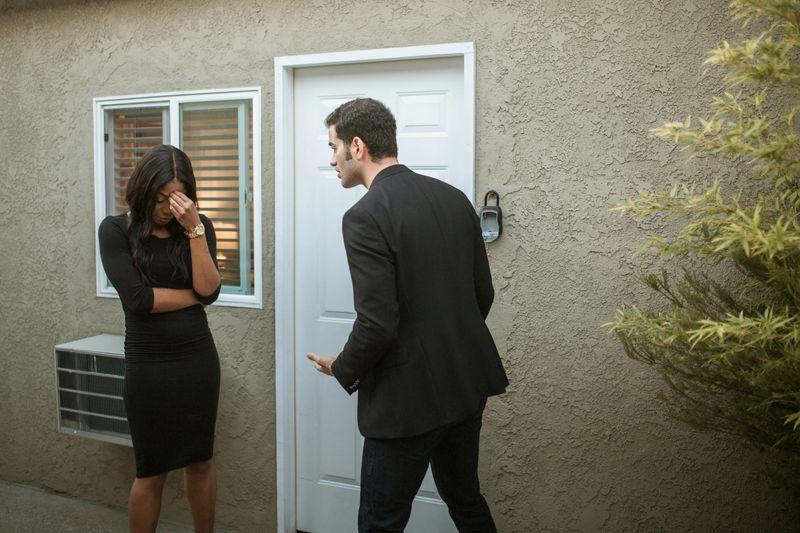
Ever feel like your decisions aren’t really your own anymore?
Controlling partners often use guilt, emotional pressure, or clever wording to steer you into doing what they want.
It can be so subtle that you barely notice it happening.
Manipulation often disguises itself as concern or love, making it tricky to identify at first.
But a true partner respects your opinions and supports your independence.
When someone repeatedly overrides your choices or makes you feel powerless, that behavior crosses a clear line from love into something far more harmful.
4. Constant Drama and Upheaval

Some couples have the occasional rough patch, but in a toxic relationship, conflict feels like the permanent setting.
Arguments erupt over small things, tension never fully disappears, and calm moments feel too short to trust.
Living in that kind of emotional chaos is exhausting.
Repeated drama is not passion or proof that two people care deeply.
More often, it signals a serious lack of emotional maturity or respect from one or both partners.
You deserve a relationship that feels like a safe harbor, not a storm you can never fully escape from.
5. Emotional or Physical Abuse

Fear has no place in a loving relationship.
If your partner uses threatening words, humiliates you in public, or has ever laid a hand on you in anger, that is abuse, plain and simple.
No excuse, backstory, or apology makes that behavior acceptable.
Abuse tends to follow a cycle of tension, explosion, and false calm that can make leaving feel impossible.
But your safety always comes first.
Reaching out to a trusted friend, family member, or a professional support line can be the first brave step toward reclaiming your life and your sense of self-worth.
6. Disregard for Boundaries

Boundaries are not walls that keep people out.
They are the healthy lines that tell others how you need to be treated.
When a partner repeatedly ignores your boundaries, reads your private messages, shows up uninvited, or dismisses your discomfort, they are sending a clear message that your needs do not matter.
Respecting limits is one of the most basic building blocks of trust.
A partner who consistently crosses those lines, even after being asked to stop, is not just being careless.
They are showing you exactly how much they value your comfort and autonomy.
7. Lack of Trust

Trust is the foundation that every solid relationship is built on.
Without it, even the smallest interactions can feel loaded with suspicion and doubt.
Being constantly accused of lying, having your every move questioned, or feeling like you have to prove your loyalty repeatedly is deeply draining.
A relationship without trust often turns into a cycle of accusations, defensiveness, and emotional distance.
You should never have to feel like a suspect in your own partnership.
When suspicion replaces security on a daily basis, the emotional toll adds up quickly and steadily erodes your sense of peace.
8. Constant Feelings of Guilt or Shame

Expressing a need or sharing a feeling should never result in punishment.
Yet in toxic relationships, speaking up often leads to being called selfish, dramatic, or too sensitive.
Over time, that pattern teaches you to stay silent rather than risk another wave of blame.
Guilt and shame used as weapons are forms of emotional control.
Your feelings are valid, and you have every right to voice them without fear of backlash.
A supportive partner listens with empathy, not judgment.
If you regularly leave conversations feeling worse about yourself for simply speaking honestly, something is seriously wrong.
9. Walking on Eggshells

Choosing every word carefully because you are afraid of how your partner might react is an exhausting way to live.
When your home stops feeling like a safe space and starts feeling like a minefield, that is a major red flag you should not ignore.
Healthy relationships allow both people to speak freely and make mistakes without fearing an emotional explosion.
Constantly second-guessing yourself creates deep anxiety that can affect your confidence, your health, and your overall happiness.
You deserve a relationship where you can be yourself fully, not a quieter, smaller version of who you really are.
10. Emotional Exhaustion

Leaving a conversation with your partner feeling completely wiped out is not normal.
Relationships should add energy to your life, not consistently drain it away.
If you find yourself dreading interactions, feeling hollow after spending time together, or needing hours to recover emotionally, that pattern matters.
Emotional exhaustion in a relationship often comes from constantly managing someone else’s moods, absorbing their negativity, or feeling unsupported during hard moments.
Your mental well-being is just as important as any other part of your health.
A relationship that regularly depletes you rather than restoring you is one that deserves serious reflection and honest reconsideration.
Comments
Loading…