
 Isabel Parker
13 Breakup Tactics You’ve Definitely Seen Before

Breakups are never easy, and somehow people always seem to follow the same playbook when ending a relationship. Whether you’ve been on the giving or receiving end, you’ve probably spotted a few of these classic moves.
From sudden cold shoulders to drawn-out “we need to talk” conversations, breakup tactics tend to repeat themselves across generations. Get ready to recognize some painfully familiar patterns that almost everyone has experienced at least once.
1. The Slow Fade

Texts go from instant replies to radio silence over the course of a few weeks.
The slow fade is one of the most passive-aggressive ways someone can end a relationship without ever saying the actual words.
It leaves the other person questioning everything.
Rather than having an honest conversation, the person slowly pulls back — fewer calls, shorter replies, canceled plans.
The confusion it causes can be worse than a direct breakup.
You’re left wondering if it’s something you said or did.
Recognizing this tactic early can save you a lot of emotional energy and help you move on faster.
2. The “It’s Not You, It’s Me” Classic

Few breakup lines have survived as long as this one.
“It’s not you, it’s me” has become such a cliche that most people laugh nervously the moment they hear it.
Yet somehow, people still use it all the time.
On the surface, it sounds like the person is taking responsibility.
But honestly, it usually just means they don’t want to explain their real reasons.
It’s a soft exit wrapped in a polite bow.
Hearing this line can actually be more frustrating than a direct explanation.
Most people would rather know the truth, even if it stings a little.
3. The Text Breakup

Breaking up over text is widely considered one of the least respectful ways to end things, yet it happens constantly.
A few typed sentences replace what should be a real, face-to-face conversation.
The person on the receiving end is left staring at a screen in disbelief.
Sometimes people choose this route because they’re avoiding an emotional confrontation.
Other times, they genuinely think it’s kinder to skip the awkward in-person moment.
Either way, it rarely feels that kind to the person reading it.
Technology has made ghosting and texting goodbyes way too easy, which is probably why this tactic keeps showing up.
4. Picking Fights on Purpose
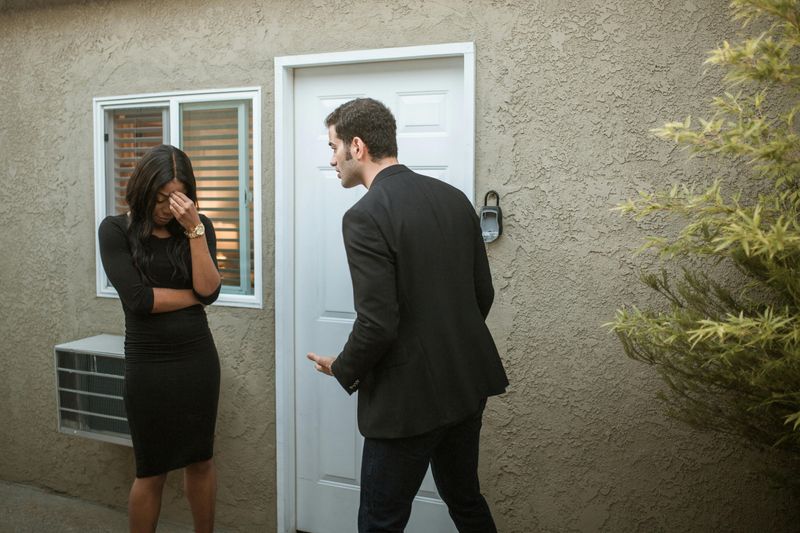
Ever notice how some people start acting really difficult right before they end a relationship?
Picking fights on purpose is a sneaky way of creating distance and building a case for the breakup.
It’s like manufacturing a reason to leave.
Small things suddenly become huge arguments.
The person who wants out starts criticizing habits they never cared about before.
Before long, the relationship feels miserable for both people involved.
What makes this tactic especially unfair is that the other person often doesn’t realize what’s happening.
They’re genuinely trying to fix problems that were never real issues to begin with.
5. The “Let’s Just Be Friends” Move

“Let’s just be friends” sounds sweet and mature on the surface.
But in reality, it’s one of the most confusing things you can say to someone who still has feelings for you.
It blurs the line between ending things and keeping someone around.
Sometimes people genuinely mean it and want to stay connected.
Other times, it’s said out of guilt or to soften the blow of rejection.
The result is usually a very awkward in-between phase that satisfies no one.
Staying friends after a breakup can work, but both people need time and honesty before that transition can actually happen naturally.
6. Ghosting

No calls.
No texts.
No explanation.
Ghosting is arguably the most talked-about breakup tactic of the modern era, and it shows no signs of disappearing anytime soon.
One day everything seems fine, and the next, the person has completely vanished.
What makes ghosting so painful is the total lack of closure.
The person left behind spends days, sometimes weeks, replaying conversations trying to figure out what went wrong.
The silence itself becomes the answer, and that’s a hard thing to accept.
As frustrating as it is, being ghosted says far more about the other person’s communication skills than it does about your worth.
7. The “I Need Space” Excuse

“I just need some space” can mean a hundred different things, and that’s exactly what makes it so tricky to hear.
Sometimes it’s genuine — people do need breathing room in relationships.
But often, it’s a soft way of ending things without saying so directly.
The person asking for space avoids a hard conversation while the other person is left waiting, hoping things will improve.
Days turn into weeks, and the “space” quietly becomes a permanent distance.
If someone asks for space, a clear timeline and honest check-in can save both people from weeks of unnecessary confusion and false hope.
8. Blaming External Circumstances

“The timing just isn’t right.”
“I’m too busy with work.”
“Long distance would never work.”
Sound familiar?
Blaming outside circumstances is a classic way of ending a relationship while avoiding personal accountability.
It frames the breakup as nobody’s fault.
While sometimes circumstances really do play a role, this tactic is often used to dodge the real reason someone wants out.
It sounds reasonable and hard to argue against, which is exactly why people reach for it.
The frustrating part is that it leaves no room for problem-solving.
You can’t fix “bad timing” the way you could address an actual relationship issue.
9. The Comparison Trap

Few things sting quite like being compared unfavorably to someone else during a breakup.
“You’re just not as easygoing as my ex” or “my last partner never did this” are lines designed to shift blame and justify leaving.
It’s a low move with a lasting impact.
Being compared to others makes the person feel like they were never enough, rather than simply incompatible.
It plants seeds of self-doubt that can take a long time to uproot.
The comparison trap is cruel precisely because it feels so personal.
Healthy breakups focus on incompatibility, not scorecards.
Nobody deserves to be ranked against someone else’s history.
10. The Dramatic Scene

Some breakups happen quietly and privately.
Others turn into full theatrical productions complete with raised voices, public tears, and an audience of strangers.
The dramatic scene breakup is unforgettable, usually for all the wrong reasons.
Choosing a public place to end things is sometimes intentional — the theory being that neither person will make a huge scene with others watching.
But ironically, some people use the public setting to amplify the drama rather than contain it.
Whether it’s a restaurant meltdown or a parking lot showdown, dramatic breakups tend to leave both people feeling embarrassed long after the relationship ends.
11. The On-Again, Off-Again Cycle

Breaking up and getting back together repeatedly is a pattern so common it has its own nickname: the on-again, off-again relationship.
One week it’s over, the next week they’re posting couple photos again.
It can feel like an emotional rollercoaster that never stops.
This cycle usually happens because the connection feels too strong to walk away from, even when the problems are real and unresolved.
Each reunion feels hopeful, but without actual changes, the same issues resurface fast.
Research suggests that on-again, off-again relationships tend to have lower satisfaction over time.
Breaking the cycle usually requires one person to make a firm, final decision and stick to it.
12. Sudden Coldness

One day they’re warm, affectionate, and engaged.
The next, they’re cold, distant, and barely making eye contact.
Sudden coldness is one of the most disorienting breakup tactics because it hits without warning and offers zero explanation.
The person pulling away knows something has shifted internally, but they haven’t shared that with their partner yet.
The result is a confusing emotional gap that the other person desperately tries to close.
Apologies start flowing for offenses that never even happened.
This behavior is often rooted in avoidance.
The person going cold hasn’t figured out how to have the conversation, so silence becomes their placeholder until they do.
13. The “I Love You But I’m Not In Love With You” Confession

This one lands like a riddle wrapped in heartbreak.
“I love you, but I’m not in love with you” is somehow both kind and devastating at the same time.
It acknowledges the bond while closing the romantic door completely.
People use this line because it’s technically honest — they do care, just not romantically anymore.
But for the person hearing it, the distinction between the two kinds of love feels almost impossible to process in the moment.
As breakup lines go, this one at least comes from a place of truth rather than avoidance.
That doesn’t make it hurt less, but it does make it a little easier to eventually understand.
Comments
Loading…