
 Isabel Parker
12 Little Things “Good Men” Do That Actually Hurt Women More Than They Realize

Relationships aren’t destroyed by grand betrayals nearly as often as they’re worn down by tiny behaviors that slowly chip away at a woman’s emotional foundation.
The tricky part is that many of these habits come from “good men”—the ones who genuinely care but unintentionally step on landmines they don’t even see.
Psychologists say that miscommunication in relationships usually isn’t about bad intentions but mismatched assumptions, and these small moments are perfect examples.
They seem harmless on the surface.
They often come wrapped in kindness.
But the impact is very real.
Women internalize them.
Women adapt around them.
And women get hurt by them far more than men ever realize.
If you’ve ever felt confused by why something “small” bothered you, this list may explain everything.
1. Saying “It’s Not a Big Deal” When She’s Upset

Dismissing emotions might feel like an attempt to soothe, but it can have the opposite effect.
Most women hear this phrase as a neon sign flashing Your feelings are inconvenient.
Emotional invalidation is one of the most common predictors of relationship dissatisfaction, according to studies published in the Journal of Social and Personal Relationships.
She’s not asking him to solve world peace—she’s asking him to understand why something matters to her.
Even if he doesn’t fully get it, listening works wonders.
Minimizing someone’s emotional experience doesn’t calm the storm; it teaches them to bottle it up.
And bottled emotions always leak out somewhere else.
Good men rarely intend harm, but this small sentence packs a punch.
Validation costs nothing, but it pays in connection.
Women remember the moments they felt heard.
2. Taking Over Tasks to Be ‘Helpful’

Watching a man swoop in with good intentions can feel surprisingly frustrating.
He thinks he’s being thoughtful, but she often feels erased instead of supported.
Research shows that women still handle the majority of household mental load, even in “progressive” relationships.
So when he takes over without asking, it reinforces the idea that her way is slower, less efficient, or unnecessary.
She wants partnership, not a parent.
A man grabbing the grocery list from her hands or redoing the dishwasher may think he’s contributing.
She sees someone quietly telling her she didn’t do it right.
It’s not about the task—it’s about the message.
Collaboration beats assumption every time.
When he asks instead of acts, she feels respected rather than replaced.
That tiny shift changes everything.
3. Making Jokes at Her Expense

Light teasing can feel playful at first, but it lands differently when it targets her insecurities.
What he sees as harmless humor often hits the exact spot she’s been trying to protect.
Studies show that negative humor in relationships increases conflict and lowers long-term satisfaction.
Even “friendly” sarcasm can bruise more deeply when someone loves you.
She laughs to keep the peace.
She smiles because she doesn’t want to seem dramatic.
But inside, those jokes linger longer than he imagines.
Humor should build connection, not chip away at someone’s self-worth.
A good man rarely realizes how quickly a joke becomes a tiny cut.
Enough cuts create wounds.
Kindness in conversation matters more than comedic timing.
If he wouldn’t say it to a stranger, he probably shouldn’t say it to her.
4. Calling Her “Too Sensitive”

Few phrases shut a woman down faster than being labeled overly emotional.
This statement doesn’t just dismiss her feelings—it pathologizes them.
Psychologists note that women are socialized to express emotion, not exaggerate it, meaning her reaction is usually proportionate to her experience.
When a man calls her too sensitive, he’s really saying, “Your reality isn’t valid.”
That’s not protection—it’s emotional gaslighting, even when unintentional.
She begins to second-guess herself.
She edits what she shares.
And eventually, she stops opening up altogether.
Sensitivity isn’t a flaw; it’s a form of emotional intelligence that research links to stronger empathy and communication skills.
Instead of labeling, he could try curiosity.
Asking why she feels a certain way builds bridges.
Dismissing her shuts every door.
5. Avoiding Hard Conversations
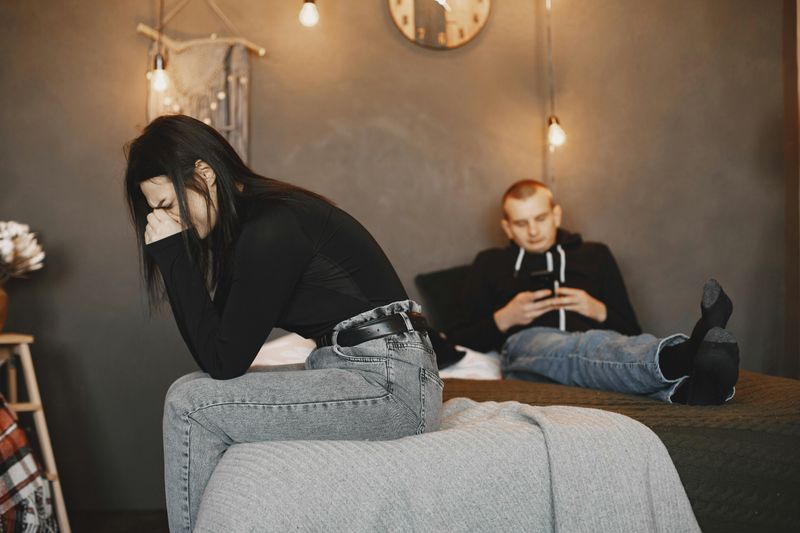
Silence feels safer for him, but it often feels like abandonment to her.
Conflict avoidance is one of the most common issues reported in couples therapy.
When a man retreats, he believes he’s preventing a fight.
In reality, he’s creating emotional distance.
Women don’t need perfection in communication—they need presence.
A difficult topic won’t disappear just because he steps away from it.
Instead, it grows sharper in her mind.
She’s left with unresolved emotions and unanswered questions.
Meanwhile, he thinks the problem has “cooled off.”
But cooling off isn’t the same as resolving.
Courageous conversations deepen connection.
Avoiding them slowly erodes trust.
She notices when he shuts down, even for a moment.
And over time, those moments add up.
6. Apologizing Just to End the Argument

A rushed apology might stop an argument, but it never heals the wound beneath it.
He sees resolution.
She sees dismissal.
Relationship experts consistently note that meaningful apologies require accountability, not speed.
When he says “sorry” just to end the tension, it shortcuts the entire emotional process.
She’s left with lingering feelings he assumes have vanished.
He doesn’t know that “quick apologies” make her feel unheard.
She’s not asking for an essay—just acknowledgment of how his actions affected her.
Avoiding discomfort isn’t the same as solving the issue.
Real resolution involves conversation and curiosity.
Shortcuts just push problems underground.
And buried problems always resurface.
A genuine apology is powerful; a rushed one is another bruise.
7. Offering Solutions Instead of Support

Problem-solving comes naturally to many men, but not every moment calls for a fix.
Sometimes she just wants empathy, not engineering.
Studies suggest that women feel more connected when partners respond with emotional validation rather than immediate solutions.
A man hears a problem and grabs his metaphorical toolbox.
A woman shares a problem because she wants connection, not construction.
When he jumps into solution mode, she feels unheard.
Her story becomes a task instead of an experience.
She doesn’t need the world rearranged—she needs someone who sits beside her long enough to understand it.
Solutions can come later.
Support needs to come first.
If he listens before acting, he becomes her safe place, not her technician.
That shift builds deeper intimacy.
8. Comparing Her to Other Women (Even Positively)

Even compliments can sting when they rely on comparisons.
Telling her she’s “not like other women” sounds flattering at first, but it reinforces damaging stereotypes.
Sociologists note that this phrase mirrors internalized misogyny, rewarding her for distancing herself from her own gender.
It makes her feel like she’s winning a competition she never agreed to enter.
Worse, it suggests that if she changes, she might slip into a category he doesn’t value.
Positive comparisons are still comparisons.
She wants to be appreciated for who she is, not because she’s “better” than someone else.
He may think he’s being sweet.
She feels subtly judged.
Admiration lands better when it stands on its own.
No scoreboard required.
Authentic praise doesn’t need a loser.
9. Withholding His Own Feelings to ‘Protect’ Her

Keeping emotions locked away doesn’t shield her—it isolates her.
Many men are raised to believe vulnerability is weakness, but research shows the opposite: emotional openness increases relationship satisfaction and reduces conflict.
When he hides stress or sadness, she feels shut out rather than protected.
She senses something is wrong, even if he won’t admit it.
Women are biologically wired to pick up on emotional cues; it’s part of social bonding.
So his silence doesn’t calm her—it confuses her.
She wants to carry life with him, not watch him carry it alone.
Openness builds closeness.
Secrecy creates gaps.
She doesn’t need him to be perfect.
She just needs him to be honest.
Shared vulnerability is a superpower, not a burden.
10. Being Overly Positive When She Needs Realism

Relentless positivity can feel like pressure instead of comfort.
Toxic positivity—yes, it’s a real psychological term—invalidates normal emotional experiences by insisting everything is fine.
When he says “just look on the bright side,” he may think he’s helping reframe her mindset.
But she hears, “Don’t feel what you’re feeling.”
Humans are wired to process negative emotions as a survival mechanism, not to suppress them.
She needs room to be human, not a motivational speaker in her living room.
Positivity is helpful when it’s grounded in reality.
Otherwise, it becomes another form of dismissal.
She appreciates support that acknowledges the struggle.
She connects with honesty more than cheerleading.
And sometimes, the most supportive thing he can say is simply, “Yeah, that really sucks.”
11. Expecting Praise for Basic Respect

Compliments shouldn’t be reserved for the bare minimum.
Yet some men act like faithful commitment or simple household contributions are heroic acts deserving applause.
Sociologists call this “performative helpfulness,” where men expect recognition for tasks women have done silently for decades.
She values kindness, of course.
But when he expects praise for being decent, it puts her in the awkward position of rewarding basic respect.
Holding a door isn’t extraordinary.
Treating her well isn’t a favor.
Love isn’t measured by how loudly he announces his “goodness.”
She wants a partner, not someone keeping score.
Consistency matters more than spectacle.
When he stops performing and starts participating, the relationship becomes more balanced.
Respect should be a baseline, not a trophy.
12. Acting Supportive Publicly but Not Privately

Public affection means little if it doesn’t match his private behavior.
A man who brags about being supportive but disappears when it’s time to follow through creates emotional whiplash.
Psychologists note that inconsistency is more damaging than outright neglect because the highs make the lows feel more painful.
She feels praised one moment and abandoned the next.
It’s confusing.
It’s lonely.
And it’s exhausting.
Support doesn’t happen on Instagram—it happens in the quiet, unglamorous moments of real life.
Women remember who shows up when no one is watching.
They also notice who only performs when there’s an audience.
Consistency is love in action.
If his private behavior matched his public persona, she’d feel cherished instead of misled.
Actions matter more than image.
Comments
Loading…