
 Isabel Parker
11 Things You Should Never Say to Your Wife When She’s Upset

When your wife is upset, the words you choose can either help calm the storm or make things worse.
Many husbands mean well but accidentally say things that dismiss, minimize, or invalidate their partner’s feelings.
Understanding what not to say is just as important as knowing the right words to use, and it can make all the difference in keeping your relationship strong and healthy.
1. “Calm down”

Telling someone to calm down rarely works the way you hope.
Instead of soothing the situation, these two words often pour gasoline on the fire.
Your wife already knows she’s upset, and hearing this phrase makes her feel like you’re dismissing her emotions rather than trying to understand them.
When you say this, it sounds like you’re more interested in silencing her feelings than actually addressing what’s bothering her.
She might interpret it as you saying her emotions are inconvenient or inappropriate.
The message she receives is that her feelings don’t matter as much as your comfort.
A better approach is to acknowledge her feelings first.
Try saying something like, “I can see you’re really upset. What can I do to help?”
This shows empathy and partnership instead of judgment.
2. “You’re overreacting”

Nobody likes being told their feelings aren’t valid.
When you accuse your wife of overreacting, you’re essentially saying her emotional response is wrong or exaggerated.
This phrase completely shuts down any chance of productive conversation because it makes her feel judged and misunderstood.
What seems like a small issue to you might carry much more weight for her.
Perhaps it’s connected to past experiences, ongoing stress, or something deeper you haven’t considered yet.
By labeling her reaction as excessive, you’re refusing to explore what’s really happening beneath the surface.
Instead of evaluating whether her reaction fits your scale, try to understand her perspective.
Ask questions like, “Help me understand why this is so important to you.”
This opens dialogue rather than closing it down with criticism.
3. “You’re too sensitive”

Calling your wife too sensitive shifts the blame entirely onto her personality rather than addressing the actual problem.
It’s a way of avoiding responsibility by suggesting there’s something wrong with how she processes emotions.
This phrase damages trust and makes her feel like she needs to hide her true feelings from you in the future.
Sensitivity isn’t a character flaw.
Being in touch with emotions is actually a strength that helps people connect deeply with others.
When you criticize this quality, you’re essentially telling her to change who she is rather than working together to solve the issue at hand.
A healthier response involves taking ownership of your part in the situation.
Say something like, “I didn’t realize that would hurt you. Tell me more about how you’re feeling.”
This validates her experience without making it about personality defects.
4. “It’s not a big deal”

If something matters enough to upset your wife, then it is a big deal, period.
Minimizing her concerns tells her that you don’t value what she cares about.
This phrase creates distance in your relationship because it signals that you’re not willing to take her seriously when she’s hurting.
What might seem trivial to you could represent something much larger in her world.
Maybe it’s about feeling respected, heard, or prioritized.
When you brush off her concerns as unimportant, you’re missing an opportunity to understand what really matters to her and strengthen your connection.
Try validating her feelings first, even if you don’t fully understand them yet.
You might say, “I can see this really matters to you. Let’s talk about it.”
This simple shift shows respect and willingness to engage with her perspective.
5. “You always…” / “You never…”

Absolute statements like “you always” or “you never” turn a specific situation into a sweeping accusation.
These words escalate conflict because they’re rarely accurate and make your wife feel attacked rather than heard.
They shift the focus from solving the current problem to defending against exaggerated claims.
When you use these phrases, you’re essentially saying that she has a permanent character flaw rather than addressing a specific behavior or situation.
This makes her feel hopeless about the relationship improving because you’re suggesting she’s fundamentally flawed.
It also makes her less likely to listen to your actual concerns.
Focus on the specific issue at hand instead.
Say something like, “I felt hurt when this happened today,” rather than making it about a pattern.
This keeps the conversation productive and solvable.
6. “What’s wrong with you?”

Few phrases sound more judgmental than asking what’s wrong with someone.
When your wife is already upset, this question feels like an attack on her character rather than genuine concern.
It implies there’s something broken or defective about her for having the feelings she’s experiencing.
This phrase completely kills any chance of her opening up about what’s really bothering her.
Instead of feeling safe to share her thoughts, she now has to defend herself against the implication that she’s somehow damaged or unreasonable.
It creates shame around having emotions at all.
If you’re genuinely confused about why she’s upset, try a softer approach.
Ask, “Can you help me understand what you’re feeling right now?”
This shows curiosity and care rather than criticism, making it much more likely she’ll actually share what’s going on inside.
7. “You’re being dramatic / crazy”

Labeling your wife’s emotions as dramatic or crazy is one of the fastest ways to destroy trust in your relationship.
These words are deeply dismissive and suggest that her feelings aren’t based in reality.
It’s a form of emotional invalidation that makes her question whether she can trust her own perceptions and experiences.
When you use these labels, you’re avoiding the actual issue by attacking her credibility instead.
She’s left feeling isolated and misunderstood, wondering if you’ll ever truly see things from her perspective.
This creates a pattern where she might stop sharing her feelings altogether to avoid being called names.
Choose words that show you’re trying to understand rather than judge.
Something like, “I want to understand what you’re going through,” opens the door to real communication instead of shutting it with hurtful labels.
8. “That’s your problem, not mine”

Marriage is supposed to be a partnership where you face challenges together.
Saying something is her problem and not yours creates a clear division that goes against the whole point of being in a committed relationship.
This phrase signals that you’re not willing to be there for her when she needs support.
When your wife is upset, she needs to know you’re on her team, even if you didn’t cause the problem.
By distancing yourself from her struggles, you’re essentially abandoning her in a moment of vulnerability.
This builds resentment and makes her wonder if she can count on you when things get tough.
A better response acknowledges that you’re in this together.
Try saying, “How can we work through this together?”
This shows partnership and commitment rather than emotional distance and selfishness.
9. “Here we go again”

Rolling your eyes with a “here we go again” attitude tells your wife that you view her concerns as repetitive and tiresome.
But if the same issues keep coming up, that’s a sign they haven’t been properly resolved, not that she’s being unreasonable.
This phrase dismisses ongoing problems rather than addressing why they keep resurfacing.
When you respond this way, you’re shutting down communication before it even starts.
Your wife might have valid concerns that haven’t been heard or addressed in previous conversations.
By treating recurring issues as annoyances, you’re guaranteeing they’ll continue to cause problems in your relationship.
Instead of expressing frustration, acknowledge the pattern and commit to finding a real solution.
You might say, “I know this has been bothering you. Let’s figure out how to fix it for good.”
This shows you’re taking her seriously.
10. “You’re just like your mother/ex”
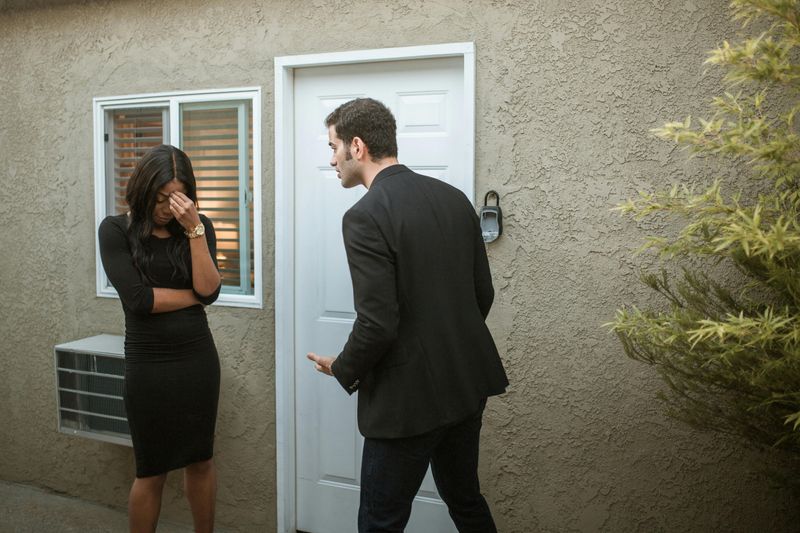
Bringing up comparisons to her mother or ex-partner is a low blow that completely derails any productive conversation.
These comparisons are meant to hurt, and they do.
They shift the focus from the actual issue to defending herself against hurtful accusations that have nothing to do with the current situation.
This phrase is particularly damaging because it attacks her identity and brings past relationships or family dynamics into your marriage.
It suggests you’ve been storing up negative judgments about her and are now using them as weapons.
This creates deep wounds that take a long time to heal.
Keep the conversation focused on the two of you and the specific situation at hand.
Avoid bringing in outside people or past relationships.
Address the current issue with respect and without trying to land hurtful jabs that you’ll later regret.
11. “It’s all in your head”

Telling your wife that something is all in her head is a form of gaslighting that makes her question her own reality.
This phrase suggests that her perceptions, feelings, and experiences aren’t valid or real.
It’s incredibly damaging because it attacks her ability to trust her own judgment and feelings.
When you dismiss her experiences this way, you’re essentially saying she’s making things up or can’t distinguish between reality and imagination.
This creates confusion and self-doubt that can seriously harm her mental health and your relationship.
She may start hiding her feelings entirely to avoid being told they’re not real.
Believe your wife when she tells you how she feels or what she’s experiencing.
Even if you see things differently, her feelings are real and deserve respect.
Say something like, “I believe you, and I want to understand better.”
This builds trust instead of destroying it.
Comments
Loading…