
 Hailey Watson
11 Reasons Women Quietly Lose Interest in Their Relationships

Relationships don’t always end with loud arguments or dramatic breakups.
Sometimes, a woman’s interest slowly fades away without much noise at all.
Understanding why this happens can help partners recognize warning signs early and work together to keep their connection strong and healthy.
1. Poor Communication

Have you noticed conversations becoming shorter and less meaningful?
When partners stop sharing their true thoughts and feelings, a gap starts forming between them. Misunderstandings pile up like dirty dishes in the sink, and before long, the emotional bond weakens.
Open, honest talks are the foundation of any strong relationship. Without them, assumptions take over and resentment builds quietly.
Partners may physically be in the same room but feel miles apart emotionally.
Making time for real conversations—not just about schedules or chores—helps rebuild that lost connection.
Listening actively and speaking truthfully creates safety and trust that keeps love alive.
2. Emotional Unavailability

Imagnine trying to reach someone who’s always just out of reach.
A partner who shuts down emotionally or dismisses feelings leaves her carrying all the emotional weight alone.
She might share something important only to be met with silence or a quick subject change.
Over time, this pattern teaches her that vulnerability isn’t safe.
She stops trying to connect and starts protecting her heart instead.
The relationship becomes a lonely place, even with someone right beside her.
Emotional presence means showing up not just physically but with genuine care and attention.
Being supportive during tough moments builds the kind of bond that lasts through anything.
3. Feeling Unappreciated

Small gestures matter more than grand romantic displays.
When the little things she does go unnoticed day after day, affection starts draining away like water through a cracked cup.
A simple thank you or recognition can mean everything, yet its absence speaks volumes.
Being taken for granted turns love into obligation.
She might continue doing things out of habit, but the warmth behind those actions fades.
Resentment quietly replaces the joy she once felt.
Expressing genuine gratitude regularly keeps appreciation alive.
Noticing her efforts and acknowledging them—even the smallest ones—reminds her that her contributions truly matter and are valued.
4. Unmet Emotional or Physical Needs

Everyone enters a relationship with certain needs—some spoken, others assumed.
When affection, understanding, or intimacy consistently goes unfulfilled, disappointment becomes a constant companion.
She might ask for what she needs initially, but repeated letdowns teach her to stop asking altogether.
Unmet needs create invisible barriers between partners.
The relationship starts feeling one-sided, like she’s pouring from an empty cup.
Interest naturally fades when basic emotional or physical requirements aren’t being met.
Checking in regularly about each other’s needs prevents this silent withdrawal.
Creating space for honest discussions about desires and expectations helps both partners feel valued and understood in meaningful ways.
5. Loss of Physical Intimacy

Physical touch communicates love in ways words sometimes can’t.
A decline in sexual connection or even simple affectionate gestures like hugs and kisses often signals something deeper happening beneath the surface.
When physical closeness disappears, emotional distance usually isn’t far behind.
Intimacy keeps partners bonded in unique ways that conversation alone can’t achieve.
Without it, the relationship can start feeling more like a friendship or roommate situation.
She may begin questioning whether the romantic spark still exists at all.
Prioritizing physical connection—even during busy or stressful times—maintains that special bond.
Small touches throughout the day remind both partners they’re loved and desired beyond words.
6. Relationship Monotony

Remember when everything felt exciting and new?
Routines provide comfort, but too much predictability turns relationships stale.
When every day looks exactly like the last, with no surprises or adventures, the spark that once burned bright starts flickering out.
Monotony makes partners take each other for granted.
Date nights become Netflix and takeout on repeat.
Conversations cover the same topics.
The relationship feels stuck in neutral, going nowhere interesting.
Breaking patterns with new experiences—whether big trips or small changes—reignites curiosity and excitement.
Trying activities together, exploring new interests, or simply changing up routines reminds both people why they chose each other originally.
7. Lack of Independence or Feeling Controlled

Healthy relationships require two whole individuals, not two halves desperately clinging together.
When one partner becomes overly possessive or controlling, the other feels suffocated.
Constantly checking in, questioning friendships, or limiting activities creates a cage rather than a partnership.
Independence isn’t about loving someone less—it’s about maintaining your own identity. Being controlled makes her feel small and trapped.
She starts withdrawing emotionally as a way to reclaim some sense of self.
Trusting each other to have separate interests, friendships, and space actually strengthens the relationship.
Supporting individual growth creates two happier people who choose to be together, not two people who need each other out of desperation.
8. Ongoing Conflict and Unresolved Arguments

Arguments happen in every relationship, but constant tension is exhausting.
When the same fights repeat without resolution, or when conflict becomes the default mode of interaction, the relationship stops feeling like a safe haven.
Instead, it becomes another source of stress she’d rather avoid.
Unresolved issues pile up like unpaid bills, creating emotional debt.
She might stop bringing up problems altogether because past attempts led nowhere.
Silence replaces communication, and indifference replaces care.
Learning to resolve conflicts constructively—listening, compromising, and actually fixing problems—transforms disagreements into opportunities for growth.
Creating a peaceful, supportive environment makes the relationship somewhere she wants to be, not somewhere she needs to escape from.
9. Trust Issues or Infidelity

Trust forms the foundation every relationship is built upon.
Once betrayal cracks that foundation—whether through infidelity, lies, or broken promises—rebuilding becomes incredibly difficult.
She might stay physically, but emotionally she’s already protecting herself from future hurt.
Living without trust means constantly questioning and second-guessing everything.
The relationship becomes exhausting rather than comforting.
Even if she wants to forgive, the emotional safety that once existed has vanished.
Honesty and consistency over time can slowly rebuild trust, but it requires genuine effort and patience.
Both partners must commit to transparency and accountability, understanding that betrayed trust doesn’t heal overnight or with empty promises.
10. Different Life Goals or Values
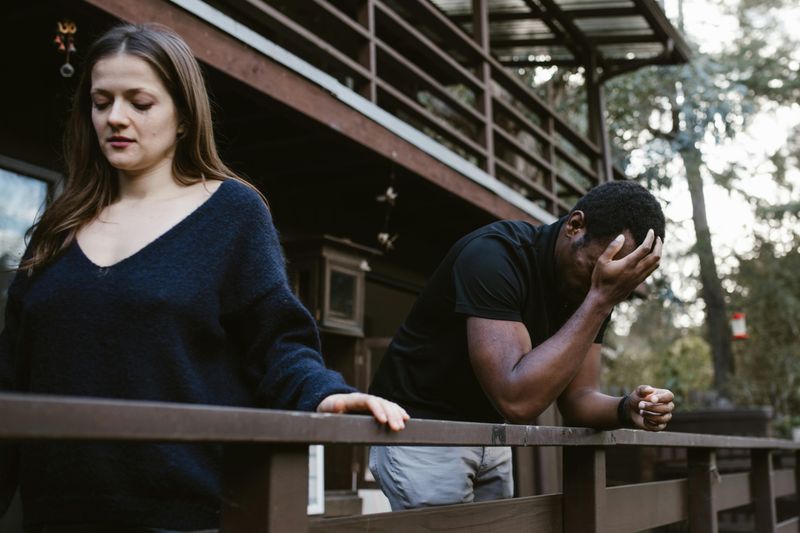
Did you know that shared values matter more than shared interests?
When partners discover they want fundamentally different things—like children, career paths, or lifestyle choices—emotional distance grows naturally.
She might love him but realize they’re heading in opposite directions.
Misaligned priorities create constant compromise where someone always sacrifices their dreams.
Over time, resentment builds as one or both partners feel they’re giving up too much.
The relationship starts feeling like an obstacle rather than support.
Having honest conversations early about major life goals prevents this painful discovery later.
While compromise is important, core values and major life decisions need genuine alignment for long-term happiness and fulfillment together.
11. Lack of Personal or Emotional Growth

People naturally evolve, learning and growing throughout life.
When one partner actively pursues personal development while the other remains stuck in old patterns, a gap forms between them.
She’s moving forward, exploring new ideas and becoming more, while he stays exactly the same.
Stagnation makes the relationship feel limiting rather than inspiring.
Conversations become repetitive because there’s nothing new to discuss.
She starts seeking growth and stimulation elsewhere—through friends, hobbies, or work—leaving the relationship behind emotionally.
Growing together—or at least supporting each other’s individual growth—keeps the relationship dynamic and interesting.
Encouraging development, trying new things together, and celebrating progress creates a partnership that evolves beautifully over time instead of becoming stuck.
Comments
Loading…