
 Jade Reed
10 Things Men Admit They Regret Saying to Their Partner

Most couples have at least one moment they wish they could rewind, not because the argument was huge, but because one careless sentence landed harder than expected.
A lot of men admit they didn’t mean to be cruel, controlling, or dismissive, yet the words that came out sounded exactly like that.
Sometimes the comment was blurted out during stress, sometimes it was learned from family dynamics, and sometimes it was a defense mechanism meant to end the conversation fast.
The problem is that “fast” fixes often create slow damage, especially when the message underneath the words is, “Your feelings aren’t valid.”
If you’ve ever said something in the heat of the moment and regretted it instantly, you’re not alone.
Here are ten common lines men say they wish they could take back, along with why they sting so much.
1. “You’re overreacting.”

In the middle of a disagreement, it can feel tempting to label your partner’s emotions as exaggerated so the situation seems easier to manage.
The issue is that this phrase doesn’t calm anything down; it tells her that her feelings are inconvenient, irrational, or embarrassing, which often makes her fight harder to be understood.
Even if you genuinely think the reaction is bigger than the trigger, calling it an “overreaction” skips the part where you try to understand what the moment represents to her.
Many men later admit they were actually reacting to discomfort, not logic, and they wanted the conversation to end quickly.
A better approach is to acknowledge the emotion and ask what’s driving it, because validation doesn’t mean you agree, it means you care.
2. “Calm down.”

When someone is upset, ordering them to relax usually has the opposite effect, because it comes off like a command rather than support.
Men often regret this line because they learn, sometimes the hard way, that tone matters just as much as content, and “calm down” can sound like, “Your emotions are a problem for me.”
It can also feel patronizing, especially if she’s expressing something important and you’re focusing on how she’s saying it instead of what she’s saying.
In calmer moments, many guys admit they used the phrase because they didn’t know what else to do, or because they felt overwhelmed and wanted the intensity to drop immediately.
Instead, try slowing the moment down with something like, “I want to understand you—can we take a breath and talk through it?”
3. “My ex never did that.”

Comparisons have a way of turning a normal disagreement into a competition nobody can win.
Men who say this often regret it because the sentence doesn’t land as a harmless observation; it lands as a warning that she’s failing a test she didn’t agree to take.
Even if the intention is to give context, the message she hears is that she’s being measured against someone else, which can trigger insecurity, resentment, and defensiveness all at once.
It also shifts the focus away from the real issue and into an argument about the past, which rarely leads anywhere good.
Many men admit they only realized later that bringing up an ex was a shortcut, not a solution, and it created distance instead of clarity.
If something bothers you, keep it about the present and say what you need without dragging history into it.
4. “You’re just like your mother.”
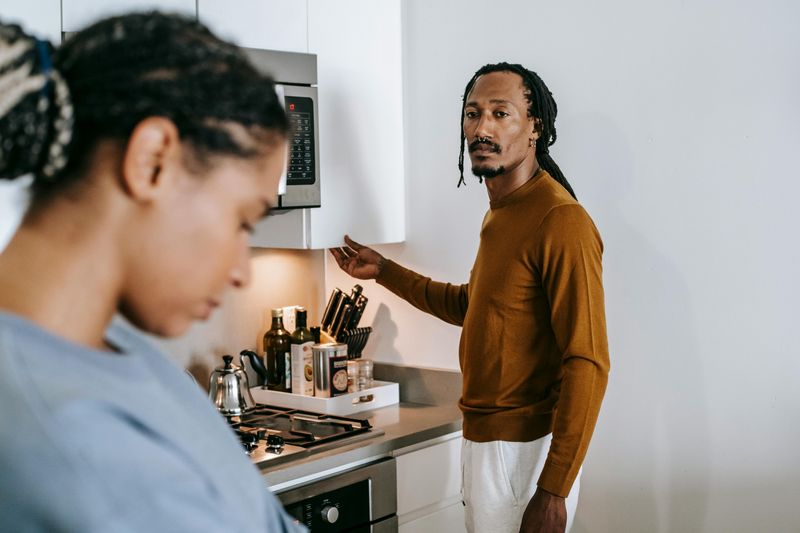
In a heated moment, family comparisons can slip out as a cheap jab, especially if you know your partner has complicated feelings about a parent.
The regret comes fast because this line isn’t feedback; it’s a personal attack that hits identity, history, and vulnerability all at once.
Even in cases where the behavior truly resembles something her mother might do, saying it this way sounds like you’re insulting her character and dismissing her growth.
It can also feel unfair because it reduces her to a stereotype, instead of recognizing her as an individual who’s trying to navigate the situation with you.
Men often admit they used this phrase because they were angry and wanted to “win,” but winning a moment can cost closeness for weeks.
If a pattern is bothering you, describe the specific behavior and how it affects you, without turning it into a family verdict.
5. “Do you really need that?” (especially about money, food, or self-care)

This question can sound practical in your head, but it often lands like a judgment about her choices, priorities, or worth.
Men who regret saying it usually realize it wasn’t just about the item, whether it was a purchase, a treat, a haircut, or a break; it was about autonomy and respect.
When you frame her decision as something she must justify, you position yourself as the gatekeeper, even if you didn’t mean to.
It can be especially sensitive if money is tight or if she already carries the mental load of budgeting, because the question implies she’s careless or selfish.
Many men later admit they were anxious about finances but didn’t express that vulnerability, so it came out as criticism instead.
A healthier move is to talk about the actual concern—cash flow, goals, stress—without making her feel small for wanting something.
6. “Whatever.”

Few words communicate dismissal faster than this one, because it signals that you’ve checked out emotionally while the conversation is still happening.
Men often regret using it because they intended to avoid escalation, but it usually reads as contempt, and contempt is poison in a relationship.
“Whatever” tells your partner that her point isn’t worth responding to, that the outcome doesn’t matter, or that you’d rather stonewall than engage.
Even if you’re exhausted, overwhelmed, or afraid of saying something worse, the coldness of this word can linger long after the argument ends.
Many guys admit they said it because they felt stuck and didn’t know how to respond without making things worse, but it still hurts because it shuts the door on connection.
If you need a pause, say so clearly and kindly, and promise to come back to the topic when you can actually participate.
7. “It’s not a big deal.” (when it’s clearly a big deal to her)

Minimizing your partner’s concern can feel like you’re trying to keep things in perspective, but it often sends the message that her feelings are unreasonable.
Men who look back and regret this line usually realize they weren’t actually addressing the issue; they were managing discomfort, because if it’s “not a big deal,” then they don’t have to do anything about it.
The problem is that what feels small to you might feel huge to her, especially if it taps into a deeper need like reliability, trust, appreciation, or safety.
Dismissing it creates a second conflict on top of the first: now she’s upset about the original issue and about not being taken seriously.
Many men admit they only understood later that validation is not the same as surrendering the argument.
A better option is to say, “I can see this matters to you—help me understand why,” and then listen without trying to shrink it.
8. “You always…” / “You never…”

Absolute statements turn a specific complaint into a character indictment, which is why they make people instantly defensive.
Men who regret using “always” or “never” often realize the words were fueled by frustration, not accuracy, because almost nobody truly always does something or never does it.
The effect is that your partner stops hearing the original point and starts searching her memory for exceptions, which becomes a debate about facts instead of a conversation about feelings and solutions.
These phrases also create hopelessness, because if she “always” fails or “never” tries, then what’s the point of improving?
A lot of men admit they were trying to express a recurring pattern but reached for the most dramatic language, which escalated everything.
If you’re noticing a cycle, focus on recent examples and explain how it affects you, because specifics invite change while absolutes invite a fight.
9. “I don’t care.” (when he actually means “I’m stressed” or “I don’t know what to say”)

This sentence is tricky because it’s often untrue, yet it’s delivered as a final answer.
Men who regret it typically admit they were actually feeling stressed, criticized, cornered, or emotionally overloaded, and “I don’t care” was a shield to avoid vulnerability.
The issue is that your partner hears it as indifference to her needs, her happiness, or the relationship itself, which can sting more than anger.
Even when you mean, “I don’t care which restaurant,” it can come across like you don’t want to participate, leaving her to make every decision while also wondering if she’s alone in caring.
Over time, repeated indifference can erode intimacy because it removes the sense of being chosen and considered.
If you’re overwhelmed, say that plainly, and if you’re flexible, say what you do care about, such as budget, timing, or quality time, so she can feel your engagement instead of your withdrawal.
10. “Fine, do what you want.” (the passive-aggressive permission slip)

Passive-aggressive permission is one of those phrases that sounds like agreement but feels like punishment.
Men often regret it because they were trying to end the argument without giving in, yet the sentence communicates resentment and sets a trap: if she goes ahead, she’s “selfish,” and if she doesn’t, she’s “controlled.”
It also shifts responsibility in a sneaky way, because you’re implying the choice is hers while making it clear you’ll be upset about it later.
Many guys admit they used this line when they didn’t know how to compromise or express disappointment without sounding demanding, so they reached for sarcasm instead.
The result is usually more tension, not less, because nobody feels safe to decide anything.
A healthier alternative is to say what you truly mean—whether you need more time, you feel unheard, or you have a specific concern—so the conversation stays honest rather than loaded with subtext.
Comments
Loading…