
 Jade Reed
Getting kids to help around the house can sometimes feel like pulling teeth. Between the eye rolls, the “I’ll do it later” excuses, and the dramatic sighs, even the simplest chore can turn into a full-blown battle. It’s easy to feel frustrated when cooperation seems out of reach.
But it doesn’t have to be that way. With a few smart, practical strategies, you can turn everyday household tasks into something your kids are more willing to take part in—and maybe even start to enjoy over time.
1. Make It a Game

What if cleaning the house felt more like playing than working?
Turning chores into a game is one of the easiest ways to get kids moving without the usual complaints.
Try setting a timer and challenging your child to finish before it goes off — you’ll be amazed how fast they move.
You can also create a points system where kids earn stars or tokens for completing tasks.
Trade those points in for screen time, a favorite snack, or a small prize.
When there’s something fun at stake, kids stop dragging their feet and start sprinting toward the finish line.
2. Give Age-Appropriate Tasks

Handing a five-year-old a mop and expecting a sparkling floor is a recipe for frustration — for everyone.
Matching the chore to the child’s age and skill level makes all the difference.
When kids feel capable of doing the job, they’re far more willing to try.
Younger children can sort laundry by color, wipe down low surfaces, or feed pets.
Older kids can tackle vacuuming, washing dishes, or taking out trash.
Starting with tasks they can actually succeed at builds confidence and creates a habit of helping that grows stronger as they get older.
3. Create a Visual Chore Chart

Kids thrive on structure, and a visual chore chart gives them exactly that.
Seeing their responsibilities laid out clearly removes the “I didn’t know I had to do that” excuse almost entirely.
Plus, there’s something deeply satisfying about checking off a completed task.
Make the chart together using markers, stickers, or even a whiteboard — when kids help design it, they feel ownership over it.
Keep it somewhere visible, like the fridge or a bedroom door.
Celebrate the week when every box gets checked.
A simple chart can quietly transform your household routine without anyone feeling bossed around.
4. Use Positive Reinforcement

Catching your child doing something right is far more powerful than pointing out what they did wrong.
Positive reinforcement — praise, rewards, and recognition — sends a clear message: your effort matters and it gets noticed.
Kids repeat behaviors that make them feel good about themselves.
Try specific praise like “You did a fantastic job organizing those shoes!” instead of just “Good job.” Specific compliments stick longer and feel more genuine.
You don’t always need big rewards either.
Sometimes a high-five, a proud smile, or a few extra minutes of storytime before bed is all the motivation a child needs.
5. Do Chores Together as a Family
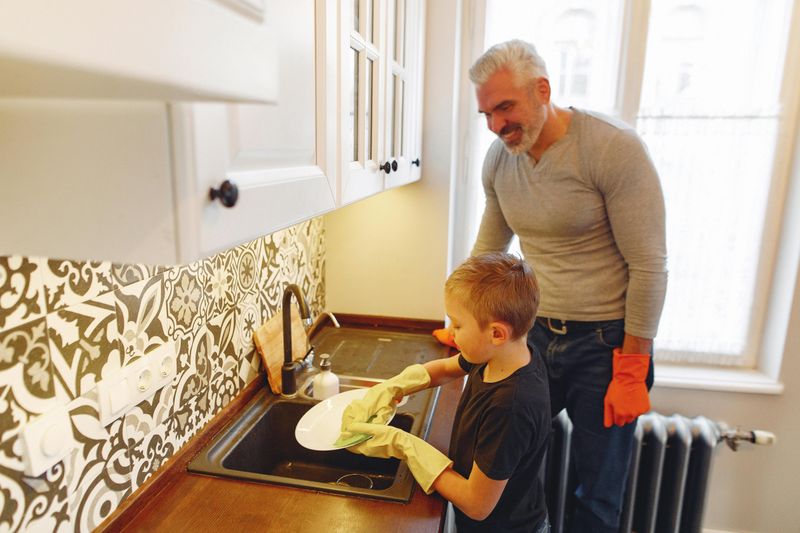
Nobody wants to scrub the bathroom while everyone else watches TV.
Chores feel a lot less miserable when the whole family pitches in at the same time.
Designating a “family cleanup hour” on weekends sends the message that helping out is something everyone does — not just the kids.
Crank up a fun playlist, split up the rooms, and work together until the job is done.
You’ll finish faster, and the shared effort creates a sense of teamwork that kids genuinely respond to.
Bonus: it models the kind of responsible behavior you want your children to carry into adulthood.
6. Let Kids Choose Their Chores

A little bit of choice goes a long way when it comes to kids and cooperation.
When children feel like they have some control over their responsibilities, they’re much less likely to push back.
Letting them pick from a list of options makes chores feel less like a punishment and more like a personal decision.
Offer two or three tasks and let them decide which ones they’ll own for the week.
Rotate the options regularly so nothing feels too boring or repetitive.
This simple shift in approach can reduce arguments significantly, turning the weekly chore conversation from a standoff into an easy five-minute chat.
7. Be Consistent and Keep Expectations Clear

Consistency is the secret ingredient that makes every other strategy actually work.
If chores are optional some days and required on others, kids will always test the limits to see which version today is.
Clear, steady expectations remove that guessing game entirely.
Set specific times for chores and stick to them as much as possible.
Explain what “done” looks like so there’s no confusion — a made bed means pillows straightened, not just sheets pulled up halfway.
When kids know what to expect and when to expect it, they stop fighting the routine and start accepting it as just part of everyday life.
Comments
Loading…