
 Jade Reed
Cosmic horror explores the terrifying idea that humanity is insignificant in a vast, uncaring universe filled with forces beyond our understanding.
Unlike traditional horror that relies on monsters or jump scares, this genre taps into existential dread and the fear of the unknown.
These 7 films didn’t just scare audiences—they redefined what horror could be, influencing countless filmmakers and shaping the way we think about terror from the stars.
1. Alien (1979)
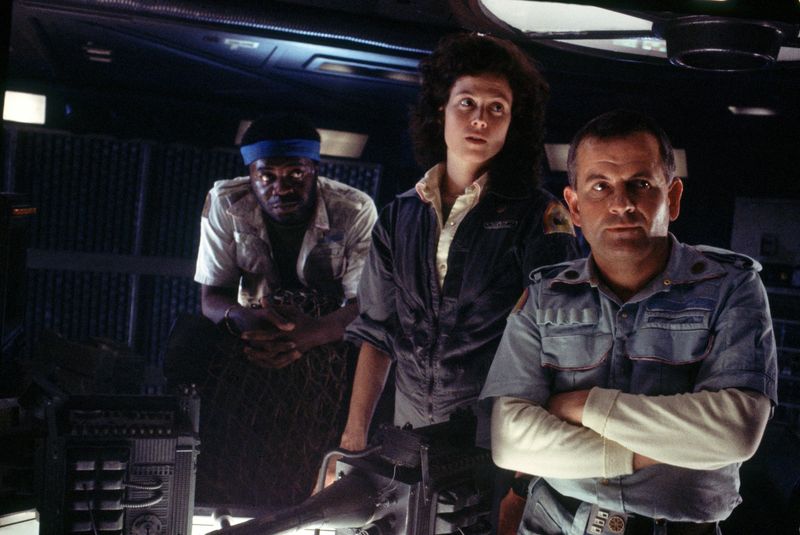
Ridley Scott’s masterpiece turned space into a claustrophobic nightmare where no one can hear you scream.
The crew of the Nostromo encounters a lifeform so alien, so perfect in its hostility, that survival becomes nearly impossible.
What makes this film cosmic horror is its embrace of the unknowable—the xenomorph isn’t just a monster, it’s a representation of nature’s indifference to human life.
The vast emptiness of space amplifies the crew’s isolation and helplessness.
Every dark corridor and dripping wall builds tension that never lets go.
The film proved that horror doesn’t need supernatural elements when the universe itself is terrifying enough, setting a new standard for sci-fi terror.
2. The Thing (1982)
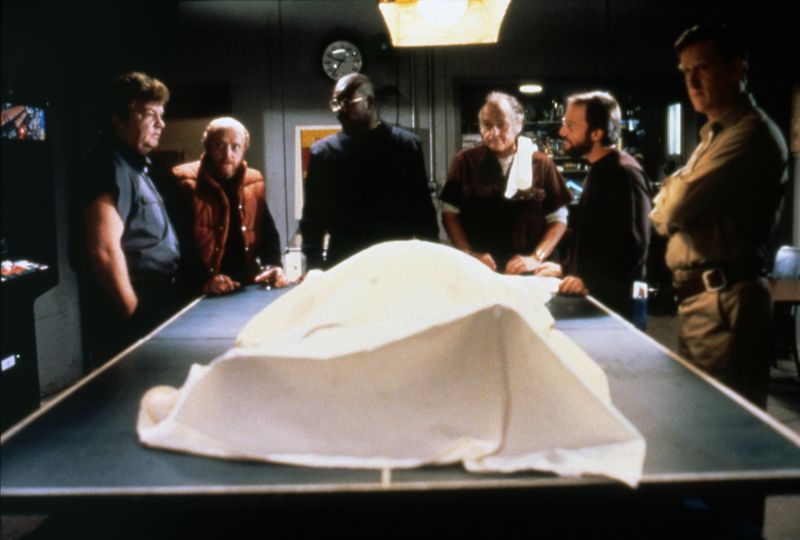
John Carpenter crafted a frozen hellscape where trust becomes the deadliest luxury.
An Antarctic research station becomes ground zero when an extraterrestrial organism begins perfectly imitating its victims, cell by cell.
The genius here lies in how the alien defies comprehension—it has no motive we understand, no weakness we can exploit.
Paranoia spreads faster than the infection as team members realize anyone could be the enemy.
Practical effects still shock audiences today, showing grotesque transformations that feel genuinely alien.
The film asks a horrifying question: if something can become you so completely, what does that say about identity itself?
This masterpiece proved cosmic horror works best when it turns our own humanity against us.
3. In the Mouth of Madness (1994)
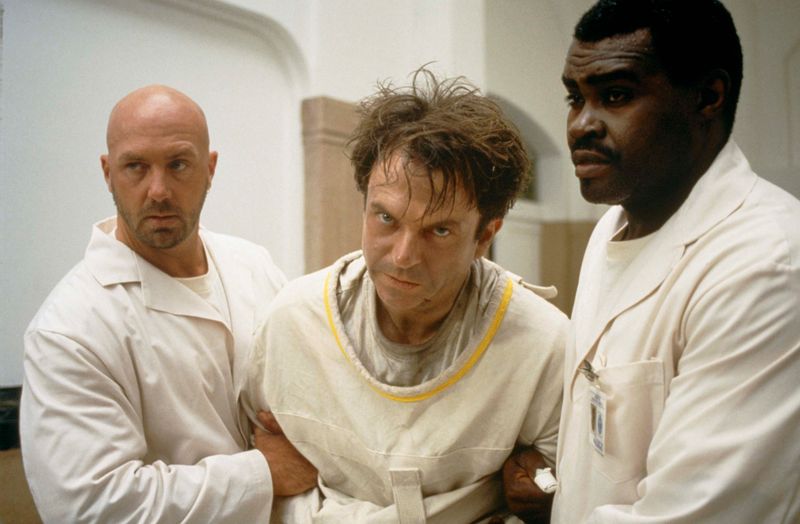
What happens when fiction becomes more real than reality?
Sam Neill stars as an insurance investigator tracking down a missing horror novelist whose books are driving readers insane.
This meta-nightmare blurs every line between story and truth until nothing feels stable.
The town of Hobb’s End shouldn’t exist, yet there it stands, pulled from the pages of Sutter Cane’s twisted imagination into our world.
Carpenter explores the ultimate cosmic horror concept: that we might be nothing more than characters in someone else’s story.
The film’s ending leaves viewers questioning their own existence, a deeply unsettling achievement few horror films manage.
Reality itself becomes the monster here.
4. Annihilation (2018)
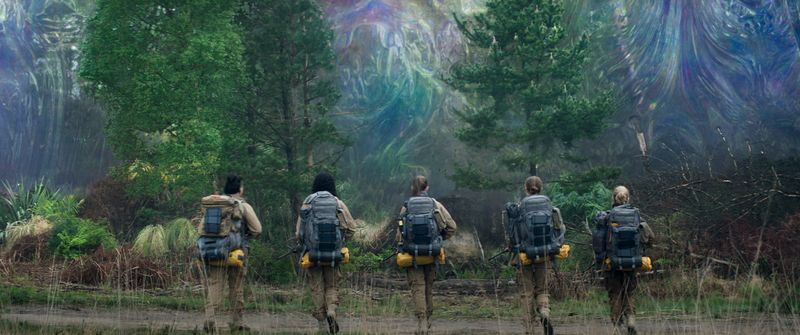
A shimmering barrier called The Shimmer has appeared on the coast, and nothing that enters ever returns unchanged.
Natalie Portman leads a team of scientists into this prismatic zone where the laws of nature have been completely rewritten.
Director Alex Garland creates something visually stunning yet deeply disturbing—plants shaped like people, animals that share DNA across species, beauty mixed with absolute wrongness.
The entity causing this isn’t evil; it simply exists in ways our minds can’t process.
The film’s climax features one of cinema’s most alien sequences, a dance with something so beyond human that communication becomes meaningless.
This is cosmic horror for the modern age.
5. Color Out of Space (2019)
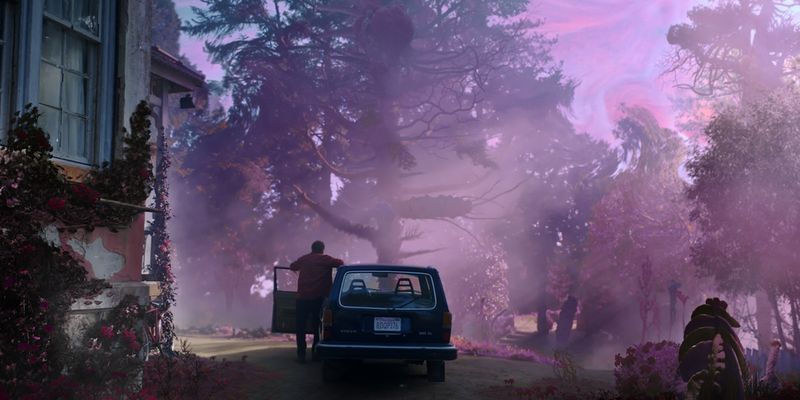
Nicolas Cage delivers a wild performance as a father watching his family unravel after a meteor crashes on their farm.
Based on H.P. Lovecraft’s story, this adaptation captures the author’s vision of incomprehensible cosmic forces.
The entity isn’t a creature—it’s a color, something so alien that human perception struggles to process it.
Time warps, bodies merge, and sanity crumbles as the farm becomes ground zero for reality’s collapse.
Director Richard Stanley uses psychedelic visuals to show what happens when something from beyond our dimension touches Earth.
The film proves that Lovecraft’s brand of cosmic horror, where knowledge itself destroys the mind, still terrifies when done right.
6. The Endless (2017)
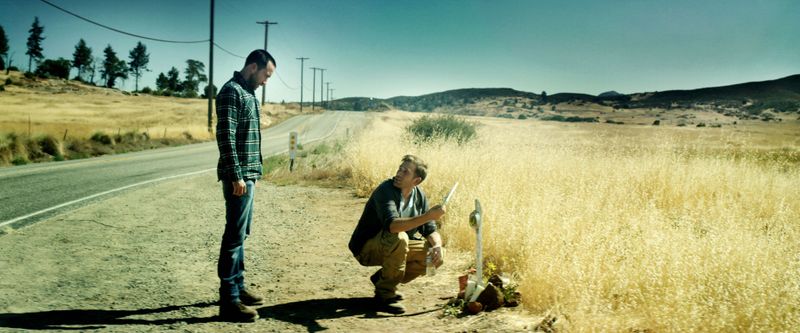
Two brothers escaped a UFO death cult years ago, but curiosity draws them back to the commune.
What they find defies explanation—time loops, impossible physics, and evidence that the cult might have been right about something watching from above.
Made on a tiny budget, this indie gem punches way above its weight.
The horror comes from gradual realization that an entity exists in dimensions we can’t see, manipulating reality like a child playing with toys.
Directors Justin Benson and Aaron Moorhead create dread through implication rather than spectacle.
The unseen presence never reveals its true form or purpose, leaving viewers with that essential cosmic horror feeling: we are so very small.
7. Event Horizon (1997)
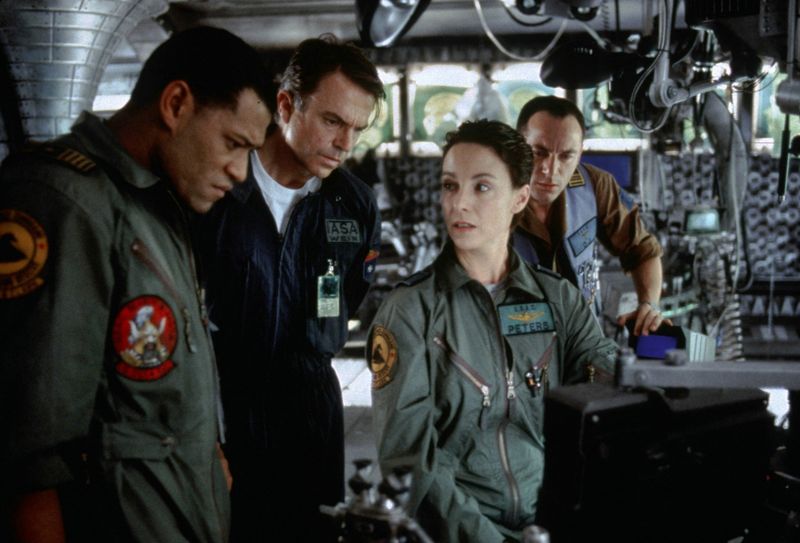
A rescue crew investigates a spaceship that vanished seven years ago, only to return from beyond a black hole carrying something unspeakable.
The Event Horizon traveled to a dimension of pure chaos and brought back horrors that break human minds.
Paul W.S. Anderson blends science fiction with gothic horror, creating a haunted house in space.
The ship itself becomes a portal to something that might be hell, or something worse—a place where physics and sanity have no meaning.
Though flawed, the film’s core concept remains terrifying: what if faster-than-light travel requires passing through realms humans were never meant to see?
Sometimes the void stares back, and it’s hungry.
Comments
Loading…