
 Mary Murphy
15 Toxic Movie Couples That Still Shock Audiences Today
Some movie couples make you root for them from the very first scene.
But others leave you gripping your seat, wondering how things got so dark so fast.
Hollywood has given us some truly disturbing relationships over the years, ones built on lies, control, obsession, and cruelty.
These cinematic pairs are unforgettable not because of their love, but because of how powerfully they show what love should never look like.
1. Dolores “Lolita” Haze & Humbert Humbert in Lolita (1962)
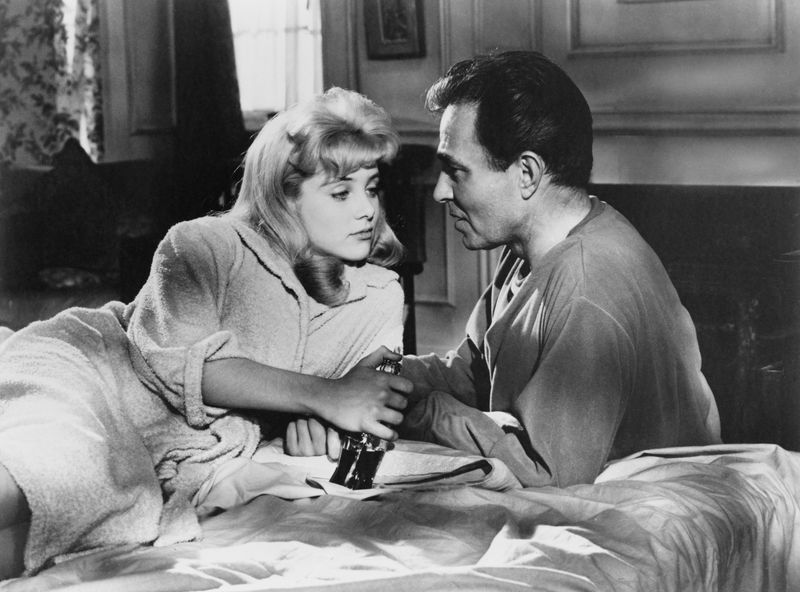
Few films have made audiences as deeply uncomfortable as Lolita.
Humbert Humbert, a grown man in his forties, convinces himself that his obsession with a young girl named Dolores is somehow romantic.
It is not.
It is predatory, calculated, and deeply wrong.
Stanley Kubrick’s adaptation walks a razor-thin line, never glamorizing the abuse while still forcing viewers to confront how manipulation can be disguised as affection.
Humbert controls every aspect of Dolores’s life, isolating her completely.
Her suffering is real, even when the camera does not show it directly.
This remains one of cinema’s most disturbing portrayals of exploitation.
2. Martha & George in Who’s Afraid of Virginia Woolf? (1966)
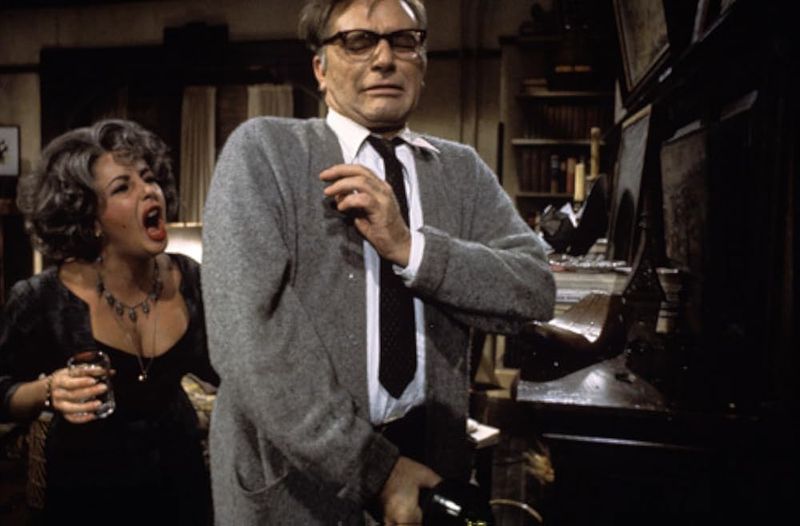
Elizabeth Taylor and Richard Burton brought a terrifying authenticity to Martha and George, and honestly, it is hard to watch.
Their marriage is not a partnership.
It is a war zone dressed up as a dinner party.
Every conversation becomes a weapon.
Emotional cruelty flies back and forth like volleys in a match neither can win.
Humiliation is their love language, resentment their daily bread.
What makes this couple so unsettling is how real it all feels.
Director Mike Nichols captured the exhausting cycle of two people who cannot leave each other alone, even when staying together destroys them both.
3. Dan Gallagher & Alex Forrest in Fatal Attraction (1987)
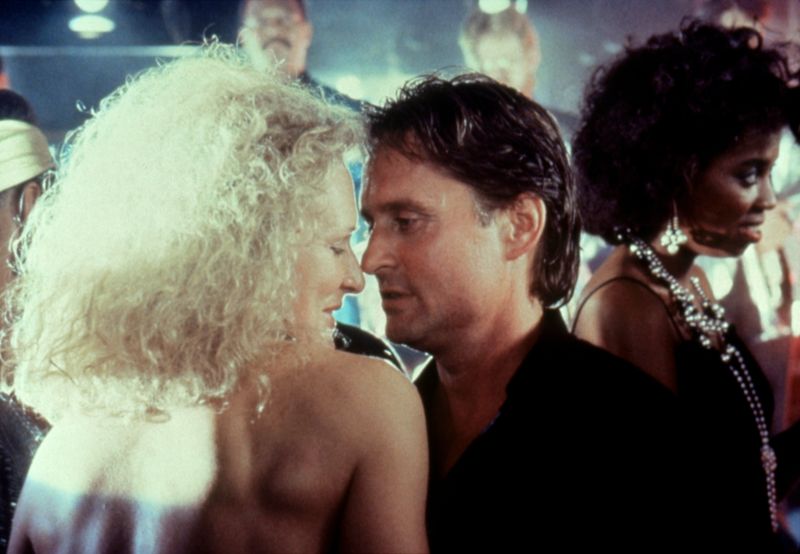
Fatal Attraction turned an extramarital affair into a cultural warning shot heard around the world.
Dan Gallagher thinks a weekend fling will stay quiet.
Alex Forrest has very different plans.
What unfolds is a masterclass in consequences, obsession, and entitlement colliding head-on.
Dan’s casual dishonesty triggers something explosive in Alex, whose instability escalates from unsettling to genuinely terrifying.
Critics have long debated whether Alex is villain or victim, and that ambiguity is exactly what makes this film stick.
The toxicity runs in both directions here.
One person deceives; the other unravels.
Neither walks away clean from the wreckage they create together.
4. Oliver & Barbara Rose in The War of the Roses (1989)
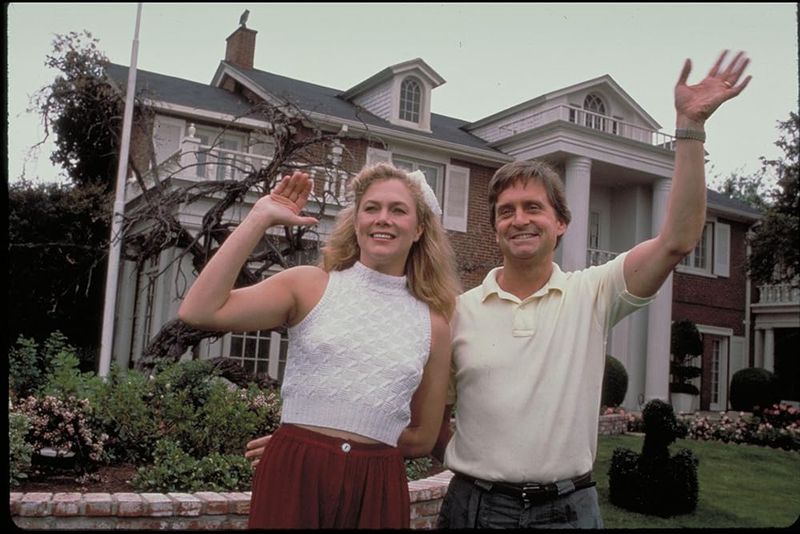
What starts as a fairy-tale romance between Oliver and Barbara Rose ends in something almost cartoonishly destructive, except the pain underneath is completely real.
Their divorce becomes a battlefield where pride matters more than sanity, survival, or even basic self-preservation.
Danny DeVito directed this pitch-black comedy with a sharp awareness that winning can sometimes mean losing everything.
Oliver and Barbara are each other’s worst enemy by the final act, yet neither will blink first.
Their stubbornness is almost admirable if it were not so catastrophically self-destructive.
The War of the Roses remains a cautionary tale about letting ego outlast love in the ugliest possible way.
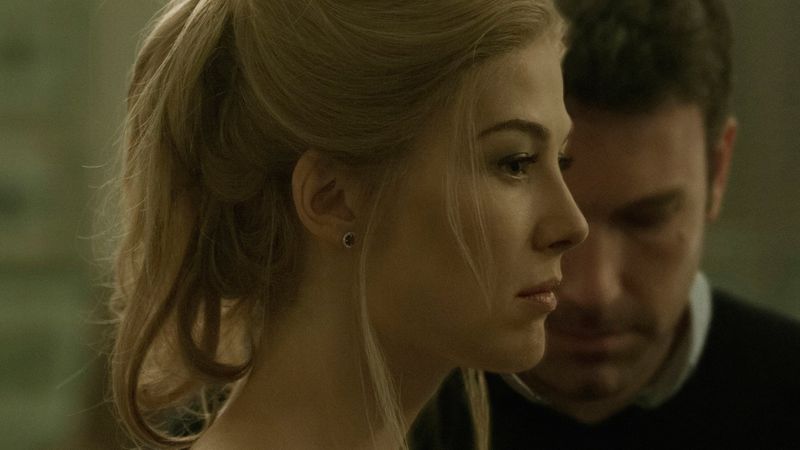
5. Amy Dunne & Nick Dunne in Gone Girl (2014)
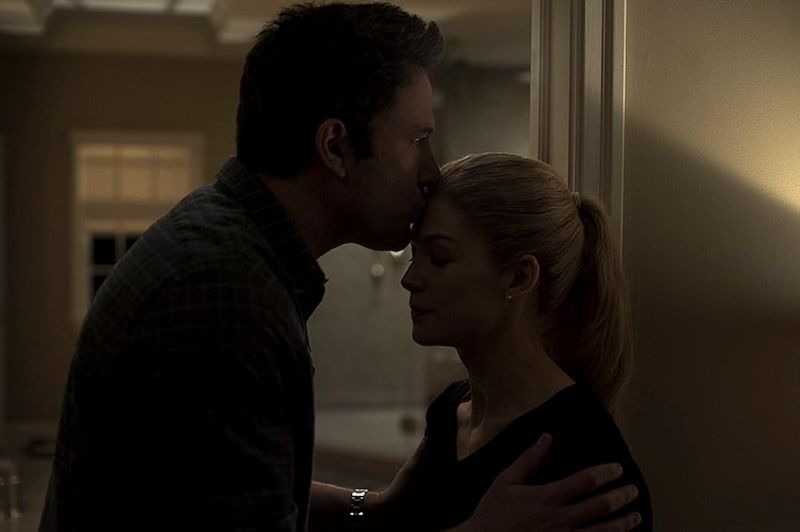
Gone Girl is a film that rewards you with chills every time you think you understand what is happening.
Amy and Nick Dunne’s marriage is a performance from beginning to end, built on curated images rather than genuine connection.
When the mask slips, what is underneath is genuinely alarming.
Amy’s calculated revenge plot is jaw-dropping in its precision.
Nick’s passive dishonesty is equally troubling.
David Fincher frames their relationship as a dark mirror of modern marriage, where image management replaces intimacy.
The film asks a haunting question: what happens when two people are better at playing a couple than actually being one?
6. Anastasia “Ana” Steele & Christian Grey in Fifty Shades of Grey (2015)
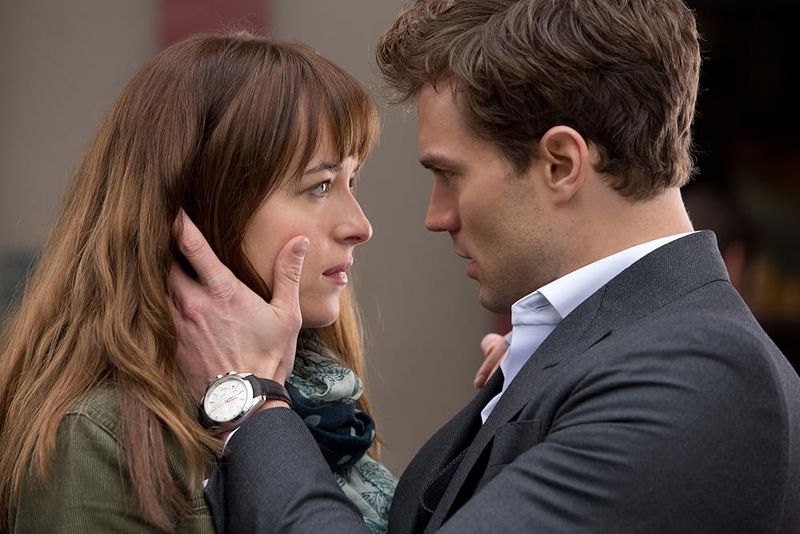
Few relationships in recent cinema have sparked as much debate as Ana and Christian’s.
Marketed as a steamy romance, Fifty Shades of Grey actually presents a deeply unbalanced dynamic where one partner holds nearly all the power and the other constantly second-guesses herself.
Christian’s controlling behavior is framed as passion, but many viewers and critics recognized it as something far more troubling.
Ana’s boundaries are routinely tested, minimized, or outright ignored.
The film’s glossy aesthetic makes it easy to miss how much of their relationship rests on pressure and imbalance rather than mutual respect.
Packaging control as desire is one of fiction’s most dangerous moves.
7. Nicole Barber & Charlie Barber in Marriage Story (2019)
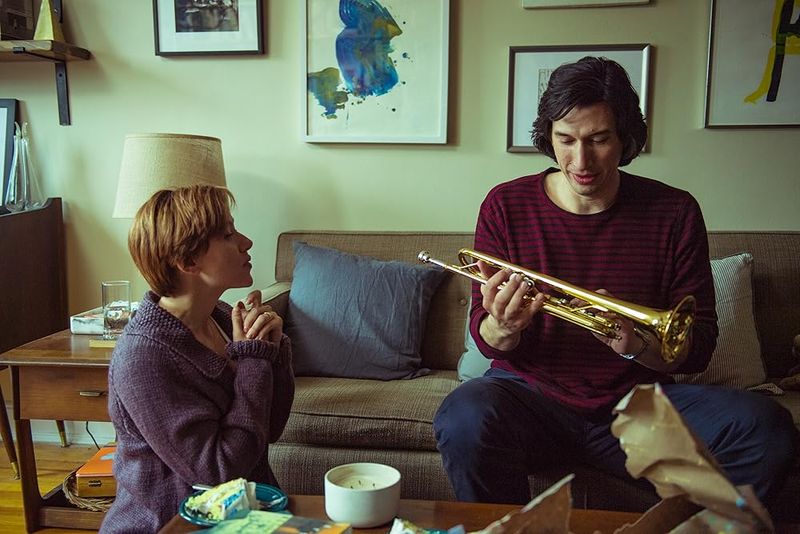
Marriage Story is not loud in the way most toxic relationship films are.
It sneaks up on you quietly, and then that kitchen argument scene hits like a freight train.
Nicole and Charlie are not villains.
They are two people who grew in different directions and handled it badly.
Unspoken resentments build for years before finally exploding in one of the most raw, emotionally devastating arguments ever filmed.
Noah Baumbach captures how good people can wound each other deeply when ego and hurt feelings take the wheel.
Their toxicity is painfully relatable, which makes it sting far more than any dramatic thriller could ever manage.
8. Cindy & Dean Pereira in Blue Valentine (2010)
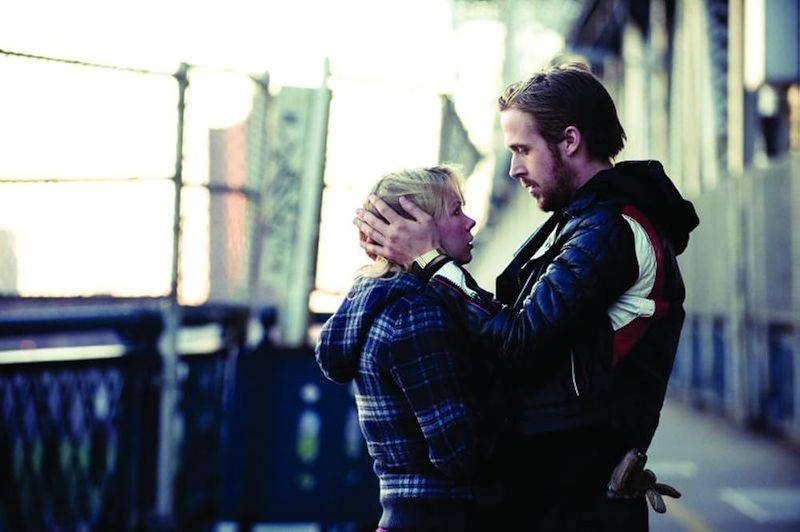
Blue Valentine does something most romance films avoid entirely: it shows you the beginning and the bitter end at the same time.
Ryan Gosling and Michelle Williams portray Cindy and Dean with such raw honesty that watching their relationship fall apart feels genuinely painful.
Miscommunication piles on top of unmet expectations until intimacy becomes a distant memory.
Dean clings to an idealized version of their early love while Cindy quietly suffocates under the weight of a life she never fully chose.
Director Derek Cianfrance strips romance down to its bones, revealing how two people can drift into resentment without either one being entirely the villain.
9. Veronica Sawyer & J.D. Dean in Heathers (1989)

Heathers begins like a sharp, satirical teen comedy and then slowly reveals something far darker underneath.
J.D. is charismatic, rebellious, and exactly the kind of bad boy Veronica thinks she wants, until his ideology crosses from edgy into genuinely murderous.
What makes their relationship so chilling is how gradually the manipulation escalates.
Veronica does not realize how far things have gone until she is already deeply involved.
J.D. uses her desire to belong and her frustration with social cruelty to pull her into his orbit.
Their dynamic is a cautionary study in how romantic obsession can quietly override a person’s own moral compass.
10. Tessa Young & Hardin Scott in After (2019)
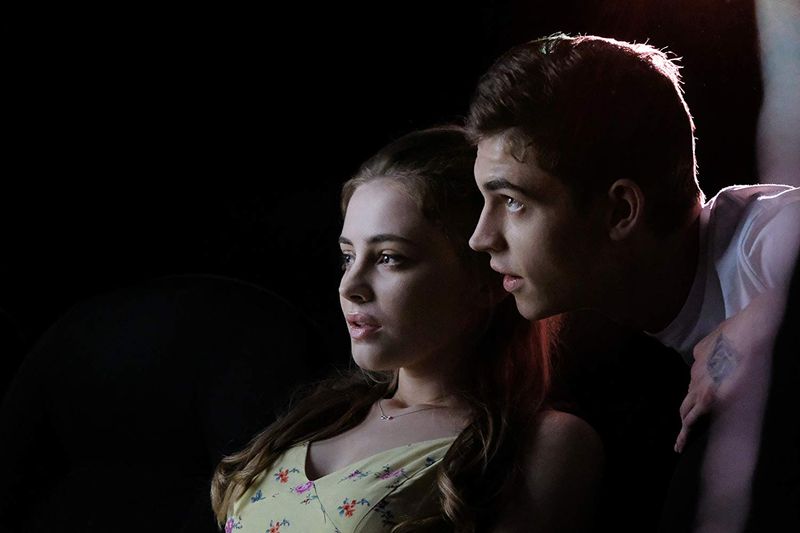
Hardin Scott is introduced as the brooding, complicated love interest every young adult novel seems to have.
Tessa Young is drawn to him despite every red flag waving frantically in her direction.
Their relationship in After is a cycle of breakups, reconciliations, and emotional whiplash that never quite settles.
Jealousy and secrecy fuel their dynamic more than genuine trust ever does.
Hardin’s volatile moods keep Tessa perpetually off-balance, which the film sometimes presents as romantic intensity.
Many viewers, especially younger audiences, recognized this pattern as anything but healthy.
After sparked real conversations about how media aimed at teens can accidentally romanticize possessiveness and emotional instability as signs of passionate love.
11. Anora “Ani” Mikheeva & Ivan “Vanya” Zakharov in Anora (2024)
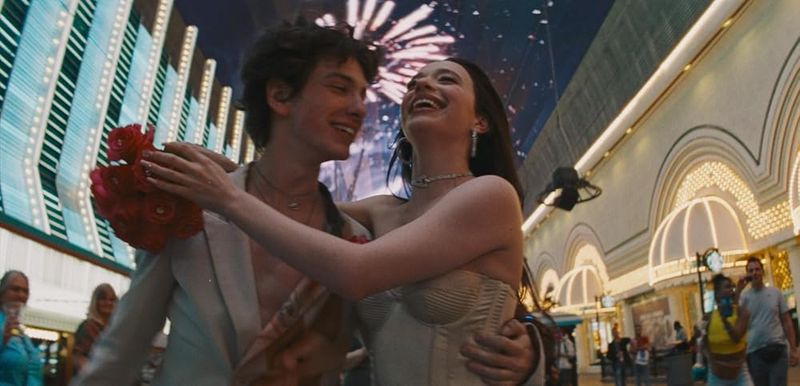
Sean Baker’s Anora brought a fresh and deeply human story to screens in 2024, earning wide critical acclaim.
But beneath the whirlwind energy of Ani and Vanya’s impulsive romance lies a relationship built on fantasy rather than foundation.
Their connection moves fast because slowing down would expose how little holds it together.
Vanya’s wealth and recklessness create an illusion of freedom for Ani, but power never disappears just because it goes unspoken.
When reality arrives, it arrives hard.
Clashing expectations reveal how differently each person understood what they had.
Anora is a quietly devastating portrait of two people who wanted very different things from the same whirlwind moment.
12. Stella & Stanley Kowalski in A Streetcar Named Desire (1951)
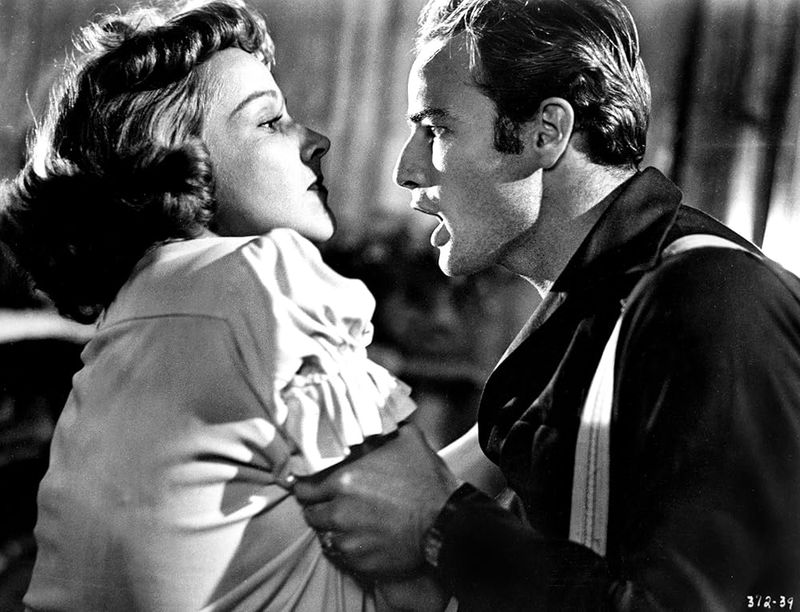
Marlon Brando’s Stanley Kowalski is magnetic, brutish, and terrifying in equal measure.
Stella stays with him despite clear and repeated evidence that this relationship is dangerous, and the film never lets the audience off the hook for understanding why she does.
Passion and fear become tangled together in their cramped New Orleans apartment until it is hard to tell where one ends and the other begins.
Elia Kazan’s direction captures the suffocating heat of a marriage built on dominance and willful blindness.
A Streetcar Named Desire remains one of cinema’s most unflinching looks at how cycles of abuse can masquerade as intensity, keeping people trapped in ways they cannot always name.
13. Andrea “Andy” Sachs & Nate Cooper in The Devil Wears Prada (2006)
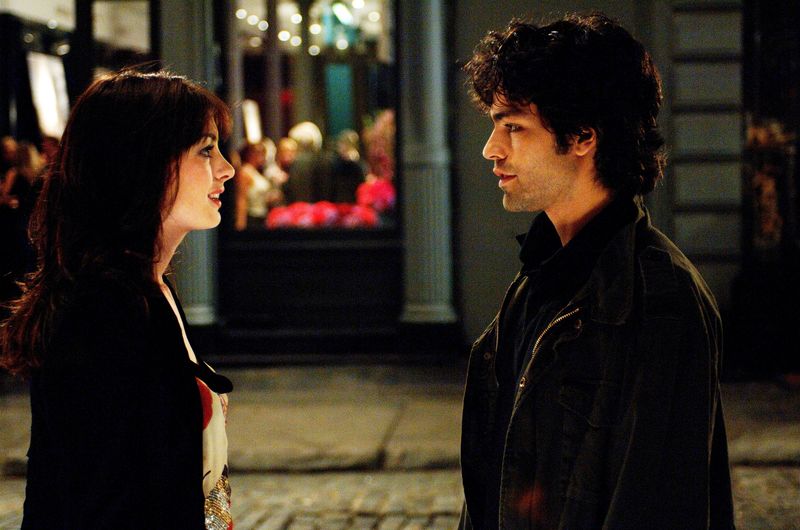
Andy and Nate do not scream or scheme against each other, which is exactly why their slow fracture feels so recognizable.
As Andy’s career in fashion takes off, Nate grows increasingly resentful of her ambition, framing her success as abandonment rather than growth.
He expects her to shrink back to fit the version of her he was comfortable with, and that quiet expectation does real damage.
The Devil Wears Prada gets credit for its Miranda Priestly drama, but Andy and Nate quietly illustrate how everyday incompatibility and unchecked resentment can erode a relationship just as thoroughly as any dramatic betrayal.
Subtler toxicity is still toxicity.
14. Dr. Nick Cavanaugh & Helena in Boxing Helena (1993)
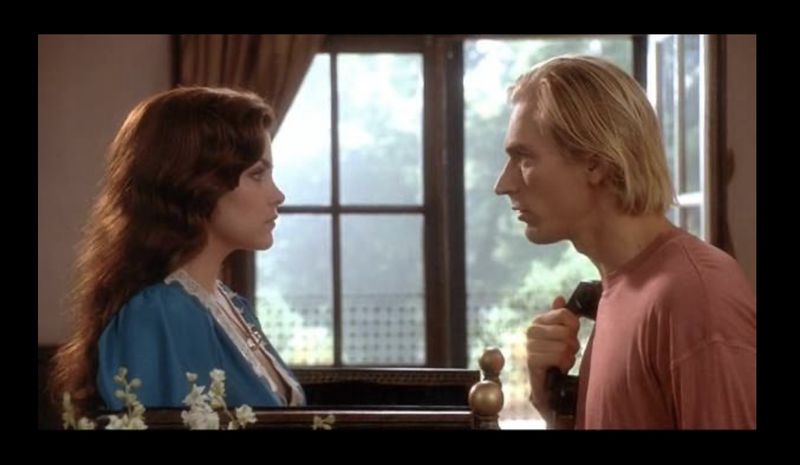
Boxing Helena is not an easy film to watch, and that is entirely by design.
Nick Cavanaugh becomes so consumed by his obsession with Helena that he crosses into genuinely horrifying territory, imprisoning her as a twisted act of devotion.
The film blurs the line between desire and domination until both become unrecognizable.
Director Jennifer Lynch created something deeply controversial, a portrait of obsession so extreme it forces viewers to examine how romantic fixation can curdle into something monstrous.
Nick believes he is protecting Helena.
What he is actually doing is erasing her.
Few films have depicted the darkest possible endpoint of controlling behavior with quite this level of disturbing commitment.
15. Ernest Menville & Madeline Ashton in Death Becomes Her (1992)
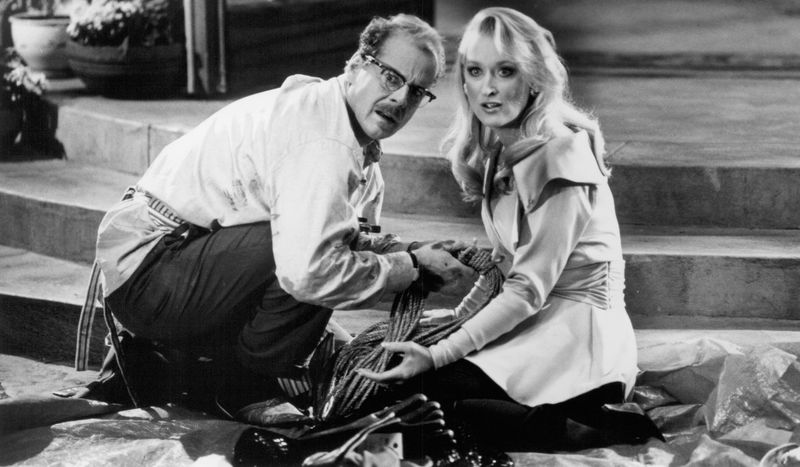
Death Becomes Her wraps its toxic marriage in spectacular dark comedy, but strip away the special effects and what remains is a portrait of two people who genuinely despise each other.
Madeline married Ernest as a prize to be claimed, not a partner to cherish.
Ernest stayed out of weakness and eventually revenge-fueled desperation.
Vanity and rivalry poison every interaction they share, even long after death technically should have changed things.
Robert Zemeckis uses immortality as a metaphor for relationships that should have ended long ago but somehow keep lurching forward.
Their grotesque competition for youth and relevance makes Death Becomes Her one of Hollywood’s most darkly funny relationship horror stories.
Comments
Loading…