
 Harper Hall
15 Legendary Lead Guitarists Who Shaped Rock History
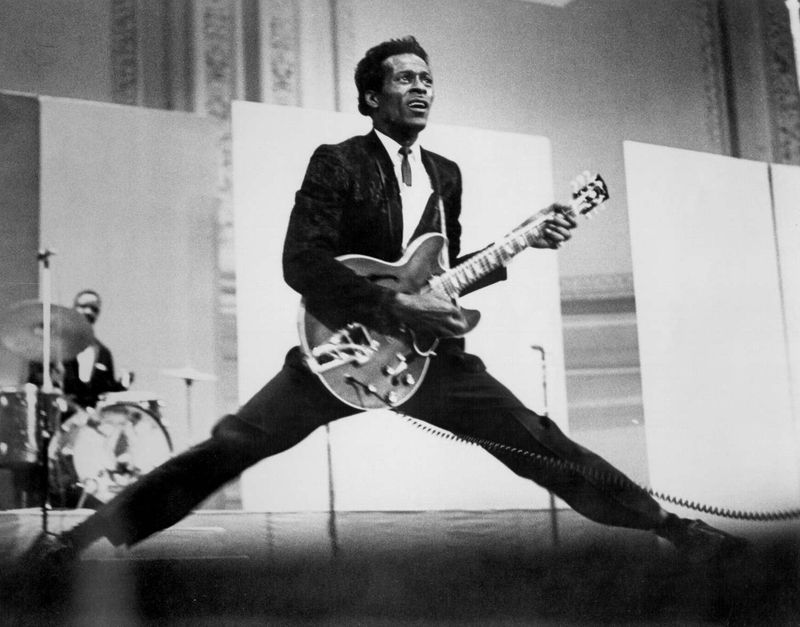
Rock music wouldn’t exist without the electric guitar, and certain players took this instrument to heights nobody imagined possible.
These guitarists didn’t just play notes—they created sounds that defined entire generations and inspired millions to pick up a guitar themselves.
From blistering solos to unforgettable riffs, these musicians changed what people thought a guitar could do and left their mark on music history forever.
1. Jimi Hendrix
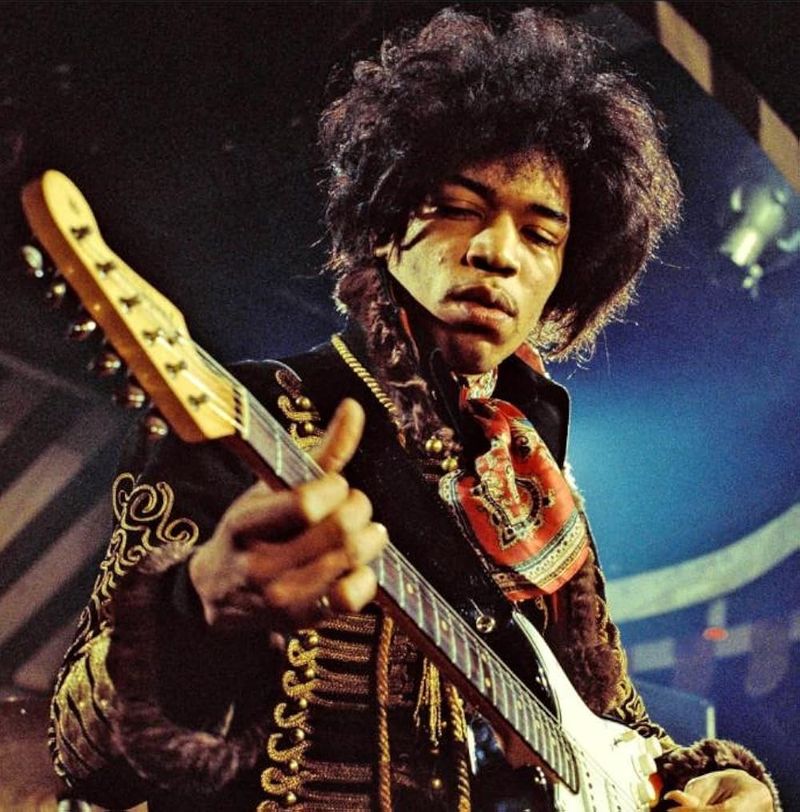
When Hendrix set his guitar on fire at the Monterey Pop Festival, he wasn’t just performing a stunt—he was announcing a revolution.
His approach to the electric guitar transformed it from a simple instrument into a voice that could scream, whisper, and wail with emotion.
Feedback and distortion became musical tools in his hands rather than problems to avoid.
The wah-wah pedal created sounds nobody had heard before, making songs like “Voodoo Child” instantly recognizable.
His performance of “The Star-Spangled Banner” at Woodstock used guitar effects to mirror the chaos of the Vietnam War era, proving rock could be both artistic and political.
2. Eric Clapton
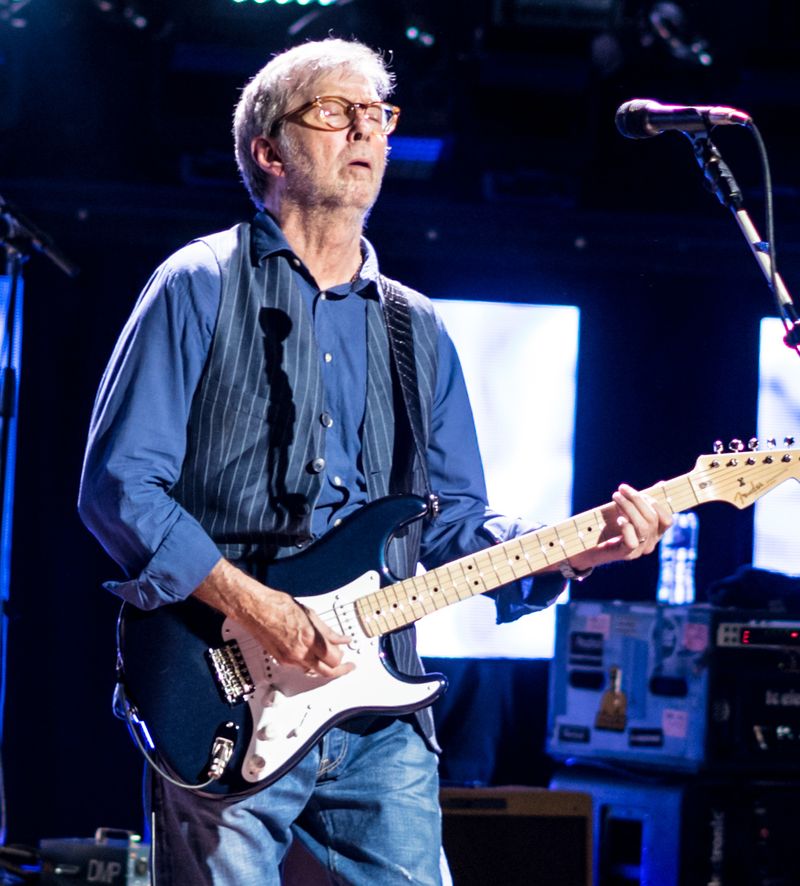
“Clapton is God” appeared as graffiti across London during the 1960s, and fans weren’t exaggerating by much.
His nickname “Slowhand” came from the slow clapping audiences gave him while he changed broken strings during performances.
Starting with the Yardbirds and moving through Cream, Clapton brought American blues to British rock audiences.
His emotional playing style made every note count rather than relying on speed alone.
Songs like “Layla” showcased his ability to blend technical skill with raw feeling.
Personal tragedy shaped his later work, with “Tears in Heaven” becoming one of rock’s most moving ballads about loss and healing.
3. Jimmy Page
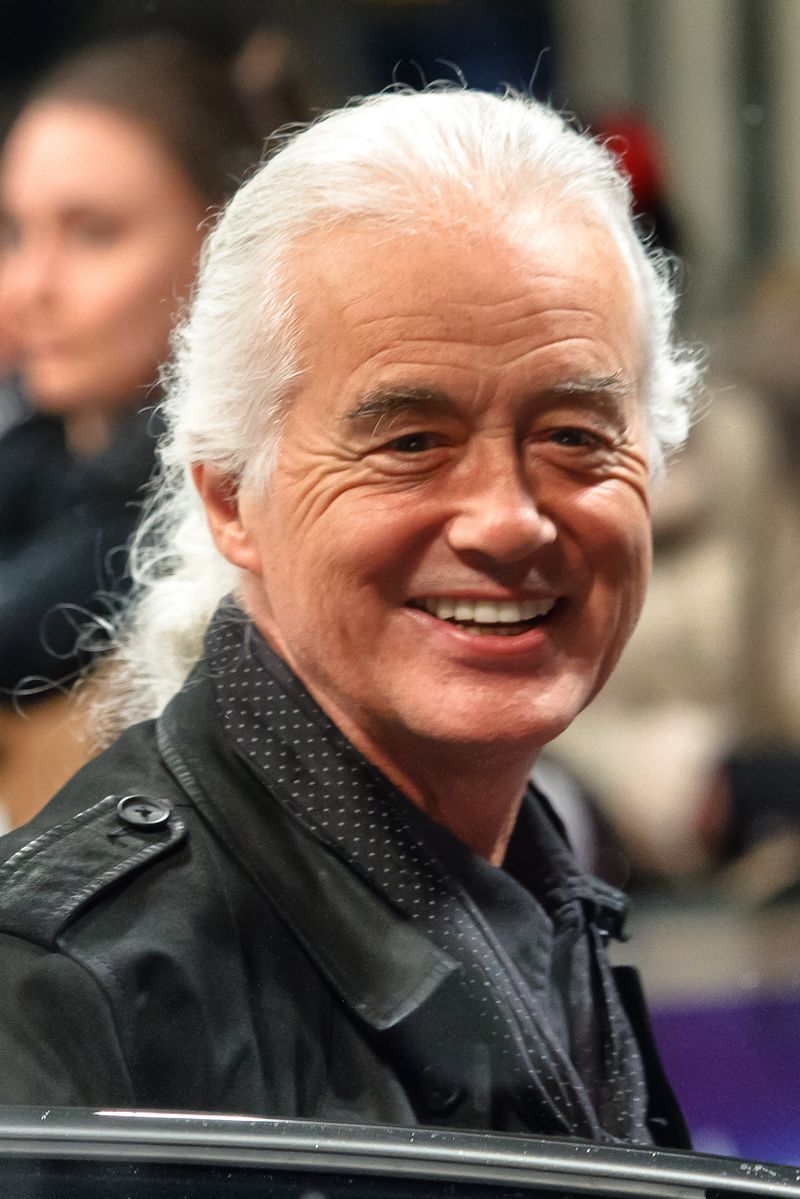
Before forming Led Zeppelin, Page worked as a session musician, playing on countless hit records while learning studio secrets.
He used a violin bow on his guitar during “Dazed and Confused,” creating eerie sounds that audiences had never experienced before.
The opening riff to “Whole Lotta Love” became one of rock’s most recognizable moments.
His layered recording techniques on “Stairway to Heaven” built from acoustic whispers to electric thunder.
Page proved that great guitar playing wasn’t just about solos—it was about creating entire soundscapes.
His innovative use of alternate tunings and studio effects influenced how rock albums would be recorded for decades.
4. Eddie Van Halen
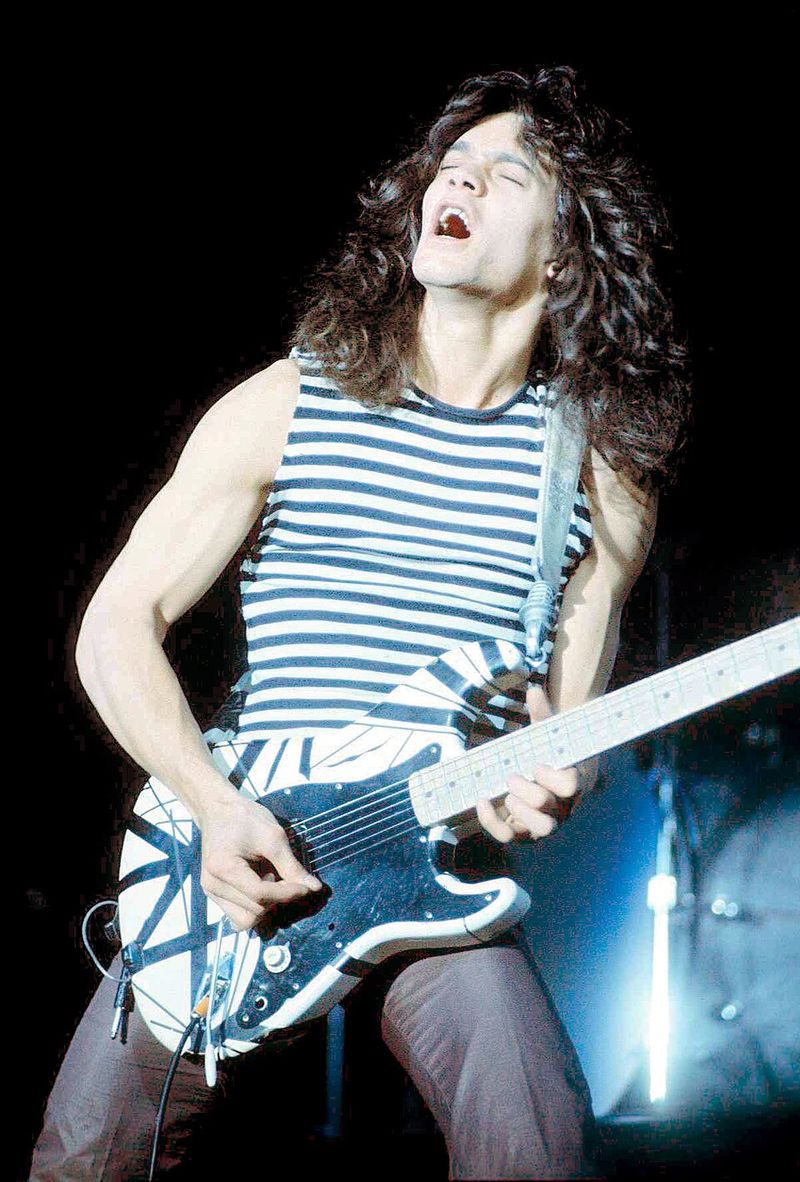
Van Halen literally built his own guitar by combining parts from different instruments, creating the famous “Frankenstrat” that became his signature.
His two-handed tapping technique on “Eruption” lasted only 102 seconds but changed guitar playing forever.
Before Eddie, most guitarists kept one hand on the fretboard and one on the strings.
He used both hands on the fretboard, hammering notes at lightning speed while creating harmonics nobody thought possible.
Michael Jackson personally requested Eddie play the solo on “Beat It,” bringing rock guitar to pop audiences worldwide.
His smile while performing showed that technical mastery could still be fun and joyful rather than serious.
5. B.B. King
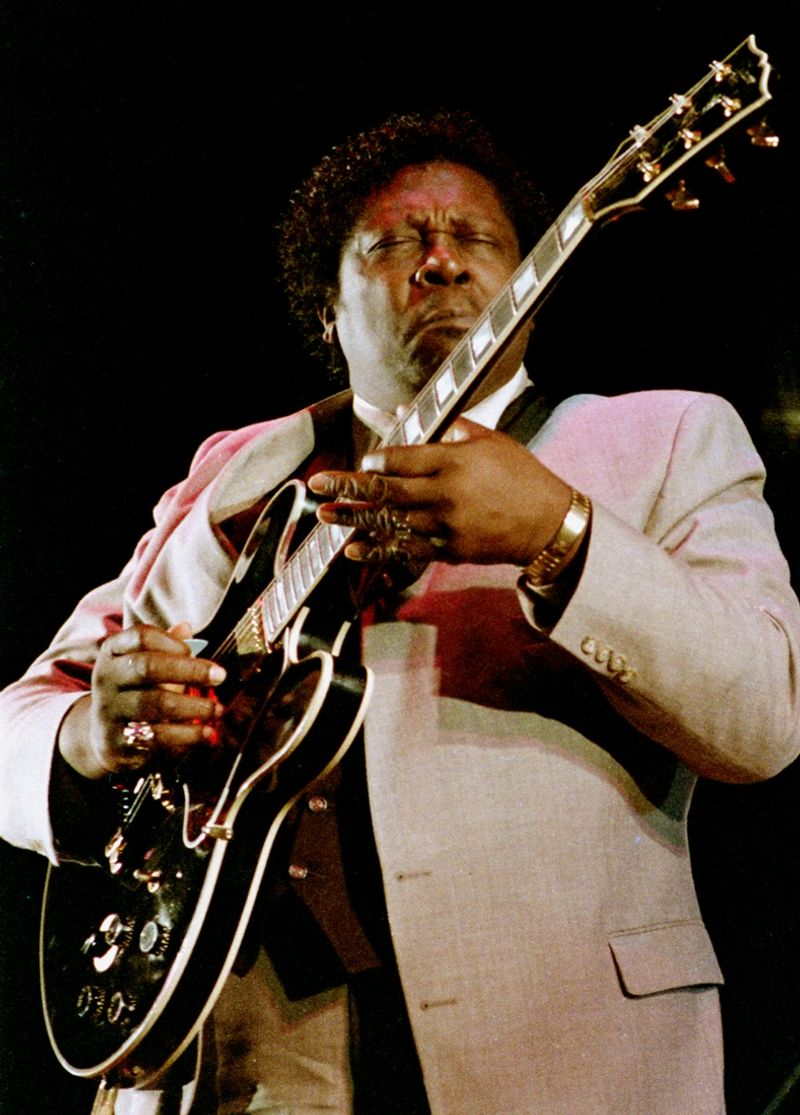
King named every guitar he owned “Lucille” after rescuing one from a burning building where two men fought over a woman with that name.
His vibrato technique—rapidly bending strings to create a crying sound—became the foundation of blues guitar expression.
While other guitarists played hundreds of notes, B.B. made every single note matter through emotion and timing. “The Thrill Is Gone” demonstrated how silence between notes could be just as powerful as the notes themselves.
He influenced everyone from Eric Clapton to John Mayer, proving blues guitar wasn’t about speed but about feeling.
His gentle personality off stage contrasted with the intense emotion he poured into every performance.
6. Chuck Berry
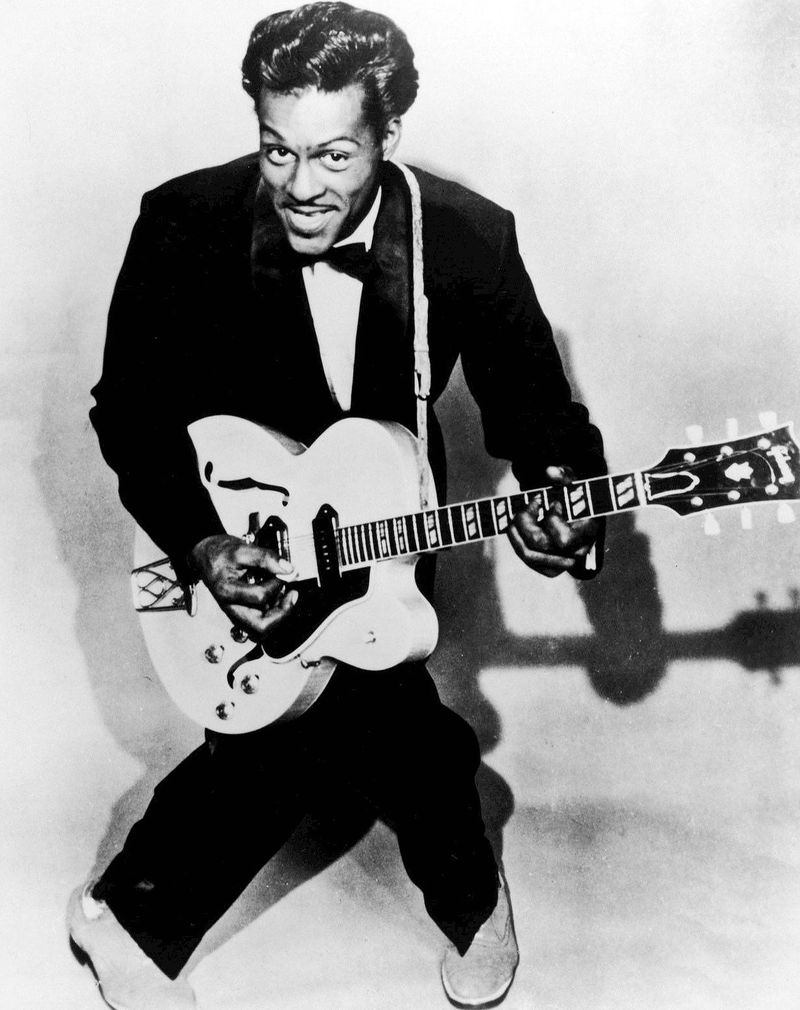
Berry’s “Johnny B.
Goode” featured a guitar intro that became rock and roll’s DNA—NASA even included it on the Voyager spacecraft sent into space.
His duck walk across the stage while playing became as famous as his music, combining showmanship with incredible skill.
Before Berry, guitar was often background rhythm.
He pushed it front and center, creating riffs that told stories and made people want to dance simultaneously.
Songs like “Roll Over Beethoven” announced that this new music would replace the old guard.
His lyrics about teenage life and cars spoke directly to young audiences, while his guitar work provided the perfect soundtrack for rebellion and fun.
7. Stevie Ray Vaughan
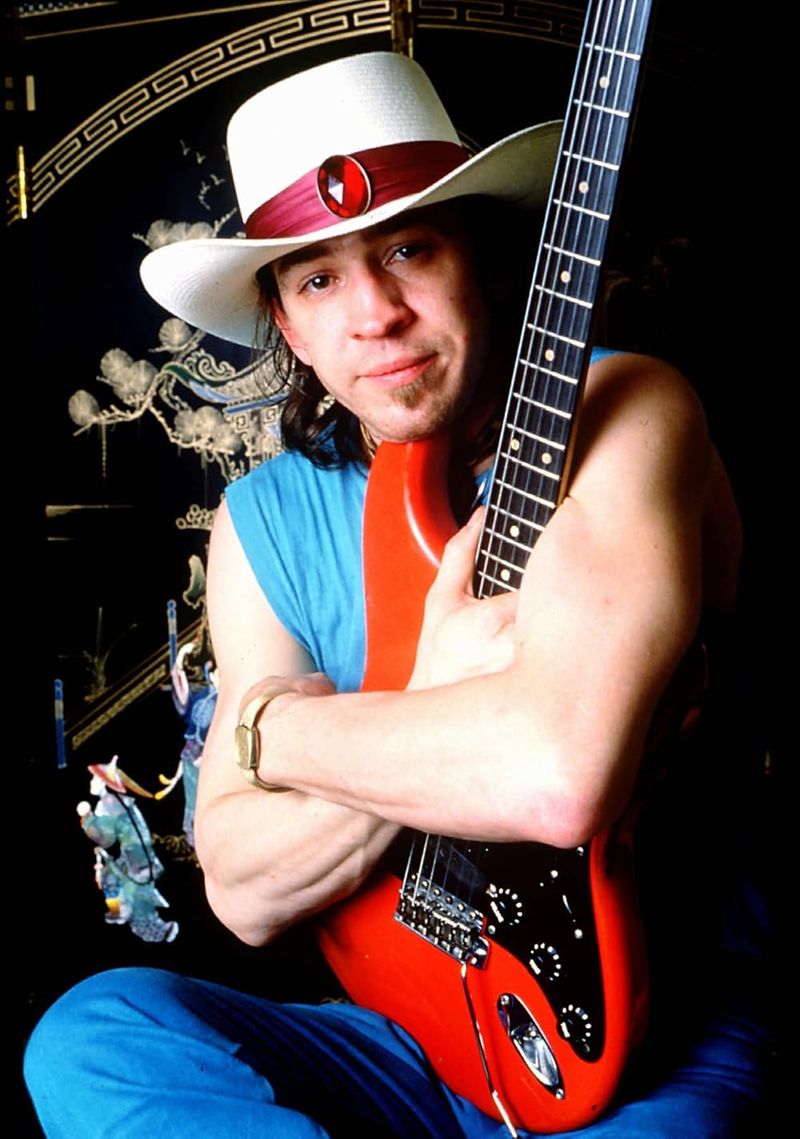
Vaughan played with strings so heavy that other guitarists couldn’t even bend them, yet he made his guitar sing with seemingly effortless power.
His 1983 debut “Texas Flood” reminded everyone that blues guitar was far from dead in the rock and synthesizer era.
Tragically dying in a helicopter crash at age 35, he left behind a legacy that revived interest in blues-based rock.
His version of “Little Wing” paid tribute to Hendrix while adding his own Texas flavor.
Overcoming substance abuse, his later performances carried even more emotional weight.
Guitar strings would sometimes cut his fingers until they bled during shows, but he never stopped playing until the song ended.
8. David Gilmour
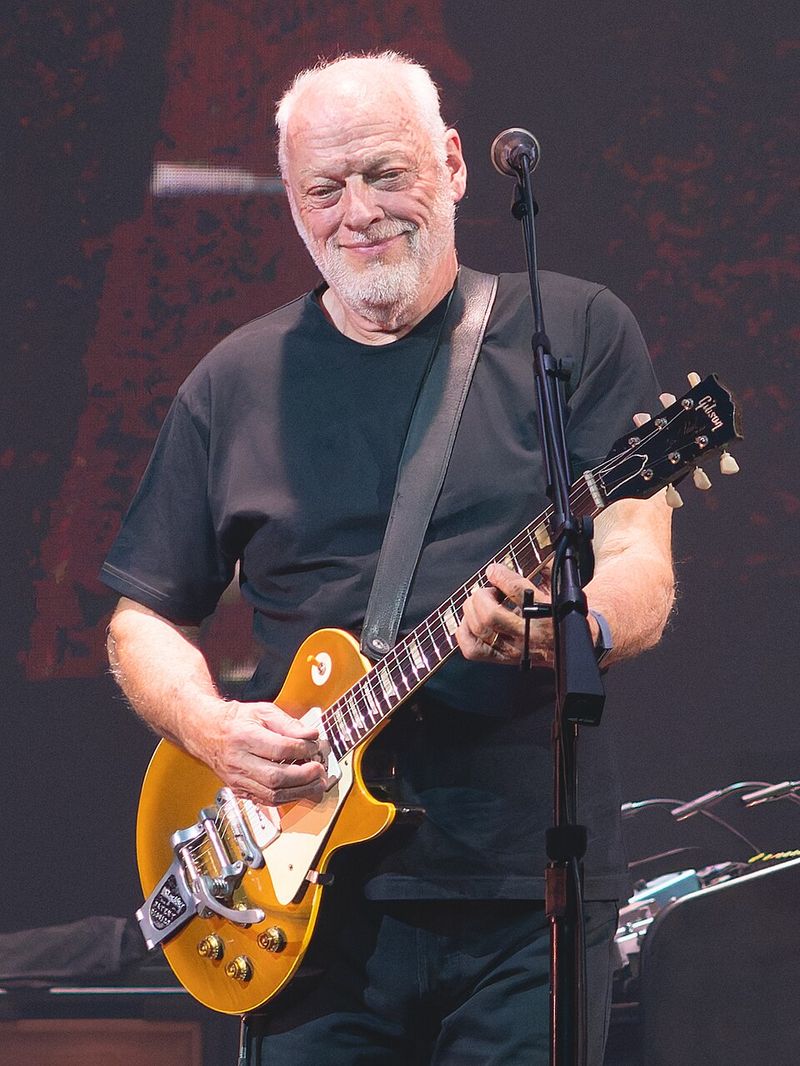
Gilmour’s guitar solo on “Comfortably Numb” regularly tops polls as rock’s greatest, using space and emotion rather than speed to create unforgettable moments.
With Pink Floyd, he crafted soundscapes where every note floated perfectly in place within the song’s atmosphere.
His tone—warm, singing, and instantly recognizable—came from careful attention to effects and amplifier settings.
While other guitarists showed off technical prowess, Gilmour proved that restraint and melody could be equally powerful.
Songs like “Shine On You Crazy Diamond” featured solos that functioned as additional vocals, expressing feelings words couldn’t capture.
His influence taught generations that guitar solos should serve the song rather than overshadow it.
9. Keith Richards
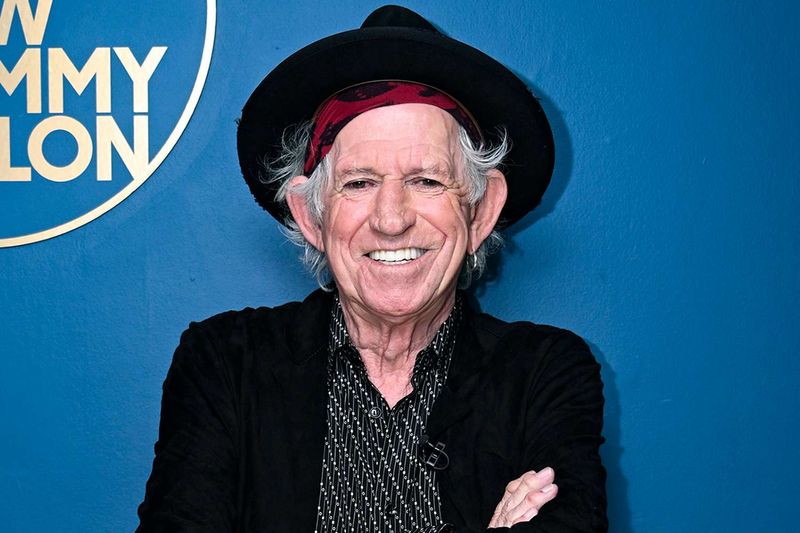
Richards created the opening riff to “Satisfaction” in his sleep, waking up just long enough to record it before passing out again.
His rhythm guitar work with the Rolling Stones proved that supporting the song could be just as important as flashy solos.
Using open tunings and removing the sixth string from his guitars, he developed a unique sound that became the Stones’ backbone. “Start Me Up” and “Brown Sugar” featured riffs so perfect they seemed simple, though countless guitarists struggled to replicate his groove.
His partnership with Mick Jagger created some of rock’s greatest songs, with Keith’s guitar providing the foundation.
Despite his notorious lifestyle, his guitar playing remained sharp and essential for over six decades.
10. Carlos Santana
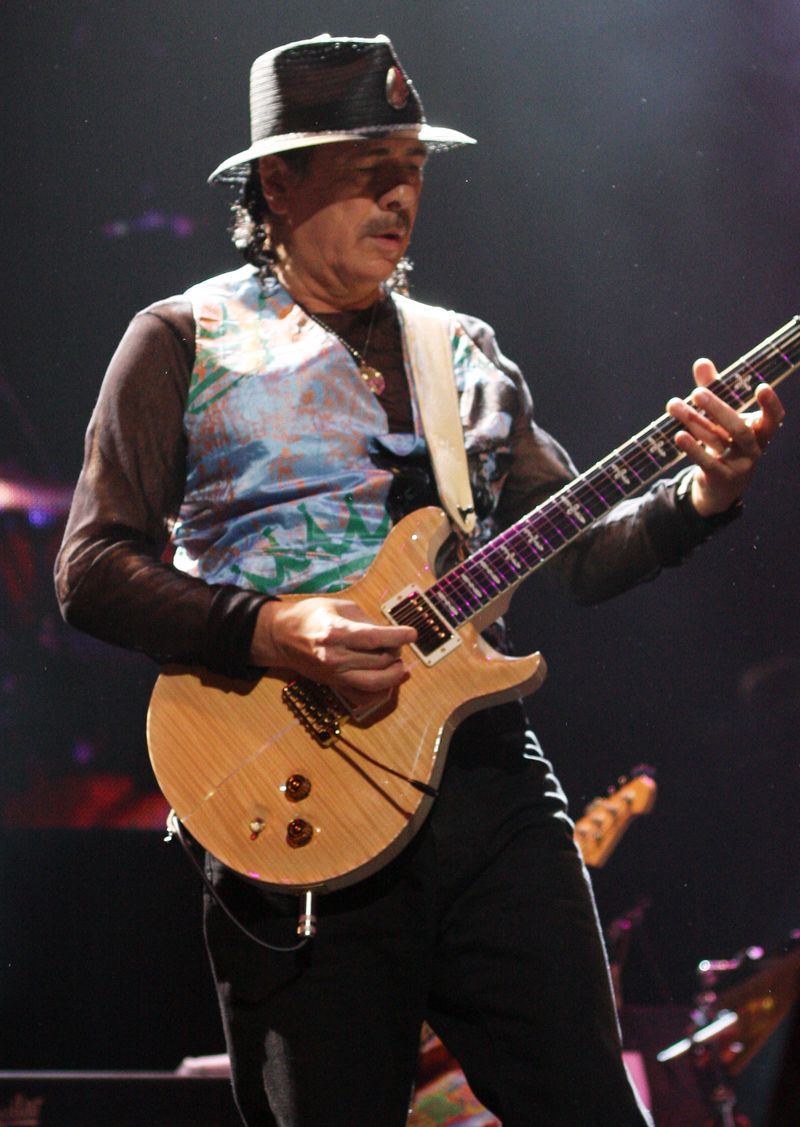
Santana’s guitar tone—sustained, singing, and unmistakably his own—blended Latin rhythms with rock power at Woodstock, introducing audiences to a completely new sound.
His spiritual approach to music meant every performance felt like a meditation rather than just entertainment.
“Black Magic Woman” and “Oye Como Va” brought Afro-Latin music into mainstream rock radio.
His guitar didn’t just play melodies; it danced with the percussion, creating conversations between instruments.
Decades later, his collaboration with Rob Thomas on “Smooth” proved his style could adapt to any era while remaining distinctly Santana.
His Gibson SG became an extension of his voice, expressing joy, pain, and transcendence through carefully chosen notes.
11. Slash
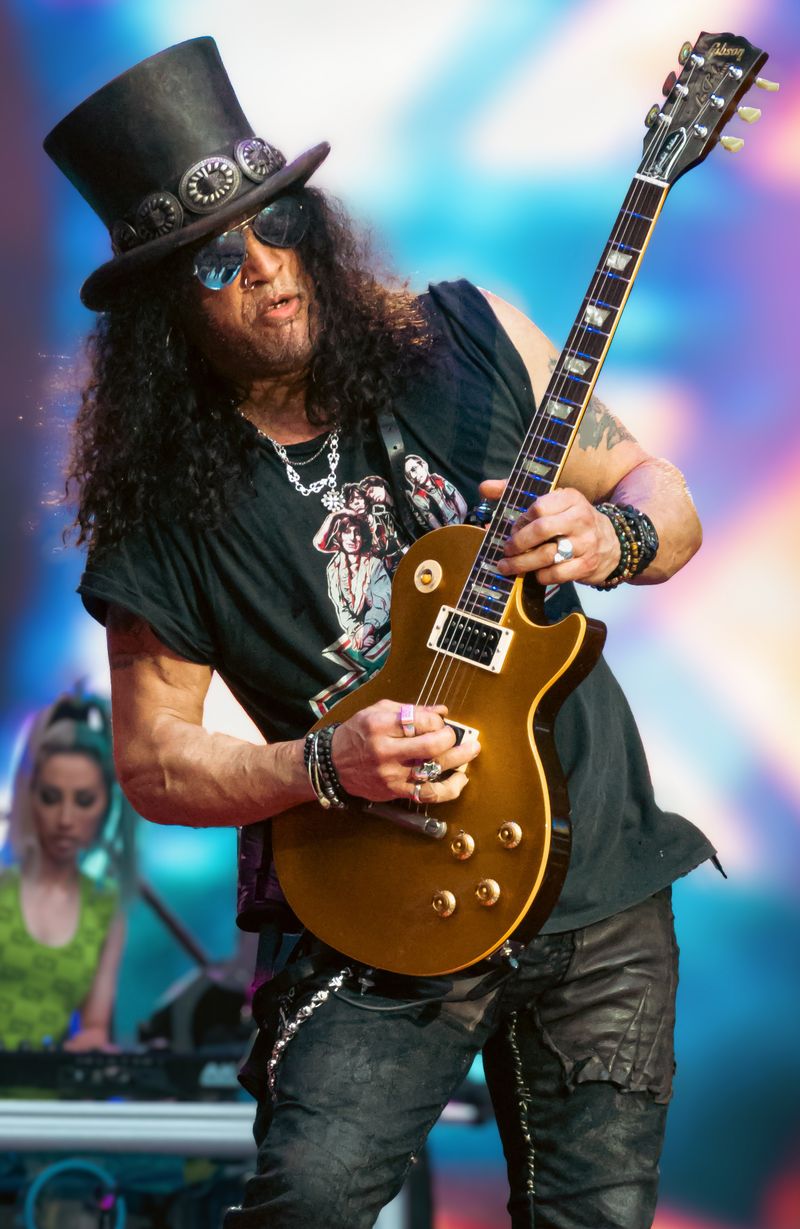
That top hat became almost as famous as his guitar, but Slash’s playing on “Sweet Child O’ Mine” created one of rock’s most recognizable intros using a simple finger exercise.
With Guns N’ Roses, he brought bluesy, classic rock guitar back to an era dominated by synthesizers and hair metal.
His solo on “November Rain” built from gentle acoustic picking to soaring electric emotion, showcasing his range.
The Les Paul guitar in his hands produced thick, creamy tones that cut through the heaviest rock arrangements.
Unlike many 1980s guitarists who favored speed, Slash focused on melody and feel.
His riffs were anthemic and memorable, proving that great guitar parts should be singable even without words.
12. Brian May
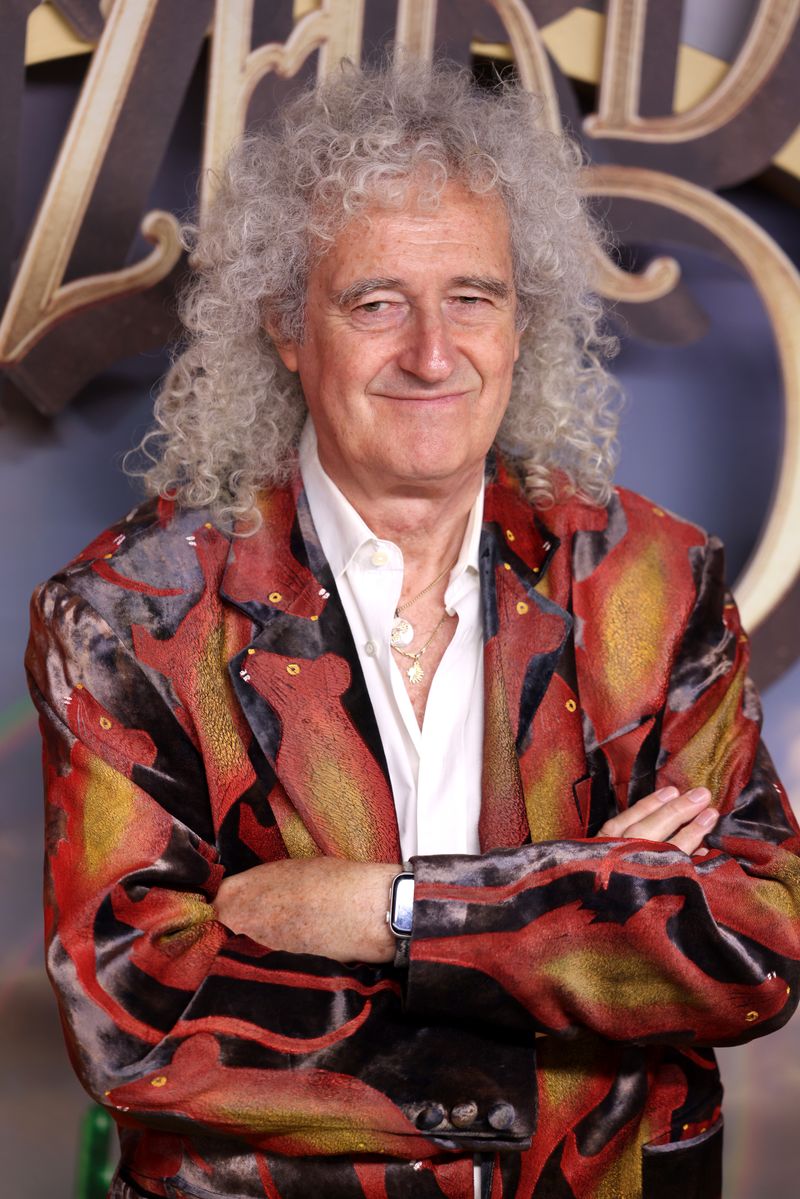
May built his legendary “Red Special” guitar with his father using wood from an old fireplace mantle, creating an instrument with a sound unlike any other.
Queen’s guitar-driven anthems like “Bohemian Rhapsody” featured layers upon layers of harmonized guitars, all played by May himself.
His background in astrophysics influenced his methodical approach to creating guitar symphonies.
Rather than relying on distortion, he used a sixpence coin as a pick, producing his signature chiming tone.
“We Will Rock You” proved that sometimes the simplest riff could be the most powerful.
His orchestral approach to guitar showed that rock could be as complex and beautiful as classical music while maintaining raw power.
13. Ritchie Blackmore
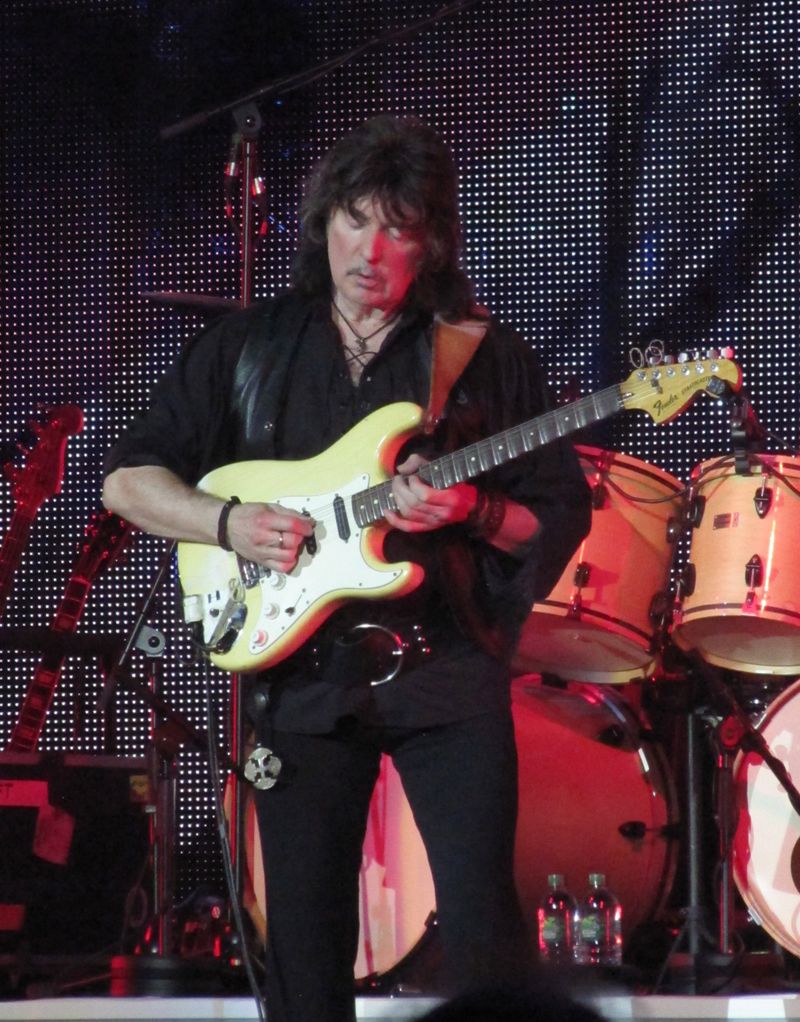
Blackmore’s classical music training merged with hard rock to create the iconic riff for “Smoke on the Water,” supposedly the most played guitar riff in music store history.
With Deep Purple, he pushed rock guitar into heavier territory while maintaining melodic sophistication.
His neoclassical style influenced an entire generation of metal guitarists who followed.
Songs like “Highway Star” featured breakneck solos that borrowed from Bach and Beethoven, bringing classical structure to rock improvisation.
After Deep Purple, he formed Rainbow and later Blackmore’s Night, exploring medieval and Renaissance music.
His temperamental personality made him difficult to work with, but nobody questioned his innovative approach to combining classical technique with rock attitude.
14. Duane Allman
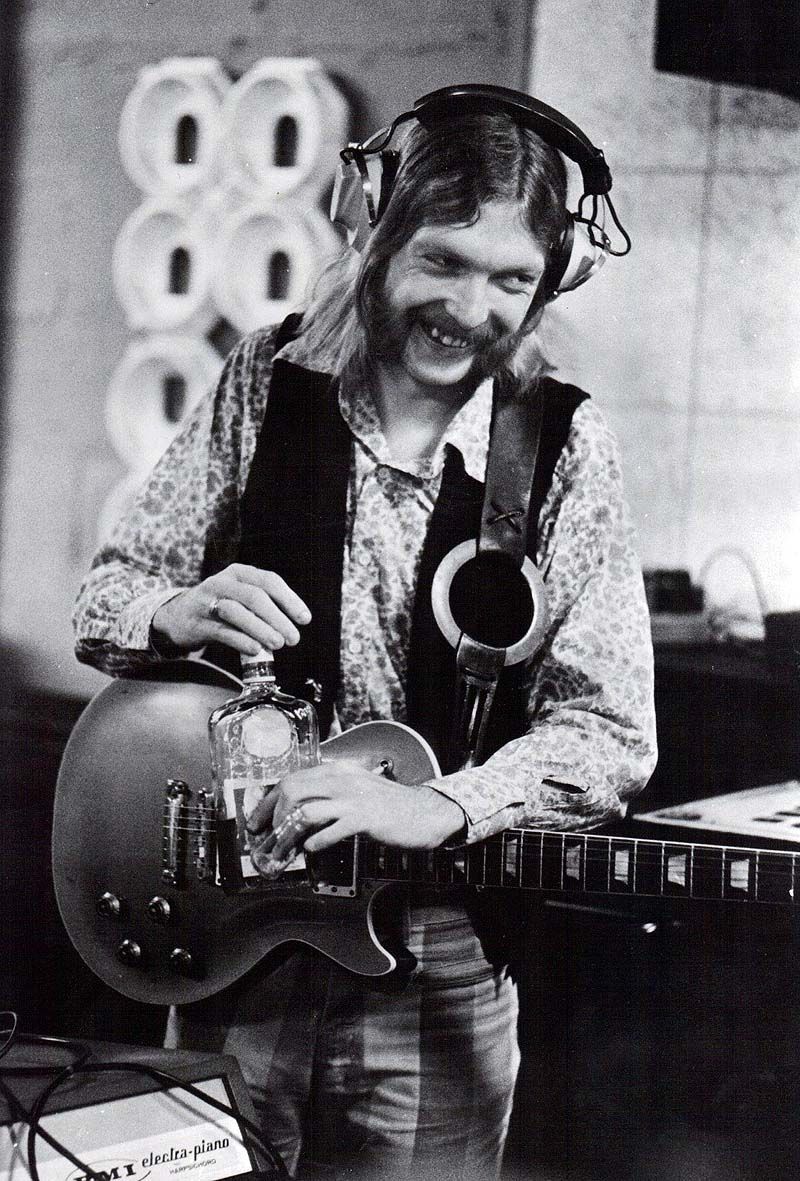
Allman’s slide guitar work on “Layla” with Eric Clapton created one of rock’s most beautiful guitar conversations, two masters pushing each other to greater heights.
Using a glass bottle as a slide, he made his guitar weep and soar with emotion that words couldn’t express.
The Allman Brothers Band’s “Whipping Post” showcased his ability to blend blues, jazz, and rock into Southern rock’s foundation.
His dual guitar harmonies with Dickey Betts created a sound that influenced countless bands.
Dying in a motorcycle accident at only 24, he left behind recordings that showed what he could have become.
His session work with artists like Aretha Franklin proved his versatility extended far beyond rock.
15. Jeff Beck
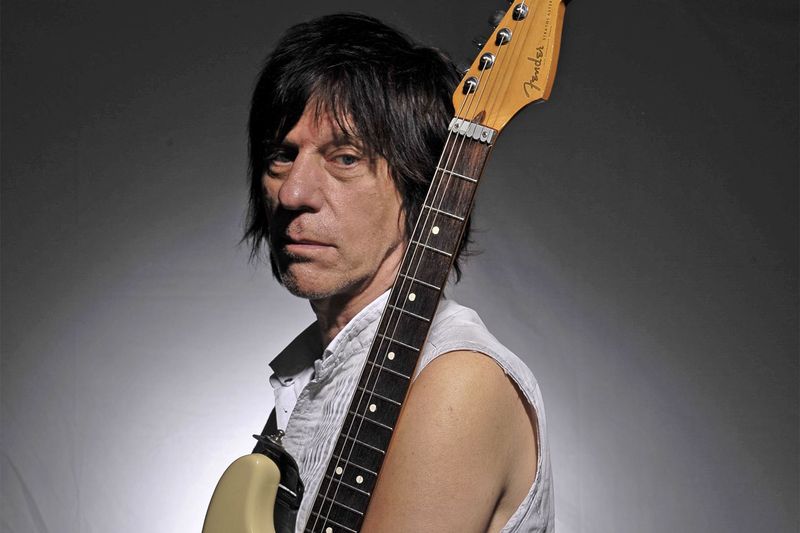
Beck replaced Eric Clapton in the Yardbirds, then proceeded to take guitar into even more experimental territory that few could follow.
His instrumental albums proved that guitar music didn’t need vocals to express complex emotions and tell compelling stories.
Using his fingers instead of a pick, along with his tremolo arm, he created sounds that seemed impossible on a standard guitar. “Cause We’ve Ended as Lovers” demonstrated how guitar could sing with vocal-like expression.
Never content to repeat himself, Beck constantly explored new styles from jazz fusion to electronica.
His refusal to tour extensively meant fewer people saw him live, but those who did witnessed guitar playing that pushed boundaries other musicians didn’t know existed.
Comments
Loading…