
 Jade Reed
12 Iconic Movie Outfits That Were Actually Ripped From Real-Life History
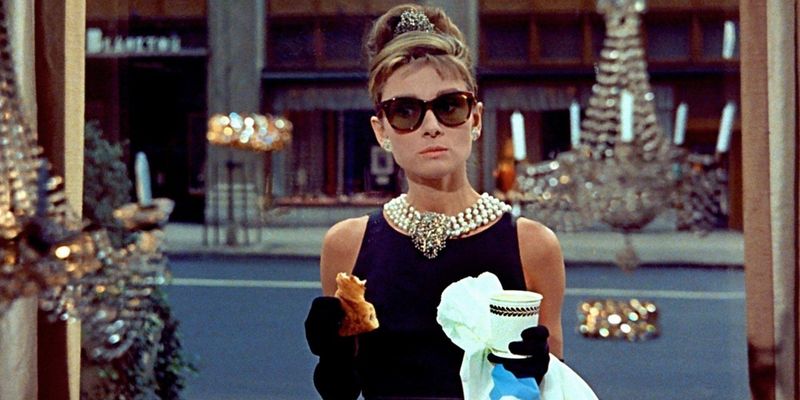
Movie costumes can feel so perfect that we assume they were invented in a studio with a bolt of fabric and a big imagination.
In reality, some of the most unforgettable on-screen outfits are basically history lessons you can wear, pulled from real eras, real people, and real visual records like photographs, portraits, and surviving garments.
Costume designers often start with what actually existed, then refine it for story, movement, and character psychology, which is why these looks land with such instant credibility.
The result is fashion that doesn’t just look “cinematic,” but also emotionally true.
Below are iconic outfits that didn’t appear out of thin air; they borrowed heavily from what people truly wore, proving that real-life style has always been more dramatic, inventive, and influential than we give it credit for.
1. Scarlett O’Hara’s “curtain dress” — Gone With the Wind (1939)
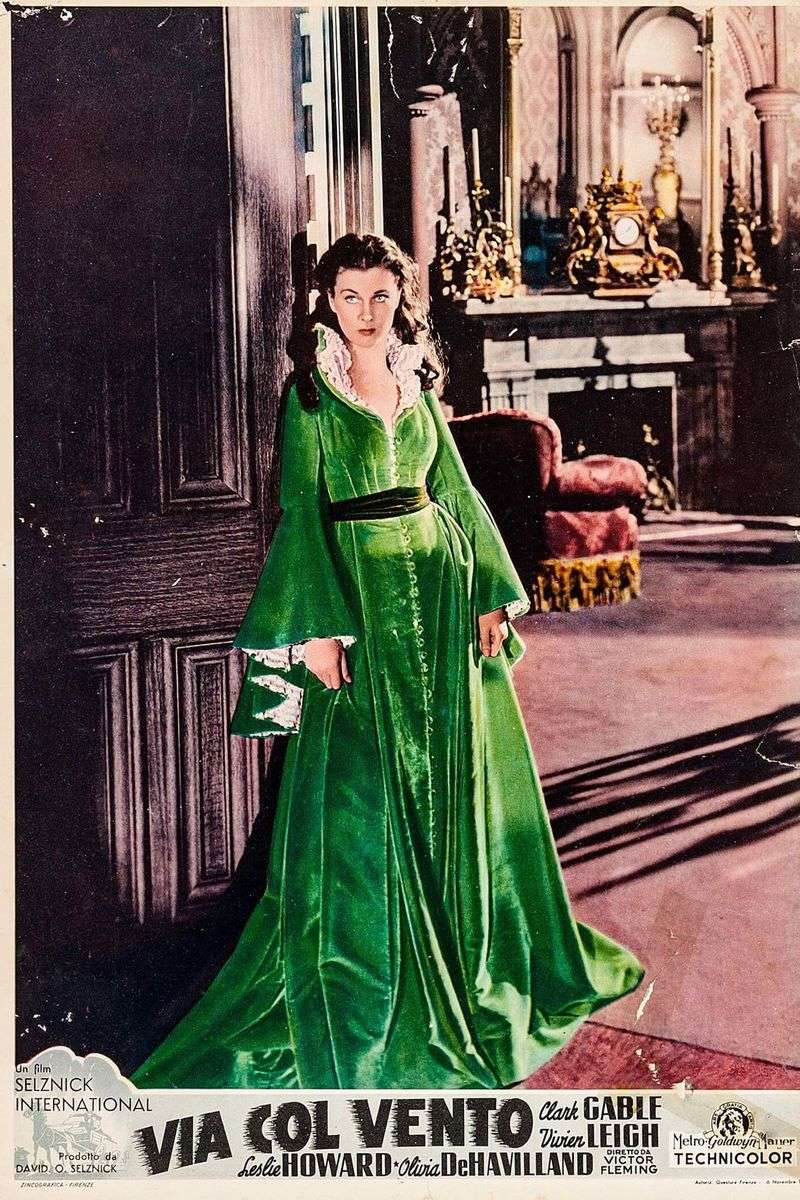
A desperate, make-do moment becomes unforgettable partly because it’s grounded in what women actually wore in the mid-19th century.
The famed “curtain dress” isn’t just a clever plot point, because the silhouette echoes Civil War–era fashion with its structured bodice, emphasized waist, and full skirt that suggests the period’s underpinnings, including hoops and crinolines.
Even when Hollywood heightened the drama, the look still communicates how women of that era used clothing as social armor, especially during upheaval.
The heavy fabric, the ornamental trim, and the confident styling also reflect how status was projected through textiles when money was unstable and appearances mattered intensely.
It’s a costume that works because it feels historical first, theatrical second, and character-driven the entire time.
2. Maria’s “made-from-curtains” play clothes — The Sound of Music (1965)
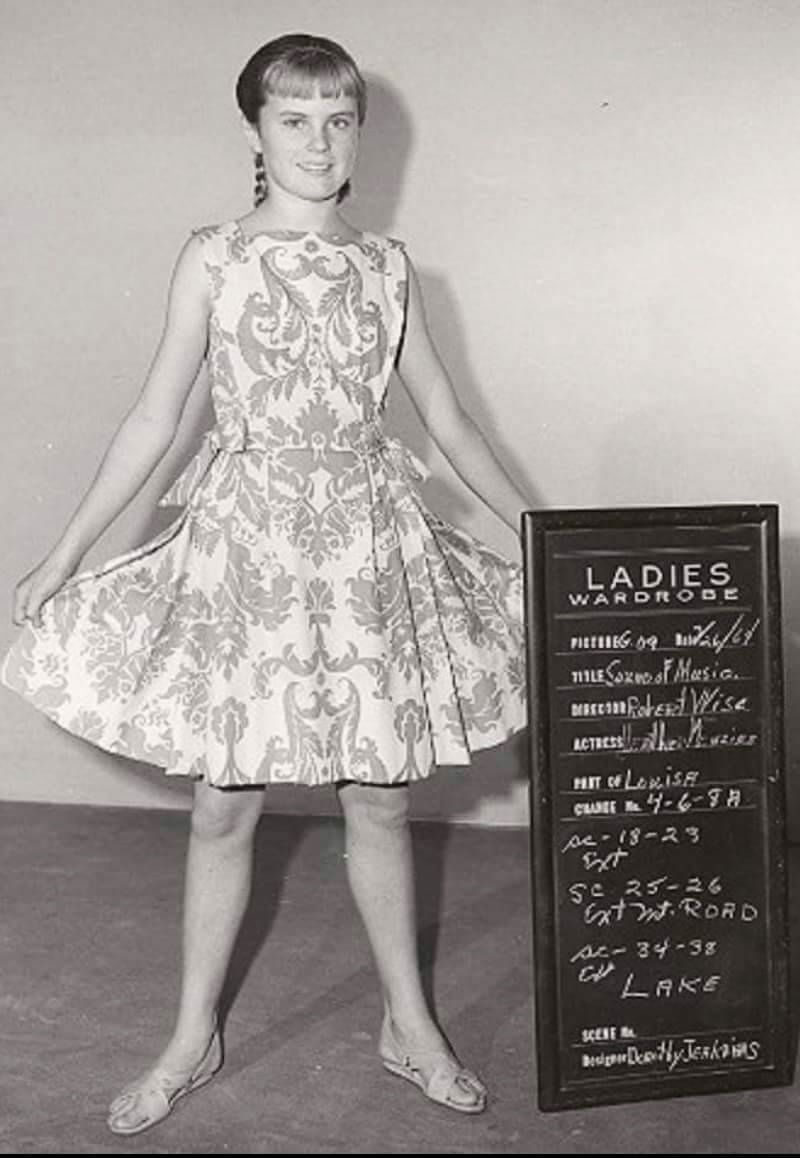
Resourcefulness becomes the heart of this look, and the reason it resonates is because it draws from a very real wartime mindset.
The children’s curtain-made outfits tap into the practical reality of households reusing fabric when budgets were tight and supplies were uncertain, which makes the scene feel more truthful than whimsical.
The prints read like home décor rather than boutique yardage, and that contrast is exactly the point: the clothes are meant to look “assembled,” not purchased.
At the same time, the tailoring is just polished enough to show Maria’s care and creativity, turning necessity into dignity.
Historically, repurposed textiles weren’t rare, and this costume quietly honors that tradition.
It’s iconic because it captures how love can show up as stitches, hems, and small acts of reinvention.
3. Holly Golightly’s black Givenchy dress — Breakfast at Tiffany’s (1961)
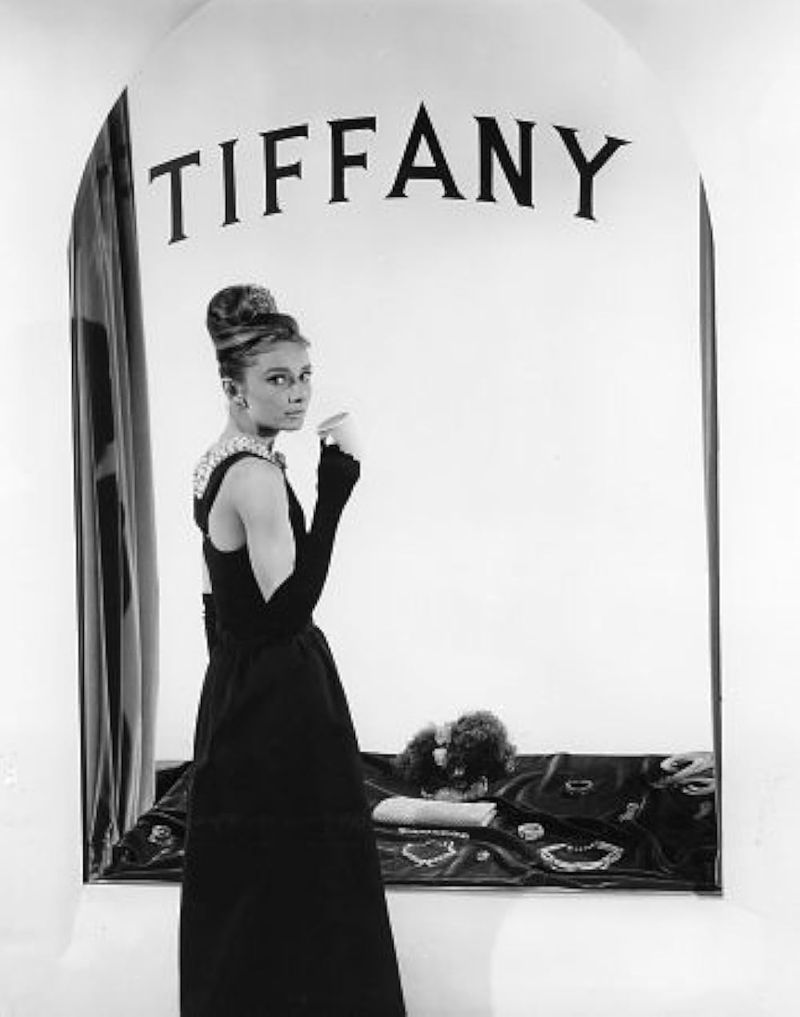
Elegant restraint rarely feels as powerful as it does here, because the dress is rooted in real mid-century couture rather than a fantasy of sophistication.
The sleek black silhouette, long gloves, and refined accessories reflect the era’s fashion language, when designers like Hubert de Givenchy helped define a clean, architectural approach to glamour.
What makes the look so enduring is how it mirrors the cultural shift toward minimalism that still felt luxurious, especially in a decade obsessed with polished femininity.
The styling also nods to society’s fascination with “the perfect woman” presentation, even when the character herself is complicated and restless beneath the surface.
Because it’s anchored in authentic high fashion, the outfit doesn’t date itself as a movie costume.
It reads like a real wardrobe choice that simply happened to be captured at the perfect cinematic moment.
4. Rose’s Edwardian “Titanic” gowns — Titanic (1997)
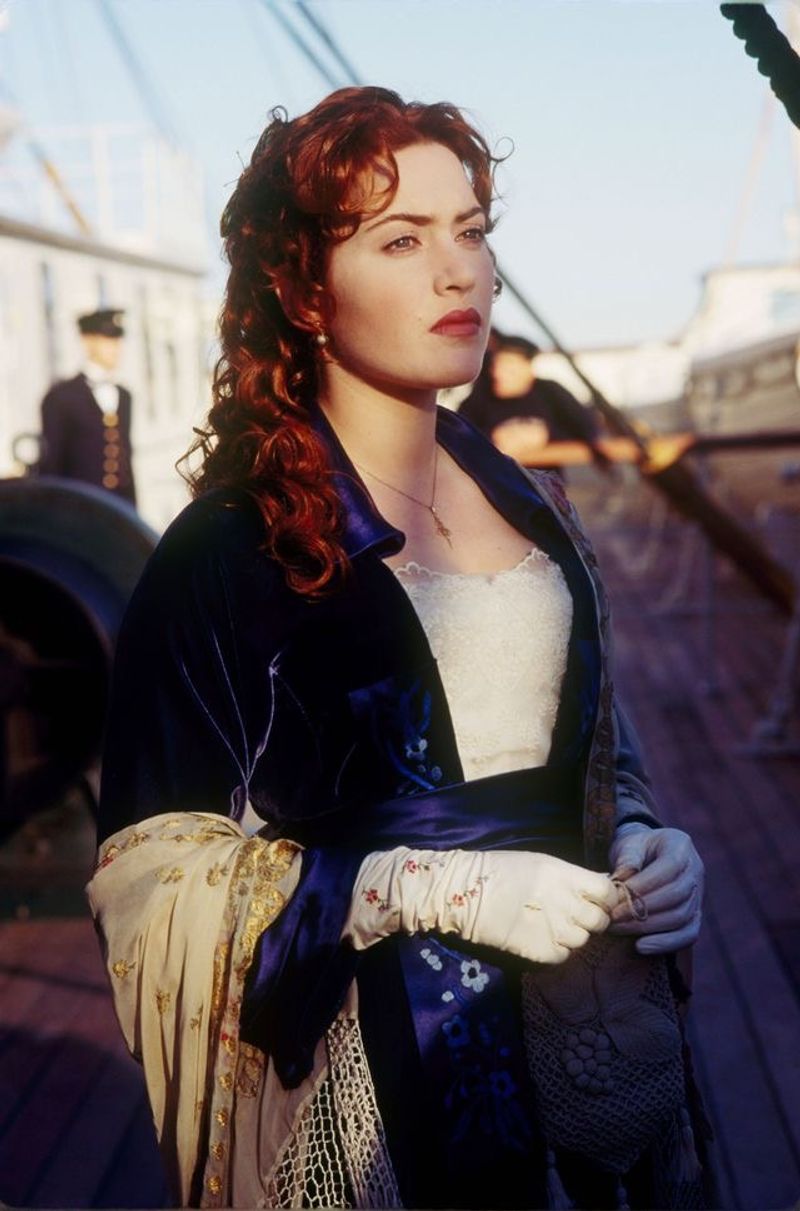
Nothing sells a period film faster than clothes that move like they belong to the time, and this wardrobe is a masterclass in that kind of authenticity.
Rose’s early-1910s looks borrow from Edwardian fashion codes, including structured corsetry, high necklines, and the graceful “S-curve” influence that shaped the era’s silhouette.
The hats, gloves, and layered textures also reflect how upper-class style functioned as a complete system, where accessories weren’t optional but essential.
What feels especially historical is the way the costumes communicate class, because fabric quality and cut would have signaled status immediately in that world.
Even when the film romanticizes the setting, the clothing stays grounded in period references, which makes Rose’s transformation more believable.
The outfits aren’t just pretty; they visually represent the constraints she’s trying to escape.
5. Daisy Buchanan’s Jazz Age sparkle — The Great Gatsby (2013)
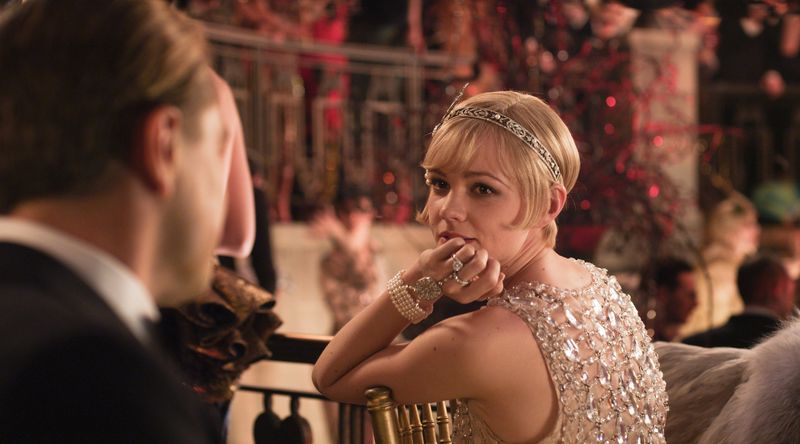
Glamour in this film works because it leans into the spirit of the 1920s instead of treating the decade like a costume party.
Daisy’s beaded, shimmering looks are built around real Jazz Age signatures, including dropped waists, fluid silhouettes, and intense surface decoration that catches light with every movement.
That obsession with sparkle wasn’t random; the era celebrated nightlife, modernity, and a new kind of female visibility, and clothing became a dazzling social performance.
The film’s styling also reflects how 1920s fashion blurred lines between youthful freedom and high society polish, which is exactly Daisy’s tension as a character.
Even with modern fashion influences mixed in, the foundation remains historically recognizable, especially in the accessories and overall silhouette.
The outfits feel iconic because they reproduce an era’s mood, not just its measurements, and that’s what makes them stick in the cultural memory.
6. Marie Antoinette’s pastel court gowns — Marie Antoinette (2006)
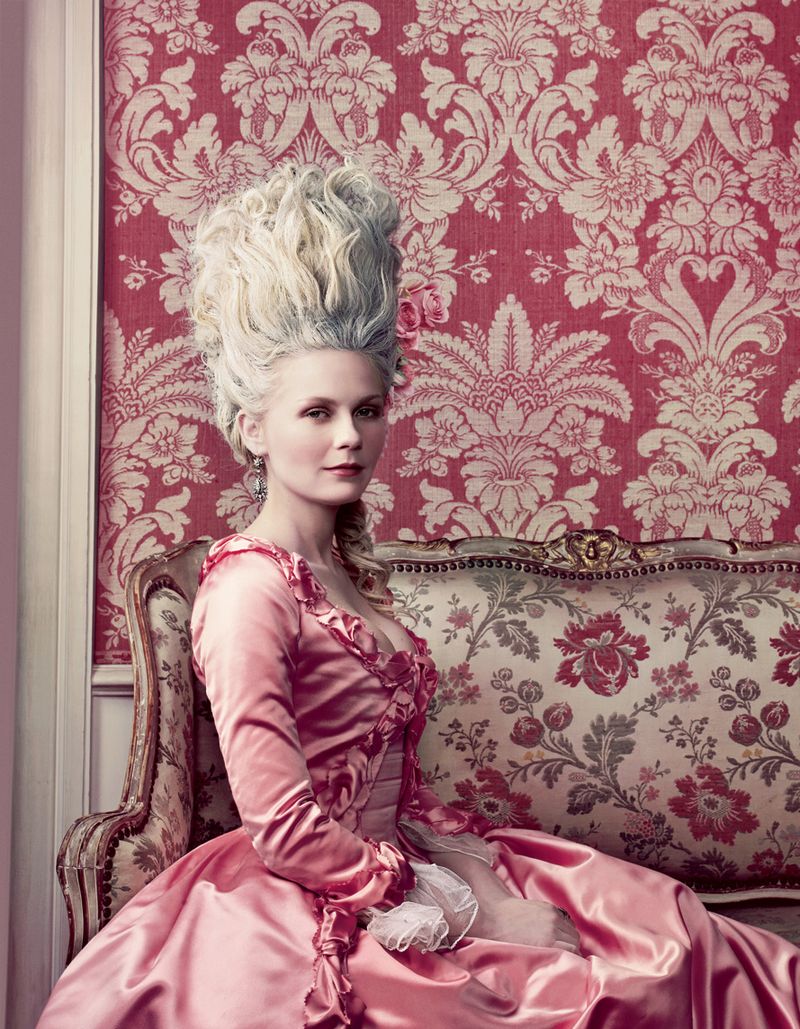
Excess is the point, but it’s not invented out of nowhere, because the wardrobe is built on the real visual language of 18th-century French court fashion.
The powdered palette, ornate trims, and towering shapes echo the era’s obsession with status signaling through clothing, when fabric, ribbons, and embellishments were practically political statements.
While the film plays with modern attitude, the silhouettes still reflect historical structures, including stays, panniers, and the deliberate “constructed” shape of aristocratic dressing.
That rootedness is why the anachronistic energy works instead of feeling sloppy; the costumes understand the period before they remix it.
The real Marie Antoinette was famously associated with fashion influence, and the movie’s wardrobe channels that cultural reality rather than inventing her as a style icon from scratch.
These outfits remain unforgettable because they dramatize how clothes can function as performance, escapism, and power.
7. Elizabeth I’s armor-like gowns and ruffs — Elizabeth (1998)
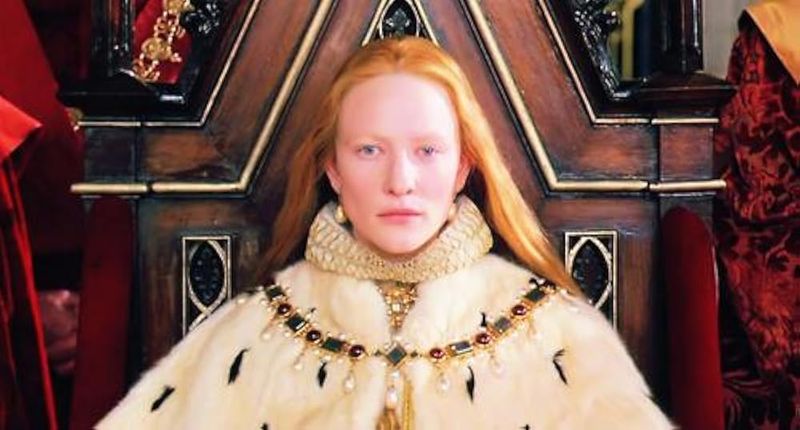
Royal authority is communicated before a single line of dialogue, thanks to costuming that draws directly from late Tudor aesthetics.
The structured gowns, stiff collars, and imposing ruffs echo real 16th-century portraiture, where the queen’s clothing was designed to look untouchable, almost architectural.
Those historical references matter because the era treated dress as propaganda, with wealth and control displayed through fabric, jewels, and silhouette rather than casual personal expression.
The film’s wardrobe leans into that truth by making the outfits feel like wearable power structures, not soft romance.
Even the color choices and surface detailing resemble the visual codes used in paintings to reinforce the queen’s myth.
What makes the look iconic is how accurately it captures the idea that monarchy wasn’t just a role, but an image maintained through deliberate styling.
In that sense, the costumes aren’t embellishment; they’re storytelling in historical form.
8. Mary Todd Lincoln’s jewelry + Civil War-era looks — Lincoln (2012)
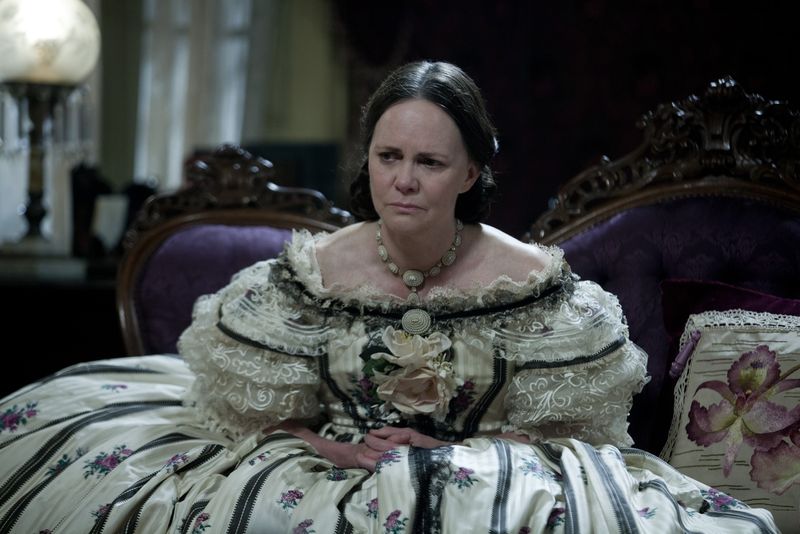
A sense of lived-in history comes through in these costumes because they draw from documented Civil War–era fashion rather than generic “old-time” styling.
Mary Todd’s dresses reflect the period’s structured silhouettes, full skirts, and carefully arranged details that would have been expected for a woman of her social standing.
What makes the wardrobe feel especially grounded is its attention to small, believable choices, including fabric textures and trims that suggest real garments rather than pristine replicas.
The styling also reinforces how political life and social life overlapped, with appearances serving as both etiquette and strategy.
In an era defined by national crisis, clothing still signaled stability, mourning, patriotism, and status, sometimes all at once.
Because the costumes are built from historical reference points, the viewer senses the pressure of the time in every layer and fastener.
The result is an iconic look that feels quiet on the surface, but heavy with context.
9. Bonnie Parker’s beret + knit set — Bonnie and Clyde (1967)
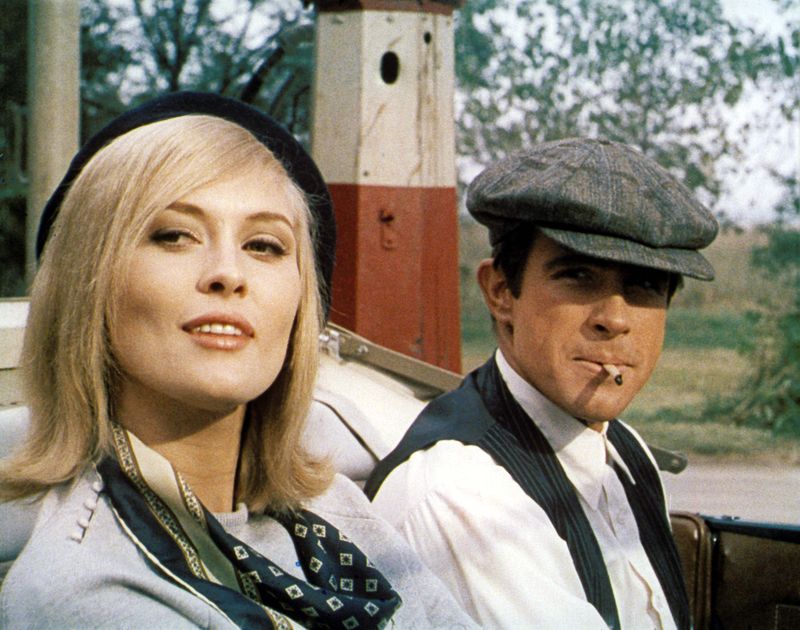
Rebellion can be a style statement, and this look became iconic because it channels the real 1930s aesthetic that surrounded Bonnie Parker’s legend.
The beret, the streamlined silhouette, and the practical knit pieces reflect an era when fashion balanced hardship with an urge to look sharp anyway.
During the Great Depression, clothing often emphasized thrift, rewearing, and clever coordination, yet women still used accessories and tailoring to project confidence.
The film’s wardrobe taps into that historical truth, showing how someone could look composed and modern without appearing wealthy.
It also mirrors the way the real Bonnie was mythologized through photographs, which turned her into a symbol far beyond her life story.
Because the costume speaks the visual language of the decade, it feels instantly authentic, even as it becomes stylized cinema.
The outfit endures because it captures a very real mix of scarcity, swagger, and headline-making identity.
10. The green dress that screams “1930s bias-cut” — Atonement (2007)
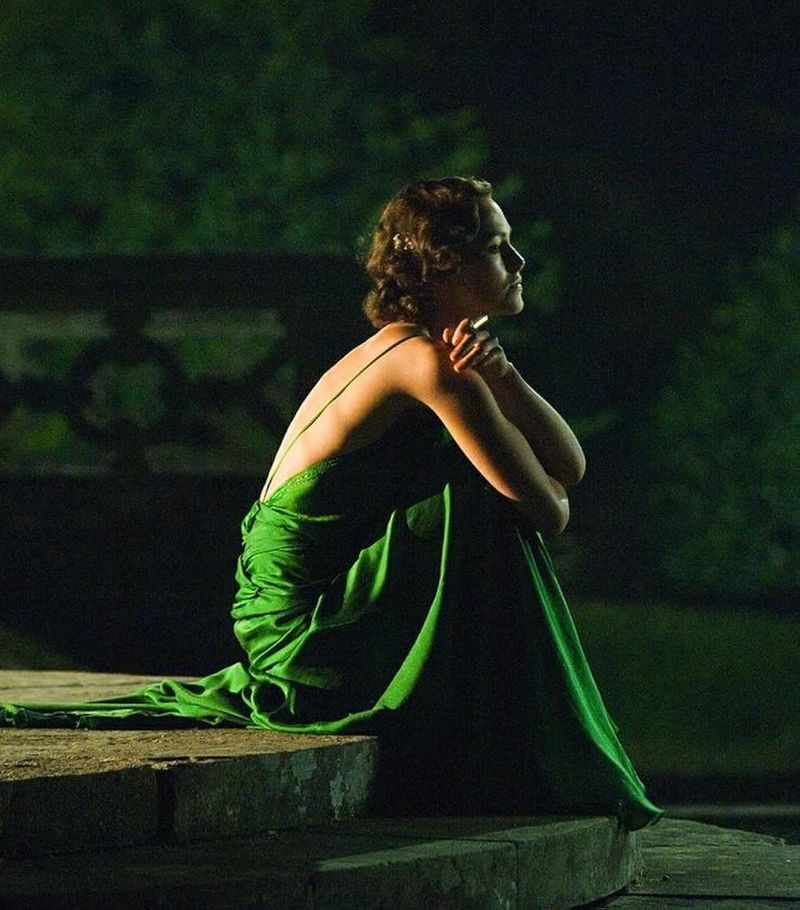
Modern viewers read this dress as timeless, but its power comes from the way it borrows from 1930s design principles.
The slinky drape and fluid movement evoke bias-cut techniques that became famous in that era, when designers used diagonal fabric grain to create cling without heavy structure.
That historical reference matters because the 1930s had a particular kind of elegance, sleek and body-aware while still refined, and the dress captures that feeling in a way that looks believable on screen.
It’s also the kind of silhouette that makes sense in a world of formal dinners and tightly controlled social rules, where the wrong outfit could turn into gossip.
The dress isn’t just “pretty,” because it visually signals confidence, desire, and disruption, all while grounded in a real fashion legacy.
By building a cinematic moment on an authentic historical technique, the costume becomes iconic rather than merely memorable.
11. Oppenheimer’s hat-and-suit “uniform” — Oppenheimer (2023)
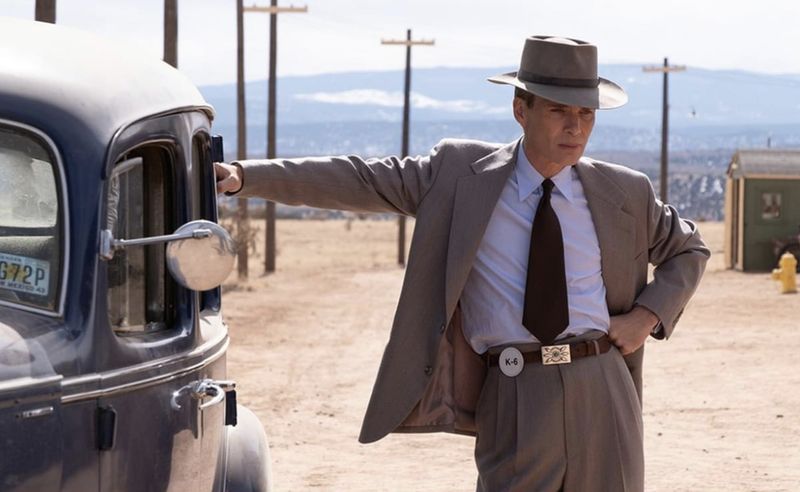
Menswear becomes instantly recognizable when it’s treated as a personal signature, and that’s why this look works so well.
The film leans into the real mid-20th-century style of a public intellectual, including structured suits, crisp shirts, and the unmistakable hat that reads like a uniform rather than a trend.
That kind of dressing was historically common for professional men in the 1940s, when tailoring signaled seriousness and credibility, and when hats were everyday essentials instead of occasional accessories.
What makes it feel “ripped from history” is the consistency, because real people often repeat silhouettes that become part of their identity.
The wardrobe doesn’t try to make him fashionable, because it’s aiming for accuracy and character truth, showing how a man could look controlled while being internally unstable.
In a story about power and consequence, the restraint of the clothes becomes part of the tension.
12. The March sisters’ Civil War–era wardrobe — Little Women (2019)
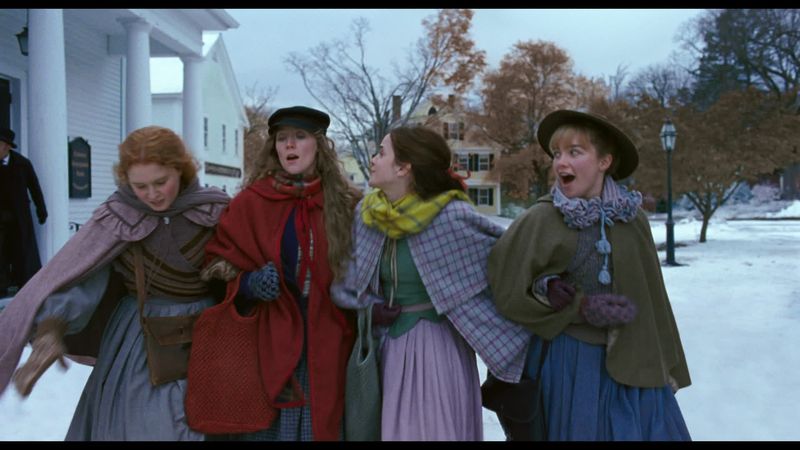
Authenticity in this film’s costumes comes from the sense that these clothes have been lived in, repaired, and worn through seasons, which reflects how real families dressed in the 1860s.
The March sisters’ looks borrow from Civil War–era silhouettes, including fitted bodices, full skirts, and practical layers, but they avoid feeling like museum displays.
Instead, the wardrobe emphasizes wear, reuse, and slight mismatches, echoing the reality that middle-class clothing often had to last, be altered, and be shared.
That historical grounding makes the characters’ personalities clearer, because fabric choices and small details communicate who is careful, who is dreamy, and who is impatient with convention.
The costumes also show the social gap between families with money and those without, which was central to the era’s daily life.
Because the designs are rooted in real period references, the emotional themes land harder; the clothes feel like part of the family’s story, not decoration around it.
Comments
Loading…