
 Isabel Parker
11 Once-Beloved Sitcoms That Somehow Slipped Through the Pop Culture Cracks
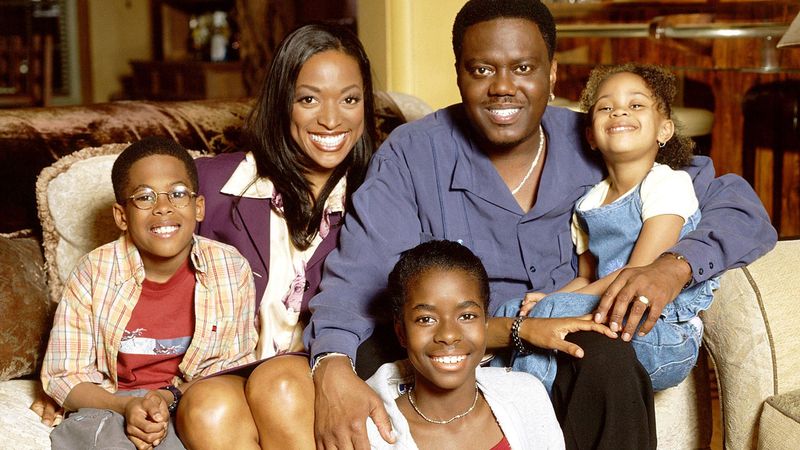
Remember when Thursday nights meant gathering around the TV for your favorite sitcom?
During the ’90s and early 2000s, networks packed their schedules with comedy gold that had millions tuning in weekly.
While shows like ‘Friends’ and ‘Seinfeld’ still dominate streaming platforms and pop culture conversations, dozens of equally funny sitcoms have quietly faded from memory.
These forgotten gems featured talented casts, clever writing, and devoted fanbases, yet somehow never achieved lasting cultural staying power.
1. NewsRadio (1995–1999)
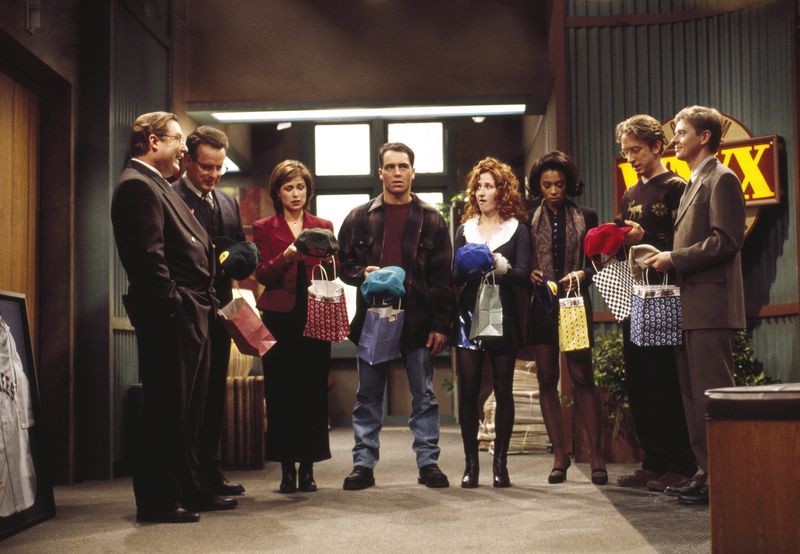
Behind the scenes at WNYX, a New York radio station buzzed with some of television’s sharpest dialogue and most unpredictable characters.
Phil Hartman anchored the ensemble as egotistical news anchor Bill McNeal, while Dave Foley played the perpetually stressed station manager trying to maintain order.
What set this workplace comedy apart was its willingness to embrace absurdity without sacrificing intelligence.
Episodes could shift from grounded office politics to surreal tangents within seconds, keeping viewers constantly surprised.
The writing room, led by Paul Simms, crafted jokes that rewarded careful attention and repeat viewings.
Despite critical acclaim and a passionate following, the show never cracked the top ratings.
Today, it remains a hidden treasure that comedy nerds recommend to anyone willing to discover brilliance hiding in plain sight.
2. Just Shoot Me! (1997–2003)
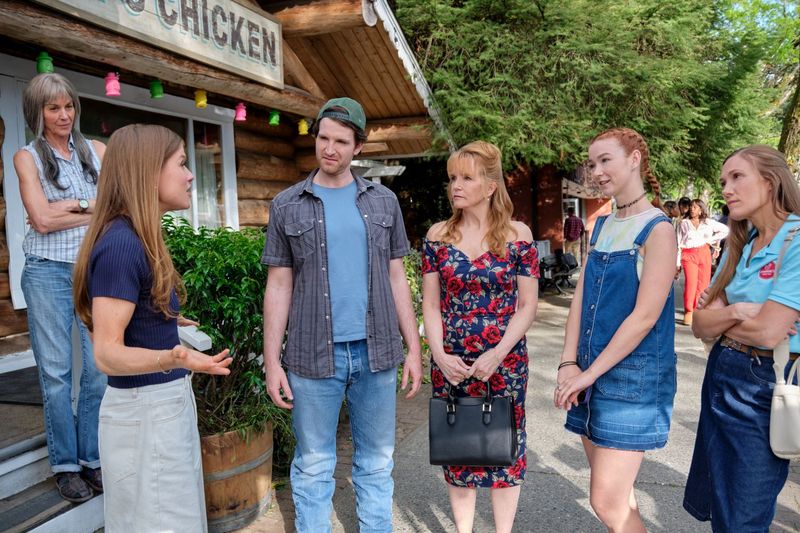
Inside the glossy offices of Blush magazine, sarcasm flowed as freely as champagne at a product launch.
George Segal played Jack Gallo, the magazine’s powerful publisher, while Laura San Giacomo brought sharp wit as his feminist daughter Maya, a serious journalist forced to work at a fluffy fashion mag.
David Spade delivered career-defining snark as Dennis Finch, the smarmy assistant whose one-liners could slice through pretension like a hot knife.
Wendy Malick rounded out the core cast as former model Nina Van Horn, whose vanity and desperation created comedy gold.
The show thrived on rapid-fire insults and workplace chaos.
Seven successful seasons proved audiences loved this formula, yet the show vanished from cultural memory almost immediately after its finale.
Streaming services have given it new life among viewers craving witty banter.
3. Becker (1998–2004)
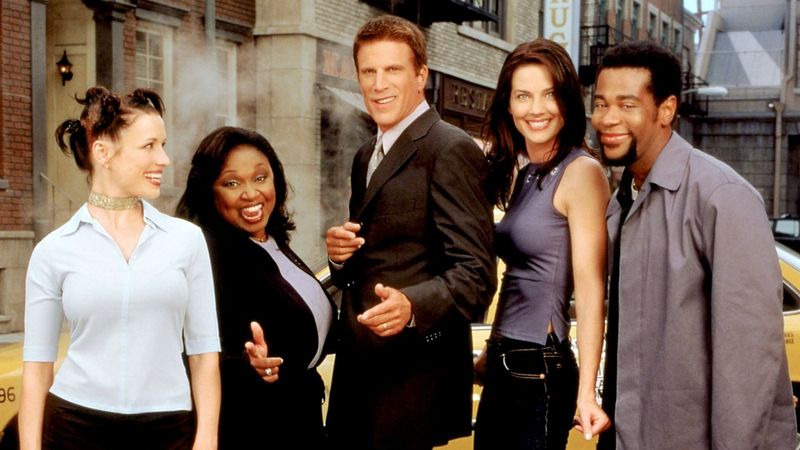
John Becker wasn’t your typical TV doctor.
Ted Danson played him as perpetually irritated, cynical about humanity, and brutally honest about life’s disappointments.
Running a small practice in the Bronx, Becker complained about everything from insurance companies to incompetent people, yet somehow viewers found his grumpiness endearing rather than off-putting.
What made the show work was the warmth hiding beneath Becker’s crusty exterior.
His interactions with diner owner Reggie, played by Terry Farrell, revealed vulnerability and unspoken attraction.
Hattie Winston brought dignity as his unflappable nurse Margaret, while Shawnee Smith added sweetness as the blind newsstand owner Jake befriended.
Six seasons allowed Danson to explore a character completely different from his Cheers persona.
The show proved that audiences would embrace an unlikable protagonist if the writing stayed smart and the supporting cast balanced the tone perfectly.
4. Spin City (1996–2002)
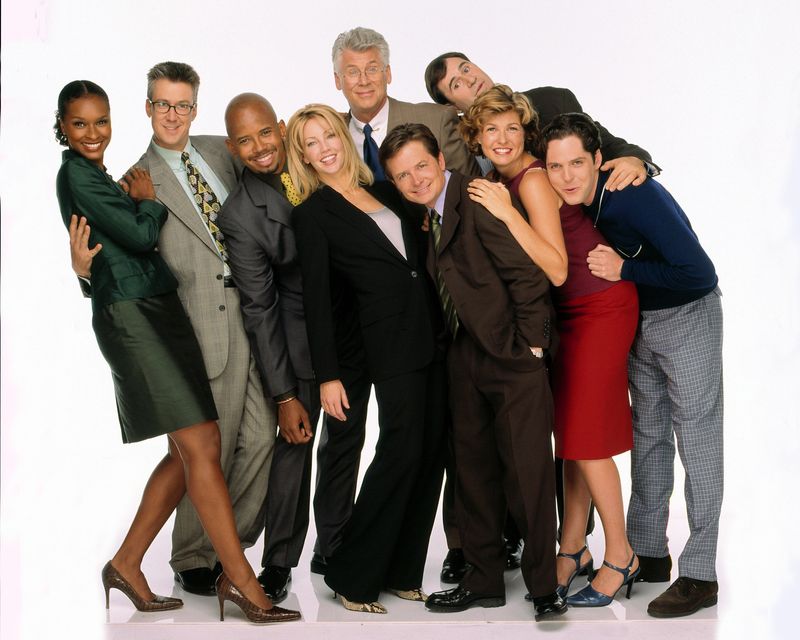
Political chaos never looked so entertaining as it did in the offices of New York’s deputy mayor.
Michael J. Fox commanded the screen as Mike Flaherty, the brilliant spin doctor managing crises for the bumbling Mayor Randall Winston, keeping scandals buried and poll numbers high through quick thinking and charm.
The ensemble cast created magic through rapid-fire dialogue and perfectly timed physical comedy.
Barry Bostwick played the lovably clueless mayor, while Richard Kind, Alan Ruck, and Michael Boatman rounded out the staff with distinct personalities.
When Fox left due to health concerns, Charlie Sheen stepped in, bringing different energy but maintaining quality.
Six seasons proved this formula worked, blending political satire with workplace romance and friendship.
The show tackled real issues while keeping things light, a balance that feels especially valuable looking back at simpler political times.
5. Caroline in the City (1995–1999)
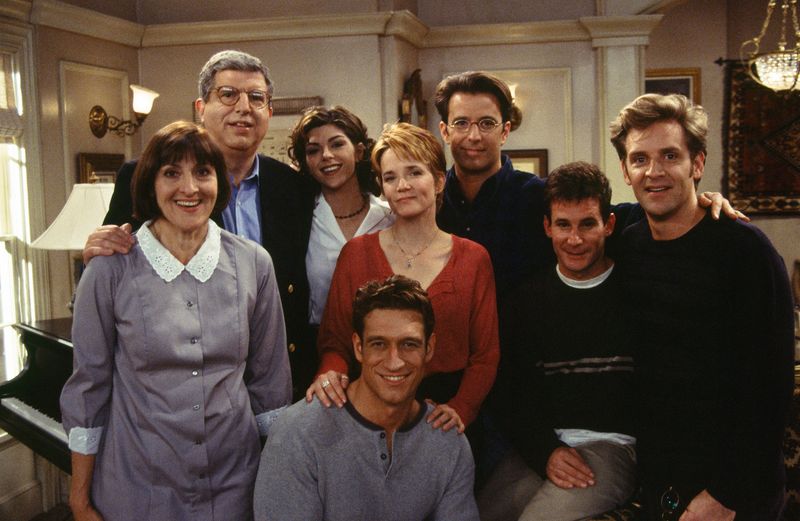
Caroline Duffy drew a comic strip about a single woman navigating New York City while living that exact life herself.
Lea Thompson brought charm and neurotic energy to the cartoonist whose romantic misadventures mirrored her fictional creation, creating meta-humor before it became trendy.
The supporting cast elevated every episode.
Malcolm Gets played Richard, Caroline’s colorful assistant whose unrequited love created ongoing tension.
Eric Lutes appeared as Del, the hunky neighbor serving as Caroline’s will-they-won’t-they love interest.
Amy Pietz stole scenes as Annie, Caroline’s brash dancer friend who said everything Caroline couldn’t.
Four seasons captured mid-’90s Manhattan through a romantic lens, complete with impossibly spacious apartments and charming coffee shops.
The show balanced physical comedy with heartfelt moments, creating something genuinely sweet that captured the era’s optimistic spirit before cynicism took over sitcom sensibilities.
6. Suddenly Susan (1996–2000)
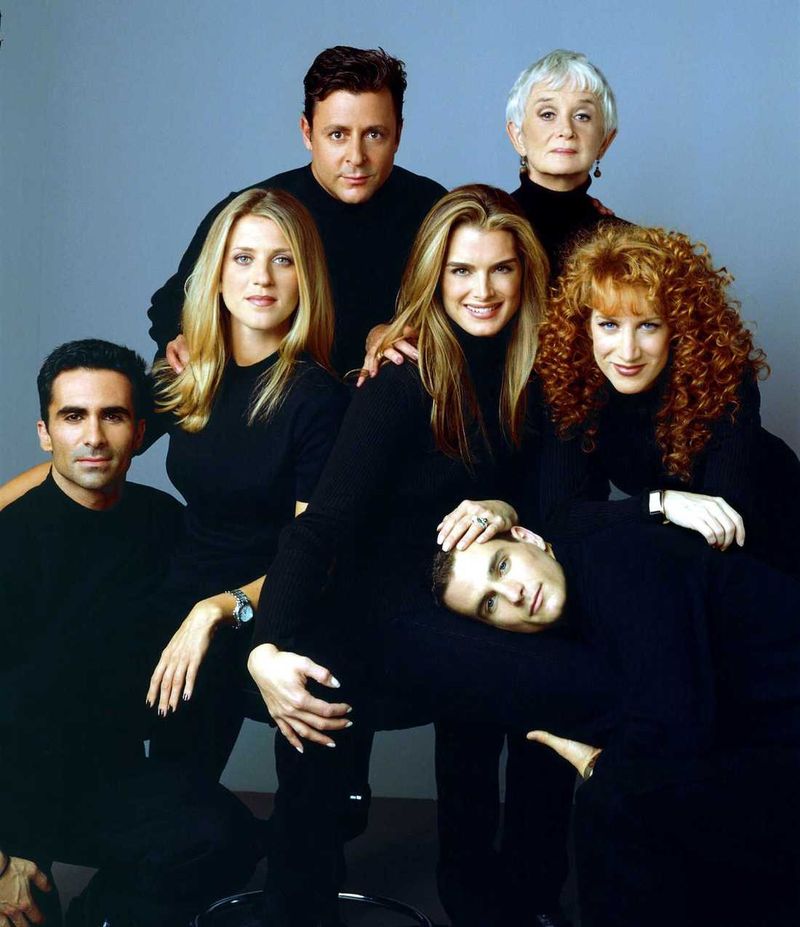
Susan Keane left her fiancé at the altar and reinvented herself as a columnist at The Gate, a San Francisco magazine.
Brooke Shields proved her comedic chops playing a woman discovering independence for the first time, navigating career challenges and dating disasters with relatable awkwardness.
The newsroom ensemble included Judd Nelson as her demanding editor Jack, creating romantic tension throughout the series.
Kathy Griffin appeared as Vicki, Susan’s sharp-tongued coworker who delivered brutal honesty wrapped in friendship.
The workplace dynamics felt authentic, capturing the chaos of magazine deadlines and office politics.
Four seasons explored themes of self-discovery and female empowerment through a lighthearted lens.
The show tackled serious topics like career ambition and relationship struggles while maintaining its comedic core.
Despite respectable ratings, it faded quickly after cancellation, leaving behind episodes that captured a specific moment in ’90s television.
7. Yes, Dear (2000–2006)
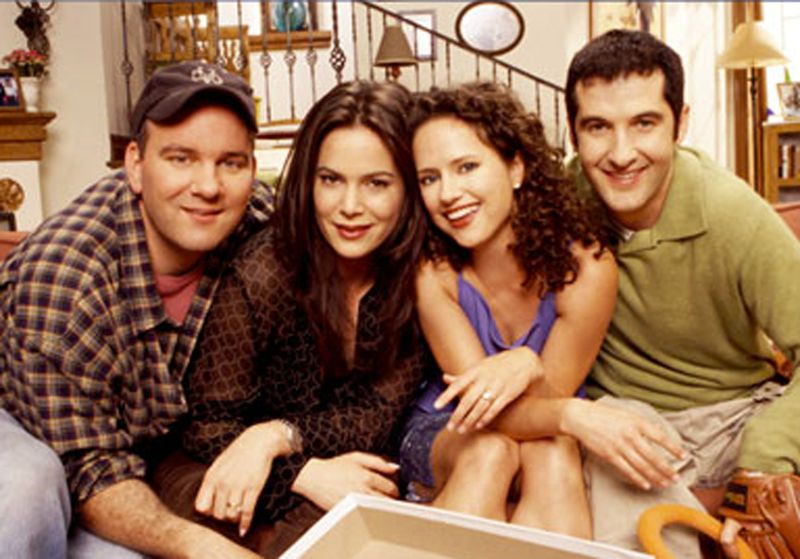
Two couples, one guesthouse, and countless arguments about parenting styles created comedy gold in this underrated family sitcom.
Greg and Kim Warner allowed Kim’s sister Christine and her husband Jimmy to move into their guesthouse, setting up constant conflict between their vastly different approaches to marriage, money, and raising kids.
Anthony Clark and Jean Louisa Kelly played the uptight, overachieving Warners, while Mike O’Malley and Liza Snyder brought blue-collar authenticity as the laid-back Hughes family.
The show’s strength came from making both parenting philosophies look equally ridiculous, never taking sides in the debates that drove each episode’s plot.
Six seasons proved that audiences connected with these realistic family struggles.
The show avoided sentimentality, choosing instead to mine humor from the genuine frustrations of marriage and parenting without pretending everything resolves neatly in twenty-two minutes.
8. Grounded for Life (2001–2005)
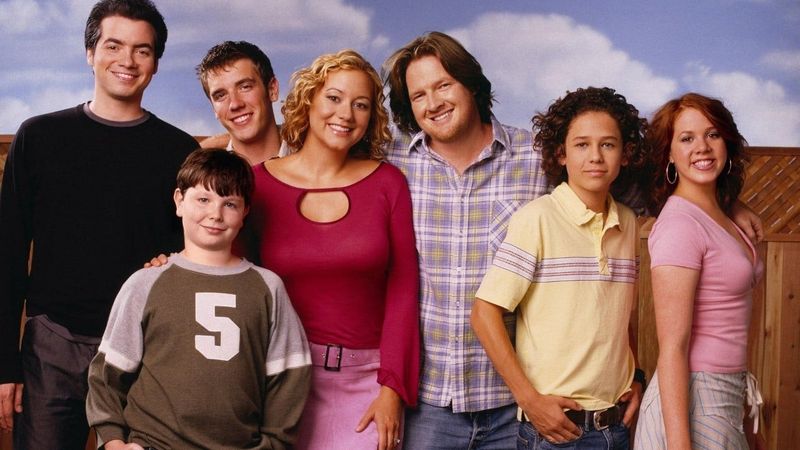
Sean and Claudia Finnerty became parents at sixteen, meaning they raised their kids while barely leaving adolescence themselves.
This unconventional premise powered a sitcom that felt refreshingly honest about family dysfunction, told through flashback structure that revealed how each episode’s crisis actually began.
Donal Logue and Megyn Price played the young parents with perfect chemistry, balancing authority and immaturity as they navigated teenage children while still figuring out adulthood.
Kevin Corrigan added chaos as Sean’s irresponsible brother Eddie, living in the basement and offering terrible advice.
The show embraced its Irish-Catholic Staten Island setting without making it a punchline.
Five seasons on two different networks proved the show’s quality, even as it struggled to find a consistent audience.
The non-linear storytelling and willingness to show parents as flawed humans set it apart from typical family sitcoms of the era.
9. Wings (1990–1997)
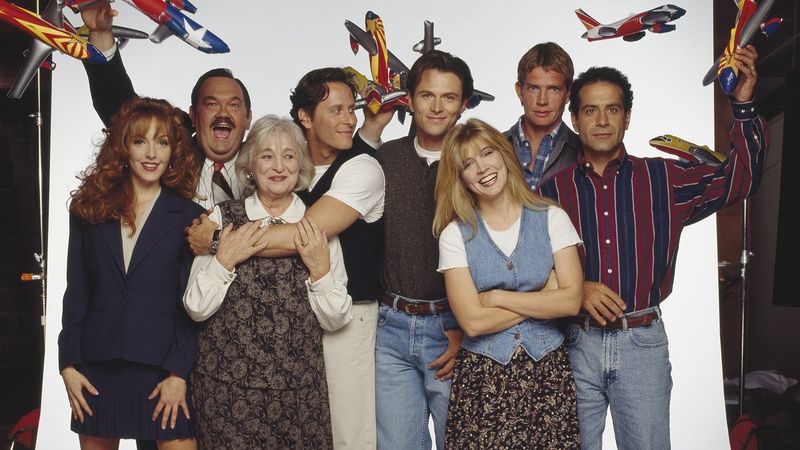
Tucked away on Nantucket Island, Tom Nevers Field Airport served as home base for brothers Joe and Brian Hackett’s tiny airline company.
Created by the same team behind Cheers, this sitcom traded the Boston bar for a quaint terminal filled with quirky locals and complicated relationships.
Timothy Daly and Steven Weber played the brothers with genuine chemistry, navigating sibling rivalry and romantic entanglements.
Crystal Bernard charmed as Helen, the lunch counter owner caught between the brothers romantically.
Thomas Haden Church stole scenes as the dim-witted mechanic Lowell, while Tony Shalhoub showed early brilliance as eccentric cab driver Antonio.
The show’s gentle humor and character-driven stories built a loyal audience over eight seasons.
Unlike flashier sitcoms of its era, Wings chose warmth over edginess, creating something genuinely comforting that deserves rediscovery.
10. The Bernie Mac Show (2001–2006)
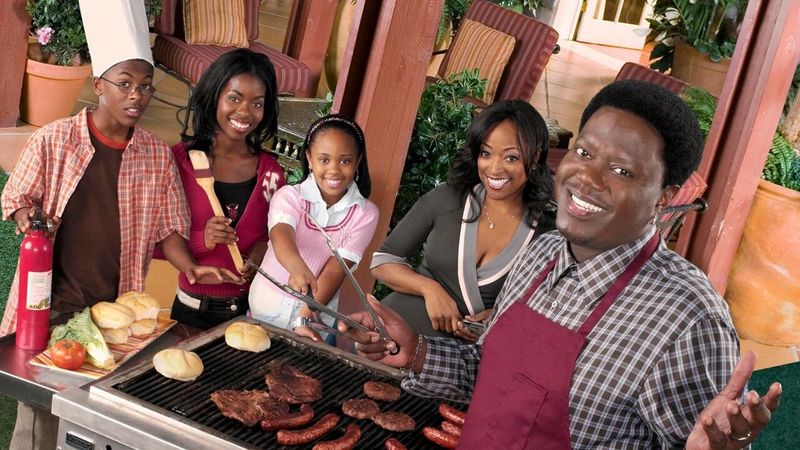
Bernie Mac broke every sitcom rule by talking directly to the camera, sharing his unfiltered thoughts about raising his sister’s three children after she entered rehab.
This groundbreaking format let audiences inside Bernie’s head, hearing his frustrations and fears while watching him navigate unexpected fatherhood with his wife Wanda.
The comedian brought his stand-up persona to primetime, creating a character who loved these kids desperately while openly admitting he had no idea what he was doing.
Kellita Smith balanced Bernie’s chaos as the more patient Wanda, grounding the show’s wilder moments.
The child actors held their own against Mac’s powerhouse presence.
Five seasons showcased innovative storytelling and fearless comedy that tackled race, class, and family with uncommon honesty.
The show’s influence on modern single-camera comedies cannot be overstated, yet it rarely gets mentioned alongside sitcom greats despite deserving that recognition completely.
11. Still Standing (2002–2006)
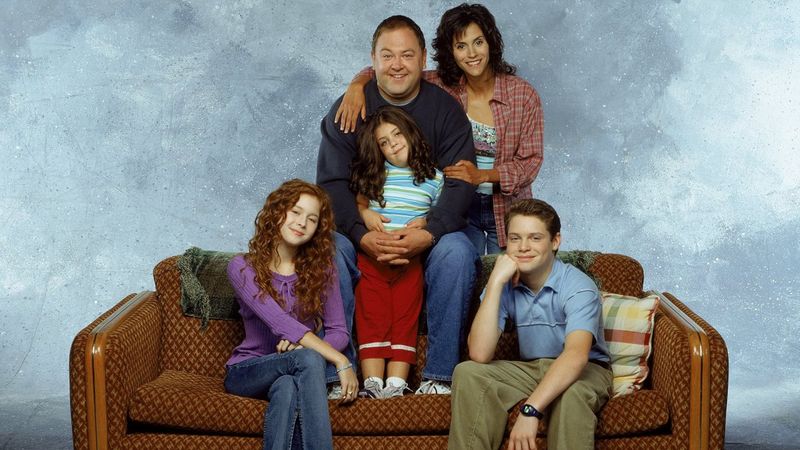
Bill and Judy Miller survived parenthood through sarcasm, stubbornness, and an unshakeable partnership forged in their Chicago working-class neighborhood.
Mark Addy and Jami Gertz played parents who loved their kids fiercely while openly acknowledging that raising them was exhausting, frustrating, and occasionally ridiculous.
The show’s blue-collar perspective set it apart from glossier family sitcoms.
Bill worked as a dental supply salesman while Judy stayed home with their three children, dealing with tight budgets and everyday struggles that felt authentic.
Their bickering masked deep affection, showing a marriage that worked precisely because they could be honest with each other.
Four seasons delivered consistent laughs without pretending parenting was magical or that love conquered all problems.
The Millers fought, made mistakes, and kept going, creating something genuinely relatable that resonated with families living similar lives across America.
Comments
Loading…