
 Chloe Peterson
Have you ever noticed someone acting a bit strange around you, but couldn’t quite figure out why?
Sometimes people feel intimidated without ever saying a word about it.
Their body language and small actions can reveal what they’re really feeling inside.
Understanding these quiet signals can help you navigate relationships with more awareness and kindness.
1. Avoiding eye contact or looking away quickly

When someone feels overwhelmed by your presence, their eyes often tell the story first.
You might notice they glance at you briefly, then quickly shift their gaze to the floor, their phone, or anywhere else but your face.
This isn’t rudeness—it’s actually a defense mechanism.
Holding eye contact with someone they find intimidating creates internal pressure and discomfort.
Breaking that connection helps them feel safer and less exposed.
They’re essentially giving themselves a small mental break from the intensity they associate with you.
Pay attention to this pattern during conversations.
If it happens consistently, it’s a strong sign your confidence or presence affects them more than they’re letting on.
2. Fidgeting or playing with objects nervously

Restless hands rarely lie.
When someone starts tapping their fingers on the table, twirling their hair, or constantly adjusting their sleeves around you, anxiety is usually the culprit.
These small movements aren’t random—they’re ways to release nervous energy that builds up in your presence.
Think of fidgeting as their body’s way of staying busy when their mind feels unsettled.
They might pick up a coffee cup repeatedly, click a pen, or straighten papers that don’t need straightening.
All these actions serve one purpose: managing the self-consciousness you unknowingly trigger.
Watch for these behaviors especially during one-on-one interactions.
The more fidgeting you notice, the stronger their internal discomfort likely is.
3. Giving overly critical or backhanded compliments

Ever received a compliment that felt more like a dig?
Comments like “You’re so confident—I could never be that bold” or “That’s a nice outfit for someone your age” aren’t genuine praise.
They’re actually disguised attempts to regain control of an uncomfortable power dynamic.
People who feel threatened by your abilities or presence sometimes use sarcasm and criticism dressed up as kindness.
This helps them feel less inferior by subtly pointing out flaws or making you second-guess yourself.
It’s their way of leveling the playing field when they feel you’re somehow above them.
Listen carefully to the tone and wording.
True compliments build you up; backhanded ones try to bring you down while maintaining plausible deniability.
4. Acting distant or avoiding deep conversations

Some people keep conversations stuck in the shallow end deliberately.
If someone consistently steers discussions toward weather, weekend plans, or surface-level topics while avoiding anything meaningful, intimidation might be the reason.
Deep conversations require vulnerability, and vulnerability feels risky around someone who makes them nervous.
They fear your confidence or insight will expose their own insecurities or perceived shortcomings.
Staying emotionally distant protects them from feeling judged or inadequate.
It’s safer to chat about nothing important than risk revealing too much to someone they view as superior.
Notice if this person opens up easily with others but stays guarded specifically with you.
That selective distance speaks volumes about how you affect them.
5. Laughing excessively or nervously at your jokes

Did your mildly funny comment just earn a laugh way louder than it deserved?
Nervous laughter is a telltale sign someone’s trying too hard to please you or ease their own tension.
When people feel intimidated, they often overcompensate with exaggerated positive reactions to gain your approval.
This isn’t about your comedy skills—it’s about their need to appear agreeable and likable in your eyes.
Each overly enthusiastic laugh is an attempt to build rapport and reduce the social pressure they feel.
They’re essentially saying, “Please like me and don’t judge me” without using words.
Compare their reactions around you versus others.
If they laugh significantly more or differently with you, intimidation is likely driving that behavior.
6. Mirroring your body language subtly

Imitation might be the sincerest form of flattery, but it’s also a sign of uncertainty.
When someone subconsciously copies how you sit, gesture, or position yourself, they’re trying to establish connection while feeling unsure of themselves.
This mirroring happens automatically when people want to fit in or gain favor with someone they perceive as more confident.
You might notice they cross their arms shortly after you do, lean forward when you lean forward, or adopt similar hand movements during conversation.
These aren’t conscious decisions—their brain is working overtime to match your energy and hopefully feel less intimidated in the process.
This behavior shows respect mixed with nervousness.
They’re essentially trying to speak your nonverbal language to bridge the gap they feel exists between you.
7. Being unusually competitive or defensive
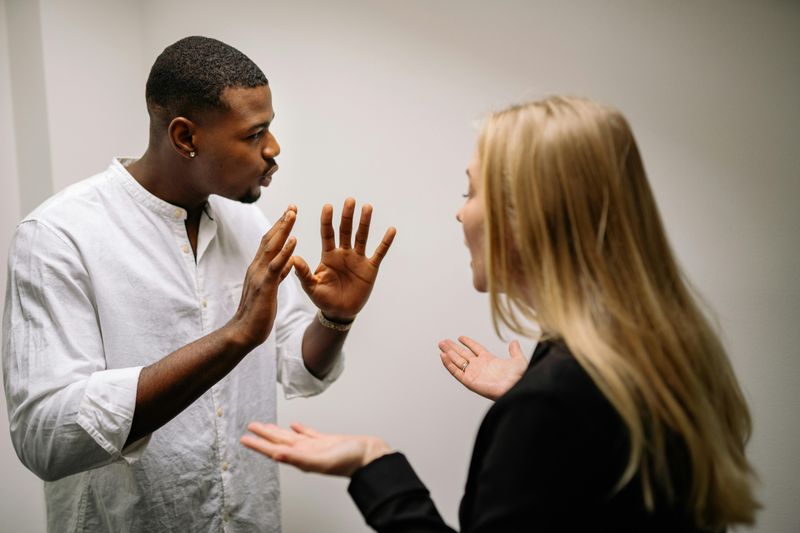
Suddenly every conversation becomes a contest?
When someone feels threatened by your strengths, they might respond by trying to one-up you or getting defensive over minor things.
This competitiveness isn’t about genuine rivalry—it’s about protecting their ego from the discomfort your presence creates.
They might interrupt to share their own accomplishments, correct you unnecessarily, or push back on your ideas even when they’re reasonable.
Each defensive reaction is their attempt to prove they’re just as capable, smart, or worthy as they perceive you to be.
It’s exhausting for both of you, but it stems from their internal struggle with feeling inadequate.
Watch for patterns where they’re relaxed with others but tense and competitive specifically around you.
That contrast reveals the intimidation factor clearly.
8. Staying unusually quiet or giving short responses

Silence can speak louder than words, especially when someone who’s normally chatty suddenly becomes a person of few words around you.
Brief answers like “yeah,” “sure,” or “I don’t know” replace their usual conversational flow.
This withdrawal happens because they’re afraid of saying something wrong or appearing foolish in front of you.
Your presence makes them second-guess every word before it leaves their mouth.
The mental energy required to avoid embarrassment becomes so overwhelming that staying quiet feels like the safest option.
They’re essentially protecting themselves from potential judgment by minimizing their verbal exposure.
Test this by observing them in different social settings.
If they’re talkative elsewhere but silent specifically with you, intimidation has likely stolen their voice temporarily.
9. Over-apologizing or over-explaining themselves

When someone constantly apologizes for minor things or explains every small decision in exhaustive detail around you, fear of judgment is driving that behavior.
They’re trying to prevent criticism before it happens by justifying themselves preemptively.
This over-explanation shows they believe you’re scrutinizing their every move and finding them lacking.
Each “sorry” and lengthy justification is an attempt to maintain your approval and avoid disappointing you.
They’re working hard to prove they’re thoughtful and intentional, even about trivial matters that don’t require explanation.
Notice if this pattern appears mainly in your interactions.
Excessive apologizing directed specifically at you reveals how much your opinion weighs on their mind and triggers their insecurities.
Comments
Loading…