
 Chloe Peterson
14 Ways to Make Life Simple Again (Starting Today)

Life can get complicated in sneaky ways.
One extra subscription here, one more obligation there, and suddenly your days feel like a nonstop game of catch-up.
The frustrating part is that nothing is “wrong” on paper—you’re doing what you’re supposed to do—yet you still feel scattered, behind, and oddly exhausted by small decisions.
Simplicity isn’t about living out of a suitcase or tossing everything you own.
It’s about reducing friction: fewer pointless choices, fewer cluttered spaces, fewer pings demanding your attention, and more routines that support you instead of draining you.
The good news is you don’t need a dramatic life overhaul to feel better.
A handful of small resets can make your home calmer, your schedule lighter, and your money habits more intentional.
Here are 14 realistic ways to make life feel simple again, starting where you are.
1. Do a one-week “buy nothing” reset

When spending becomes automatic, life tends to feel noisy, because every purchase creates a tiny ripple of decision-making.
A one-week “buy nothing” reset gives your brain a break by removing the temptation to browse, compare, and justify.
For seven days, you only buy essentials like groceries, medicine, and true necessities, and you pause everything else, including “little treats” that add up.
The point isn’t guilt; it’s awareness.
Use the week to notice what triggers impulse spending—stress, boredom, social scrolling, or that one store you “just check.” Keep a simple note on your phone for anything you want to buy, then revisit the list later.
Most items will feel less urgent after a few days, and you’ll also get a clearer picture of what you actually value.
2. Pick 10 “default meals” and repeat them on a loose rotation

Decision fatigue often shows up in the kitchen, especially when you’re hungry and tired and trying to be “creative” at 6 p.m.
Picking a set of default meals removes that daily pressure and turns dinner into a simple system instead of a recurring problem.
Start with ten meals you genuinely like, that don’t require specialty ingredients, and that you can make without a ton of cleanup.
Think: sheet pan chicken and veggies, tacos, pasta with a protein, stir-fry, soup and salad, breakfast-for-dinner, and a couple slow-cooker options.
Build your grocery list around those staples, then rotate based on what sounds good that week.
You’ll waste less food, spend less money on last-minute takeout, and free up mental space for things that actually deserve your energy.
3. Set two daily check-in times for your phone (and ignore it otherwise)

Constant notifications make life feel like it’s happening to you instead of being lived by you.
Instead of trying to “use your phone less” in a vague way, give yourself clear boundaries by choosing two daily check-in times—one late morning and one late afternoon works well for many people.
During those windows, you can return messages, handle emails, and catch up on anything important.
Outside of them, your phone becomes a tool, not a slot machine.
Turn off nonessential notifications, move distracting apps off your home screen, and keep your device out of reach during meals or focused work.
At first, it might feel uncomfortable, because you’re used to immediate responses, but the quiet is the point.
You’ll notice you think more clearly, start tasks faster, and feel less mentally cluttered by other people’s urgency.
4. Create a “Sunday 30” routine: trash, laundry, plan, groceries, reset

A simple weekly reset can prevent the kind of chaos that sneaks up on you midweek.
Setting aside a focused 30 minutes on Sunday gives you a baseline of order without turning your weekend into a cleaning marathon.
The routine can be consistent and boring on purpose: take out trash, start or fold a load of laundry, glance at the week ahead, outline dinners, and make a grocery list.
If you have time, do a quick surface tidy to reset your living space, because visual clutter adds stress even when you don’t realize it.
The goal is not perfection, but momentum.
When Monday arrives, you’re not scrambling to find clean clothes, you’re not wondering what’s for dinner, and you’re less likely to spend extra money on convenience.
A tiny bit of planning makes everything feel lighter.
5. Declutter one micro-zone a day

Big decluttering projects sound inspiring until you’re staring at a mountain of stuff with no idea where to start.
A micro-zone approach keeps it simple by shrinking the job into something you can finish in one short session.
Choose one small area—like a sock drawer, a bathroom shelf, a kitchen counter corner—and commit to clearing it completely.
Toss trash, relocate items that don’t belong, and keep only what you actually use.
The power here is in the completion, because finishing one tiny space gives you a quick win and makes it easier to repeat tomorrow.
Over time, those micro-zones add up to a calmer home, and a calmer home makes your life feel easier.
You’ll spend less time searching for things, cleaning around piles, or feeling irritated by clutter you’ve been ignoring.
6. Unsubscribe from emails and texts that trigger spending

Marketing messages are designed to create urgency, and urgency makes your life feel busier than it needs to be.
If your inbox is full of “last chance” and “exclusive offer” subject lines, it’s harder to stay calm and intentional with money.
Unsubscribing is a simplicity move because it reduces temptation and cuts down on mental noise.
Start by searching your email for words like “sale,” “promo,” and “discount,” then unsubscribe from the stores that reliably pull you into browsing.
If you get text alerts, opt out there too, because those are even more immediate.
You can always resubscribe later if you truly miss it, but most people don’t.
With fewer prompts to spend, you’ll make fewer impulse purchases, and you’ll also feel less like you’re constantly behind on deals.
Your money becomes quieter, and your mind follows.
7. Adopt the “one home for everything” rule

Losing things is exhausting, not because the items are so important, but because the constant searching creates low-grade stress.
Giving everything a designated “home” is one of the fastest ways to make daily life smoother.
Start with the most annoying items to lose: keys, wallet, headphones, chargers, and the pile of mail that never seems to have a place.
Choose a specific spot for each category and make it easy to use, like a bowl near the door, a hook for bags, and a small charging station.
The trick is to keep the system simple enough that you’ll actually follow it when you’re tired.
Over time, this creates automatic habits that save minutes and frustration every day.
When your essentials are always where they belong, you start your mornings calmer and end your nights with less clutter.
8. Simplify your wardrobe with a mini-capsule

Getting dressed shouldn’t feel like a complicated puzzle, yet it often does when your closet is packed with items that don’t work together.
A mini-capsule wardrobe simplifies life by making your clothing more interchangeable, so outfits come together faster with fewer decisions.
You don’t need to throw out everything or commit to a strict minimalist vibe; you just need a reliable set of pieces that mix and match easily.
Choose a simple color palette, focus on flattering basics you actually wear, and keep a few “hero” items that make you feel put together.
As you refine, donate what doesn’t fit, irritates you, or requires too much effort.
The side benefit is financial: when you know what you wear, you stop buying random pieces that don’t match anything.
Less clutter, fewer regrets, and mornings that start with less stress.
9. Automate the boring stuff

The more tasks you have to remember, the more your brain stays in a low-level state of anxiety.
Automating repetitive responsibilities removes that mental load and makes life feel steadier.
Set up automatic payments for fixed bills like rent, utilities, and insurance when possible, and schedule a recurring transfer to savings right after payday, even if it’s a small amount.
If you regularly buy household staples, consider subscriptions only for items you truly need and won’t overstock, like pet food or toiletries.
Automation isn’t about pretending money problems don’t exist; it’s about reducing missed payments, late fees, and the constant “I need to handle that” feeling.
It also helps you plan, because predictable systems give you clearer cash flow.
Once the boring stuff runs in the background, you’ll have more bandwidth for goals that actually matter.
10. Use a single “master list” for tasks

When your to-dos are scattered everywhere, your brain never fully relaxes, because you’re always afraid you’re forgetting something.
A single master list gives you one trusted place to capture tasks, which instantly makes life feel more organized.
Pick one format—notes app, paper planner, or a simple task app—and commit to it for a month.
Every time a new responsibility pops up, dump it there instead of starting a new list on a random receipt.
Then, once a day, review the list and choose a short set of priorities so you’re not trying to do everything at once.
The goal isn’t to become hyper-productive; it’s to stop carrying a thousand reminders in your head.
With one list, you make fewer decisions, lose fewer tasks, and spend less time “getting organized” instead of actually living.
11. Lower your standards strategically

Perfectionism makes life complicated because it turns simple tasks into emotional projects.
If you’re always aiming for the ideal—perfectly clean house, perfectly balanced meals, perfectly planned schedule—everything takes longer and feels heavier.
Strategic simplification means deciding what actually needs to be high-quality and what can be “good enough” without consequences.
Maybe your living room can be tidy but not magazine-ready, or dinner can be nutritious without being elaborate.
Give yourself permission to use shortcuts that save time, like pre-cut veggies, grocery pickup, or repeating the same outfits.
This isn’t about lowering your self-respect; it’s about protecting your energy.
When you stop over-optimizing, you free up space for rest, relationships, and hobbies, which are often what you’re really craving.
A simpler life usually begins with releasing impossible standards you didn’t even choose consciously.
12. Set boundaries with your calendar
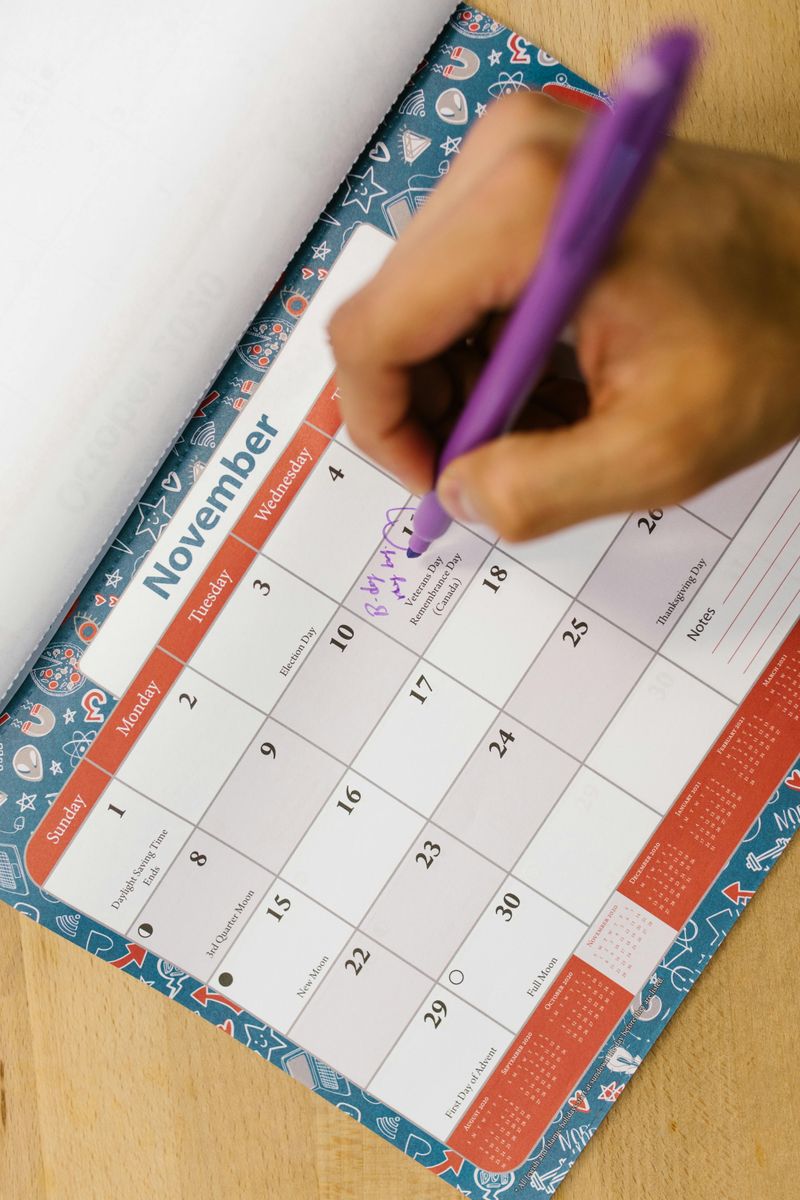
A packed schedule can make you feel successful while quietly making you miserable.
Putting boundaries on your calendar is a direct way to reclaim simplicity without a dramatic lifestyle change.
Start by choosing one no-plans evening each week, and treat it like a real commitment rather than an empty slot waiting to be filled.
That night becomes your built-in recovery time, whether you use it to rest, take a long walk, or simply do nothing.
Next, create one short “admin block” for the unglamorous tasks that pile up, like appointments, emails, returns, and paperwork.
When you contain those tasks to a dedicated window, they stop leaking into every day.
Your time becomes more predictable, and predictability feels peaceful.
Boundaries also make it easier to say no, because you’re not rejecting people; you’re honoring a system that keeps you functional.
13. Stop optimizing every decision

Trying to pick the “best” option for everything is exhausting, especially when the decisions don’t matter that much.
If you spend energy comparing shampoo, researching the perfect blender, or debating what to watch for an hour, you’re burning bandwidth that could be used for things you actually care about.
Choosing defaults is a simplicity strategy that reduces decision fatigue.
Pick a standard brand for staples, a go-to grocery order, a simple breakfast, and a few reliable outfits, and repeat them without overthinking.
Save your research and big decisions for purchases that truly impact your budget or quality of life.
The point is to create calm through consistency.
When small choices become automatic, your day flows more easily, and you feel less mentally cluttered.
Life gets simpler when you stop treating every minor decision like it needs to be optimized.
14. Do a monthly “life audit”: what drains you, what helps, what to cut

When life feels complicated, it’s often because you’re carrying habits, commitments, and routines that no longer fit.
A monthly “life audit” helps you step back and adjust before things pile up.
Once a month, spend 20 minutes reviewing what has felt heavy and what has felt supportive.
Look at your spending, your calendar, your energy, and even your home environment, and identify patterns.
Maybe certain social plans leave you drained, certain apps trigger stress, or certain errands always snowball into wasted time.
Then choose one thing to cut, one thing to simplify, and one thing to protect.
Keep it small so it’s realistic.
This kind of regular check-in prevents you from living on autopilot, and it keeps simplicity from being a one-time decluttering event.
Over time, the audit becomes a reset button that keeps your life aligned with what you actually want.
Comments
Loading…