
 Isabel Parker
13 Things We Take for Granted That Future Generations Won’t Have

Right now, you probably use dozens of things every day without giving them a second thought. They feel so normal, so woven into your routine, that it’s hard to imagine life without them. But the world is changing fast, and many of the things we take for granted today may not be around forever.
Technology, culture, and habits evolve quicker than we realize, quietly replacing what once seemed essential. Future generations might look back at our era the same way we look at rotary phones or black-and-white TV—nostalgic, curious, and a little surprised. Here are 13 things we enjoy today that kids in the future may never get to experience.
1. Privacy in Public Spaces

Cameras are everywhere now, and most of us barely notice them anymore.
Street corners, stores, traffic lights, and even doorbells record us constantly throughout the day.
We walk through life assuming a certain level of anonymity, but that assumption is already fading fast.
Facial recognition technology is advancing at a breathtaking pace.
Governments and corporations can already identify individuals in real time using public camera feeds.
Future generations may grow up in a world where being watched is simply the default, with no memory of what it ever felt like to just blend in.
2. Owning Physical Music

There was something magical about holding a CD, reading the liner notes, and feeling like the music truly belonged to you.
Streaming changed all of that almost overnight, shifting music from something you own to something you rent by subscription.
Today, billions of songs are available instantly, but you don’t actually own a single one.
If a streaming platform shuts down or removes an album, it’s just gone from your life.
Future kids won’t know the joy of flipping through a record collection or the heartbreak of a scratched favorite CD that skips at the best part.
3. Quiet Skies Without Drones

Step outside on a calm afternoon and listen carefully.
That quiet hum you occasionally hear overhead?
That’s just the beginning.
Drone delivery services, aerial surveillance, and hobbyist flyers are multiplying rapidly across cities and suburbs alike.
Aviation experts predict that within a few decades, low-altitude airspace will be as crowded as rush-hour highways.
The peaceful, uninterrupted sky that we currently enjoy on a lazy Sunday afternoon may become a relic of the past.
Future generations might find it completely normal to look up and see dozens of buzzing machines rather than open, quiet blue space.
4. Handwritten Letters and Cards

Getting a handwritten letter in the mail feels like receiving a tiny gift.
Someone took the time to sit down, choose their words carefully, and physically write them out just for you.
That effort communicates something no emoji or text message ever quite can.
Handwriting rates are already declining sharply in schools around the world, with many districts dropping cursive instruction entirely.
As digital communication dominates, the art of the personal letter is quietly disappearing.
Kids growing up today may be among the last to experience the warm surprise of finding a handwritten note tucked inside their mailbox.
5. Driving Your Own Car
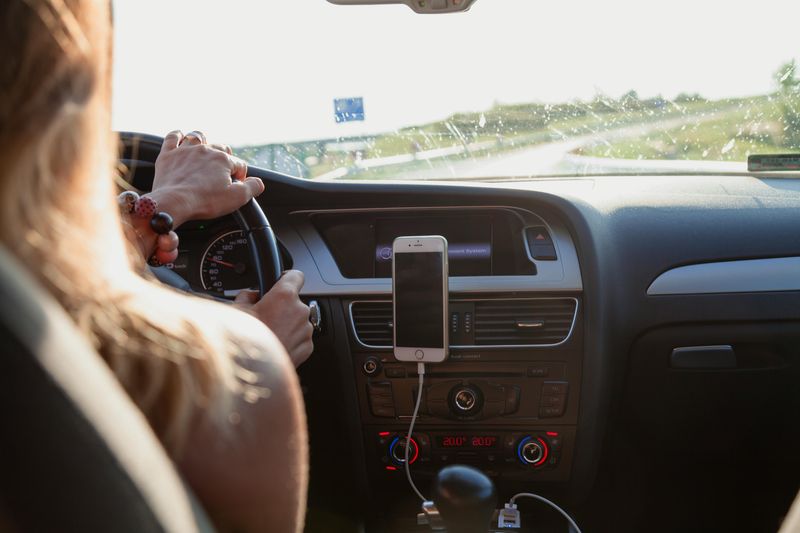
For over a century, driving has been a symbol of freedom and independence.
The open road, your hands on the wheel, choosing your own route, your own speed, your own playlist, it’s a deeply personal experience that millions of people genuinely love.
Self-driving technology is advancing rapidly, and many experts believe fully autonomous vehicles will dominate roads within a generation.
Some cities may eventually ban human-operated cars entirely for safety and efficiency reasons.
The thrill of merging onto a freeway or parallel parking perfectly on the first try could become skills that future generations never need, or even get, to learn.
6. Coral Reefs in Their Full Glory
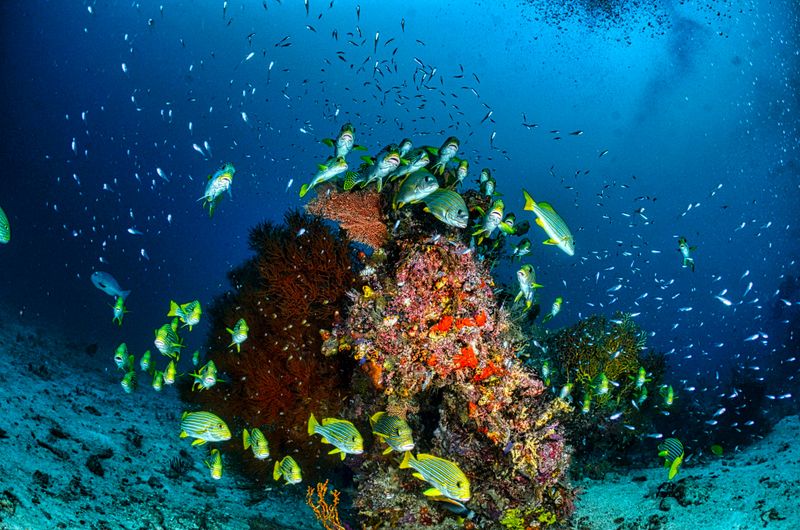
Imagine snorkeling over a rainbow of coral, watching hundreds of fish dart between bright pink and orange formations.
For now, some of the world’s most breathtaking reefs still exist in this vivid, living form.
But warming oceans are bleaching and killing them at an alarming rate.
Scientists warn that up to 90 percent of coral reefs could disappear by 2050 if ocean temperatures continue rising.
Entire ecosystems depend on these underwater cities for survival.
Future generations may only know coral reefs through photographs and museum exhibits, missing out on one of the most spectacular natural wonders our planet has ever produced.
7. Landline Telephones

Remember the satisfying click of dialing a rotary phone, or the way a busy signal meant you actually had to try again later?
Landlines were once the backbone of everyday communication, and nearly every home had one.
Now they’re nearly extinct, kept alive mostly by older generations and businesses.
By 2030, analysts predict landline subscriptions will effectively vanish in most developed countries.
Kids today already find it strange to see a phone attached to a wall.
Future generations won’t just avoid landlines, they’ll look at them the way we look at telegrams: fascinating relics from a world that no longer exists.
8. Printed Newspapers

There’s a particular rustle that a newspaper makes when you fold it back to read the sports section.
It’s a sound tied to lazy Sunday mornings, coffee mugs, and a slower pace of life.
Millions of people grew up with that ritual, and it shaped how entire generations understood the world around them.
Newspaper circulation has dropped by more than half over the past two decades, with hundreds of local papers shutting down permanently.
Digital news moves faster but often lacks the depth and local focus that print journalism once provided.
Future readers may never know the simple pleasure of ink-stained fingertips after the morning paper.
9. Stable, Predictable Seasons

Seasons used to feel reliable.
You expected snow in December, blooming flowers in April, and scorching heat in July.
That rhythm shaped holidays, farming, fashion, and even people’s moods.
Most of us still carry that seasonal calendar in our heads without questioning it.
Climate change is scrambling those patterns in ways that are already measurable.
Winters are shorter, summers are longer, and extreme weather events are becoming more frequent and intense.
Children born today are growing up in a climate that looks noticeably different from their grandparents’ childhood.
Future generations may experience seasons that feel completely foreign compared to what we currently consider normal.
10. Cash and Coins

Digging through your pocket for exact change, checking your wallet before leaving the house, the satisfying weight of coins, these small habits are already disappearing faster than most people realize.
Digital payments have made physical money feel almost old-fashioned in just a single decade.
Sweden, China, and several other countries are already moving aggressively toward fully cashless economies.
Central banks worldwide are developing digital currencies designed to eventually replace physical money entirely.
Future generations may never experience the simple childhood excitement of finding a crumpled dollar bill in an old jacket pocket, or the magic of a coin collection passed down through the family.
11. Truly Wild, Untouched Wilderness

Somewhere out there right now, there are forests no human has walked through in decades, rivers that flow without a single dam, and mountains where the only sounds are wind and wildlife.
That kind of raw, untouched wilderness still exists, but it’s shrinking every single year.
Human development, deforestation, and resource extraction are eating into wild spaces at a pace that alarms conservationists worldwide.
The Amazon rainforest alone loses thousands of acres daily.
Future generations may inherit a world where every patch of land is mapped, managed, or developed, leaving behind only carefully preserved nature reserves as reminders of what true wilderness once looked like.
12. Bookstores and Libraries as Community Hubs

Walking into a good bookstore feels like stepping into a place where time slows down.
The smell of paper, the quiet browsing, the occasional recommendation from a staff member who actually read the book, it’s an experience that no algorithm has ever truly replicated.
Libraries carry that same communal magic.
Physical bookstores have been closing at a heartbreaking rate since the rise of online shopping and e-readers.
Many public libraries are facing severe budget cuts and shifting toward digital-only models.
Future generations risk losing these beloved gathering places entirely, trading the warmth of a shared reading community for the cold convenience of a download button.
13. Boredom as a Creative Spark
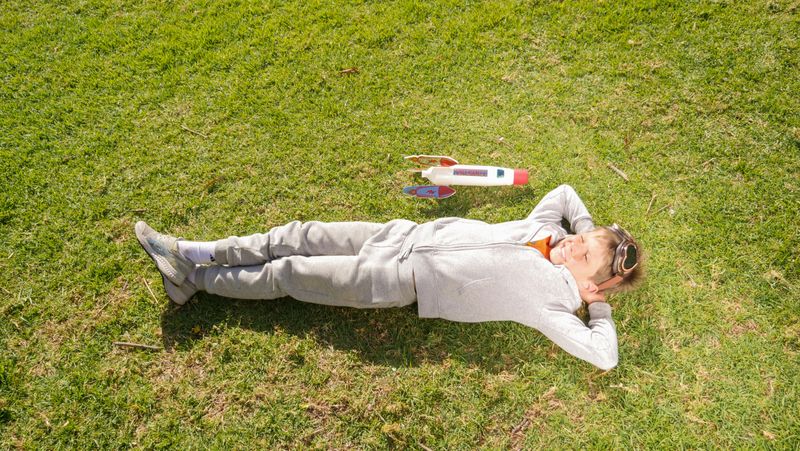
Boredom gets a bad reputation, but it has quietly fueled some of the greatest inventions, stories, and ideas in human history.
When there’s nothing to do, the mind starts wandering, and that wandering is where creativity is born.
Kids who stared at ceilings or clouds often came up with their best ideas precisely because nothing else was competing for their attention.
Smartphones and endless content have practically eliminated unstructured downtime for most people.
Notifications, videos, and apps fill every spare second before boredom even gets a chance to show up.
Future generations may never experience the slow, productive discomfort of having absolutely nothing to do.
Comments
Loading…