
 Isabel Parker
12 Things Men Do When They Were Raised Without a Healthy Father Figure

A father’s influence can shape how a boy learns to handle conflict, express emotion, and feel safe in relationships, especially when that influence is harsh, unpredictable, or absent.
When a man grows up with a “bad dad” (controlling, shaming, volatile, neglectful, or emotionally unreachable), he often learns survival strategies that make sense in childhood but cause problems in adulthood.
This isn’t about labeling someone as broken, and it’s definitely not a diagnosis.
Plenty of men do the work, heal, and become deeply loving partners.
Still, patterns can offer clues about what someone learned at home.
If you’ve ever felt like you’re dating someone who reacts to normal situations as if they’re threats, the reason may go back further than your relationship.
Here are 12 behaviors that can hint at a damaging father-son dynamic.
1. He apologizes for existing

Even when nothing is wrong, some men act as if they’re already in trouble.
They may over-explain a simple choice, ask permission for things most adults don’t need approval for, or apologize repeatedly for taking up time and space.
This often comes from growing up with a father who criticized, nitpicked, or punished mistakes harshly, which teaches a child that peace depends on staying small.
In adulthood, that habit can show up as excessive people-pleasing, anxious self-monitoring, and discomfort around confident women who speak plainly.
The tricky part is that it can look polite at first, but over time it creates an uneven dynamic where you’re always reassuring him.
Healthy confidence doesn’t mean arrogance; it means believing you deserve to be here without constantly proving it.
2. He can’t handle gentle feedback
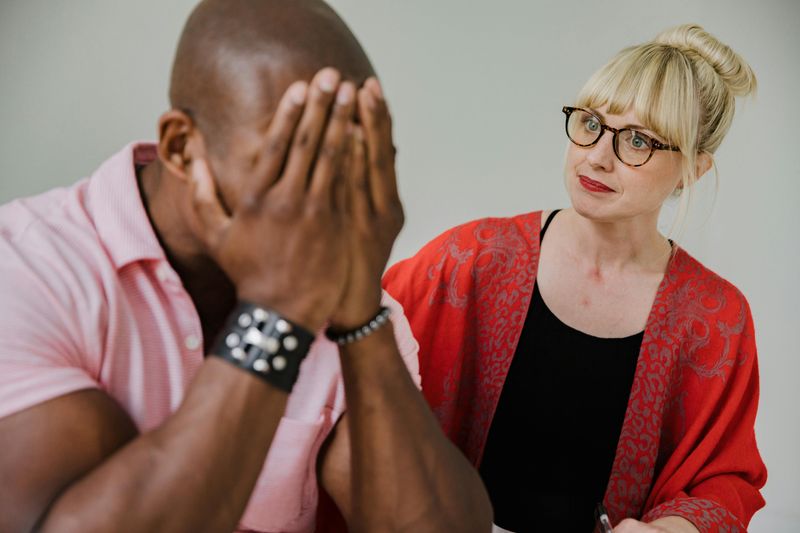
A simple suggestion can land like a personal attack when someone was raised in a home where criticism meant humiliation.
Instead of hearing, “Hey, that hurt my feelings,” he hears, “You’re failing,” and his nervous system reacts accordingly.
You might notice defensiveness, sudden withdrawal, or an attempt to flip the conversation so you feel guilty for bringing anything up.
In families with harsh fathers, boys often learn that admitting fault leads to punishment, so they become experts at self-protection rather than growth.
Over time, this can make relationships exhausting because conflict never stays focused on the issue.
The healthiest response to feedback is curiosity, not combat.
If accountability always turns into a crisis, it may be less about the topic and more about an old fear of being shamed.
3. He mistakes control for love

Some men equate “I care about you” with “I need to manage you,” especially if their father’s love came wrapped in rules, threats, or constant monitoring.
This can look like questioning your outfits, discouraging certain friendships, demanding updates, or acting offended when you make independent plans.
He might frame it as protection or concern, but the underlying message is often anxiety and mistrust.
In childhood, a controlling dad teaches a boy that power equals security, so control becomes a shortcut to feeling safe.
In adult relationships, though, it slowly erodes connection because love can’t thrive where autonomy is treated like betrayal.
Caring partners make room for your choices, even when they don’t fully understand them.
When “love” starts to feel like supervision, it’s usually not devotion; it’s fear trying to run the relationship.
4. He avoids emotional conversations like the plague

For men raised by emotionally unsafe fathers, feelings can register as danger rather than information.
Instead of talking through discomfort, he may change the subject, crack jokes, suddenly get sleepy, or retreat into work and screens whenever a serious conversation begins.
This isn’t always indifference; it can be a learned response from growing up in a home where vulnerability was mocked, punished, or ignored.
Many boys were taught that emotions make you weak, and a “real man” stays silent and stoic.
The problem is that relationships require emotional presence, not just physical proximity.
When a partner consistently disappears during meaningful moments, you end up doing all the emotional labor alone.
A healthy adult can sit with discomfort long enough to understand it, even if he needs time to find the right words.
Avoidance may keep the peace short-term, but it blocks intimacy long-term.
5. He’s either hyper-independent or clingy

Some men grow up believing they can only rely on themselves, while others learn to chase security because it was inconsistent at home.
If his father was absent, unreliable, or emotionally cold, he may become fiercely self-sufficient, refusing help and dismissing needs as “drama.”
On the flip side, a chaotic childhood can create anxiety that shows up as clinginess, constant reassurance-seeking, or fear when you need space.
Both patterns are rooted in the same wound: uncertainty about whether support is safe and reliable.
Hyper-independence can look admirable at first, but it often turns into emotional distance that makes you feel shut out.
Clinginess can feel flattering early on, yet becomes suffocating when normal boundaries trigger panic.
Secure love lives in the middle, where closeness doesn’t erase individuality and independence doesn’t mean isolation.
The key clue is whether he can soothe himself without demanding you fix his feelings.
6. He struggles to trust women

When a boy grows up with a father who spoke bitterly about women, treated his mother poorly, or framed women as manipulative, those ideas can quietly become his worldview.
You might notice suspicion where none is warranted, assumptions about your motives, or a tendency to “test” you instead of communicating directly.
Even innocent actions can be interpreted as evidence that you’ll betray him, leave him, or embarrass him, which creates tension you didn’t earn.
Trust issues can also come from watching a father lie, cheat, or break promises, because that teaches a child that relationships are unstable by nature.
In adulthood, the result is often a partner who needs constant proof that you’re safe, yet never fully relaxes.
Healthy trust isn’t blind; it’s built through consistency and honest conversation.
When he treats you like a future villain, he’s often fighting an old story rather than responding to who you actually are.
7. He performs masculinity instead of living it

A man who was raised by a harsh or rigid father may feel pressured to look “manly” at all costs, even when it conflicts with his real personality.
Instead of being grounded and confident, he might overemphasize dominance, toughness, or being right, because he learned that respect equals fear.
This can show up as mocking emotions, dismissing “soft” interests, or acting like compassion is embarrassing.
Underneath the performance is often a terrified kid who was taught love is conditional on meeting a narrow definition of masculinity.
The tragedy is that true strength includes empathy, self-control, and the ability to admit mistakes without crumbling.
When masculinity becomes a costume, relationships suffer because authenticity is replaced by ego-management.
The healthiest men don’t need to prove anything; they know who they are and let their actions speak.
If he’s always auditioning for approval, it may be because his father made love feel like a test.
8. He has a short fuse—or a long simmer

Not everyone who struggles with anger is loud about it.
Some men blow up quickly over small frustrations, while others stay eerily calm but store resentment until it leaks out through sarcasm, passive aggression, or sudden coldness.
Both patterns often come from childhood homes where anger was unsafe, unpredictable, or used as a weapon.
If his father exploded or punished emotions, he may have learned either to copy that volatility or to suppress everything until he can’t anymore.
The result is a nervous system that swings between control and chaos, with little practice in healthy expression.
Over time, you may feel like you’re walking on eggshells because you can’t predict which version of him will show up.
Anger itself isn’t the enemy; it can signal boundaries and unmet needs.
The issue is when anger becomes his main language because he never learned safer words.
9. He’s uncomfortable with healthy kindness

When someone grew up with love that was inconsistent, conditional, or followed by criticism, calm affection can feel suspicious.
A supportive partner might be met with skepticism, distance, or even self-sabotage, because he expects the other shoe to drop.
He may push you away after a good day, pick a fight when things are peaceful, or downplay your compliments as if they can’t be true.
This often stems from learning that kindness was either rare or transactional, so he assumes warmth has hidden strings attached.
Over time, you can feel like you’re being punished for being good to him, which is confusing and draining.
Healthy relationships aren’t built on emotional whiplash; they’re built on consistency and trust.
If he seems more relaxed during drama than during stability, it can be a sign that chaos feels familiar and calm feels foreign.
Real intimacy requires letting love land without immediately bracing for impact.
10. He doesn’t know how to take responsibility without shame

In homes with a “bad dad,” mistakes often brought humiliation rather than guidance, so accountability became emotionally dangerous.
As an adult, he may avoid responsibility altogether, deflecting blame and insisting he did nothing wrong because admitting fault feels like stepping into shame.
Or he may do the opposite, collapsing into self-hatred over minor missteps, apologizing excessively, and acting like he’s beyond repair.
Neither extreme is true accountability; one is denial and the other is emotional self-punishment.
Healthy responsibility sounds like, “You’re right, I messed up, and here’s how I’ll fix it,” without the theatrics and without the defensiveness.
If every conflict turns into either a courtroom or a meltdown, you end up managing his emotions instead of resolving the issue.
Shame keeps people stuck because it focuses on identity rather than behavior.
Growth becomes possible when he can separate “I made a mistake” from “I am a mistake.”
11. He uses humor, sarcasm, or criticism as armor
A biting joke can be a shield when vulnerability feels unsafe.
Men raised by critical or emotionally distant fathers often learn to stay untouchable by turning everything into a punchline, especially when conversations get personal.
At first, the banter can seem charming, but over time it may include “teasing” that stings, sarcastic comments when you share feelings, or subtle put-downs followed by “I’m just kidding.”
This behavior often comes from homes where tenderness was mocked or where expressing needs led to ridicule.
Humor isn’t the problem; avoidance is the problem, especially when humor becomes a way to dodge accountability or invalidate someone else’s emotions.
A healthy relationship can handle jokes and depth, sometimes in the same conversation, but not at the cost of respect.
If you constantly feel small or dismissed, it’s worth paying attention.
Armor protects the wearer, but it also blocks closeness, and intimacy can’t thrive when everything is treated like a setup for a punchline.
12. He repeats the “power plays” he hated

Childhood patterns have a way of resurfacing, especially under stress, and the most painful part is that people often repeat what they once resented.
If he grew up around domination, intimidation, or emotional withholding, he may unconsciously recreate those dynamics in adult relationships, even while claiming he never wants to be like his father.
This can look like interrupting and talking over you, dismissing your feelings, keeping score, using the silent treatment, or threatening to leave to regain control.
These are power moves, not partnership skills, and they usually come from a belief that relationships are about winning rather than understanding.
Many men don’t realize they’re doing it because it feels normal to them, like the default language of conflict.
The good news is that patterns can be unlearned, but only with awareness and effort.
Love requires shared power, where both people feel heard, respected, and safe, even during disagreement.
Comments
Loading…