
 Mary Murphy
12 Old-School Kitchen Gadgets That Did Their Job Better Than Anything We Have Today

Somewhere between “smart” appliances and one-click convenience, a lot of kitchen tools got a little… overdesigned.
The old-school gadgets our parents and grandparents relied on weren’t trying to be trendy or multifunctional; they were built to do one job extremely well, survive years of daily use, and clean up without a complicated instruction manual.
Many of them also offered something modern versions still struggle to match: control.
Whether you wanted a finer grind, a smoother mash, or a crispier waffle, you could feel the process and adjust as you went.
And because so many of these classics were made from sturdy metal, glass, or cast iron, they often outlast the modern replacements by decades.
Here are twelve vintage kitchen workhorses that still do their job better than almost anything sold today.
1. Hand-crank egg beater (rotary whisk)
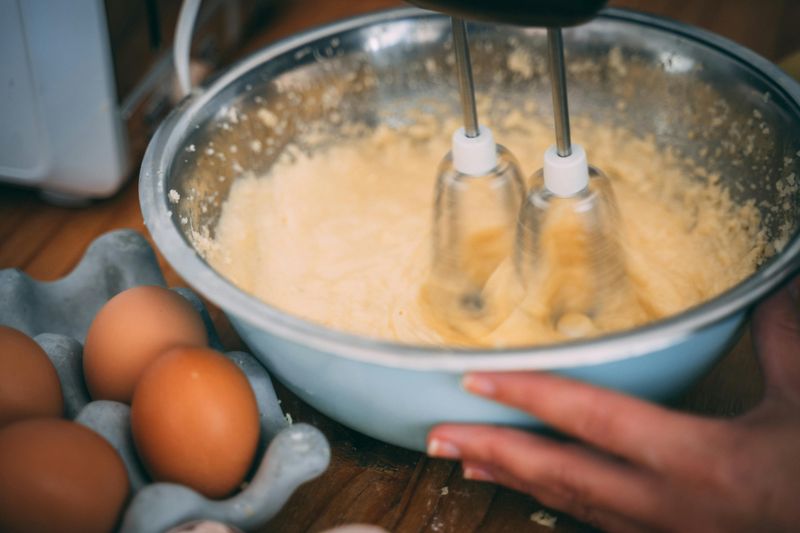
Before electric mixers took over, this simple hand-powered tool handled everything from scrambled eggs to light whipped cream with surprising speed.
The best part is the control you get, because the gears respond instantly to your pace, so you can go from gentle folding to vigorous beating without switching attachments or worrying about overdoing it.
Cleanup is also refreshingly painless: there’s no motor housing to avoid, no bulky base, and no sticky whisk heads that require special care.
Many vintage models are all metal and feel practically indestructible compared to modern plastic versions that can crack or wobble under pressure.
It’s also quieter than anything electric, which matters more than you think during early mornings.
For small batches, it’s often faster overall than dragging out a mixer.
2. Cast-iron waffle iron (stovetop)

Modern waffle makers promise crisp perfection, but plenty of them deliver pale waffles with a soft, steamed texture that never quite hits “diner good.”
A heavy stovetop version made from cast iron behaves differently, because it holds heat steadily and browns batter in a deeper, more even way.
That’s what creates the contrast people actually want: a crunchy outer shell with a tender inside.
Once seasoned properly, the surface releases waffles beautifully without the fragile nonstick coatings that chip or degrade over time.
You also get more control, since you can adjust heat on the burner and flip the iron based on how your waffles are behaving.
These irons can last for generations, and the results feel old-fashioned in the best way.
If you care about texture, this is the upgrade.
3. Manual meat grinder (clamp-on)
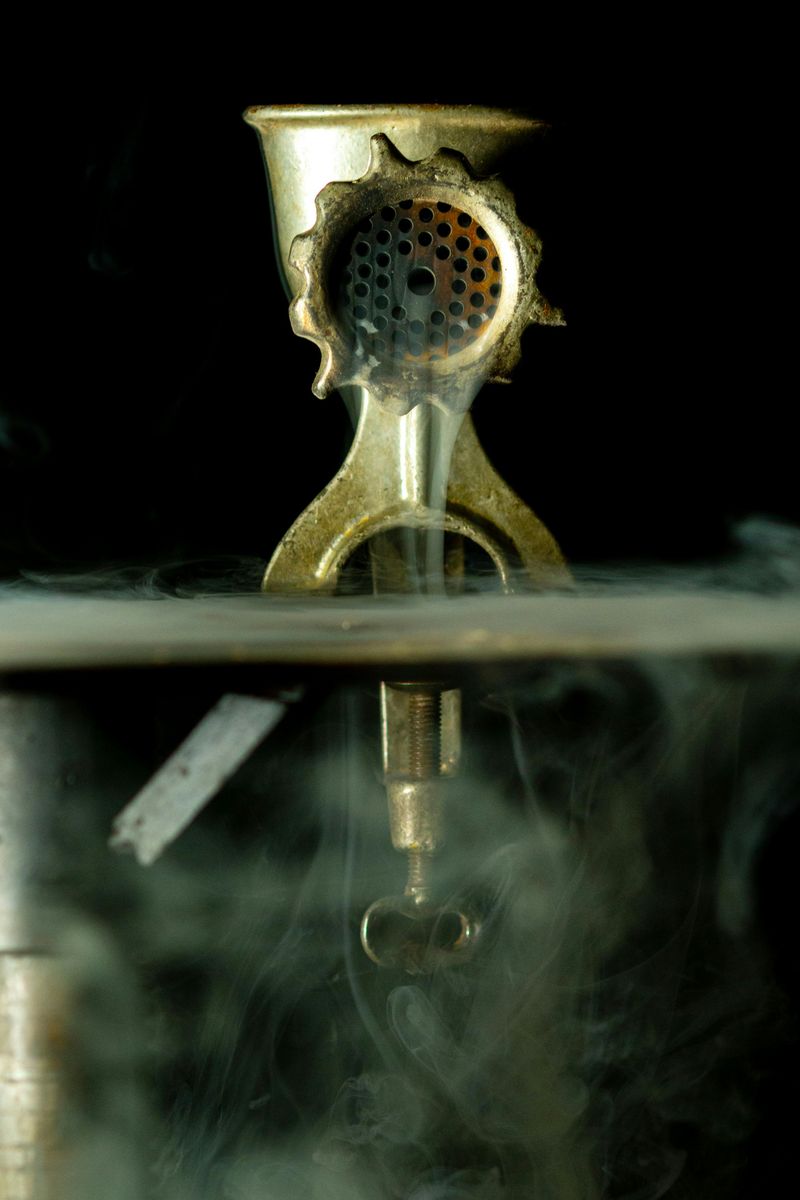
Store-bought ground meat is convenient, but it often lacks the texture and freshness that make burgers and meatballs taste truly homemade.
A clamp-on hand grinder lets you choose the cut, the fat ratio, and the grind size, which gives you better flavor and a cleaner bite.
Unlike many modern countertop grinders, vintage-style models are usually built with solid metal parts that don’t overheat quickly, and they can handle small batches without complicated setup.
You can also grind with intention, because the crank lets you control speed, which helps prevent the meat from turning pasty.
Cleanup is straightforward if you rinse and dry it quickly, and replacement parts are often easy to find.
For anyone who wants better burgers, sausages, or even ground turkey, this old tool still outperforms a lot of pricey gadgets.
4. Hand-crank can opener (all-metal, vintage style)
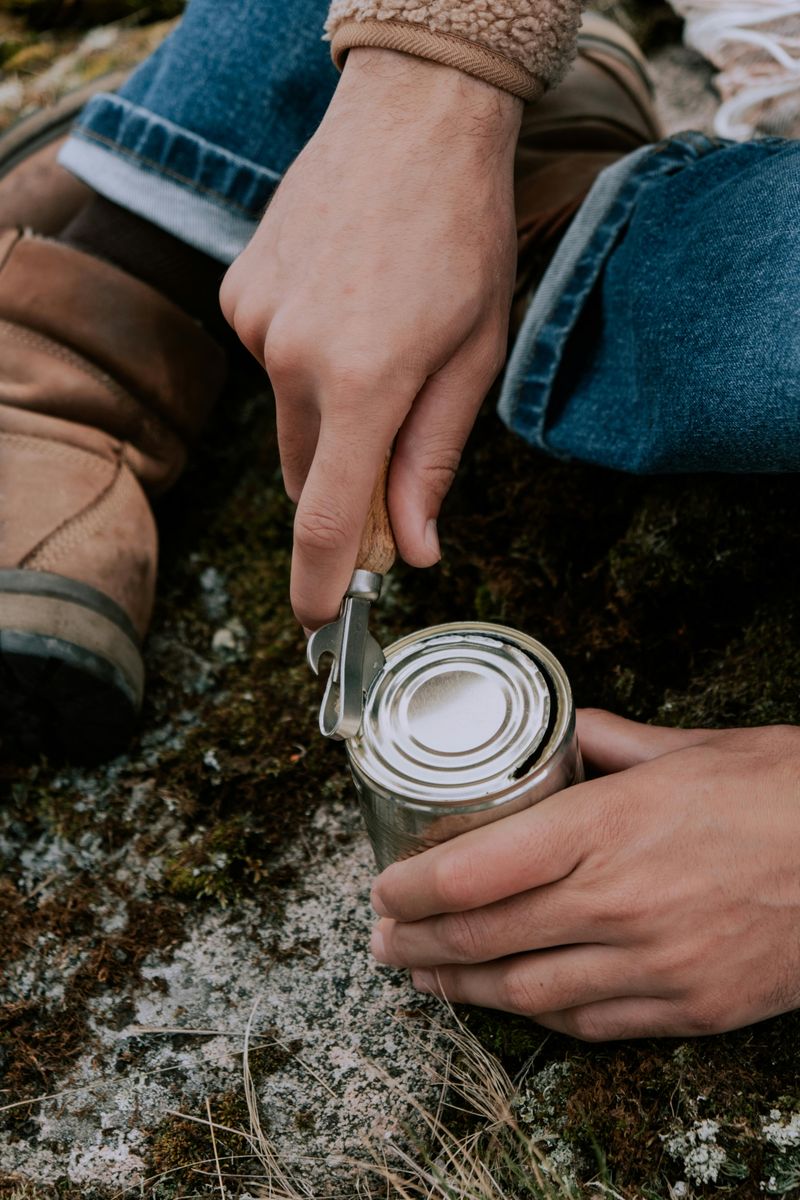
There’s a reason so many people keep an old can opener tucked away even after buying newer “safety” versions.
The classic all-metal style is reliable, sharp, and surprisingly ergonomic once you get used to it.
Instead of slipping, wobbling, or leaving jagged edges, a well-made vintage opener bites cleanly into the rim and keeps moving until the lid lifts off with minimal drama.
Modern openers often have more plastic parts, which can crack, dull quickly, or stop gripping properly over time.
With the older design, you can usually sharpen it, tighten a screw, or simply keep using it for decades without issue.
It’s also compact, which matters in small kitchens where drawer space is precious.
When something does one simple job perfectly, you don’t miss the extra features at all.
5. Potato ricer
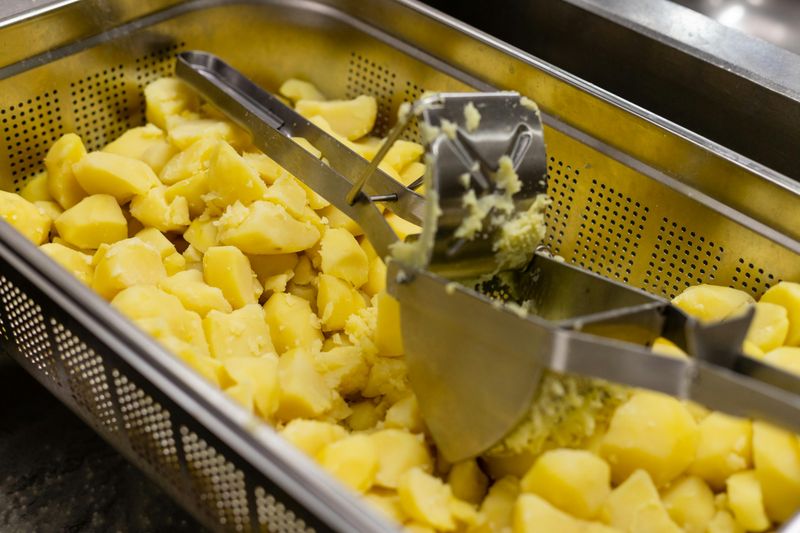
If your mashed potatoes sometimes turn gluey, it’s usually not your ingredients—it’s the mixing method.
A ricer works by pressing cooked potatoes through small holes, creating fluffy strands that mash smoothly without overworking the starch.
That’s a big reason it still beats most modern mashers and “quick” gadgets that promise silky results.
Because the texture is so even, you need less stirring afterward, which keeps your potatoes light rather than heavy and sticky.
It’s also incredibly useful beyond potatoes, since it can handle cooked cauliflower, sweet potatoes, and even drained spinach when you’re trying to remove excess water.
A sturdy ricer made from metal holds up for years, while many newer plastic versions flex or crack under pressure.
For classic comfort food done right, this tool feels like a cheat code.
6. Food mill
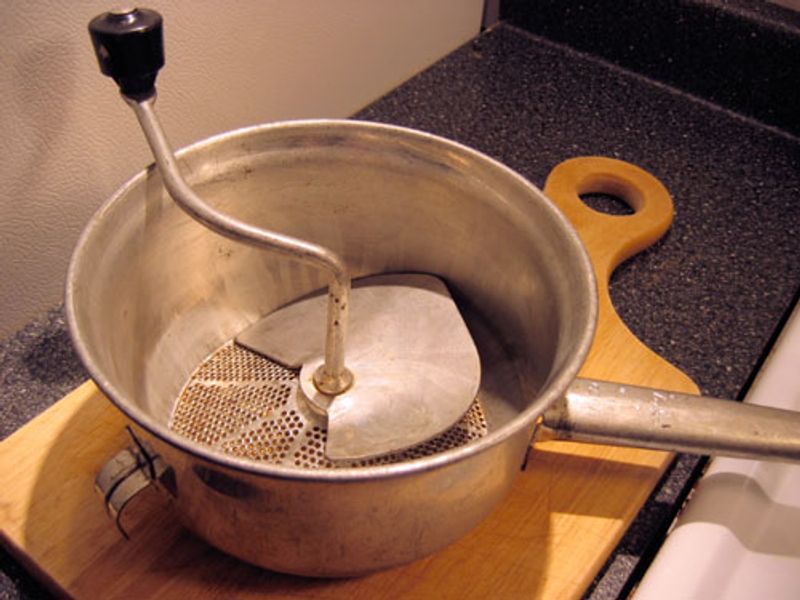
Blenders and immersion mixers are everywhere, but they often struggle with one very annoying problem: they don’t remove skins and seeds.
A food mill solves that in one step by pureeing soft foods while separating the bits you don’t want, which makes it perfect for tomato sauce, applesauce, and smooth soups.
The texture it produces is also different from a blender’s, because it’s less foamy and more naturally thick, which gives sauces a more old-fashioned, slow-cooked feel.
You don’t have to worry about hot liquid splashing, and you’re not stuck scraping puree out of blades and tight crevices afterward.
With a few interchangeable discs, you can control how fine the final product is, and the whole thing comes apart for easy washing.
If you cook seasonally or make sauces from scratch, a food mill still earns its space.
7. Butter churn (or butter paddle set)
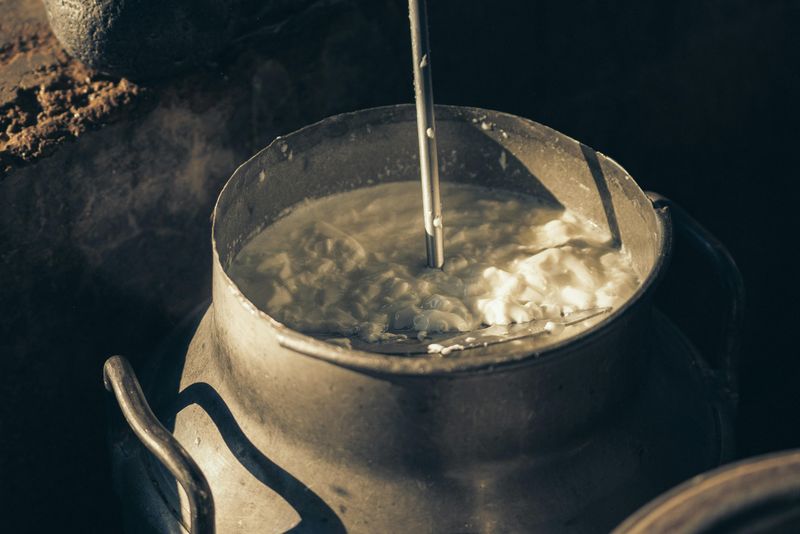
Homemade butter sounds like a quirky project until you taste it and realize how much richer and fresher it can be.
A traditional churn, or even a butter paddle setup, gives you control over the texture and the moisture content, which affects everything from spreadability to how it melts on warm toast.
Modern shortcuts often rely on overprocessing or mixing in a way that produces butter with less character, while the old method creates a creamy, satisfying result and lets you decide how much salt to add.
Another underrated benefit is the buttermilk you get as a byproduct, which is excellent for pancakes, biscuits, and marinades.
The process is also surprisingly simple once you learn the rhythm, and the tools themselves are typically built to last.
It’s old-school for a reason: the results feel special without being fussy.
8. Stoneware crock for pickling/fermenting
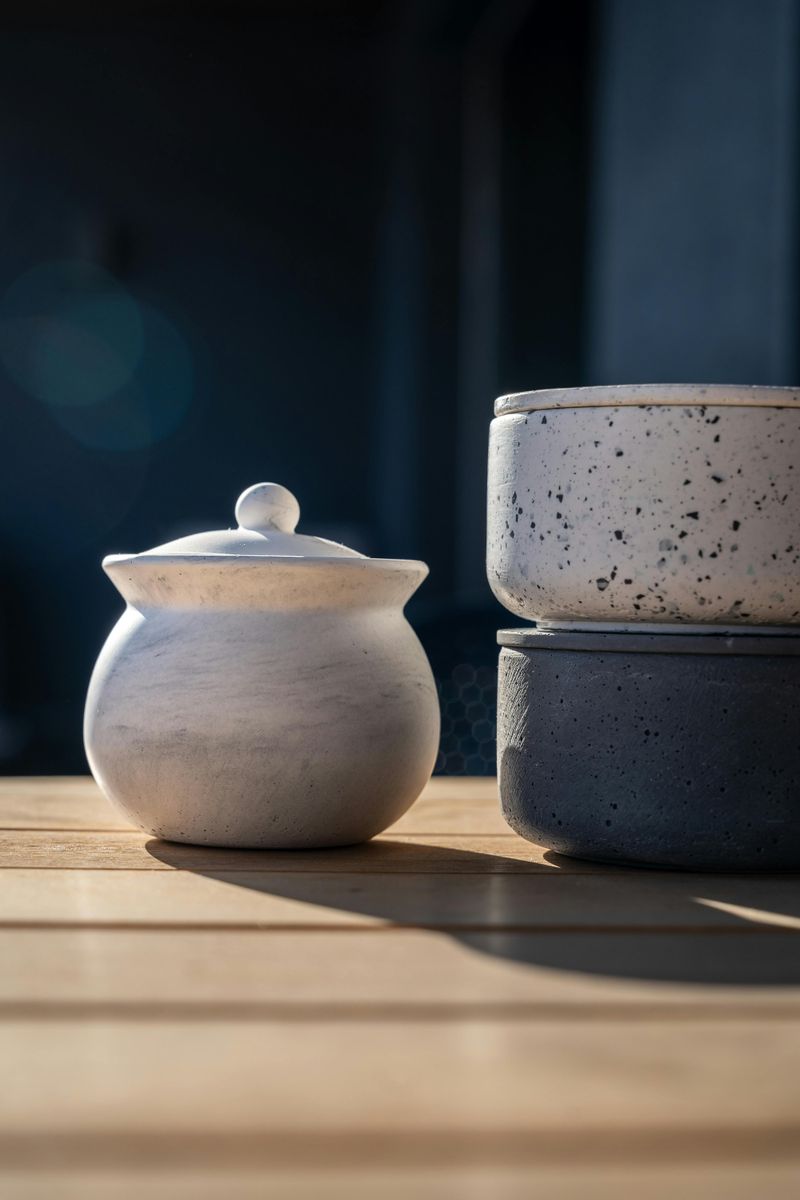
Fermentation has become trendy again, but a lot of modern kits feel flimsy compared to the heavy-duty crocks people used for generations.
A stoneware crock maintains a stable temperature and blocks light, both of which help fermentation stay consistent and safe.
It also holds enough volume for real batches, so you can make pickles, sauerkraut, or kimchi without juggling multiple jars and weights.
The best old crocks are thick, durable, and designed for the job, which means they’re less likely to crack from minor bumps or temperature changes.
When paired with a proper weight, the crock keeps vegetables submerged, reducing the risk of mold and improving flavor.
The end result tends to taste deeper and more balanced, because steady fermentation encourages complexity.
If you like pantry projects, this is one vintage vessel that still outclasses most modern alternatives.
9. Glass citrus reamer + juicer
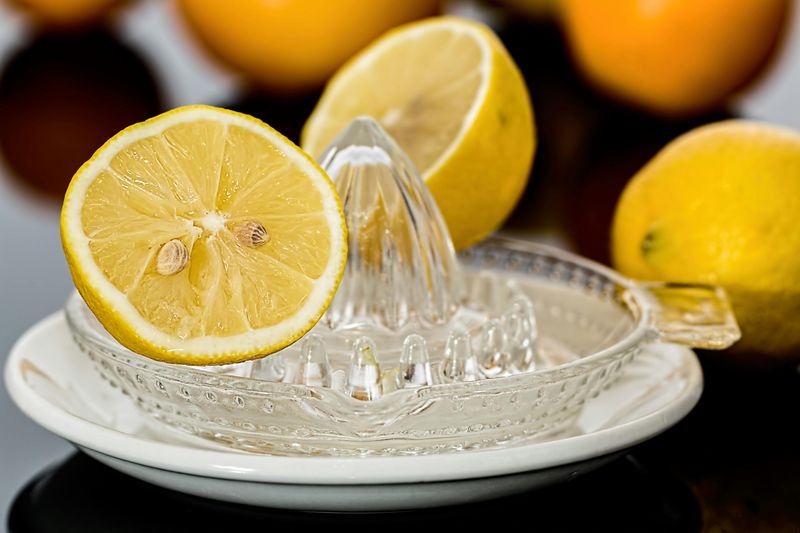
Electric juicers are fast, but they often come with messy parts, awkward storage, and cleanup that takes longer than the juicing itself.
A simple glass reamer and juicer set is the opposite: you grab it, press, pour, and rinse, and you’re done.
The weight of glass helps keep it stable on the counter, and the ridged reamer does a great job extracting juice without shredding bitter pith.
Many modern plastic versions stain, absorb odors, or develop scratches that trap grime, while glass stays clean and nonreactive.
It’s also easy to measure what you’ve squeezed, which matters for recipes like marinades, salad dressings, and baking.
For everyday lemons and limes, this low-tech tool often gets you as much juice as a bulky machine, with a fraction of the hassle.
10. Dover-style hand egg separator / simple slotted separator
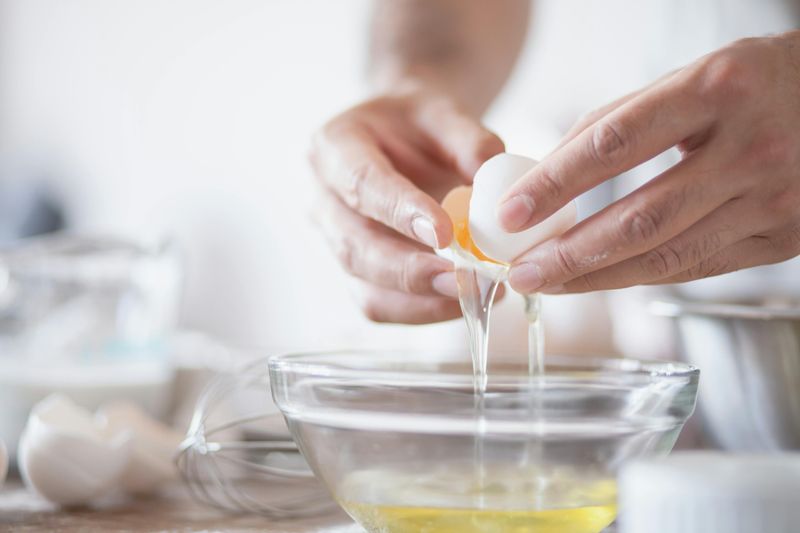
Separating eggs doesn’t need a specialized gadget with awkward shapes or narrow channels that trap egg white.
A basic slotted separator—or even the classic metal version—works because it relies on gravity and clean edges rather than gimmicks.
You crack the egg, let the white slip through, and the yolk stays intact, which reduces the chance of breaking it and having to start over.
Many modern novelty separators are harder to clean and surprisingly easy to clog, especially when you’re working quickly or separating multiple eggs.
Old-style separators are usually compact, sturdy, and rinse clean in seconds, and they don’t take up space in the drawer.
They’re also easier to use over a bowl without dripping everywhere, which matters when you’re baking and trying to stay tidy.
For something so simple, the classic design still feels like the smartest.
11. Vintage box grater (heavy gauge metal)
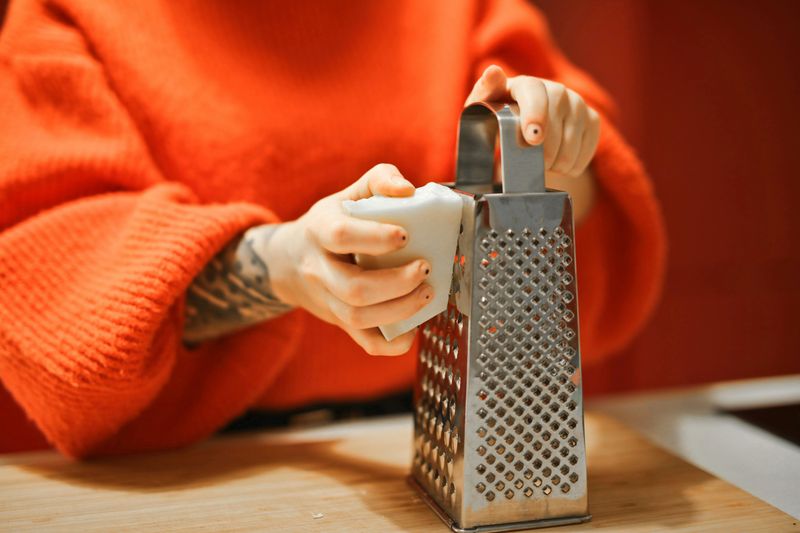
A good grater doesn’t need to be fancy; it needs to be sharp, stable, and comfortable enough that you’ll actually use it.
Older heavy-gauge box graters deliver on all three, especially compared to modern lightweight versions that slide around and dull too quickly.
With four sides, you get multiple textures—fine shreds, coarse shreds, slicing, and zesting—without buying separate specialty tools.
The sturdier metal also makes grating smoother and safer, because you don’t have to press as hard to get results.
Many newer “single-purpose” graters take up more space and still don’t outperform a solid classic.
The box shape is also great for catching what you grate, which keeps the counter cleaner.
Whether you’re shredding cheese, grating potatoes, or zesting citrus, a well-made vintage grater is one of those tools that quietly does everything better.
12. Tin/aluminum flour sifter (hand-crank or squeeze-handle)
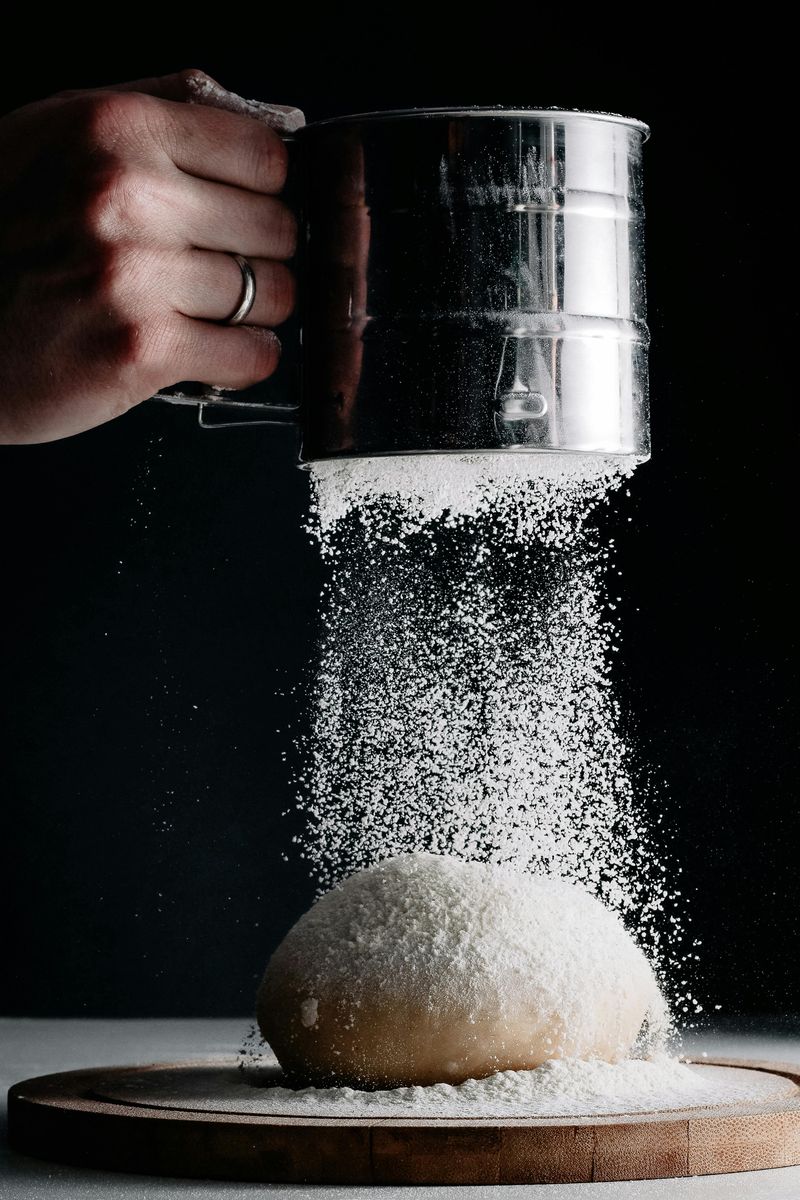
Flour sifters may feel old-fashioned, but they still solve a problem modern baking shortcuts don’t always address: clumps and uneven mixing.
A hand-crank or squeeze-handle sifter aerates flour quickly and consistently, which can improve the tenderness of cakes, biscuits, and pancakes.
It also helps distribute baking powder, cocoa, and spices more evenly, so you don’t end up with pockets of bitterness or dry spots.
Modern alternatives like whisking in a bowl can work, but they’re not always as thorough, especially when flour has been sitting for a while.
Vintage sifters are often made from metal and built with simple mechanisms that last, while some newer versions feel flimsy or stick after a few uses.
The best part is how easy it is to control the amount, since you can sift directly into your measuring cup or mixing bowl.
When baking is about precision, this classic tool still earns its place.
Comments
Loading…