
 Hailey Watson
11 Things Americans Do Every Day That Are Considered Rude Everywhere Else

Daily life in the U.S. comes with its own set of unspoken rules, and when you grow up surrounded by them, they feel completely normal.
You smile at strangers to be polite, you chat in line to pass the time, and you grab a snack while running errands because you’re busy and hungry.
The funny part is that the exact same behaviors can land very differently in other countries, where social norms prioritize quiet, privacy, or more formal public manners.
None of this makes Americans “wrong,” but it does show how culture shapes what’s considered respectful.
If you’ve ever traveled and felt like people were giving you a look you couldn’t quite explain, these everyday habits might be why.
Here are 11 things many Americans do daily that can be socially unacceptable elsewhere.
1. Talking loudly in public spaces

Volume standards aren’t universal, and what feels like normal conversation in the U.S. can come across as disruptive in places that value quieter public life.
On trains, in cafés, or in small shops, speaking loudly can be interpreted as a lack of awareness for the people around you who are trying to read, rest, or simply enjoy the space.
In countries where public areas are treated as shared “quiet zones,” loud laughter, animated storytelling, or projecting your voice across a table can be viewed as attention-seeking rather than friendly.
Even when no one confronts you, you may notice subtle signals like people moving away, exchanging glances, or lowering their own voices.
If you’re traveling, matching the room’s energy is an easy way to blend in and avoid accidentally being the loudest person present.
2. Taking phone calls (or video calls) on speaker in public

Public conversations can feel intrusive when they’re amplified, and many cultures consider it impolite to broadcast your personal life to strangers who didn’t choose to listen.
Speakerphone calls, FaceTime chats, and voice notes played out loud are especially frowned upon in shared spaces like public transportation, waiting rooms, or quiet cafés, where people expect a basic level of privacy and calm.
Even if the content is harmless, the sound itself can be seen as a form of “space taking,” because it forces everyone nearby into your interaction.
In countries with stronger norms around personal boundaries, this habit reads less like convenience and more like disregard.
When you’re out, using headphones or keeping calls brief and quiet generally signals respect, and it tends to prevent the kind of side-eye that can follow loud phone behavior.
3. Smiling at strangers nonstop

Friendly expressions are often encouraged in the U.S., but nonstop smiling at people you don’t know can carry different meanings elsewhere.
In some places, a big grin directed at a stranger can be interpreted as fake politeness, unwanted flirtation, or even confusion about why you’re making contact without a reason.
Cultures that reserve smiles for genuine warmth shared among friends may find “customer-service” cheerfulness a little unsettling, particularly in situations like walking down the street or sitting quietly on transit.
That doesn’t mean people are unfriendly; it often means they show respect through neutrality and not drawing attention to others.
If you notice that locals keep their faces more composed, it can help to soften your expressions and let interactions guide your reaction.
When a smile happens naturally in the right moment, it tends to be received warmly almost anywhere.
4. Making small talk with total strangers

Casual conversation is practically a national pastime in the U.S., but not every culture treats chatty friendliness as a default setting.
In countries where privacy is highly valued, initiating small talk with strangers in elevators, at bus stops, or in grocery lines can feel intrusive rather than charming.
People may assume you want something, that you’re being performative, or that you’re crossing an unspoken boundary by demanding social energy from someone who didn’t ask for it.
Even simple questions like “Where are you from?” or “What do you do?” can feel too personal when there’s no existing relationship.
Travelers often mistake a quiet response for coldness, when it’s actually a sign of respect for personal space.
If you’re in a new place, a safer approach is to follow the other person’s lead, keep interactions situational, and let the conversation unfold only if it’s clearly welcomed.
5. Wearing shoes inside the house

Indoor footwear is one of those cultural fault lines that surprises people because it feels so minor, yet it signals a lot about respect and cleanliness.
In many countries, stepping into a home with shoes on is seen as tracking the outside world into a private, cared-for space, especially in places where people sit on floors, use rugs for lounging, or have children playing indoors.
Guests are often expected to remove shoes at the door, and many households provide slippers or designated indoor shoes to make it easy.
Even if the home looks spotless, leaving your shoes on can still read as dismissive because it implies your comfort matters more than the host’s standards.
In some cultures, a host might not correct you directly, but they’ll remember it.
When you’re unsure, a quick glance near the entrance or a polite question about shoes immediately shows you’re trying to follow local norms.
6. Eating while walking

On-the-go eating is extremely common in American life, but in many places it’s associated with being rushed, careless, or disrespectful to the social setting.
Some cultures prefer that meals and snacks happen in designated places, like a café, a bench, or at home, because eating is treated as a moment of focus rather than something squeezed into a commute.
Walking down the street with food can be seen as messy, especially if there’s the possibility of crumbs, spills, or strong smells in crowded areas.
In certain countries, it can also be viewed as improper because it breaks the expectation that public spaces stay clean and orderly.
Even if you’re not littering, the perception matters, and locals might interpret the habit as “touristy” behavior.
If you want to stay aligned with local etiquette, it helps to pause, finish your snack in one spot, and treat food as something you give attention to rather than multitask through.
7. Snacking in stores or opening drinks before paying

It can feel harmless to open a drink or snack while shopping if you plan to pay at checkout, but many places treat that behavior as a serious social and legal line.
In countries with stricter retail norms, consuming items before purchase is seen as theft until the transaction is complete, and store staff may step in quickly rather than assuming good intentions.
Even when people aren’t confrontational, the habit can look entitled, as if the rules don’t apply because you’re confident you’ll pay later.
Parents who hand their child food off the shelf to keep them quiet may get especially judgmental looks in cultures that expect shoppers to handle needs before entering the store.
The difference is often about order and fairness, because the store’s systems rely on payment happening first.
If hunger or thirst hits mid-errand, a better move is to wait, head to a café area if the store has one, or purchase the item first before opening it.
8. Oversharing personal info with acquaintances

American culture often rewards openness, but the line between being relatable and being too personal shifts dramatically depending on where you are.
In some countries, sharing details about finances, relationship problems, medical issues, or family conflict with coworkers or casual acquaintances can feel inappropriate because personal matters are expected to stay within close circles.
What seems like honest conversation in the U.S. may be interpreted as emotional pressure, boundary crossing, or even a subtle attempt to gain attention or sympathy.
People who value privacy might respond by becoming more distant, not because they dislike you, but because they don’t know how to handle the level of disclosure without feeling obligated.
Even friendly settings can have strict expectations about what counts as “public conversation.”
When you’re unsure, it helps to keep topics lighter until you understand the local vibe, and to let others volunteer personal information first.
There’s a time and place for depth, but it lands best when it’s mutual and invited.
9. Tipping culture—especially expecting tips everywhere
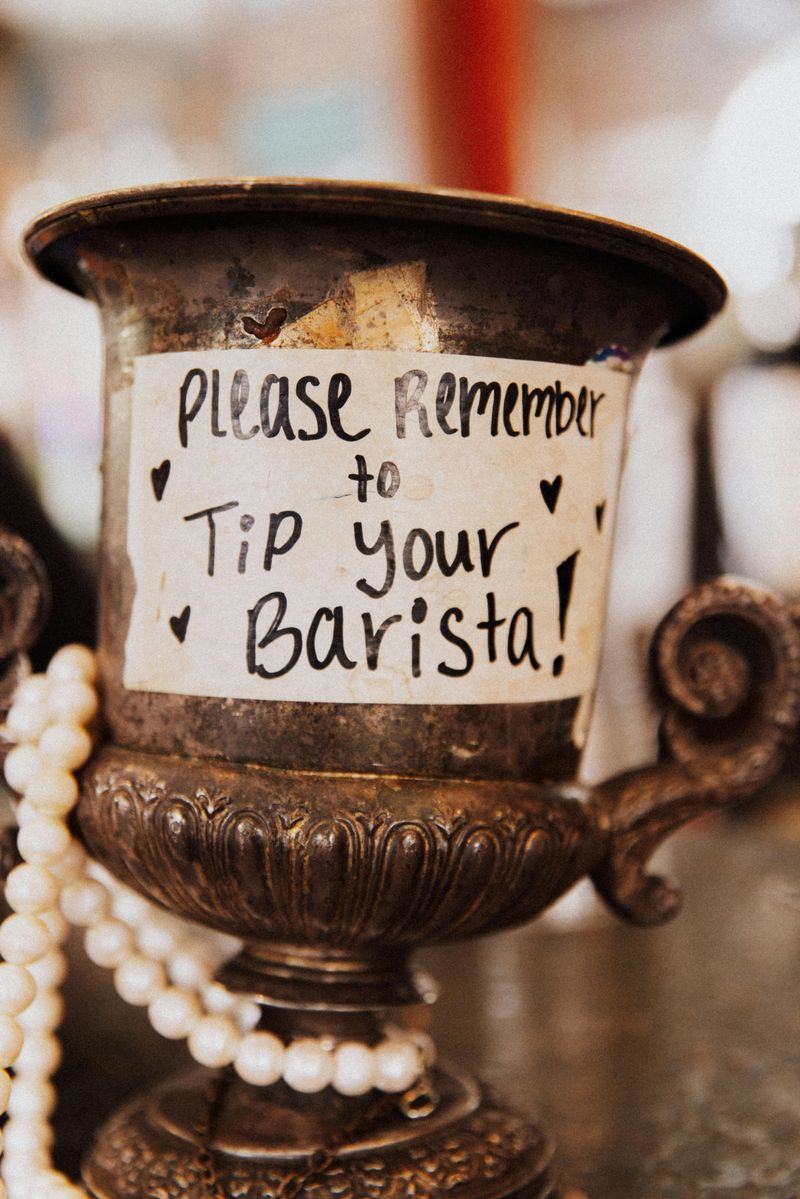
Tipping is deeply baked into the American service economy, but in many countries it’s either included in the price, treated as unnecessary, or even viewed as subtly insulting.
When travelers tip aggressively, some workers accept it as a bonus, but others may feel uncomfortable because it suggests their employer isn’t paying them fairly or that you’re trying to “buy” better service.
In places where service is considered part of professional pride, handing over extra money can imply the worker needs an incentive to do their job well, which clashes with local values.
Confusion also comes from how widespread tipping is in the U.S., where people are prompted to tip for coffee, takeout, and quick transactions that wouldn’t involve tipping elsewhere.
The safest approach is to learn local expectations, look for service charges on the bill, and follow what residents do.
If you want to show appreciation in a non-tipping culture, a sincere thank you and respectful behavior can go further than extra cash.
10. Wearing athleisure almost everywhere

Comfort-first outfits are a hallmark of modern American life, but not every culture sees leggings and sweatpants as acceptable outside of workouts or home.
In countries where public appearance is linked to self-respect and respect for others, casual athletic wear can read as sloppy, unserious, or even disrespectful, especially in settings like restaurants, public offices, or certain shopping districts.
The reaction isn’t always about being “fashionable” so much as signaling that you made an effort, because effort is often tied to social courtesy.
Even a simple upgrade like structured pants, clean sneakers, and a nicer top can shift how you’re perceived in places with stricter style norms.
Travelers sometimes get surprised by how differently they’re treated based on clothing, especially in cities where people dress sharper by default.
If you’re unsure, paying attention to what locals wear during everyday errands is the easiest guide, and it helps you avoid sticking out in a way that feels uncomfortable.
11. Standing far apart in lines / loose “American” queuing
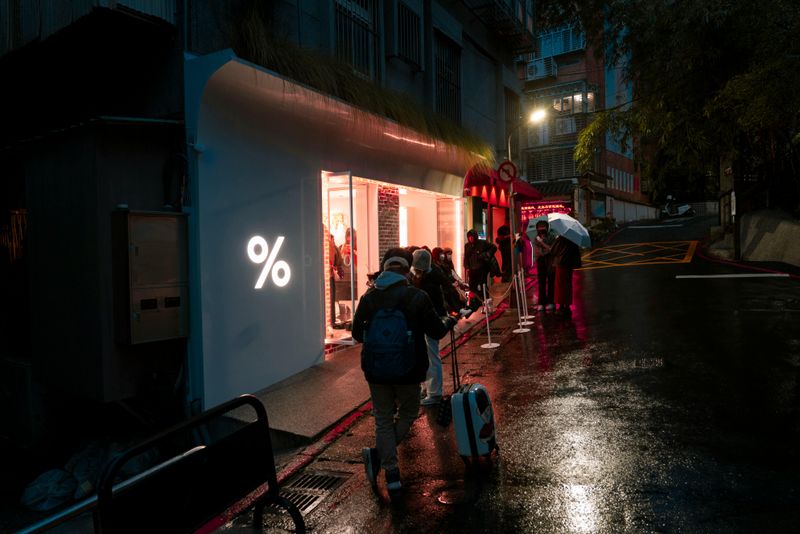
Queueing looks simple, yet it’s one of the fastest ways to feel out of sync with local culture because every country has its own idea of what “a line” should be.
In the U.S., people often leave generous space and assume everyone will respect the order, but in more crowded or assertive environments, big gaps can be interpreted as you not really participating.
That’s when someone steps into the space and you feel like you’ve been cut, while they feel like they simply moved into the available spot.
In some places, lines are tighter, movement is quicker, and you’re expected to stay close enough that your position is obvious.
The goal isn’t to be aggressive, but to be clear, because clarity prevents conflict.
When you’re traveling, watch how closely people stand, how they signal whose turn it is, and whether “lines” behave more like clusters with a shared understanding.
Adapting slightly can save you from confusion and frustration in busy settings.
Comments
Loading…