
 Isabel Parker
Remember spending hours in school learning things your teacher swore you would use every single day? Some of those lessons turned out to be genuinely helpful, but others… not so much.
Technology has changed the way we work, communicate, and solve problems faster than any textbook could keep up with. Here are nine school skills that made sense back then but feel pretty pointless in today’s world.
1. Cursive Handwriting
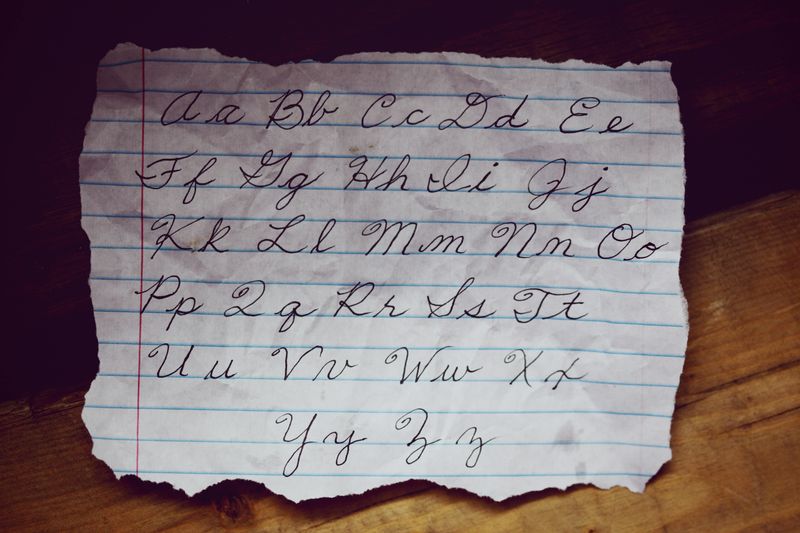
Back in the day, cursive handwriting was considered a sign of intelligence and good manners.
Teachers spent entire class periods drilling those loopy letters into students’ hands.
But honestly, when was the last time anyone asked you to write something in cursive?
Almost everything today is typed on a keyboard, phone, or tablet.
Even official forms are filled out digitally now.
Some schools have already dropped cursive from their curriculum entirely.
The truth is, printing your name clearly is more than enough for most situations in real life.
Cursive had its moment, and that moment has passed.
2. Memorizing the Dewey Decimal System

Picture this: your teacher makes you memorize a complicated numbering system just to find a book in the library.
That was real life for students for decades.
The Dewey Decimal System was once an essential library survival skill.
Today, every library has a digital catalog, and most research happens through Google or online databases anyway.
You can find any book, article, or resource in seconds without knowing a single classification number.
Spending weeks memorizing 500 for Science and 800 for Literature feels like a waste when a search bar does the same job instantly.
Libraries are still great, but this skill?
Not so much.
3. Long Division by Hand

Few things caused more classroom tears than long division.
Teachers insisted it was a foundational skill that would follow you everywhere.
Spoiler alert: calculators followed you everywhere instead.
Every smartphone, computer, and even microwave has a calculator built in.
No employer is going to ask you to divide 4,872 by 36 without any tools.
That is just not how the modern world operates.
Understanding basic math concepts still matters, and that is worth defending.
But spending hours perfecting the exact steps of long division on paper?
That time could honestly be better spent learning something with real-world payoff today.
4. Reading Analog Clocks
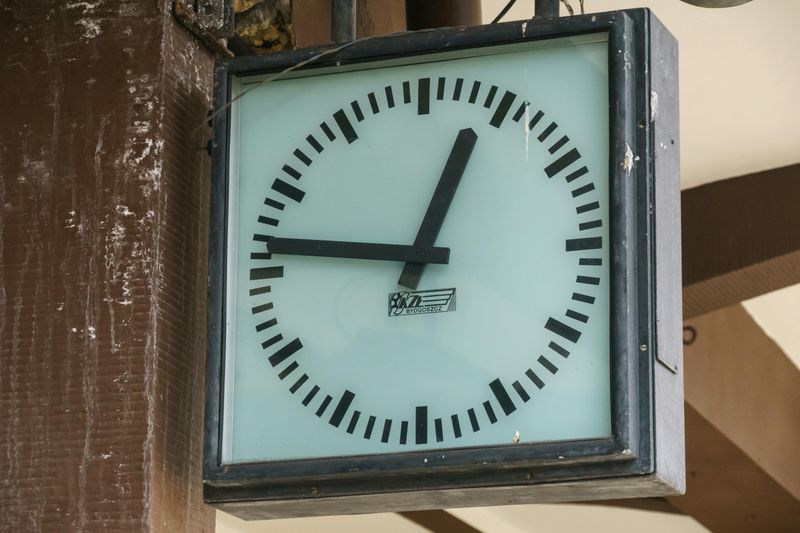
Analog clocks used to be everywhere, so learning to read them made total sense.
Schools devoted real lesson time to the big hand, the little hand, and what it all meant.
Fair enough for the 1980s.
Fast forward to today, and digital clocks are on every phone, microwave, TV, and computer screen.
Most kids interact with digital time displays dozens of times a day without thinking twice about it.
Analog clocks still exist in some classrooms and waiting rooms, sure.
But treating this as a critical life skill worth serious classroom hours feels a little out of touch with how people actually check the time now.
5. Using a Physical Encyclopedia
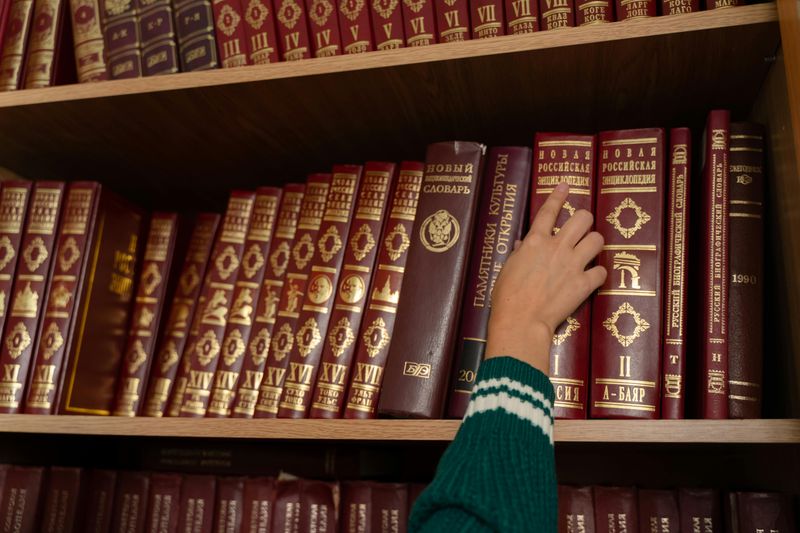
There was once a time when cracking open a heavy encyclopedia volume felt like unlocking the secrets of the universe.
Schools treated these massive books like sacred research tools, and students were expected to know how to use them properly.
Wikipedia, Google, and countless trusted websites now deliver more up-to-date information in milliseconds than any printed encyclopedia ever could.
New editions of printed encyclopedias cannot keep up with how fast the world changes.
Learning to evaluate online sources critically is the real skill students need now.
Flipping through alphabetized pages of information that might be ten years out of date just does not cut it anymore.
6. Memorizing State Capitals

Raise your hand if you still remember that Montpelier is the capital of Vermont.
Anyone?
Exactly.
Students spent serious mental energy drilling state capitals into their brains for tests that felt incredibly important at the time.
Google Maps, search engines, and voice assistants can answer any geography question within seconds.
Nobody navigates modern life by reciting capital cities from memory during a meeting or a job interview.
Geography awareness is genuinely valuable, and understanding the world around you matters.
But word-for-word memorization of capitals that you will look up anyway the moment you actually need them is a pretty low-return investment of brain space.
7. Writing a Check

Once upon a time, knowing how to write a check was considered a real grown-up life skill.
Schools and parents both pushed it hard as something every responsible adult needed to master before leaving the house.
Venmo, PayPal, Apple Pay, Zelle, and bank apps have made paper checks nearly extinct.
Many young adults today have never even owned a checkbook, and plenty of businesses no longer accept paper checks at all.
Online bill pay handles everything from rent to utilities with a few taps.
Writing the date in the top right corner and spelling out dollar amounts in cursive feels like something out of a museum exhibit at this point.
8. Using a Fax Machine
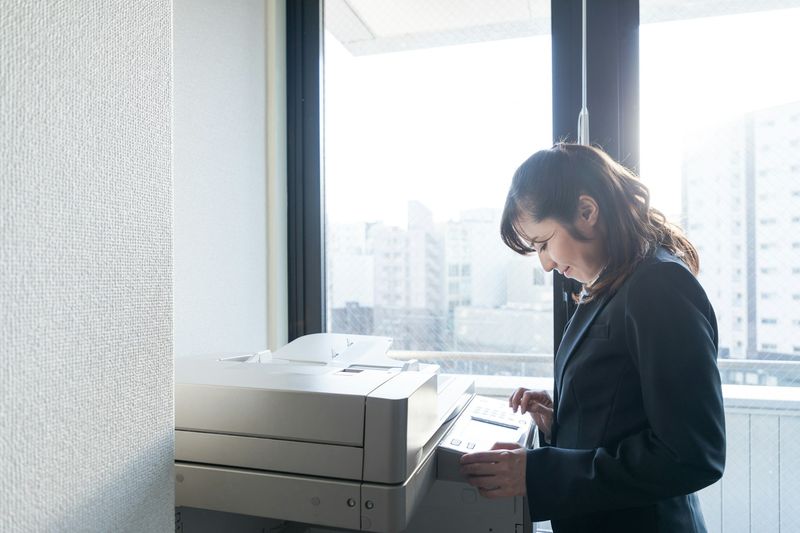
Yes, some schools actually taught students how to use fax machines.
It sounds almost funny now, but fax machines were once the cutting-edge way to send documents across the country in minutes.
Pretty impressive for the time.
Email, cloud storage, and digital document signing have completely replaced faxing in almost every industry.
Sending a PDF takes three seconds and costs nothing, while fax machines require special paper, ink, and a dedicated phone line.
A small number of industries like healthcare and law still use fax occasionally, but it is hardly a skill worth teaching in schools.
Most students today would not even recognize a fax machine in the wild.
9. Memorizing Multiplication Tables Beyond 12
Learning the multiplication tables up to 12 is genuinely useful, and most people would agree it builds a solid number sense.
But some schools pushed students to memorize tables all the way up to 15, 20, or even beyond.
Calculators handle large multiplication instantly and accurately.
No chef, engineer, or accountant is mentally computing 17 times 18 from pure memory when a device can do it error-free in half a second.
Mental math skills up to a reasonable point are worth keeping sharp.
Past that, though, drilling obscure multiplication facts eats up time that could go toward problem-solving, critical thinking, or skills that actually match how modern workplaces function today.
Comments
Loading…