
 Harper Hall
12 Things People Used to Believe That Are Now Proven Wrong

Throughout history, humans have believed all sorts of things that seemed totally true at the time. From ideas about our planet to myths about the human body, people were convinced they had the facts right. But science and discovery have a funny way of turning old beliefs upside down. Here are twelve things that everyone once accepted as truth, but we now know are completely wrong.
1. The Earth Is Flat

For thousands of years, many civilizations thought our planet was shaped like a giant pancake.
Sailors feared they might sail off the edge into nothingness.
Ancient maps showed the world as a flat disc surrounded by endless water.
Greek philosophers like Pythagoras and Aristotle started questioning this idea around 500 BCE.
They noticed ships disappeared hull-first over the horizon and that Earth cast a round shadow on the moon during eclipses.
When Ferdinand Magellan’s crew sailed around the world in 1522, they proved once and for all that Earth is a sphere.
Today, satellite images from space show us the beautiful blue marble we call home, round as can be.
2. The Sun Revolves Around Earth
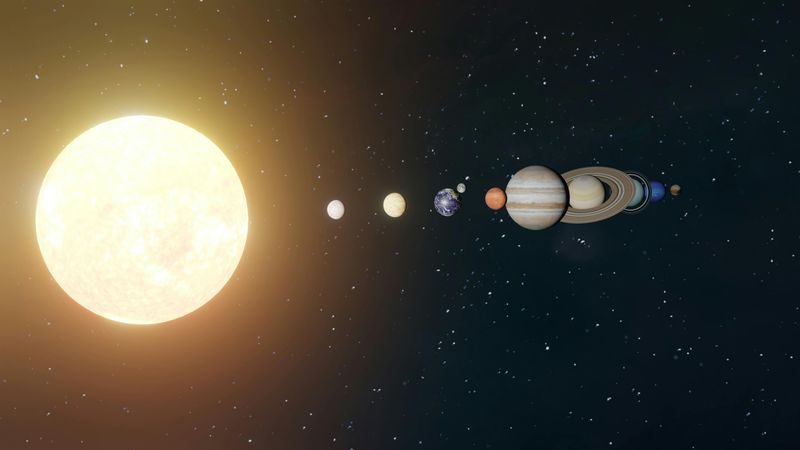
Picture waking up each morning and watching the sun rise in the east, travel across the sky, then set in the west.
It certainly looks like the sun is moving around us, right?
Ancient astronomers believed Earth sat perfectly still at the center of everything while the sun, moon, and stars circled around us.
This geocentric model dominated thinking for over a thousand years.
Nicolaus Copernicus challenged this in 1543 when he proposed that Earth and other planets actually orbit the sun.
Galileo later provided evidence using his telescope, though he faced serious trouble for supporting this idea.
Now we know Earth spins on its axis while orbiting our star.
3. Spontaneous Generation of Life

Imagine believing that mice could magically appear from piles of dirty laundry or that maggots simply materialized from rotting meat.
Sounds ridiculous now, but spontaneous generation was accepted science for centuries.
People genuinely thought life could spring from non-living matter without any parents involved.
Even great thinkers like Aristotle supported this idea.
Francesco Redi started poking holes in the theory during the 1600s with his famous meat experiment using covered jars.
Louis Pasteur finally put the theory to rest in 1859 with his swan-neck flask experiments.
He proved that microorganisms came from other microorganisms, not thin air.
Life only comes from life.
4. Bloodletting Cures Disease
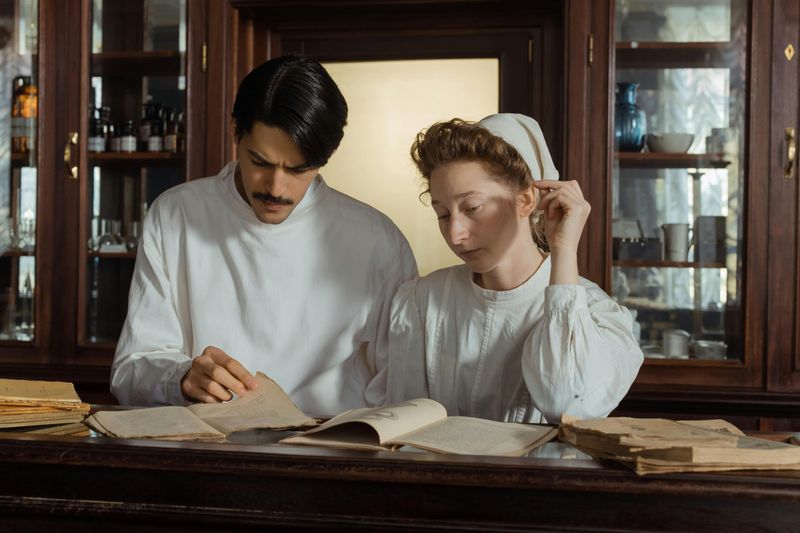
Feeling sick with a fever? According to doctors from ancient times through the 1800s, the solution was simple: drain your blood.
Physicians believed that removing blood would balance your body’s humors and cure almost anything.
They used sharp tools called lancets or applied hungry leeches to patients.
Even President George Washington received this treatment when he fell ill in 1799, losing about half his blood before dying.
Turns out, making sick people lose blood usually made them worse, not better.
Modern medicine now understands that blood carries oxygen and nutrients our bodies desperately need.
Removing it weakens patients instead of healing them, except in very specific conditions.
5. Tomatoes Are Poisonous

Wealthy Europeans in the 1700s refused to eat tomatoes because they thought the bright red fruits would kill them.
This fear had some basis in reality, but for the wrong reasons.
Rich people ate from pewter plates containing lead, and tomatoes are highly acidic.
When tomato juice touched these plates, it would leach lead into the food, causing lead poisoning.
People blamed the tomatoes instead of their fancy dishware.
Meanwhile, poorer folks who ate from wooden plates enjoyed tomatoes without any problems.
Colonel Robert Gibbon Johnson supposedly ate a basket of tomatoes publicly in 1820 to prove they were safe.
Today, tomatoes are a kitchen staple worldwide, starring in everything from pizza to salsa.
6. Women’s Brains Are Smaller and Inferior

Scientists in the 1800s measured skulls and declared that women had smaller brains, therefore they must be less intelligent than men.
This ridiculous idea was used to justify keeping women out of universities, professions, and voting booths.
Researchers conveniently ignored that brain size relates to body size, not intelligence.
They also cherry-picked data and used flawed measuring techniques to support their prejudices.
Elephants and whales have much bigger brains than humans, but nobody claims they’re smarter than us.
Modern neuroscience shows that male and female brains function equally well, just sometimes in slightly different ways.
Women have excelled in every field once given the opportunity, proving the old beliefs were pure nonsense.
7. Bathing Causes Illness

During medieval times and well into the 1800s, many Europeans believed that bathing was downright dangerous.
Doctors warned that water opened your pores, allowing diseases to enter your body.
Some thought bathing removed a protective layer of dirt that kept you healthy.
Queen Elizabeth I was considered exceptionally clean because she bathed once a month.
Most people went months or even years without a proper wash, masking their stench with perfumes and powders.
Ironically, this fear of bathing contributed to plague outbreaks since filth and lice helped spread disease.
We now know that regular bathing with soap actually prevents illness by removing germs, dirt, and bacteria that make us sick.
8. The Tongue Has a Taste Map

Remember learning in school that different parts of your tongue taste different flavors?
Sweet on the tip, bitter at the back, sour on the sides, and salty near the front?
Generations of students memorized this tongue map, but it was completely false.
The myth started from a mistranslation of a German paper from 1901.
The researcher actually found that all areas of the tongue could detect all tastes, just with slight sensitivity differences.
Somehow this got twisted into the idea that taste zones existed.
Modern research confirms that taste receptors for all five basic tastes are scattered across your entire tongue.
You can test this yourself by placing sugar anywhere on your tongue.
9. Lightning Never Strikes Twice

How many times have you heard someone say that lightning never strikes the same place twice?
This popular saying is meant to comfort people, but it’s absolutely untrue.
Lightning actually loves to strike the same spots repeatedly, especially tall objects.
The Empire State Building gets hit about 25 times every single year.
Park ranger Roy Sullivan was struck by lightning seven different times during his life and survived them all.
Lightning follows the path of least resistance to the ground, so anything tall and pointy makes an excellent target over and over.
That’s why lightning rods work so well at protecting buildings.
If lightning liked your location once, it’ll probably visit again.
10. Humans Only Use 10% of Their Brains

Movies love the idea that humans are wasting 90% of their brain power, just waiting to unlock hidden potential.
This myth has been repeated so often that most people believe it.
Brain imaging technology has completely demolished this claim.
Scans show that we use virtually every part of our brain, just not all at the same exact moment.
Different activities light up different regions.
Even during sleep, your brain stays busy processing memories and maintaining your body.
If 90% of your brain was useless, evolution would have eliminated it since brains consume about 20% of your body’s energy.
Brain damage to even small areas causes serious problems, proving every bit matters.
11. Shaving Makes Hair Grow Back Thicker

Countless teenagers have hesitated before their first shave, worried that their peach fuzz will return as thick, dark stubble.
Parents and friends often warn that shaving makes hair grow back thicker, coarser, and darker.
This myth feels true because of how we perceive regrowth.
When you shave, you cut the hair at its thickest point near the skin, creating a blunt edge.
Natural hair tapers to a fine point at the end.
That blunt edge feels stubbly and looks darker, creating an illusion of thickness.
Scientific studies have measured hair before and after shaving repeatedly, finding zero change in thickness, color, or growth rate.
Your hair follicles don’t know they’ve been shaved.
12. Bulls Are Enraged by Red Color

Cartoons and movies show bulls going absolutely crazy when they see anything red, but bulls are actually colorblind to red.
They see the world mostly in shades of blue and yellow, similar to how red-green colorblind humans see.
So what makes bulls charge at matadors?
It’s the movement of the cape that irritates them, not the color.
Matadors could wave a blue, green, or yellow cape and get the same aggressive reaction.
The red cape tradition exists because the color looks dramatic for the audience and hides bloodstains.
Researchers have tested bulls with different colored capes, confirming they react to motion, not color.
Bulls are responding to a perceived threat, not seeing red literally.
Comments
Loading…