
 Hailey Watson
11 Signs You’re a People Pleaser and Why It’s Making Everyone Lose Respect for You

Being nice is great, but there’s a difference between being kind and being a doormat.
People pleasers often think they’re making everyone happy, but the opposite happens.
When you constantly put others first and ignore your own needs, people actually start to respect you less.
They see someone who can’t stand up for themselves, and that changes how they treat you.
Let’s look at the warning signs that your helpful nature has crossed into people-pleasing territory.
1. You Always Say Yes (Even When You Want to Say No)

Your calendar is packed because you can’t turn anyone down.
Every request gets an automatic yes, even when you’re already drowning in commitments.
This habit makes people see you as someone without priorities or backbone.
When everything is a yes, nothing feels special or important.
People start taking your availability for granted because they know you’ll drop everything.
They stop valuing your time because you’ve shown them it’s not worth protecting.
Real respect comes from knowing someone has boundaries and chooses to help you anyway.
2. You Apologize for Everything

Sorry becomes your most-used word.
You apologize for things that aren’t your fault, for taking up space, for having opinions, even for existing.
This constant apologizing makes you seem weak and unsure of yourself.
People notice when someone apologizes for no reason.
It signals low confidence and makes them uncomfortable.
They start to wonder if you can handle responsibility or make tough decisions.
Apologies lose all meaning when you use them constantly.
Save them for times when you actually mess up, and people will take you more seriously.
3. You Avoid Conflict at All Costs

Peace at any price is your motto.
You’ll agree with someone who’s clearly wrong just to avoid an argument.
You change the subject when tensions rise and pretend problems don’t exist.
Here’s the thing: conflict isn’t always bad.
Healthy disagreement shows you have a spine and care about what’s right.
When you always back down, people think you don’t have real opinions or convictions worth defending.
Nobody respects someone who stands for nothing.
Your fear of rocking the boat makes you forgettable and easily dismissed.
4. You Feel Responsible for Everyone’s Happiness

Someone’s upset?
You immediately think it’s your job to fix it.
You carry the emotional weight of everyone around you, trying to make sure nobody ever feels bad.
This exhausting habit drains you while making others dependent.
When you take responsibility for everyone’s feelings, you actually disrespect them.
You’re saying they can’t handle their own emotions or solve their own problems.
People sense this and either take advantage or pull away.
Everyone needs to manage their own happiness.
Your constant fixing makes you seem controlling, not caring.
5. You Struggle to Make Decisions Without Approval

What do you think? becomes your catchphrase.
You can’t choose a restaurant, pick a movie, or make work decisions without polling everyone around you.
This constant seeking of input makes you look indecisive and weak.
Leadership requires making choices and standing by them.
When you always need consensus, people lose confidence in your judgment.
They wonder if you can ever take charge when it matters.
Did you know?
Successful people make decisions quickly and change them slowly.
Your endless deliberation tells everyone you don’t trust yourself.
6. You Change Your Opinions to Match Others

Your opinions shift depending on who’s in the room.
You agree with your boss’s political views at work, then switch to match your friend’s opposite stance at dinner.
This shape-shifting makes you seem fake and untrustworthy.
People notice when someone lacks core values.
They see right through the act and question everything you say.
If you’ll change your mind so easily, how can they trust you with anything important?
Authenticity builds respect.
Being a mirror instead of a person makes you invisible and easily replaced in every relationship you have.
7. You Ignore Your Own Needs

Your needs always come last.
You skip lunch to help a coworker, cancel doctor appointments for others, and run yourself into the ground.
This self-neglect doesn’t make you noble—it makes you a bad example.
People respect those who practice self-care because it shows strength and wisdom.
When you constantly sacrifice yourself, you become a cautionary tale.
Nobody wants to be like the person who looks burnt out and miserable.
You can’t pour from an empty cup.
Your self-neglect signals poor judgment and makes people question your ability to make smart choices.
8. You Take on Too Much Responsibility
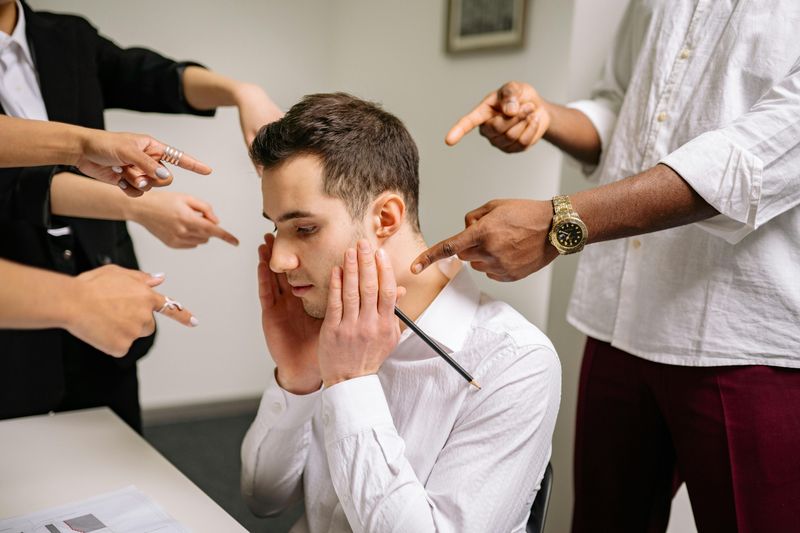
Volunteering for everything seems helpful until you’re doing three people’s jobs.
You take on coworkers’ projects, handle problems that aren’t yours, and wonder why you’re always stressed while others cruise by.
This behavior breeds resentment, not gratitude.
People let you carry the load because you’re willing, not because they respect you.
They see a sucker, not a team player.
Smart people delegate and set limits.
Your inability to say no makes you the office doormat, earning pity instead of promotions or genuine appreciation.
9. You Feel Guilty When Setting Boundaries

Saying no feels like committing a crime.
You agonize over simple boundaries, feel terrible for protecting your time, and often cave in because the guilt is unbearable.
This inability to set limits makes you an easy target.
Boundaries aren’t mean—they’re necessary.
People who respect themselves expect others to do the same.
When you feel guilty for basic self-protection, it signals deep insecurity that others exploit.
Strong people set boundaries without guilt.
Your constant apologizing for having needs makes you seem unstable and desperate for approval at any cost.
10. You Seek Constant Validation

Did I do okay? rings constantly in your head.
You need reassurance after every action, fishing for compliments and approval like your life depends on it.
This needy behavior pushes people away faster than anything else.
Confidence is attractive; neediness is repulsive.
When you constantly seek validation, people feel pressured to prop up your ego.
It’s exhausting and makes them avoid you.
Self-assured people validate themselves.
Your endless need for external approval screams insecurity and makes you seem high-maintenance and emotionally draining to everyone around you.
11. You Hide Your True Feelings

Fine becomes your automatic response, even when you’re falling apart.
You plaster on smiles while seething inside, never expressing real emotions because you fear rocking the boat.
This emotional dishonesty creates shallow, meaningless relationships.
Authenticity builds connection; pretending builds walls.
People sense when someone’s being fake, and it makes them uncomfortable.
They can’t trust you because they never know what you really think or feel.
Genuine people share their feelings appropriately.
Your constant mask-wearing makes you seem two-faced and manipulative, destroying the trust that creates real respect.
Comments
Loading…