
 Mary Murphy
11 Unwritten Rules That Make You a Better Person — Yet Many Forget

Some of the most powerful life lessons were never written in any textbook.
They’re the quiet, unspoken rules that shape how we treat others and carry ourselves through the world.
Most people know these rules exist, yet somehow they slip through the cracks of our busy daily lives.
Remembering them can truly change how people see you — and more importantly, how you see yourself.
1. Put Your Phone Away When Someone Is Talking to You

Nothing says ‘you don’t matter’ quite like scrolling through your phone while someone is mid-sentence.
It’s one of the most common forms of modern rudeness, yet most people don’t even realize they’re doing it.
When you give someone your full attention, you’re sending a message that their words have value.
That small act of presence builds stronger friendships, deeper trust, and more meaningful conversations.
Try placing your phone face-down or in your pocket next time someone speaks to you.
You might be surprised how much more connected you feel — and how much they appreciate it.
2. Clean Up After Yourself in Shared Spaces

Shared spaces — whether it’s a school cafeteria, an office break room, or a family kitchen — belong to everyone.
Leaving a mess behind silently tells others that your comfort matters more than theirs.
Taking a few extra seconds to tidy up after yourself is one of those small habits that speaks volumes about your character.
People notice, even when they don’t say anything out loud.
Making this a daily habit creates environments where everyone feels respected and comfortable.
Plus, it sets a positive example that quietly encourages others around you to do the same.
3. Say Thank You — And Mean It
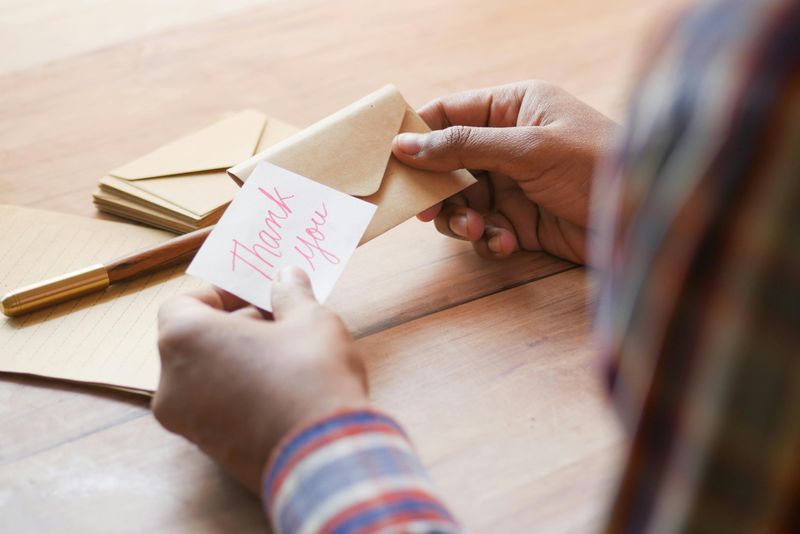
Gratitude is one of the most underused superpowers in human connection.
Saying thank you takes less than two seconds, yet many people rush past it without a second thought.
There’s a big difference between a quick, automatic ‘thanks’ and a genuine, heartfelt expression of appreciation.
The second kind actually lands — it makes the other person feel truly seen and valued.
Look people in the eye when you thank them.
Use their name if you know it.
That tiny upgrade turns a throwaway phrase into something that can genuinely brighten someone’s entire day.
4. Respect People’s Time as Much as Your Own

Chronically showing up late sends a message — whether you intend it or not.
It tells people that your schedule is more important than their time, and that quietly chips away at trust and respect.
Punctuality isn’t about being rigid or robotic.
It’s about honoring the fact that other people have lives, responsibilities, and schedules that matter just as much as yours do.
If you’re running behind, a quick heads-up message goes a long way.
Acknowledging someone’s time — even when things go sideways — shows maturity and consideration that most people genuinely admire.
5. Don’t Give Unsolicited Advice

When a friend vents about a problem, they often aren’t asking you to fix it — they just need someone to listen.
Jumping straight into advice mode, no matter how well-meaning, can feel dismissive and even a little arrogant.
There’s an easy fix: simply ask. ‘Do you want advice, or do you just need to vent?’
That one question shows emotional intelligence and genuine respect for how the other person is feeling.
Holding back unsolicited opinions is harder than it sounds, but mastering it makes you the kind of person others actually want to confide in.
6. Acknowledge People — Even Strangers

A simple nod, a smile, or a quick ‘good morning’ costs absolutely nothing — yet many people walk through their days completely wrapped up in their own world, barely noticing anyone around them.
Acknowledging strangers isn’t about being overly social.
It’s a small signal that says, ‘I see you. You exist. You matter.’
That kind of micro-kindness has a ripple effect bigger than most people realize.
Studies have shown that brief positive interactions with strangers can meaningfully boost mood throughout the day — for both people involved.
Sometimes the smallest gestures carry the heaviest weight.
7. Own Your Mistakes Without Making Excuses

Making a mistake is human.
Refusing to own it — or burying it under a pile of excuses — is what actually damages your reputation and relationships.
When you mess up and say clearly, ‘I was wrong, and I’m sorry,’ something powerful happens.
People respect you more, not less.
Accountability signals confidence and emotional maturity that most people genuinely admire.
The next time something goes sideways because of a choice you made, resist the urge to redirect blame.
A straightforward, honest acknowledgment is almost always received better than any carefully crafted excuse could ever be.
8. Keep Confidences — If Someone Trusts You, Honor It

When someone shares something personal with you, they’re handing you a fragile piece of themselves.
Sharing that information with others — even casually — is a quiet betrayal that can permanently damage trust.
Being a person who keeps secrets isn’t just about loyalty.
It signals that you have self-control, emotional depth, and genuine respect for the people in your life.
Before repeating anything someone told you in confidence, pause and ask yourself: did they give me permission to share this?
If the answer isn’t a clear yes, the answer should always be no.
9. Be Genuinely Happy for Other People’s Success

Envy is one of those emotions that sneaks up quietly and poisons your perspective without warning.
When a friend achieves something great, the first reaction isn’t always celebration — sometimes it’s comparison, and that’s worth noticing.
Choosing to be genuinely happy for others isn’t weakness or naivety.
It’s a sign of real emotional security — the kind that comes from knowing someone else’s win doesn’t shrink your own possibilities.
Celebrate loudly.
Congratulate sincerely.
Cheer people on without keeping score.
That energy is magnetic, and it tends to come back to you in ways you’d never expect.
10. Don’t Interrupt — Let People Finish Their Thoughts

Interrupting someone mid-sentence is one of those habits that feels harmless but quietly communicates something unflattering: that what you have to say matters more than what they’re currently expressing.
Good listeners are rare, and they are almost universally loved.
Letting someone finish their thought — even when you already know what you want to say — is a sign of patience and genuine respect.
If you catch yourself interrupting often, try counting to two after someone stops speaking before you respond.
That small pause creates space for real dialogue and makes every conversation feel more balanced and respectful.
11. Leave Things Better Than You Found Them

Whether it’s a borrowed book returned in better shape, a shared workspace left cleaner than when you arrived, or a friend left feeling more hopeful after talking with you — this rule applies everywhere.
The mindset of leaving things better than you found them is rooted in a deep kind of care.
It means you’re thinking beyond yourself and considering the experience of whoever comes next.
Small acts of improvement add up fast.
Over time, this habit shapes you into someone whose presence genuinely improves the world around them — and that’s a legacy worth building, one small moment at a time.
Comments
Loading…