
 Mila Ross
John Wayne became one of Hollywood’s biggest stars by riding horses across dusty trails and standing up to outlaws in unforgettable Western films.
From his breakthrough role in 1939 to his Oscar-winning performance three decades later, The Duke appeared in over 80 Westerns that shaped how we picture the Old West.
Whether you’re a longtime fan or just discovering these classics, testing your knowledge of his most famous films is a fun way to appreciate his legendary career.
1. Stagecoach (1939)
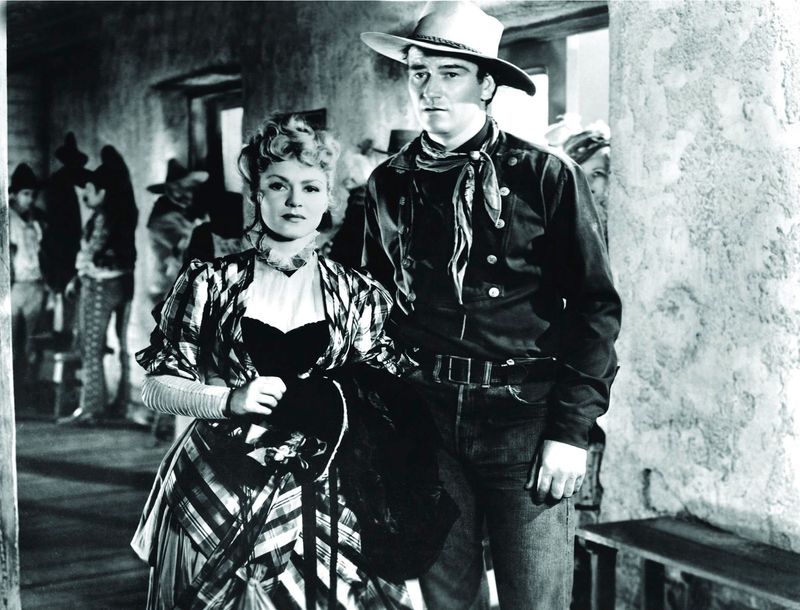
Before this groundbreaking film, John Wayne had spent years playing forgettable characters in low-budget pictures.
Director John Ford saw something special in the young actor and cast him as the Ringo Kid, a role that would change everything.
The story follows a diverse group of strangers traveling together through dangerous Apache territory.
Wayne’s character joins the stagecoach journey seeking revenge against the men who killed his family.
His natural charisma and authentic Western presence made audiences sit up and take notice for the first time.
This classic established many Western film conventions still used today.
The dramatic Monument Valley scenery became iconic thanks to Ford’s visionary direction and cinematography.
2. Red River (1948)
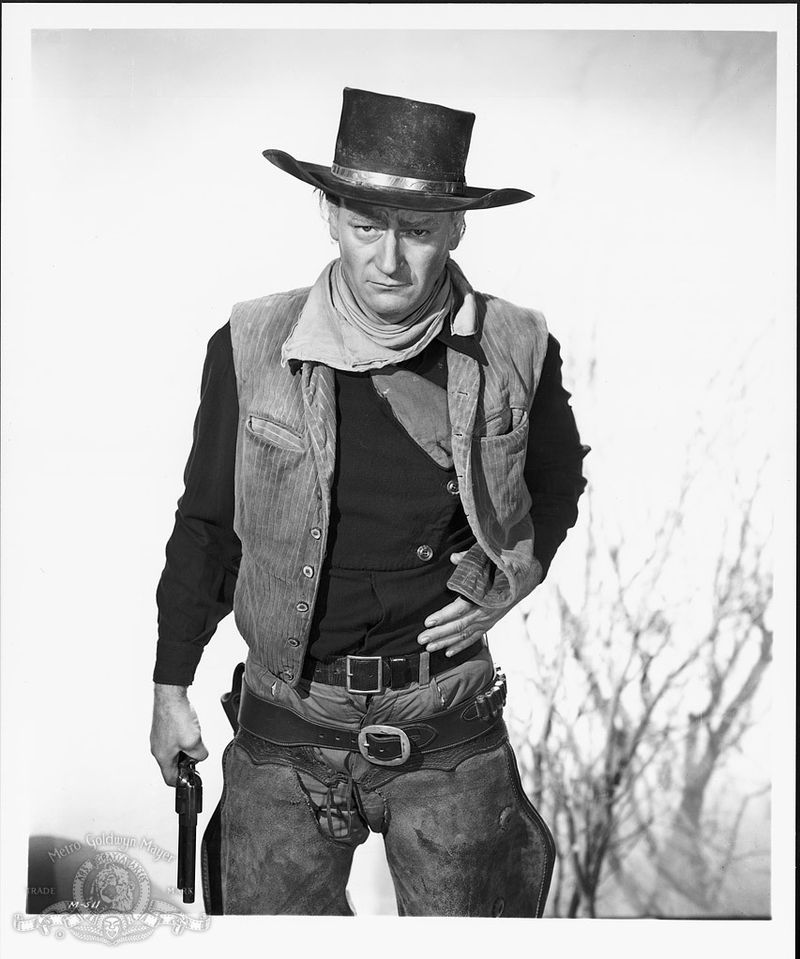
Playing against type, Wayne portrayed Thomas Dunson, a tough cattle rancher whose obsession with completing a dangerous drive nearly destroys him.
The character’s darker edges showed audiences that The Duke could deliver complex, morally ambiguous performances beyond simple heroics.
Howard Hawks directed this epic tale of the first major cattle drive along the Chisholm Trail.
Dunson’s relationship with his adopted son creates powerful tension as their conflicting leadership styles clash.
Montgomery Clift made his film debut as the younger cowboy challenging Wayne’s authority.
Critics praised Wayne’s willingness to play someone genuinely difficult to like.
His commanding presence anchored the film’s exploration of pride, stubbornness, and redemption across harsh frontier landscapes.
3. The Searchers (1956)
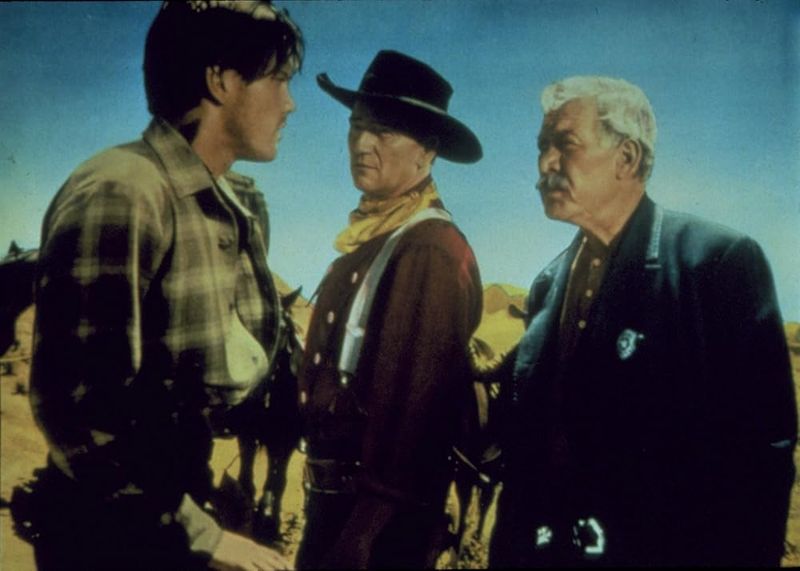
Many film scholars consider this John Ford masterpiece the greatest Western ever made.
Wayne delivers his most nuanced performance as Ethan Edwards, a bitter Confederate veteran consumed by his quest to rescue his kidnapped niece from Comanche raiders.
The film explores uncomfortable themes of racism and obsession rarely addressed in 1950s Westerns.
Ethan’s five-year search reveals his inner demons and prejudices, making him simultaneously heroic and troubling.
Wayne’s portrayal captures this complicated man without softening his harsh edges or seeking easy sympathy.
Stunning Monument Valley cinematography frames the epic journey across changing seasons and years.
The famous final shot of Wayne framed in a doorway remains one of cinema’s most memorable images.
4. Rio Bravo (1959)
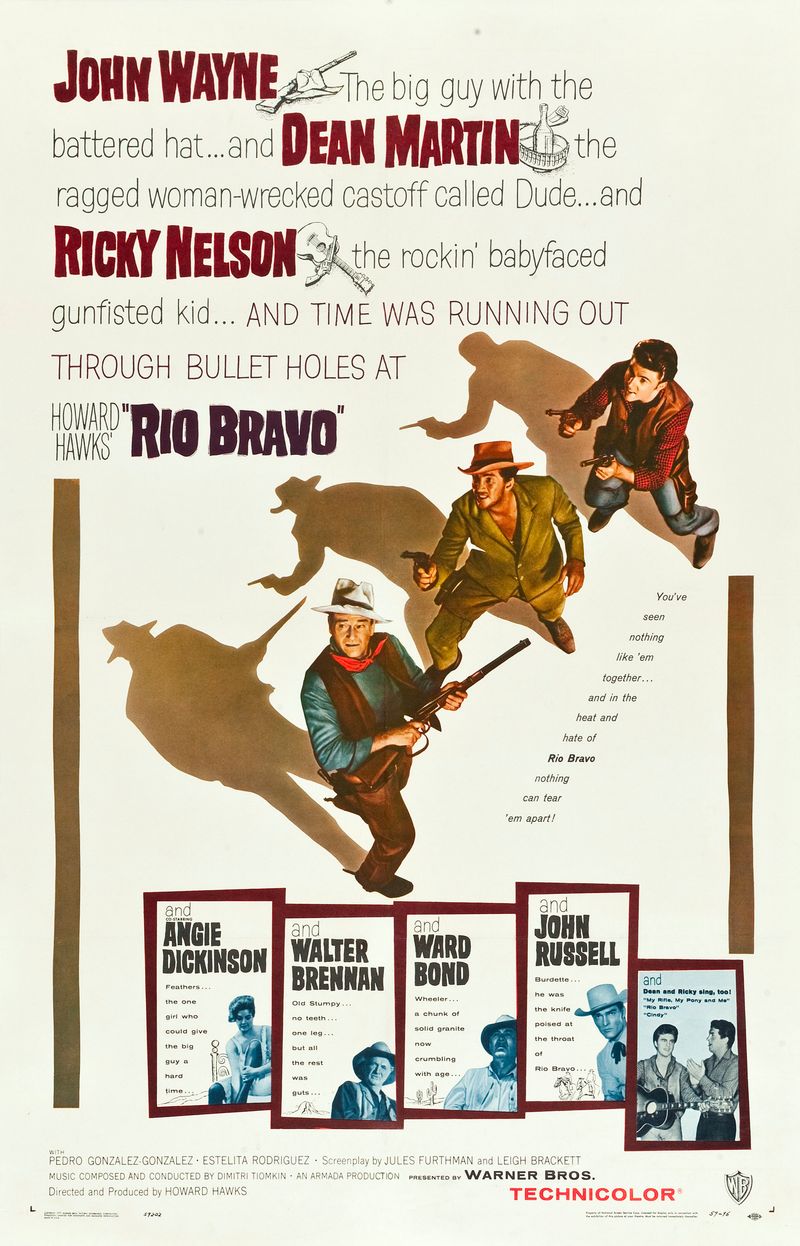
Director Howard Hawks created this Western as a deliberate response to High Noon, rejecting that film’s message that lawmen need community help.
Instead, Sheriff John T. Chance refuses outside assistance, relying only on a small group of unlikely allies including a drunk, an old man, and a young gunfighter.
Wayne’s character spends most of the film defending his jail against a powerful rancher’s gang.
The tension builds slowly as Chance and his makeshift team prepare for the inevitable showdown.
Dean Martin, Walter Brennan, and Ricky Nelson provided excellent supporting performances alongside The Duke.
Hawks emphasized character relationships over action sequences, creating a more intimate Western.
The film’s relaxed pacing and witty dialogue influenced countless later filmmakers.
5. True Grit (1969)
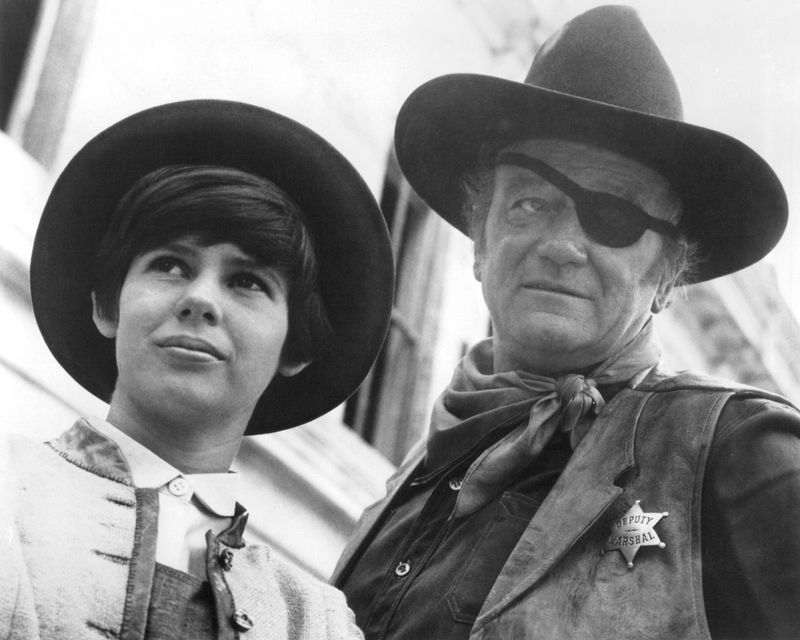
After decades of memorable performances, Wayne finally won his only Academy Award for portraying Rooster Cogburn, a hard-drinking, one-eyed U.S. Marshal.
The role allowed him to display both humor and vulnerability while maintaining his trademark toughness.
A determined teenage girl hires Rooster to track down her father’s killer across Indian Territory.
Their unlikely partnership drives this entertaining adventure filled with danger and unexpected warmth.
Glen Campbell and Kim Darby joined Wayne in bringing Charles Portis’s novel to vivid life on screen.
The famous climax features Rooster charging four outlaws while holding his horse’s reins in his teeth.
This thrilling sequence showcased Wayne’s enduring screen presence even as he approached his mid-sixties.
6. The Man Who Shot Liberty Valance (1962)
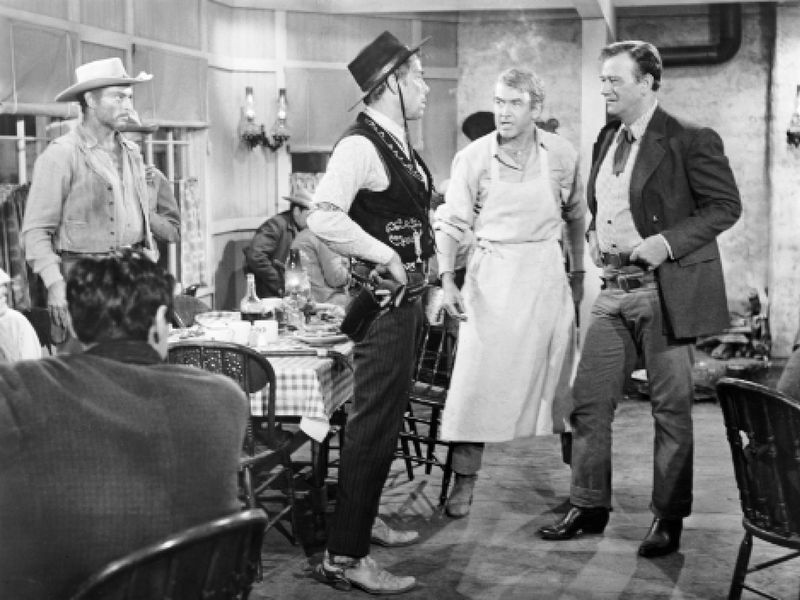
John Ford reunited Wayne with James Stewart for this powerful meditation on how legends shape history.
Wayne played Tom Doniphon, a tough rancher whose heroic actions get credited to someone else, exploring themes of truth versus mythology in the Old West.
The story unfolds through flashbacks as a senator returns to attend a funeral in his former frontier town.
Audiences gradually discover the real story behind the legendary shootout that made him famous.
Wayne’s understated performance conveys deep emotion beneath his character’s stoic exterior.
Shot in black and white when color had become standard, the film feels deliberately nostalgic.
Ford and Wayne collaborated to create a thoughtful farewell to traditional Western myths and values.
7. The Shootist (1976)
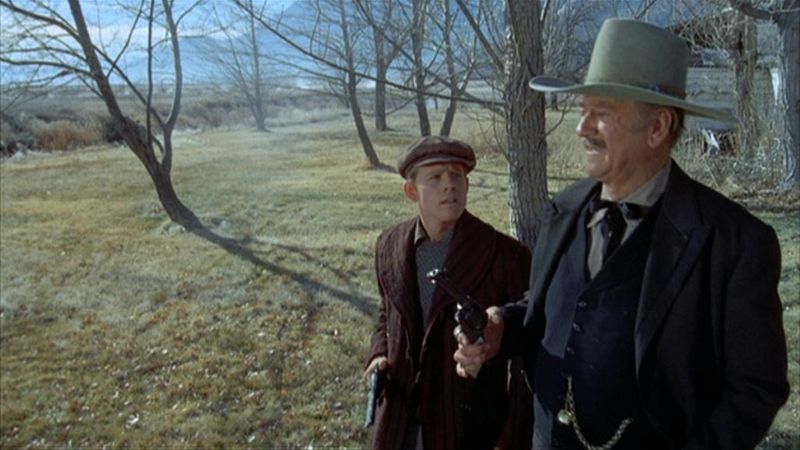
Wayne’s final film role proved hauntingly appropriate as he portrayed J.B. Books, an aging gunfighter dying of cancer.
The parallels to Wayne’s own battle with the disease added profound emotional weight to every scene in this elegiac Western.
Books arrives in Carson City seeking a doctor’s confirmation of his terminal diagnosis.
Determined to die with dignity rather than waste away, he arranges a final confrontation with old enemies.
Lauren Bacall, Ron Howard, and James Stewart supported Wayne in this thoughtful character study.
Director Don Siegel crafted a fitting tribute to both Wayne and the Western genre itself.
The film acknowledges that times change and legends must eventually fade, creating a poignant goodbye to The Duke’s remarkable career.
Comments
Loading…