
 Hailey Watson
Men Who’ve Never Experienced Real Connection Often Say These 12 Things

Some men go through life without ever truly connecting with another person. They might not even realize it, but the words they use often reveal a deeper emotional wall they’ve built around themselves.
These phrases can sound normal on the surface, but they carry hidden signs of loneliness, fear, and avoidance. Learning to recognize them is the first step toward understanding yourself or someone you care about.
1. “I Don’t Need Anyone”

Bold words, but rarely true.
When a man says he does not need anyone, it usually means he has been hurt before and built walls to protect himself.
Self-reliance is healthy, but claiming zero need for others is a defense mechanism, not strength.
Real connection requires vulnerability, and that can feel terrifying.
Men who say this often secretly crave closeness but have never felt safe enough to ask for it.
They confuse independence with isolation.
Recognizing this phrase for what it is can open the door to honest conversations and, eventually, meaningful relationships.
2. “I’m Fine” (When Clearly Not)

Two words.
Endless meaning.
“I’m fine” is perhaps the most overused emotional shield in a man’s vocabulary, especially when everything around him says otherwise.
It shuts down conversation before it even starts.
Men who have never experienced real connection often fall back on this phrase because they were never taught that sharing feelings was safe.
Saying “I’m fine” keeps people at arm’s length without causing a scene.
The problem is that nobody grows behind that wall.
Emotional honesty, even when uncomfortable, is what builds trust and real intimacy with others.
3. “Feelings Are a Waste of Time”
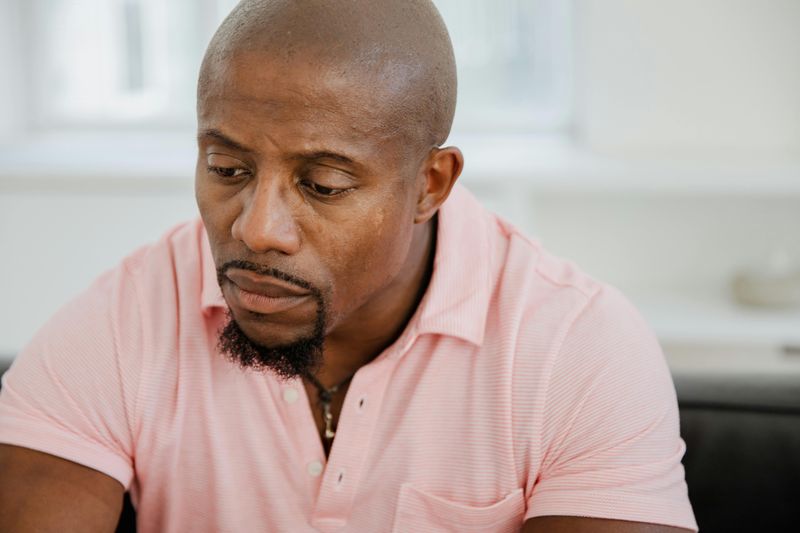
Somewhere along the way, this man was taught that emotions were weakness.
Maybe a parent said it.
Maybe life punished him for showing them.
Either way, he internalized the idea that feelings slow you down.
But emotions are not the enemy.
They are information.
Dismissing them does not make them go away; it just buries them until they explode in unexpected ways.
Men who believe this often struggle with anger, numbness, or burnout.
Reconnecting with emotions is not soft.
It is one of the bravest things a person can do, and it changes everything.
4. “I Prefer to Keep Things Casual”

Keeping things casual is not always a lifestyle choice.
For some men, it is the only emotional setting they know how to operate in.
Depth feels dangerous, so they stay on the surface where nothing can really hurt them.
This phrase often signals a fear of commitment rooted in past rejection or a lack of emotional modeling growing up.
If nobody ever showed this man what a real bond looks like, why would he chase one?
Casual can be fine temporarily, but using it as a permanent shield blocks out the very things that make life feel worthwhile.
5. “People Always Let You Down”

Cynicism about people often comes from real pain.
This phrase is not just negativity; it is a scar talking.
A man who says this has likely been betrayed, abandoned, or ignored at a critical moment in his life.
The danger is that the belief becomes self-fulfilling.
When you expect disappointment, you push people away before they get the chance to prove you wrong.
Trust feels pointless, so you stop offering it.
Healing this mindset takes time and usually professional support.
But recognizing the pattern is powerful.
Not everyone will let you down, and some people are absolutely worth the risk.
6. “I Handle My Problems Alone”

There is a fine line between being capable and being closed off.
Handling your own problems sounds admirable, but when it becomes a rigid rule, it is a sign that asking for help feels unbearable or even shameful.
Many men were raised with the message that needing others is a flaw.
So they white-knuckle their way through every crisis, quietly suffering while telling everyone they are good.
It is exhausting and deeply lonely.
Letting someone in during a hard time is not weakness.
It is the foundation of genuine connection, and it often makes the problem easier to solve, too.
7. “I Don’t Really Have Close Friends”

Said almost casually, this one hits differently when you really think about it.
Many men normalize the absence of close friendships, treating it like a quirky personality trait rather than a red flag worth examining.
Male friendships are often shallow by design.
Society does not always encourage men to be emotionally open with each other.
So years pass, and suddenly a man realizes he has acquaintances everywhere but no one he can truly talk to.
Building deep friendships as an adult takes intention and vulnerability.
It feels awkward at first, but the payoff, having someone who genuinely knows you, is irreplaceable.
8. “I Just Don’t Trust People”
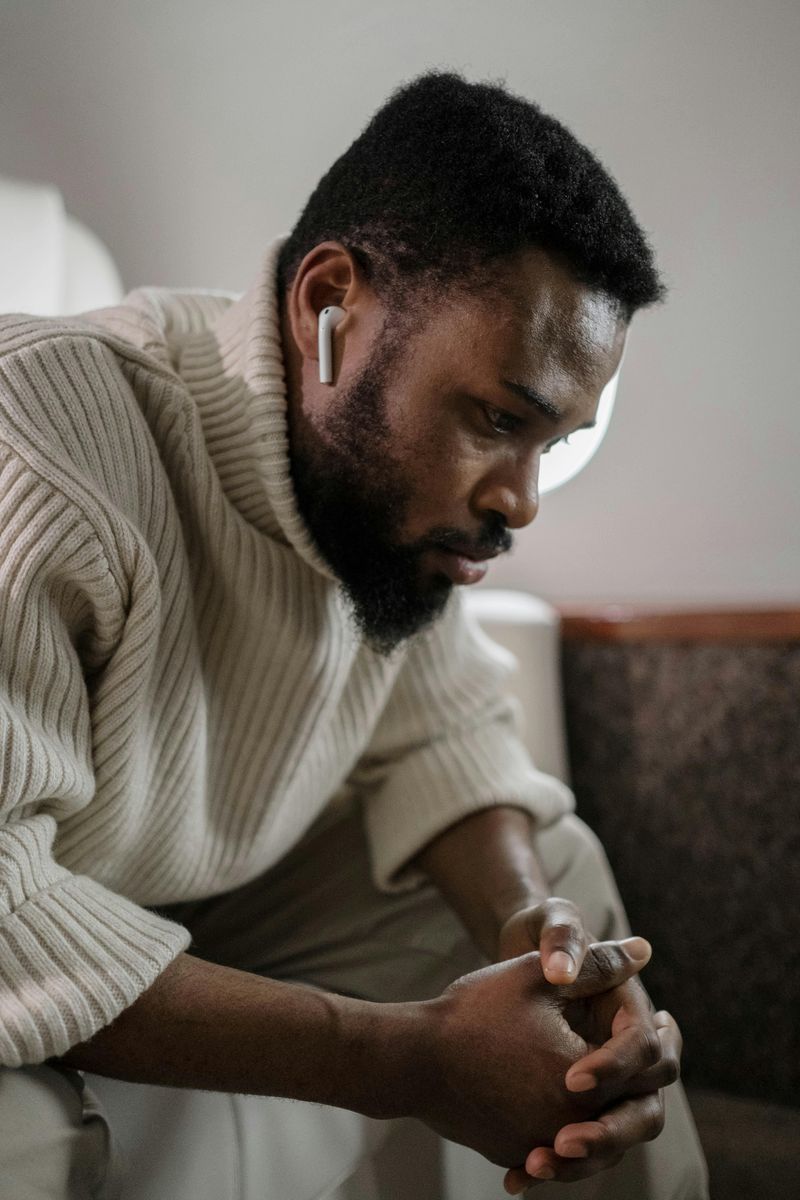
Trust is earned, sure.
But when a man says he does not trust anyone at all, that is a different story.
Blanket distrust is not wisdom; it is armor worn so long it has become a second skin.
This kind of thinking often develops after a serious betrayal, sometimes in childhood, sometimes in a relationship that fell apart.
The brain learns to expect the worst and starts treating everyone like a threat.
Real connection cannot survive without some level of trust.
Learning to extend it carefully, not blindly, is a skill that can be rebuilt with patience and the right support system around you.
9. “I’m Not Good at Expressing Myself”

Here is an honest admission wrapped in a quiet kind of helplessness.
When a man says this, he is often telling the truth, but he may not realize that expressing yourself is a learnable skill, not a fixed trait you are born with.
Growing up without emotional language modeled for you leaves gaps.
If nobody named feelings out loud in your home, you simply never picked up the vocabulary.
That is not a character flaw; it is a gap that can be filled.
Journaling, therapy, and even honest conversations with trusted people can dramatically improve emotional expression over time.
The willingness to try is what matters most.
10. “Vulnerability Is Weakness”

Researcher Brene Brown spent years studying connection and found the opposite to be true: vulnerability is the birthplace of love, belonging, and joy.
Yet for many men, showing any crack in the armor feels terrifying.
This belief is often handed down through generations.
Fathers who never cried raise sons who never cry.
The cycle continues until someone decides to break it.
That decision usually comes after a significant loss or rock-bottom moment.
Vulnerability does not mean oversharing with strangers.
It means allowing the right people to see the real you.
That is not weakness; it is the most courageous thing a person can offer another human being.
11. “I’ve Always Been a Lone Wolf”

The lone wolf identity sounds cool, maybe even romantic.
But in practice, it is often a story a man tells himself to make peace with loneliness.
Wolves, interestingly, are actually deeply pack-oriented animals.
The lone wolf is usually one who lost his pack.
Men who adopt this identity sometimes wear it as a badge of pride, not realizing it is slowly cutting them off from the experiences that give life depth and meaning.
Friends, partners, mentors, these are not accessories.
They are necessities.
Rewriting the story from “lone wolf” to “someone learning to connect” is not easy, but it is absolutely worth doing.
12. “I Don’t See the Point in Deep Conversations”

Small talk is safe.
Deep conversations are where real connection lives.
A man who avoids meaningful dialogue is often protecting himself from being truly known, because being truly known means risking judgment or rejection.
This pattern can look like changing the subject, cracking jokes at serious moments, or simply zoning out when things get real.
It is not rudeness; it is fear wearing a casual disguise.
The irony is that most people crave depth.
When one person takes the brave step of going deeper in a conversation, it often unlocks something powerful in the other person too.
That is where real bonds are formed.
Comments
Loading…