
 Mila Ross
12 Realizations You Only Have After Losing Someone Important

Losing someone you care about deeply changes you in ways you never imagined. The pain hits harder than you thought possible, but alongside it come lessons you might never have learned otherwise.
Some truths only reveal themselves after someone is gone—truths that can shift your perspective, reshape your priorities, and even alter how you see the world around you. If you’ve ever experienced the loss of someone important, you’ll likely recognize these profound realizations and the quiet ways they leave their mark on your life.
1. You Never Truly Appreciated the Ordinary Moments

That random Tuesday afternoon when you two just sat around doing nothing?
That was actually everything.
Grief has a funny way of making the smallest memories feel like buried treasure you forgot to protect.
You start replaying ordinary scenes, a shared meal, a quiet car ride, a silly inside joke, and wish you had paid closer attention.
The truth is, life happens mostly in the in-between moments, not the big celebrations.
Cherishing everyday time with the people you love is not sentimental, it is wise.
Start noticing the little things before they become the things you miss most.
2. Time Really Is the Most Precious Gift

Nobody warns you how loudly a clock ticks after someone is gone.
Every hour you spent distracted, every call you postponed, every visit you put off suddenly carries a weight you never expected.
Loss teaches you that time is not something you can earn back or borrow.
Unlike money or objects, once a moment passes, it is gone for good, and no apology can rewind it.
Going forward, being present becomes less of a motivational quote and more of a personal promise.
You begin choosing people over convenience, because you now understand what it truly costs to wait too long.
3. Regret Hits Harder Than Sadness

Sadness is heavy, but regret carries a sharper edge.
It is the “I should have said this” or “why did I wait?” that keeps you up at 3 a.m. long after the tears have dried.
Regret tends to attach itself to the conversations never had, the hugs withheld, the words left unsaid.
It is not just about what happened, but about what you chose not to do when you still had the chance.
Carrying that lesson forward means being more honest, more open, and more willing to say the hard things while the person is still there to hear them.
4. People Show Their True Colors During Your Pain

Grief works like a filter.
Some people rush to your side without being asked, while others suddenly become very hard to reach.
It can be shocking and even a little heartbreaking on top of heartbreak.
You quickly learn who truly values your relationship versus who was only around during the easy, fun times.
That contrast stings, but it also brings a kind of clarity that reshapes your social circle forever.
Rather than holding bitterness, many people find this realization freeing.
Knowing who genuinely shows up allows you to invest your energy and trust in the right relationships going forward.
5. Grief Has No Set Timeline or Schedule
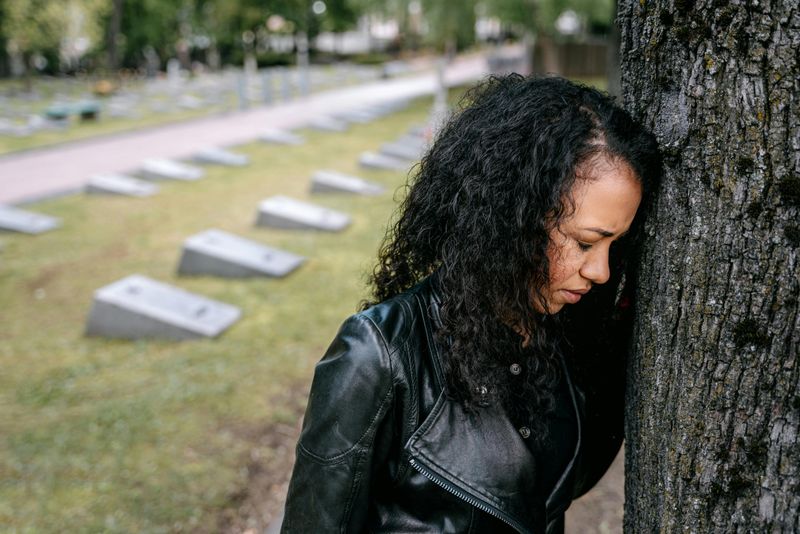
Everyone around you seems to expect you to “bounce back” within a certain number of weeks.
But grief does not follow a calendar, and anyone who has truly lost someone knows that healing is not linear.
Some days you feel completely fine, and then a song, a smell, or a random Tuesday can send everything crashing back.
That is completely normal, even when it feels confusing or embarrassing.
Giving yourself permission to grieve at your own pace is one of the most compassionate things you can do for yourself.
Healing is not about forgetting, it is about slowly learning to carry the weight differently.
6. You Start Seeing Life Differently Overnight

Something shifts inside you almost immediately after a significant loss.
The things that used to stress you out, like a bad grade or a petty argument, suddenly seem much smaller against the backdrop of real pain.
Your priorities rearrange themselves without you even trying.
You begin asking deeper questions about what actually matters, how you spend your days, and who deserves your limited energy and attention.
This shift in perspective is one of grief’s unexpected gifts.
It does not erase the hurt, but it quietly hands you a new lens through which everyday life looks more meaningful and worth protecting.
7. Words Left Unsaid Become the Loudest Silence

“I love you,” “I’m proud of you,” “I’m sorry.”
These phrases seem so easy to say, yet somehow they get swallowed by busyness, pride, or the assumption that there will always be more time.
There will not always be more time.
After a loss, unspoken words have a way of echoing in the quietest moments.
You replay conversations and find yourself finishing them in your head, giving the ending you wish you had actually spoken out loud.
That silence becomes its own kind of teacher.
Many people who have experienced loss make a deliberate effort to say the meaningful things early, often, and without waiting for the perfect moment.
8. Memories Become Sacred and Fragile at the Same Time

Once someone is gone, their memory becomes the only version of them you have left.
You guard it fiercely, terrified of the day details start to blur or fade from your mind.
At the same time, those memories can be both comforting and painful to revisit.
A photograph, a voicemail, a handwriting sample can make you laugh and cry within the same minute, sometimes the same breath.
Over time, many people find ways to honor those memories rather than just mourn them.
Keeping a journal, creating a small tribute, or simply telling stories out loud helps preserve the person beyond their physical absence.
9. You Learn That Strength Looks Like Asking for Help

For a long time, many of us are taught that being strong means handling things alone and not showing weakness.
Grief blows that idea apart completely.
Trying to carry loss by yourself is exhausting, isolating, and honestly unnecessary.
Reaching out, whether to a friend, a parent, a counselor, or even a support group, takes more courage than staying silent.
Vulnerability is not weakness; it is one of the bravest things a person can practice.
Loss teaches you that connection and community are healing tools, not signs of falling apart.
Letting people in during your hardest moments is how real recovery actually begins.
10. The Relationship Does Not End, It Just Changes

Here is something that surprises a lot of people: losing someone does not mean losing the relationship entirely.
The bond you shared does not simply disappear because they are no longer physically present in your life.
Many people find themselves still talking to the person they lost, feeling their influence in daily decisions, or sensing their presence during meaningful moments.
That is not unusual, it is actually a recognized part of healthy grief.
The connection evolves rather than ends.
Carrying someone in your heart, honoring their values, or living in a way they would be proud of keeps the relationship alive in a deeply real way.
11. You Understand Empathy on a Whole New Level

Before loss, it can be hard to fully understand what someone means when they say they are grieving.
You might say the right words, but deep down, you are guessing.
After your own loss, that guessing disappears entirely.
You develop a kind of emotional radar for pain in others.
A single look, a quiet withdrawal, or a forced smile becomes something you recognize immediately, because you have lived inside that exact feeling yourself.
That expanded empathy often turns grieving people into some of the most compassionate humans around.
The pain you carry becomes a bridge that helps you connect with and genuinely support others going through their own hard seasons.
12. Healing Is Possible Without Forgetting

One of the biggest fears after losing someone is that moving forward means leaving them behind.
Many people resist healing because it feels like a betrayal of the person they loved and lost.
But healing and remembering are not opposites.
You can laugh again, make new memories, and rebuild your happiness while still honoring and carrying the person who is gone.
Both things are true at the same time.
Grief eventually softens for most people, not because the love fades, but because the love finds a new home inside a life still being lived.
Growing forward is not forgetting, it is a tribute to what that person meant to you.
Comments
Loading…