
 Hailey Watson
The 15 Greatest Crime TV Shows Ever, Ranked by Their Impact
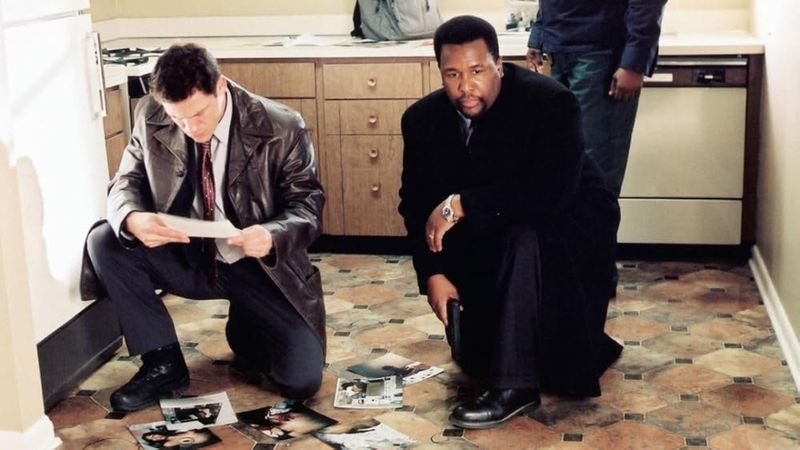
Crime TV shows have kept audiences glued to their screens for decades, blending mystery, tension, and unforgettable characters into stories that feel almost too real.
Some shows simply entertain, while others completely change the way we think about television storytelling.
Ranking these series by their lasting impact helps us understand which ones truly moved the needle for the genre.
Get ready for a countdown of the most influential crime dramas ever made.
15. Broadchurch (2013–2017)
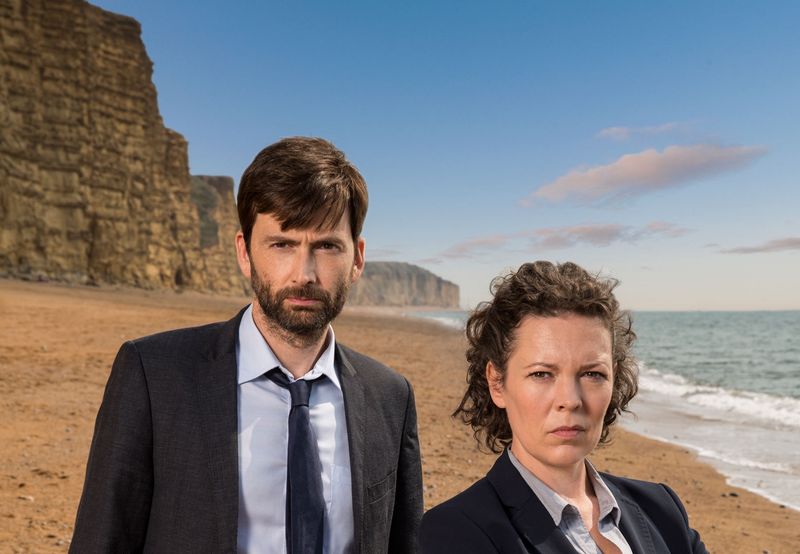
Few shows capture grief and guilt quite like Broadchurch.
Set in a small English coastal town rocked by the murder of a young boy, the series delivered emotionally raw performances from David Tennant and Olivia Colman.
The storytelling was slow-burn and deeply personal, making viewers feel every ounce of the community’s pain.
Its strength was character depth rather than plot twists.
While Broadchurch earned critical praise and loyal fans, its influence largely stayed within the UK crime drama world.
It polished the emotional template of community-based mysteries without dramatically reshaping the global crime genre.
14. Mare of Easttown (2021)
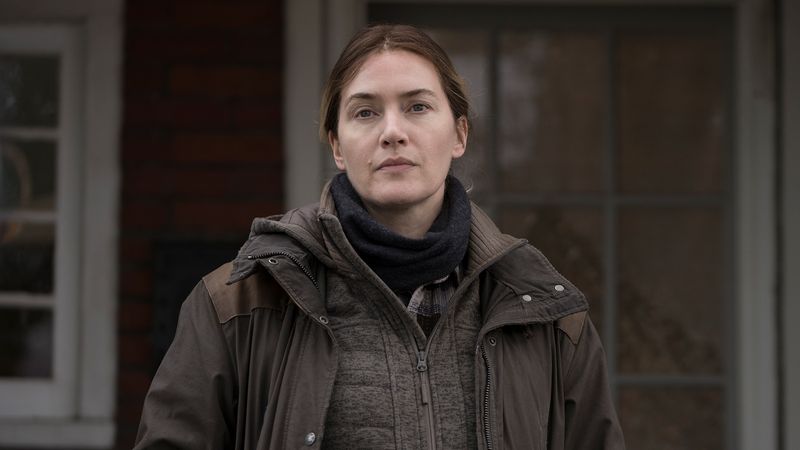
Kate Winslet showed the world what a truly lived-in detective looks like when she played Mare Sheehan in this gripping HBO miniseries.
Set in a working-class Pennsylvania town, the show balanced murder mystery with deeply human family drama.
Every character felt real, flawed, and completely believable.
Critics raved, audiences binged, and Emmy nominations piled up fast.
Still, Mare of Easttown arrived fairly recently, and its long-term influence on the crime genre is still being written.
Right now, it stands as one of the best modern examples of the format rather than a genre-defining trailblazer.
13. The Killing (2011–2014)
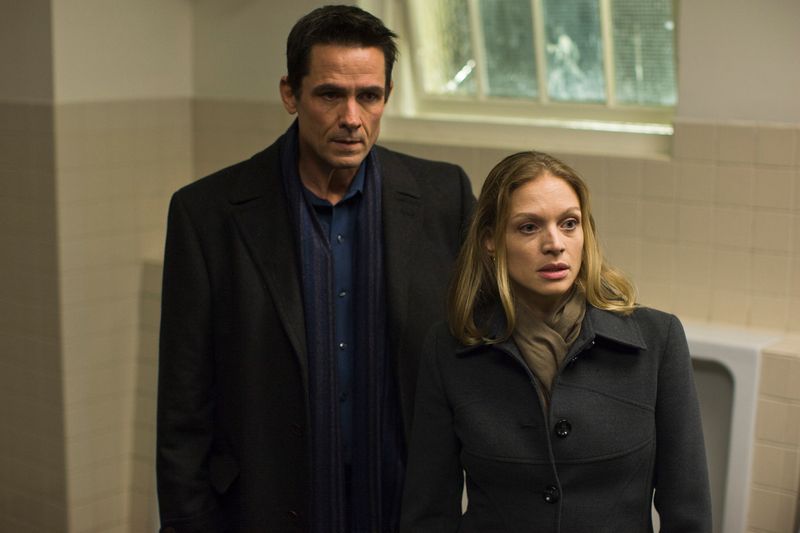
Adapted from the acclaimed Danish series Forbrydelsen, The Killing brought rain-soaked, emotionally heavy crime storytelling to American viewers.
Sarah Lund’s original Danish portrayal had already set the tone, and the U.S. version followed that blueprint faithfully.
Mireille Enos delivered a compelling performance as detective Sarah Linden, all quiet intensity and stubborn determination.
The show helped introduce Nordic noir aesthetics to mainstream American audiences, which was genuinely valuable.
However, it rode a wave that Scandinavia had already started rather than creating something entirely new.
It expanded the audience for that style more than it invented one.
12. Justified (2010–2015)
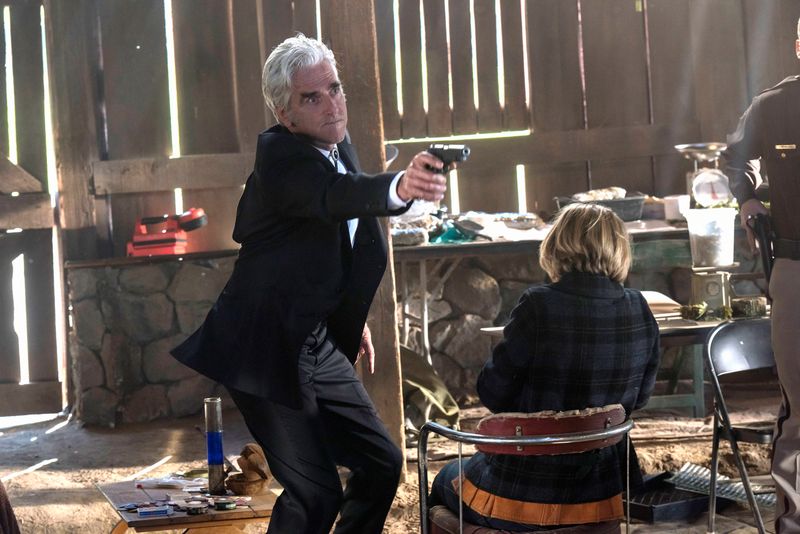
Sharp dialogue, a charismatic lawman, and a villain for the ages — Justified had all the ingredients of a modern classic.
Timothy Olyphant played Raylan Givens with effortless cool, and Walton Goggins as Boyd Crowder gave the show one of TV’s most compelling rivalries.
Based on Elmore Leonard’s writing, every line of dialogue crackled with wit and danger.
Fans and critics adored it, and its writing quality remains a high-water mark.
Yet Justified was more of a brilliantly crafted outlier than a show that fundamentally redirected the crime genre.
Its legacy is deep within its niche.
11. Sherlock (2010–2017)
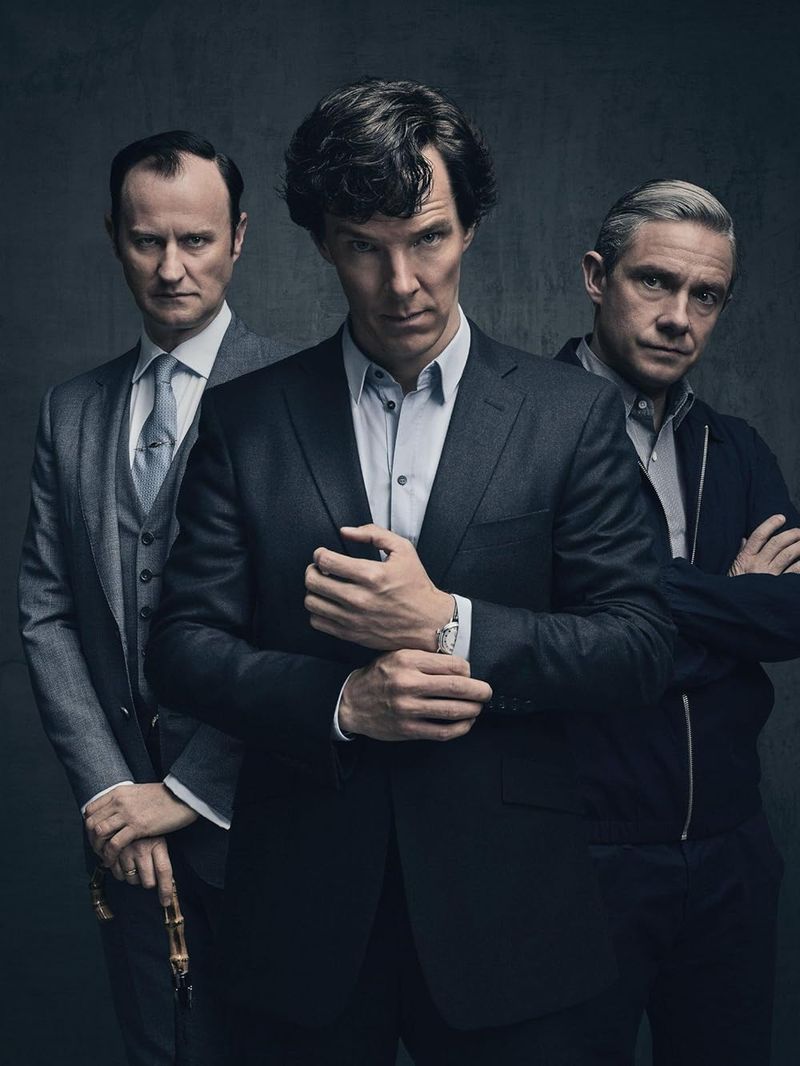
Benedict Cumberbatch made Sherlock Holmes feel fresh, electric, and unmistakably modern.
The BBC series reimagined Arthur Conan Doyle’s legendary detective in contemporary London with slick visuals, rapid-fire deductions, and a magnetic bromance between Sherlock and Watson.
Global audiences went absolutely wild for it.
Its stylistic energy and fan culture were enormous, spawning conventions, fan fiction, and countless imitators.
Even so, Sherlock’s broader impact on the crime genre’s structure was more aesthetic than foundational.
It made detective shows look cooler without necessarily changing how crime narratives are built.
Hugely entertaining, but more stylish revolution than storytelling evolution.
10. Happy Valley (2014–2023)
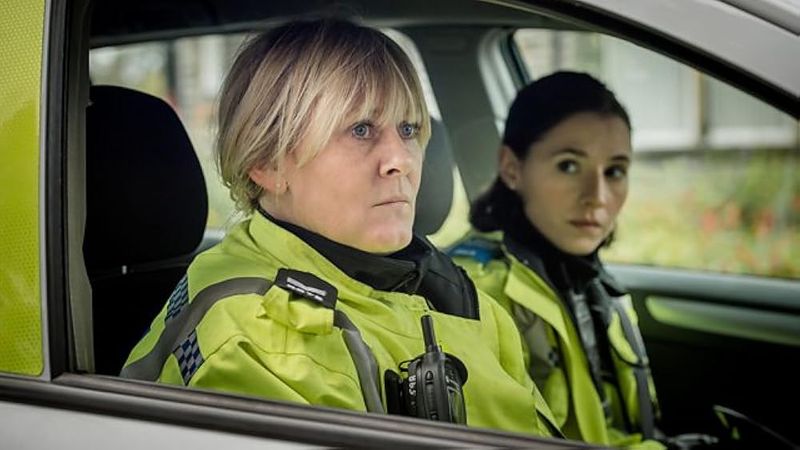
Sarah Lancashire’s performance as Sergeant Catherine Cawood is one of the greatest acting achievements in television history — full stop.
Happy Valley followed a no-nonsense Yorkshire police officer dealing with crime, family trauma, and a chillingly calm villain played by James Norton.
The writing by Sally Wainwright was precise, powerful, and deeply human.
Three seasons over nearly a decade built a devoted following and earned universal critical acclaim.
Its emotional honesty and moral complexity set it apart from typical procedural dramas.
However, its transformative reach remained strongest within British television, making it a national treasure rather than a global genre disruptor.
9. The Bridge (Bron/Broen) (2011–2018)
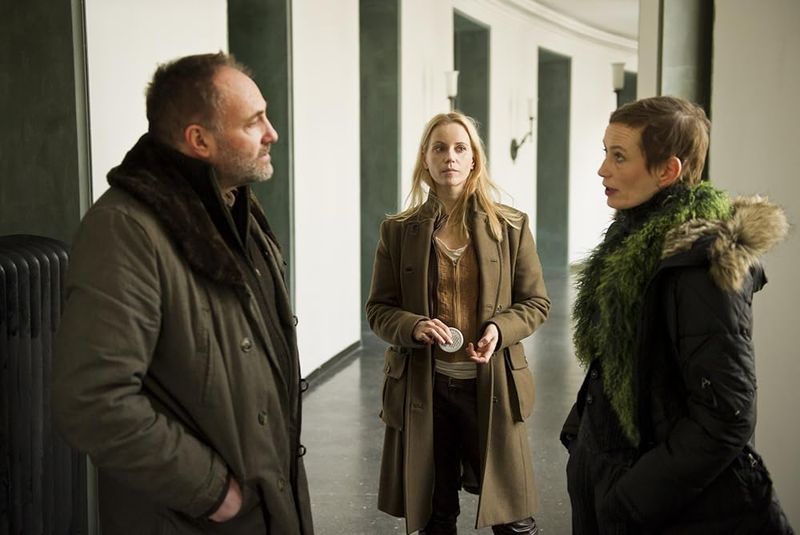
Imagine a body found exactly on the border between two countries — that’s the hook that launched one of Scandinavia’s most influential crime exports.
The Bridge introduced Saga Noren, a detective with possible autism spectrum traits, whose blunt brilliance made her instantly iconic.
The show’s cross-border premise was as clever as its character work.
Multiple countries remade it, including the U.S., Mexico, France, and the UK.
That kind of international replication shows real genre influence.
The Bridge didn’t just tell a great story — it created a structural template for cross-cultural crime storytelling that producers worldwide rushed to copy.
8. Columbo (1971–2003)
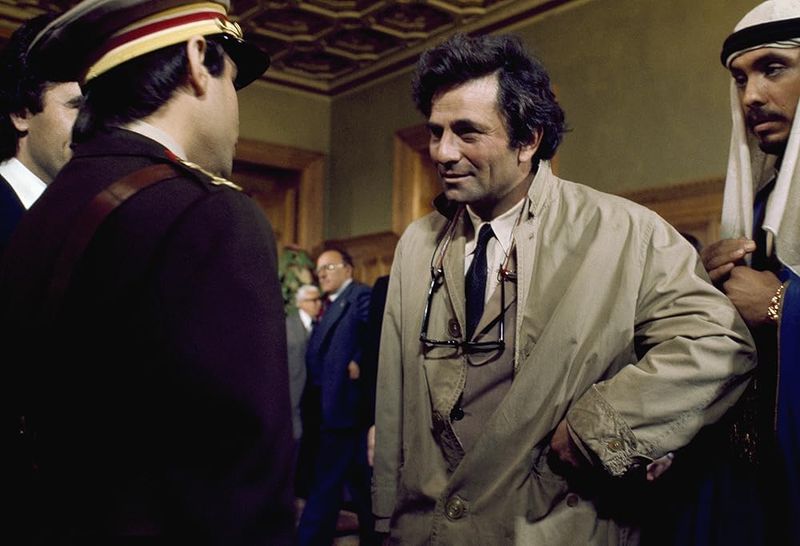
“Just one more thing…”
Those four words became one of television’s most iconic phrases, thanks to Peter Falk’s brilliantly disheveled Lieutenant Columbo.
The show flipped the detective formula entirely — viewers always knew who committed the crime.
The real suspense came from watching Columbo slowly, brilliantly corner the killer.
That inverted mystery structure was genuinely revolutionary and influenced procedural storytelling for generations.
Shows like Monk and even modern psychological thrillers owe a debt to Columbo’s format.
Running across multiple decades with consistent quality, it proved that character-driven detective storytelling never grows old.
A true pioneer hiding behind a rumpled coat.
7. Line of Duty (2012–2021)
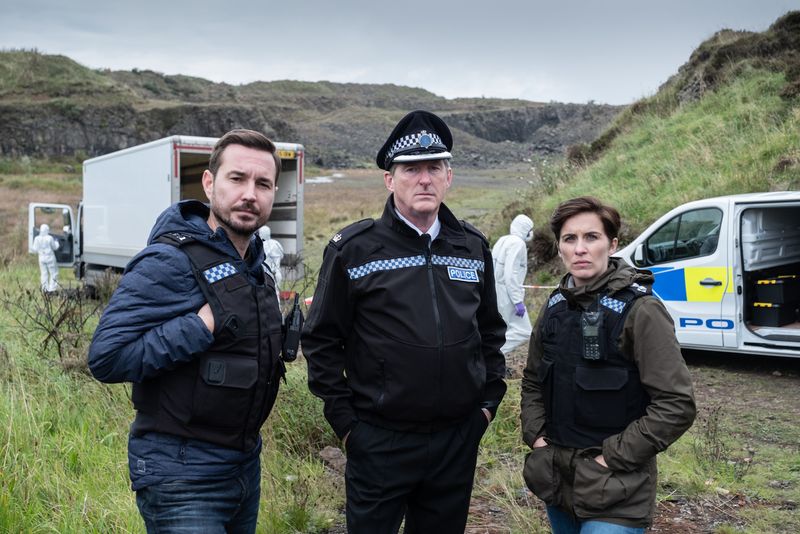
No show made police corruption feel more gripping than Line of Duty.
Jed Mercurio’s creation followed AC-12, an anti-corruption unit investigating bent coppers within their own force.
The interrogation scenes became legendary — precise, nerve-shredding, and packed with acronyms that fans proudly decoded episode by episode.
Each season ratcheted up the stakes, and the show became a genuine cultural event in the UK.
Its serialized plotting, institutional focus, and morally murky characters redefined what a modern police drama could achieve.
Line of Duty proved that procedural TV didn’t need to sacrifice complexity for accessibility — it could brilliantly deliver both.
6. Mindhunter (2017–2019)
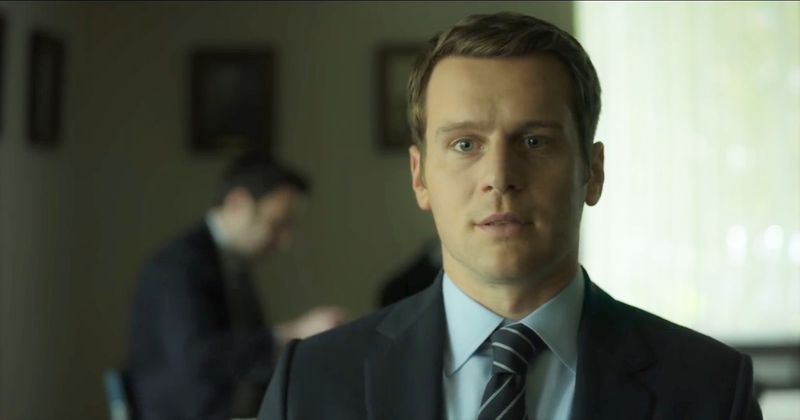
Before Mindhunter, most TV crime shows caught killers.
David Fincher’s Netflix series asked a scarier question: what makes them?
Set in the late 1970s, it followed FBI agents developing the science of criminal profiling by interviewing real serial killers.
The conversations were uncomfortably fascinating, and the pacing was deliberate and intelligent.
Mindhunter elevated psychological crime storytelling to an art form, blending procedural drama with character study and institutional critique.
It renewed mainstream interest in criminal psychology and influenced how streaming platforms approach prestige crime content.
Its abrupt cancellation remains one of TV’s great frustrations — the impact outlasted the episodes.
5. True Detective – Season 1 (2014)
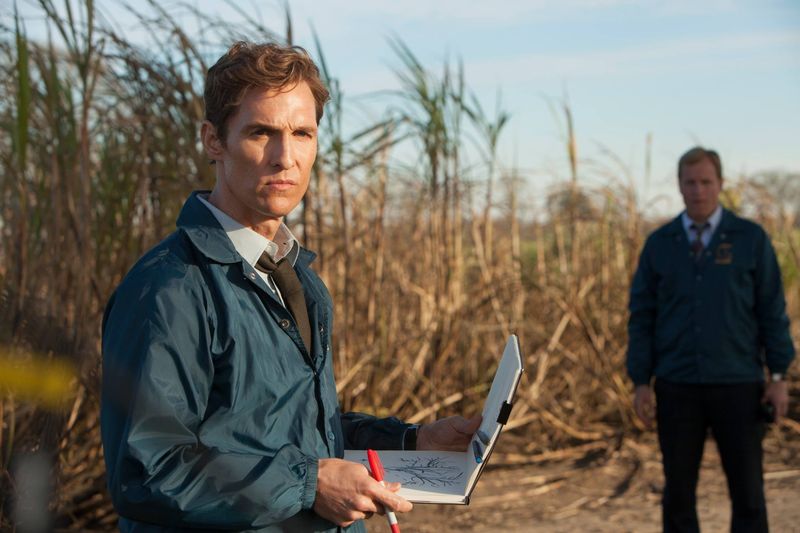
Matthew McConaughey and Woody Harrelson.
Louisiana swamps.
A spiral of philosophical darkness.
Season 1 of True Detective arrived like a thunderclap and instantly changed the conversation around what television crime drama could be.
Nic Pizzolatto’s writing mixed existential dread with Southern Gothic atmosphere in a way no network show had dared before.
The cinematic quality, long-take direction by Cary Fukunaga, and McConaughey’s Rust Cohle monologues became cultural touchstones almost overnight.
It pushed cable television toward treating crime stories with literary ambition.
True Detective Season 1 didn’t just raise the bar — it built an entirely new ceiling for the genre.
4. Hill Street Blues (1981–1987)
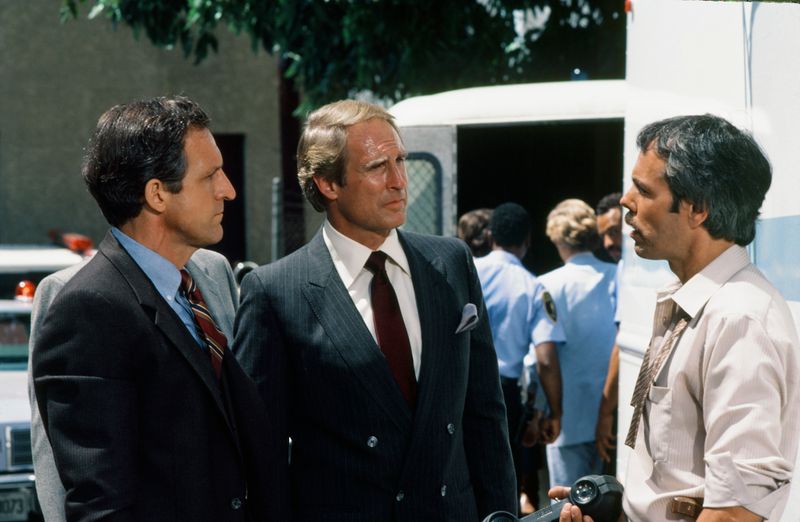
Before Hill Street Blues, American TV crime dramas were mostly clean, case-of-the-week affairs with tidy resolutions.
Then this show arrived and blew the doors off.
Steven Bochco and Michael Kozoll created a police drama that was messy, serialized, emotionally complex, and deeply human — qualities that define prestige television today.
Storylines carried over between episodes.
Characters had ongoing personal struggles.
The ensemble cast felt like a real, dysfunctional family.
Hill Street Blues essentially invented the template that shows like ER, NYPD Blue, and The Wire would later perfect.
Without it, modern TV storytelling would look dramatically different.
Its fingerprints are everywhere.
3. Homicide: Life on the Street (1993–1999)
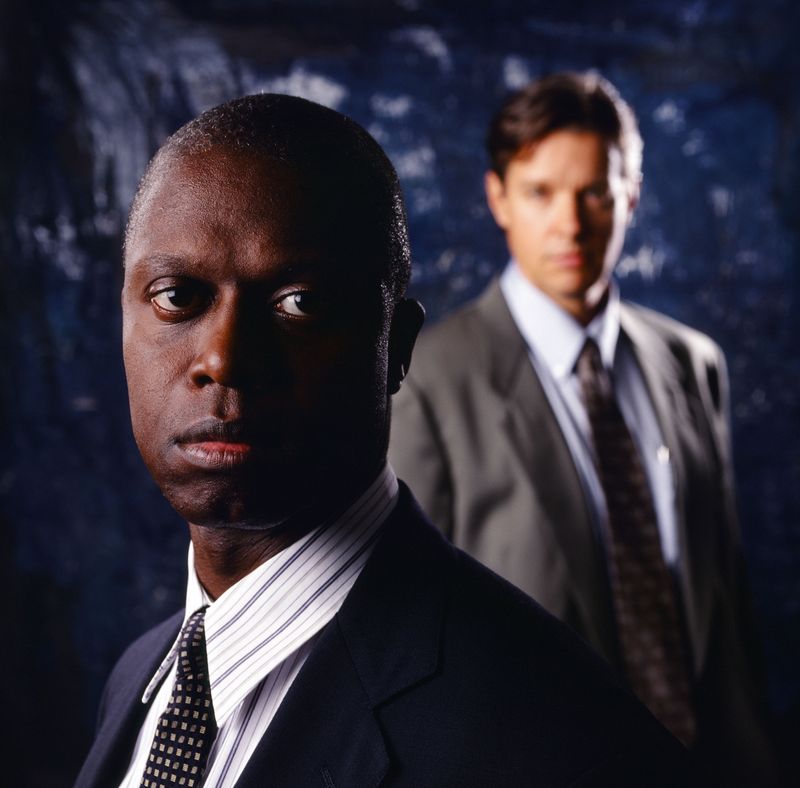
Long before The Wire made Baltimore famous, Homicide: Life on the Street was already walking those streets with uncomfortable honesty.
Based on David Simon’s nonfiction book, the show depicted the Baltimore homicide unit with a rawness that felt almost documentary.
Handheld cameras, overlapping dialogue, and morally complicated detectives made it unlike anything else on network TV.
David Simon went on to create The Wire, and the DNA is unmistakable.
Homicide proved that serious, literary crime storytelling could work on American television — and that audiences were ready for it.
It laid essential groundwork for the prestige crime era that followed.
2. The Shield (2002–2008)
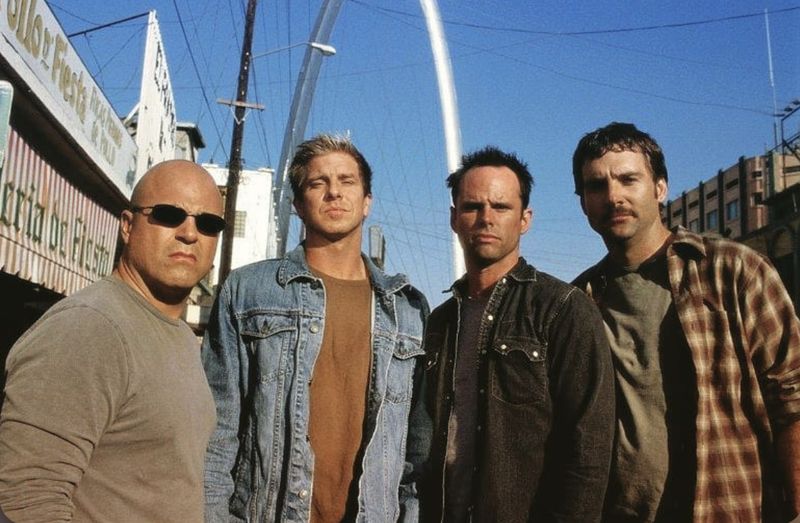
Michael Chiklis as Detective Vic Mackey was television’s first great modern antihero — a corrupt cop you somehow couldn’t stop rooting for.
The Shield launched FX as a serious prestige network and proved that cable television could go places broadcast TV never would.
Its pilot ended with an act so shocking it redefined what a first episode could do.
The show’s moral complexity cracked open the door for Tony Soprano, Walter White, and every other complicated protagonist who followed.
Before Breaking Bad made the antihero a formula, The Shield made it a revelation.
Its influence on the texture of modern scripted television is enormous and deeply underappreciated.
1. The Wire (2002–2008)
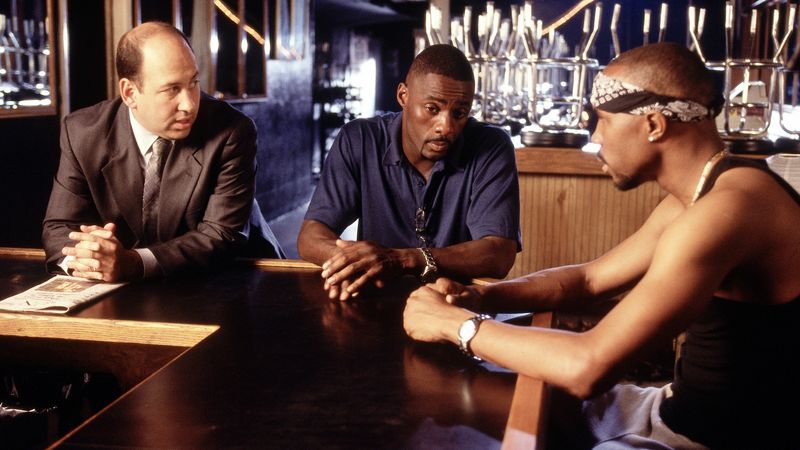
David Simon’s masterpiece doesn’t just tell crime stories — it dissects an entire American city, institution by institution.
Each season examined a different system: the drug trade, the docks, city government, schools, and the media.
No other crime show has ever attempted anything so structurally ambitious, and none has succeeded so completely.
The Wire changed how critics, academics, and filmmakers think about long-form television storytelling.
It’s taught in universities, cited by novelists, and referenced by showrunners worldwide.
Its characters, dialogue, and themes feel timeless.
Simply put, The Wire is the gold standard — the show every serious crime drama is still being measured against.
Comments
Loading…