
 Harper Hall
Finding inner peace can feel like chasing something invisible, but many ancient and modern thinkers have already mapped the way. Across centuries and cultures, certain life philosophies have helped people quiet their minds, handle stress, and feel truly content.
These ideas are not complicated or reserved for monks and scholars. Anyone, at any age, can pick up these tools and start building a calmer, more meaningful life.
1. Stoicism: Control What You Can
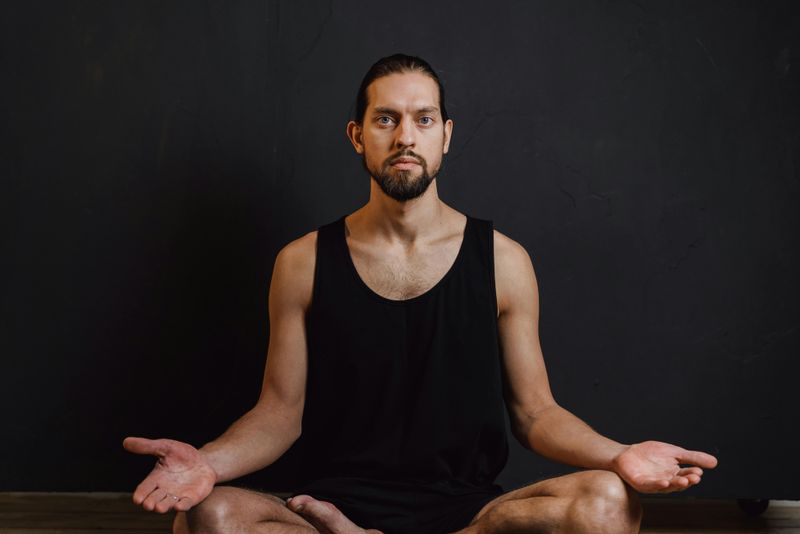
Imagine waking up and deciding that nothing outside your own thoughts will ruin your day.
That is the core promise of Stoicism, a philosophy born in ancient Greece around 300 BCE.
Stoics believed that you cannot control the weather, other people, or bad luck, but you can always control how you respond.
Practicing Stoicism means pausing before reacting, asking yourself what is actually within your power.
Marcus Aurelius, a Roman emperor and devoted Stoic, wrote daily reminders to himself about staying grounded.
His personal notes became the famous book Meditations.
Start small: when something frustrates you, ask yourself, “Can I change this?” If not, release it.
2. Mindfulness: Living in the Present Moment

Most of our worries live in the past or future, rarely in the actual present.
Mindfulness is the practice of pulling your attention back to right now, noticing what you see, hear, and feel without judgment.
Rooted in Buddhist traditions over 2,500 years old, it has become one of the most studied tools for mental well-being today.
Science backs it up too.
Research from Harvard University found that people spend nearly half their waking hours thinking about something other than what they are doing, which makes them less happy.
Try focusing fully on one simple task today, like eating breakfast without scrolling your phone.
3. Taoism: Going With the Flow of Life

Water never fights the rocks in its path.
It simply flows around them, and eventually shapes them entirely.
That elegant idea sits at the heart of Taoism, a Chinese philosophy developed by the legendary thinker Laozi roughly 2,500 years ago.
Taoism teaches that life has a natural rhythm, called the Tao or “the Way,” and that resisting it creates suffering.
When you stop forcing outcomes and trust the process, tension melts away.
Think of it as choosing cooperation over combat with life itself.
Next time a plan falls apart, instead of panicking, ask yourself what new direction this unexpected path might be opening up.
4. Buddhism: Letting Go of Attachment
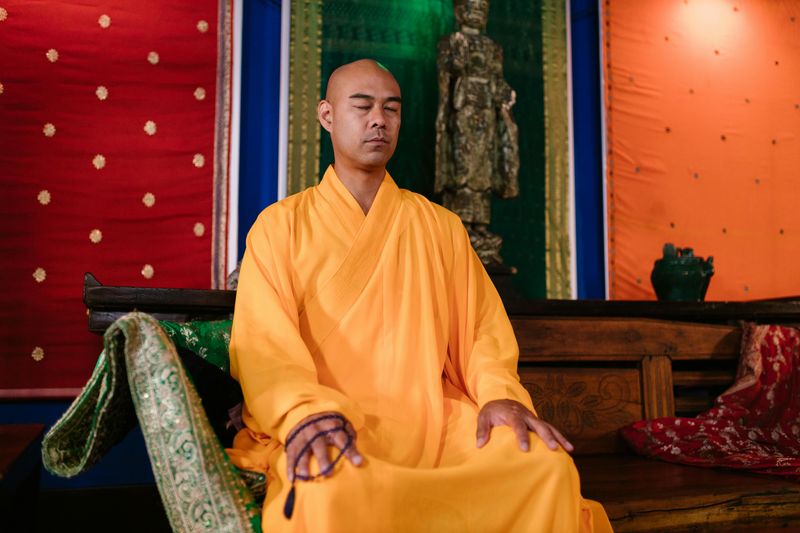
Here is a bold idea: a lot of your suffering comes from clinging too tightly to things, people, or outcomes.
Buddhism, founded by Siddhartha Gautama over 2,500 years ago, teaches that attachment is the root of most human pain.
When we expect life to stay exactly as we want it, we set ourselves up for disappointment.
Letting go does not mean you stop caring.
It means you hold things lightly, appreciating them without demanding they last forever.
Even joy becomes richer when you stop grasping at it.
Practice by noticing one thing you are holding onto too tightly and gently allowing it to be uncertain.
5. Existentialism: Creating Your Own Meaning
What if there is no preset purpose handed to you at birth, and that is actually wonderful news?
Existentialism, shaped by thinkers like Jean-Paul Sartre and Albert Camus in 20th-century France, argues that humans are free to create their own meaning.
Life does not arrive pre-labeled.
You get to write the label yourself.
That freedom can feel overwhelming at first, but it also gives you incredible power.
Your values, your passions, and your choices define who you are, not your circumstances.
Grab a notebook and write down three things that genuinely matter to you.
Build your daily life around those, and watch your sense of purpose grow.
6. Ikigai: Finding Your Reason for Being
Somewhere in Okinawa, Japan, some of the world’s longest-living people wake up each morning with a clear reason to get out of bed.
That reason has a name: ikigai, which roughly translates to “reason for being.” It sits at the crossroads of what you love, what you are good at, what the world needs, and what you can be paid for.
Finding your ikigai is not a one-day exercise.
It is a quiet, ongoing conversation with yourself about what makes your heart feel full.
Even small daily joys count.
Start by listing what activities make you lose track of time.
Those clues often point straight toward your ikigai.
7. Ubuntu: I Am Because We Are

“A person is a person through other people.” That single sentence captures Ubuntu, a Southern African philosophy that places human connection at the center of a meaningful life.
Unlike philosophies focused on individual achievement, Ubuntu reminds us that our well-being is deeply tied to the well-being of those around us.
When you help a neighbor, celebrate a friend’s win, or simply listen without judgment, you are practicing Ubuntu.
Research consistently shows that strong social connections are one of the biggest predictors of happiness and longevity.
Reach out to someone you have not spoken to in a while.
That one act of connection might bring peace to both of you.
Comments
Loading…