
 Isabel Parker
Gaslighting is a form of emotional manipulation where one person makes another doubt their own feelings, memories, and reality.
In marriages, it can be especially harmful because it happens behind closed doors, often disguised as harmless comments.
Many wives don’t even realize it’s happening until the damage is already done.
Knowing which phrases to watch out for can help you protect your emotional health and trust your own instincts.
1. “You’re Too Sensitive”

Words can cut deep, especially when the person saying them is someone you love and trust.
“You’re too sensitive” is one of the most common ways a husband can shut down a conversation before it even starts.
Instead of listening, he turns the problem back on her feelings.
This phrase tells her that her emotional reaction is the issue, not his behavior.
Over time, she may start to believe it.
She might stop speaking up altogether just to avoid being labeled dramatic.
Healthy relationships make space for all kinds of emotions, big or small, without judgment.
2. “It’s Not a Big Deal, Get Over It”

Imagine finally working up the courage to bring something up, only to be told it doesn’t even matter.
That’s exactly how this phrase lands. It skips past her concern entirely and jumps straight to dismissal.
When a husband says “get over it,” he’s not just brushing off the topic.
He’s also sending a message that her timeline for healing or processing isn’t valid.
She’s expected to move on at his pace, not her own.
Real resolution requires both people to feel heard.
Rushing past a problem doesn’t fix it; it just buries it deeper.
3. “You’re Acting Like a Child”
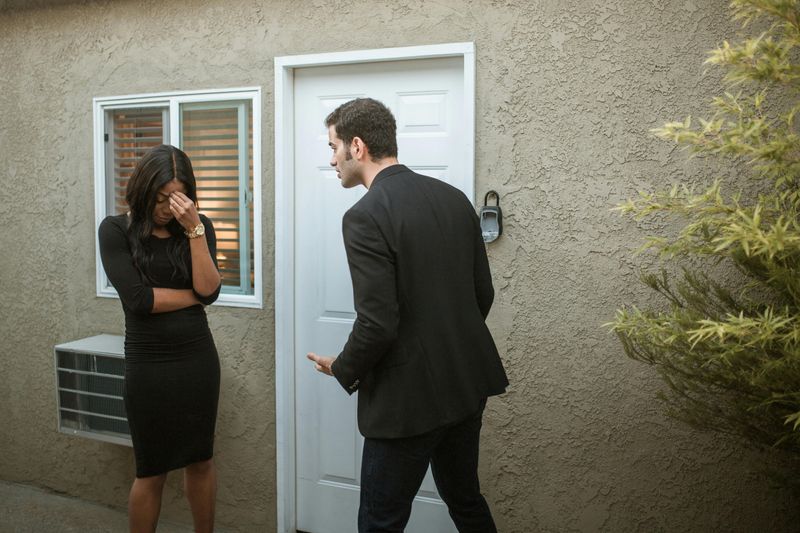
There’s something uniquely stinging about being compared to a child when you’re trying to express a real, adult concern.
This phrase does more than insult; it completely invalidates the conversation.
Suddenly, she’s defending herself instead of the issue at hand.
Calling someone childish during a disagreement is a classic power move. It makes her feel immature and unworthy of being taken seriously.
She may start to second-guess whether her feelings are even reasonable.
Emotional expression is not immaturity.
Grown adults cry, feel hurt, and need reassurance.
That’s not weakness; that’s being human.
4. “That Never Happened”

Memory is deeply personal and incredibly powerful, shaping how we understand our relationships and ourselves.
When someone flat-out insists that something you clearly remember never happened, it can feel profoundly destabilizing.
This phrase is one of the most textbook examples of gaslighting because it challenges a person’s sense of reality.
A husband who uses this tactic isn’t just disagreeing — he’s subtly attempting to rewrite history in his favor.
Over time, she may begin questioning whether her memory is faulty or if she somehow imagined the entire situation.
That creeping self-doubt can extend far beyond one argument, slowly eroding confidence and emotional security.
5. “Why Are You So Defensive?”

Flip the script.
That’s exactly what this phrase does.
One moment she’s raising a valid concern, and the next she’s being questioned about her tone.
The original issue gets completely lost in the shuffle.
Calling someone defensive is a sneaky way to avoid accountability.
Instead of addressing what she said, he focuses on how she said it.
Now she’s explaining herself rather than the problem she brought up.
This kind of deflection can make her feel like she can never bring anything up without it turning into a debate about her personality.
That’s an exhausting place to live.
6. “You’re Overreacting”

Feelings don’t come with a measuring stick.
Yet “you’re overreacting” treats them like they do, suggesting her emotional response is somehow too large for the situation.
Who decides what the right amount of upset looks like?
This phrase chips away at her confidence in her own instincts.
If she hears it often enough, she may start filtering her emotions before expressing them, asking herself, “Am I allowed to feel this way?”
That kind of self-censorship is exhausting and isolating.
Emotions are information, not performances.
Labeling them as excessive is a way of silencing rather than understanding her.
7. “I Can’t Believe You’re Upset About This”

Expressing disbelief instead of empathy sends one clear message: your feelings are unreasonable.
This phrase wraps judgment in a bow and hands it to her right when she’s already feeling vulnerable.
It’s not a question; it’s a verdict.
Rather than asking “what’s wrong?” or “help me understand,” the husband signals that her emotional state is the problem.
She’s left feeling embarrassed for having feelings in the first place.
That shame can build up quietly over months or even years.
Empathy doesn’t require agreement.
A partner can disagree with the reason for the upset while still honoring that the pain is real.
8. “Can’t You Just Take a Joke?”

Humor is wonderful until it becomes a hiding place.
When a husband says something hurtful and then hides behind “it was just a joke,” he’s using laughter as a shield against accountability.
She’s not allowed to be hurt because apparently, she doesn’t have a sense of humor.
This tactic is especially tricky because it makes her feel like the buzzkill.
Now she’s defending her right to feel offended instead of addressing what was actually said.
The joke becomes the story, not the pain it caused.
A joke that consistently hurts the same person isn’t really a joke anymore.
It’s a pattern.
9. “Why Can’t You Just Let It Go?”

Some things take time to process, and that’s completely okay.
But this phrase puts the entire burden of resolution on her shoulders.
Instead of working through the issue together, she’s expected to simply erase it from her mind on command.
Telling someone to “let it go” before they’re ready is a way of ending a conversation without actually having it.
It signals that his comfort matters more than her need for closure.
Over time, unresolved issues stack up like unpaid bills.
Letting go is a choice she gets to make when she’s ready, not when it becomes inconvenient for him.
Comments
Loading…