
 Isabel Parker
How to Budget When Every Month Is Different: A System for People With Chaotic Incomes

Some months you’re flush, other months you’re doing mental math in the checkout line, and the whiplash can make even “good” earners feel broke.
When your income changes week to week—freelancing, commission, tips, seasonal work, irregular shifts—traditional budgeting advice can feel useless because it assumes a predictable paycheck.
The fix isn’t becoming a different person with perfect spreadsheets; it’s building a system that flexes without falling apart.
The goal is simple: keep the bills paid, keep stress lower, and make sure your higher-income months actually improve your life instead of disappearing.
The ten steps below create a repeatable routine that works with chaotic income, not against it, so you can make smart decisions no matter what this month brings.
1. Build a “bare-bones” budget first (your Survival Number)

If your income swings, your budget needs a solid foundation that never changes, and that foundation is your survival number.
Start by listing only the expenses that keep your life functioning: housing, utilities, basic groceries, transportation, insurance, and the minimum payments on any debts.
Avoid optimism here, because this isn’t the month you hope to have; it’s the plan that protects you in the month you don’t.
Once you total those essentials, you’ll know the minimum amount your income must cover before you allocate a single dollar elsewhere.
This number becomes your financial guardrail and reduces decision fatigue, because you’ll immediately see whether you’re in a “cover essentials” month or a “build ahead” month.
When money feels unpredictable, clarity is calming.
2. Create a “Money Map” for every paycheck (a simple income waterfall)

Instead of budgeting once a month and hoping everything lands on time, use a consistent paycheck routine that tells every dollar where to go.
A “money map” works like a waterfall: as income arrives, you assign it in the same priority order every time.
Essentials come first, then upcoming bills that are due before your next expected income, then sinking funds, then extra debt payments or savings goals, and finally fun money.
This approach is powerful because it matches how real life works with irregular income: you can’t allocate money you don’t have yet, but you can make smart choices with what just hit your account.
Over time, this simple order prevents late fees, reduces guilt spending, and helps you feel in control even in unpredictable months.
3. Use a one-month buffer as your #1 goal

Living paycheck to paycheck feels extra intense when the paychecks don’t arrive in neat, predictable intervals.
A one-month buffer fixes that by creating breathing room between the money you earn and the money you spend.
The idea is to gradually reach a point where this month’s bills are paid with last month’s income, which means timing matters less and stress drops fast.
To build it, treat the buffer like a bill you owe yourself and funnel extra dollars there during better months—tax refunds, strong commission checks, overtime, or a side gig boost.
Even small progress helps, because a partial buffer can cover a few key expenses and stop the domino effect of overdrafts or credit card reliance.
Once you’re buffered, your budget becomes steadier without your income needing to be.
4. Set “floor + ceiling” spending ranges instead of fixed line items

Fixed budgets can backfire when your income changes, because you end up rewriting everything each month and feeling like you “failed” when spending shifts.
A better approach is to use ranges: give each category a minimum and a maximum that fit your life.
For example, groceries might be $250–$400, gas might be $80–$150, and personal spending might be $0–$100 depending on the month.
The floor keeps you realistic about what you can’t go below, while the ceiling prevents lifestyle creep when you have a high-income month.
Ranges also make decision-making easier because you’re not asking, “What’s the perfect number?” You’re asking, “Where do we land within this safe zone?” That flexibility makes your budget durable instead of fragile.
5. Run weekly budget check-ins (not monthly)

When income is chaotic, waiting until the end of the month to evaluate can be like checking the weather after the storm has already hit.
Weekly check-ins keep you proactive, because you can adjust before small problems become expensive ones.
Pick a consistent day and do a quick review of your account balances, your next seven to ten days of bills, and your spending so far in the categories that tend to drift.
Then, decide what needs to change for the coming week, especially if a slower income period is showing up.
This routine doesn’t need to be complicated; the goal is to shorten the feedback loop so you’re steering the ship, not reacting to waves.
With irregular income, a five-to-ten-minute weekly check-in can prevent late fees, panic transfers, and unnecessary credit card use.
6. Automate bills that must be paid, but don’t autopay everything

Automation can be a lifesaver, but with variable income, too much autopay can turn your checking account into a booby trap.
The smart middle ground is to automate only the bills that truly must be paid on time every month, like insurance premiums, minimum debt payments, or a core utility bill that you never want to miss.
For everything else—especially large, variable, or optional expenses—manual payment gives you control over timing and cash flow.
This matters because a high bill hitting on a low-income week can trigger overdrafts or force you to shuffle money around at the last minute.
A good system uses automation for stability and manual payments for flexibility.
If you want extra protection, keep a small “bill buffer” in checking so essential autopays clear even when your month is messy.
7. Use sinking funds for the stuff that “randomly” happens every year

Many “unexpected” expenses aren’t actually surprises; they’re predictable events that show up on an irregular schedule.
Sinking funds solve this by spreading those costs across the year so you’re not scrambling when they hit.
Think car repairs, medical copays, birthdays, holidays, school fees, annual subscriptions, and travel for weddings or family events.
Choose a few categories that tend to blow up your budget, estimate a yearly amount, and then divide it into manageable monthly contributions.
On a tight month, you can contribute the minimum; on a strong month, you can top it up.
The magic is that when the expense arrives, you pay it with money that was already set aside, which protects your essentials and keeps you from using credit.
Sinking funds turn financial chaos into planned maintenance.
8. Pick one “anchor” date to plan around (and a mini-calendar)
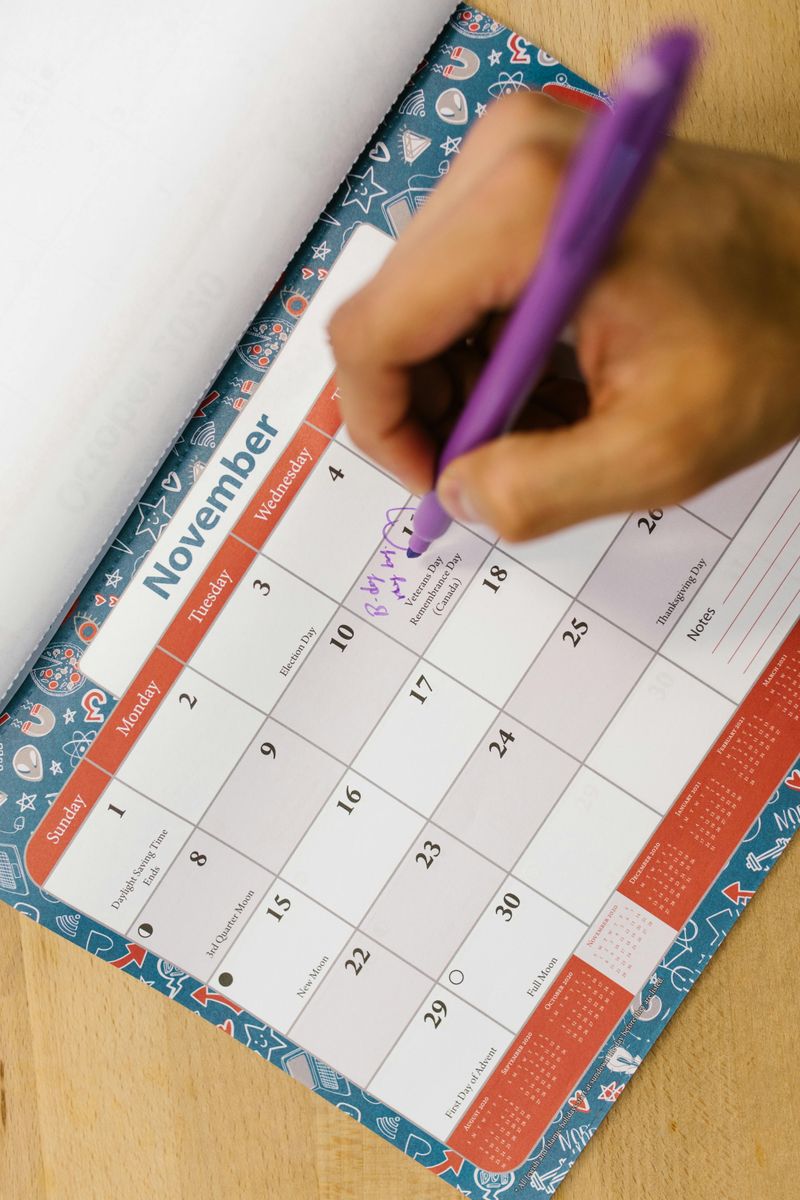
When paydays vary, you need a consistent planning rhythm that isn’t dependent on your employer or clients.
An anchor date is simply a day you choose—like every Friday or the first business day after you usually get paid—when you look ahead and make decisions before things are due.
Use a mini-calendar or a simple list to track what bills are coming up before your next anchor date, including their amounts and due dates.
Then, earmark the money for those bills immediately so it doesn’t get spent accidentally.
This habit prevents the common trap of “I have money today, so I’m fine,” followed by a surprise bill tomorrow.
Anchoring your planning to a predictable routine creates stability even when your income timing isn’t stable.
It’s a small practice that adds a lot of calm.
9. Make two budgets: a “lean month” plan and a “good month” plan

If your income changes, your spending plan should come with built-in scenarios, so you’re not making emotional decisions in the moment.
A lean-month plan covers essentials, minimum payments, and a few small quality-of-life items that keep you sane, while temporarily pausing or shrinking anything flexible.
A good-month plan, on the other hand, tells you exactly where extra money will go—buffer building, sinking funds, debt payoff, investing, and a reasonable amount of fun—so your higher-income months actually move your life forward.
This two-budget approach reduces guilt because you’ll know you’re making intentional choices instead of “messing up.”
It also prevents the classic boom-and-bust cycle where good months lead to overspending and low months lead to panic.
With clear plans, both types of months become manageable.
10. Create rules for windfalls and slow months (so emotions don’t drive spending)

When income is inconsistent, it’s easy to swing between “I deserve this” spending during good weeks and anxious hoarding during slow ones.
Simple rules keep you steady by removing the need to decide from scratch every time money comes in.
For windfalls, you might commit to a split like 50% toward your buffer or savings, 30% toward debt, and 20% toward fun, adjusting the percentages to fit your goals.
For slow months, you can have a predefined plan that pauses discretionary spending, reduces variable categories to their floors, and prioritizes essentials and due-date bills.
These rules act like guardrails, preventing one high paycheck from disappearing and one low paycheck from derailing you.
The result is consistency, which is what budgeting really needs.
Chaotic income doesn’t have to mean chaotic finances.
Comments
Loading…