
 Chloe Peterson
14 Films That Define the Period Drama Genre
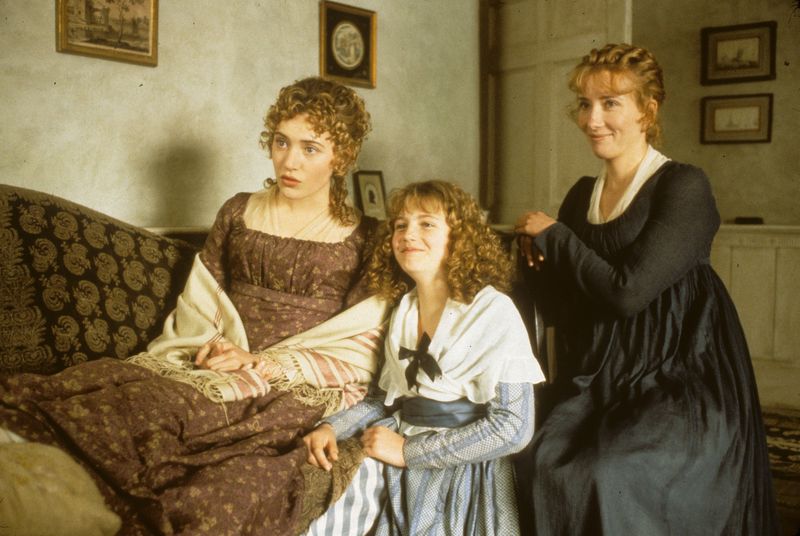
Period dramas transport us to different times and places, letting us experience history through beautiful costumes, grand settings, and powerful stories. These films capture the essence of their eras while exploring timeless themes of love, loss, and social change.
Whether set in Victorian England or 1950s America, the best period dramas make the past feel alive and relevant to our modern world.
1. Atonement (2007)
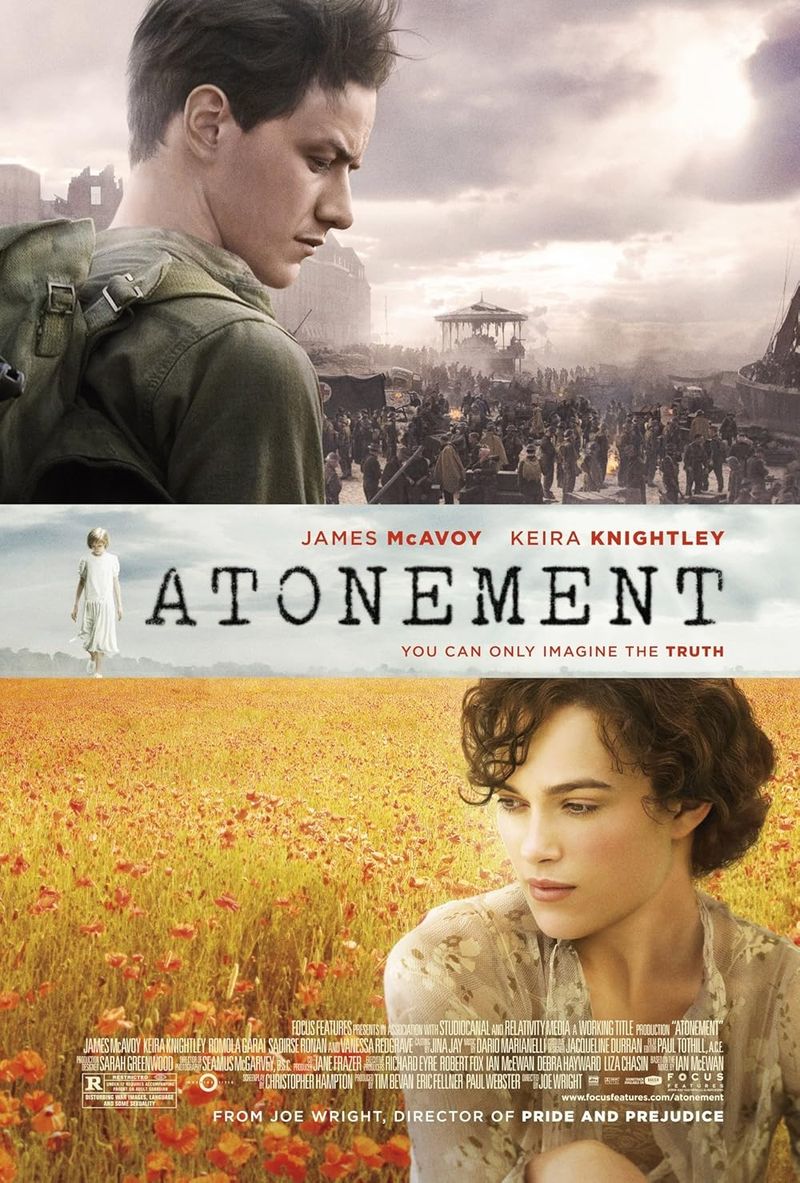
One false accusation changes three lives forever in this sweeping romance set against the backdrop of World War II.
Briony Tallis, a young girl with an overactive imagination, witnesses a moment between her sister Cecilia and housekeeper’s son Robbie that she misinterprets with devastating consequences.
Director Joe Wright crafts stunning visuals that move seamlessly between the elegant English countryside of the 1930s and the brutal beaches of Dunkirk.
The film’s famous five-minute tracking shot across the war-torn beach remains one of cinema’s most impressive technical achievements.
Keira Knightley and James McAvoy deliver heartbreaking performances as lovers torn apart by class differences and wartime chaos.
The film explores themes of guilt, redemption, and the power of storytelling itself.
2. Titanic (1997)
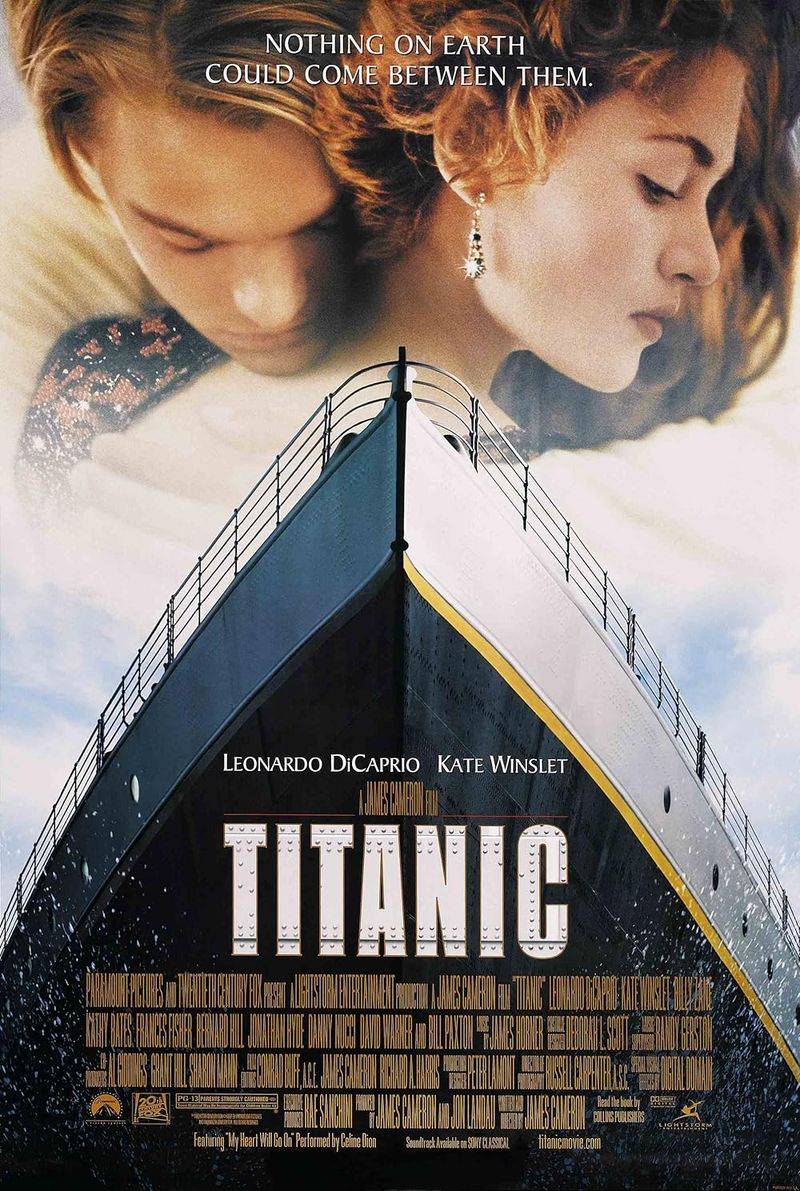
James Cameron’s epic disaster romance became a cultural phenomenon that defined a generation.
Rose DeWitt Bukater, a wealthy young woman trapped in an engagement to a cruel aristocrat, finds unexpected love with Jack Dawson, a penniless artist traveling in third class.
The film brilliantly contrasts the opulence of first-class luxury with the harsh realities faced by steerage passengers.
Cameron spent years researching the actual ship, creating historically accurate sets that make viewers feel like they’re aboard the doomed vessel.
Beyond the romance, Titanic serves as a commentary on class divisions in early 20th-century society.
The sinking sequences remain technically groundbreaking, combining practical effects with early CGI to create visceral, terrifying moments that still hold up today.
3. Emma. (2020)
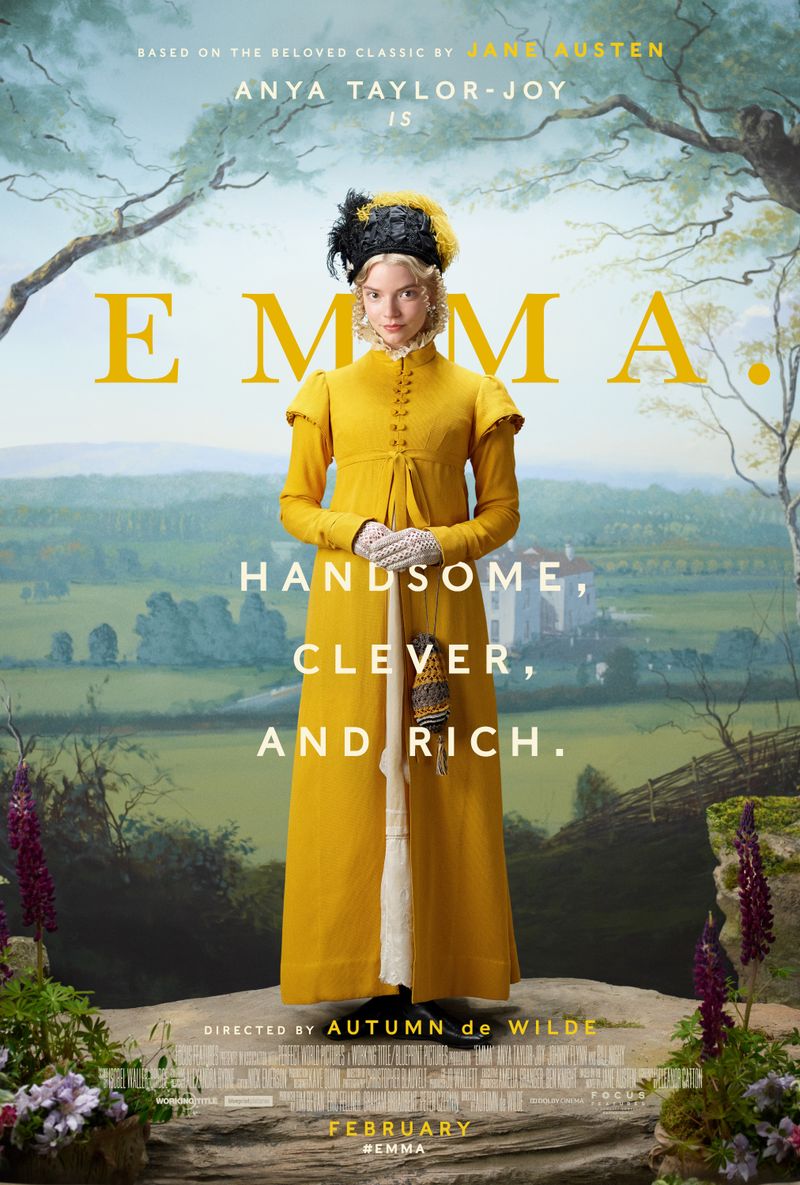
Autumn de Wilde’s adaptation brings fresh energy to Jane Austen’s beloved comedy of manners.
Emma Woodhouse, a privileged young woman in Regency England, enjoys matchmaking for others while remaining oblivious to her own romantic feelings.
This version emphasizes the novel’s humor with vibrant colors and playful cinematography that feels modern yet period-appropriate.
The costumes pop with unexpected color combinations, moving away from the muted palettes typically associated with Austen adaptations.
Anya Taylor-Joy captures Emma’s confidence and occasional cruelty perfectly, making her growth throughout the story feel earned.
The film doesn’t shy away from showing how Emma’s privilege blinds her to others’ feelings, creating a surprisingly relevant commentary on class and social awareness.
4. The Favourite (2018)
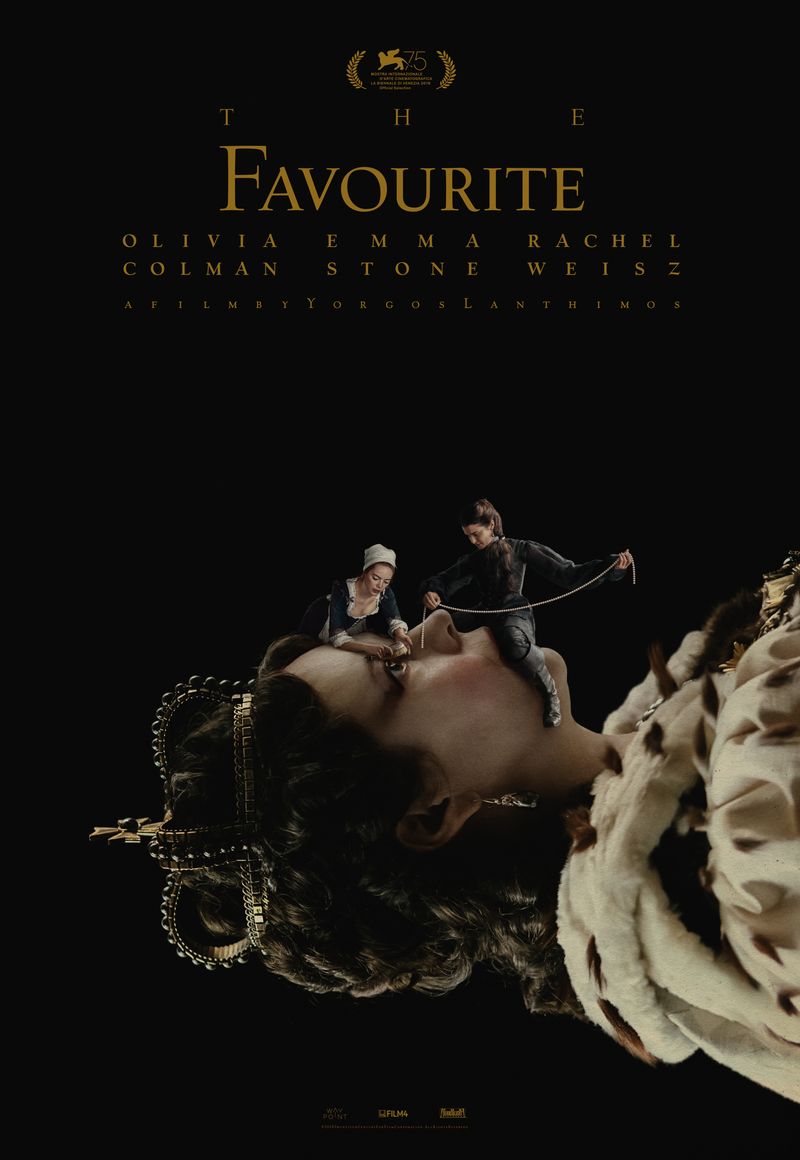
Set in the early 1700s, Yorgos Lanthimos transforms British court politics into a sharp, wicked satire.
Queen Anne, weak and unpredictable, depends on Lady Sarah Churchill, but the dynamic changes when the ambitious Abigail Hill enters the royal household.
The film uses fisheye lenses and natural lighting to create a disorienting, almost surreal atmosphere within the palace walls.
This unconventional approach makes the historical setting feel strange and new rather than stuffy or predictable.
Olivia Colman won an Oscar for her portrayal of the vulnerable yet volatile queen caught between two manipulative women.
The sharp dialogue and dark humor reveal how personal relationships shaped political decisions during this tumultuous period in British history.
5. Pride & Prejudice (2005)
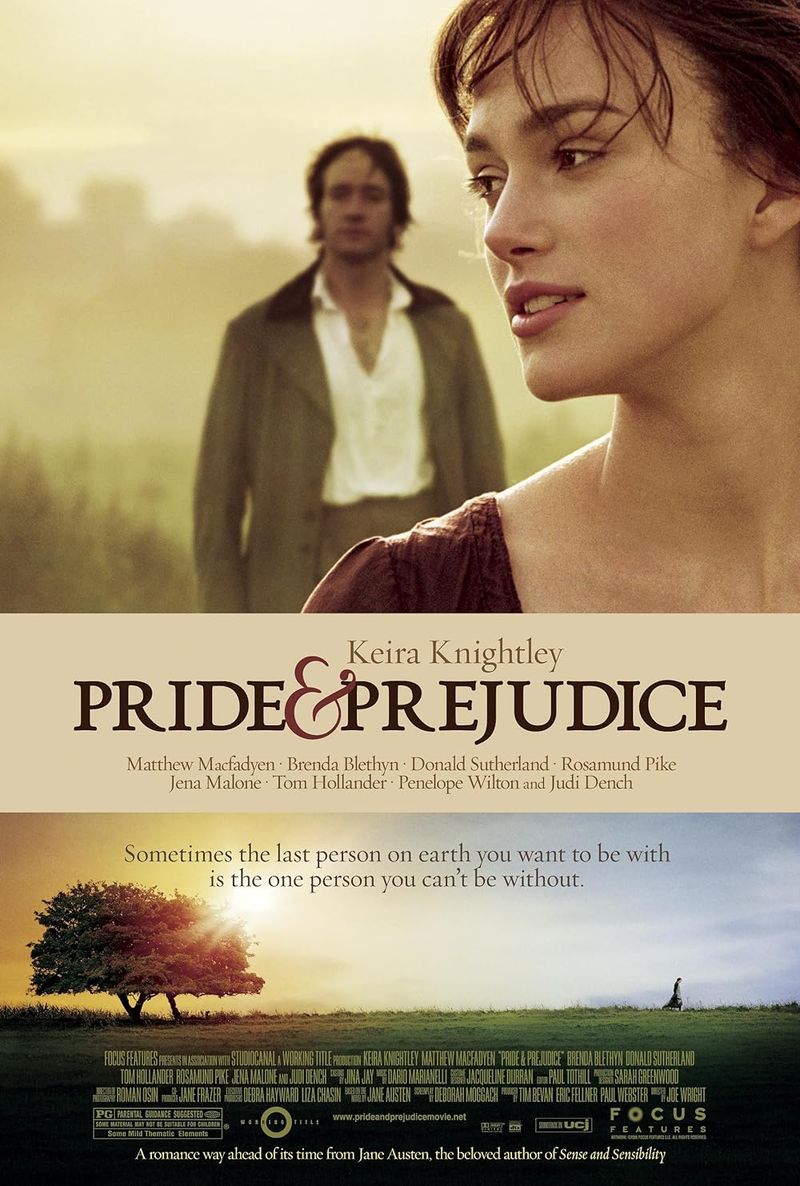
Joe Wright’s adaptation captures the emotional intensity of Austen’s most famous novel through intimate cinematography and naturalistic performances.
Elizabeth Bennet must overcome her initial prejudice against the proud Mr. Darcy while navigating the complex social expectations of Regency England.
Unlike more formal Austen adaptations, this version shows the Bennet family as realistically chaotic and slightly shabby.
The lived-in quality of their home and the muddy hems of Elizabeth’s dresses add authenticity often missing from period films.
Keira Knightley brings intelligence and wit to Elizabeth, while Matthew Macfadyen’s Darcy smolders with repressed emotion.
The film’s visual poetry, particularly the misty dawn proposal scene, elevates the romance to something truly magical.
6. Sense and Sensibility (1995)
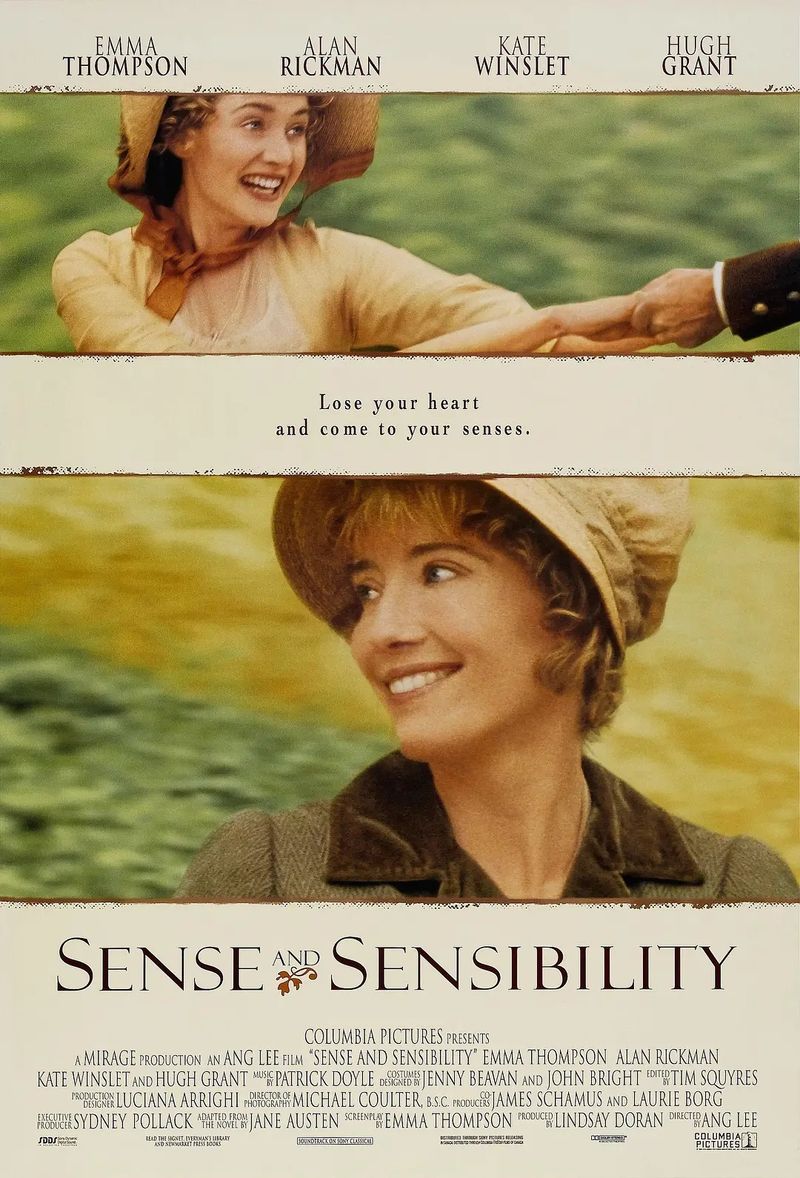
With warmth and intelligence, Emma Thompson’s Academy Award–winning script brings Jane Austen’s first novel to the screen.
The Dashwood sisters, suddenly facing financial insecurity, confront romance and loss in a society that offers them few options.
Thompson herself plays the sensible Elinor, while Kate Winslet shines as the passionate Marianne.
Their contrasting approaches to romance and heartbreak form the emotional core of the story, showing how both restraint and openness have their costs.
Director Ang Lee captures the beauty of the English countryside while never romanticizing the sisters’ precarious financial situation.
The film honestly portrays how marriage represented economic survival for women, not just romantic fulfillment during this era.
7. Little Women (2019)
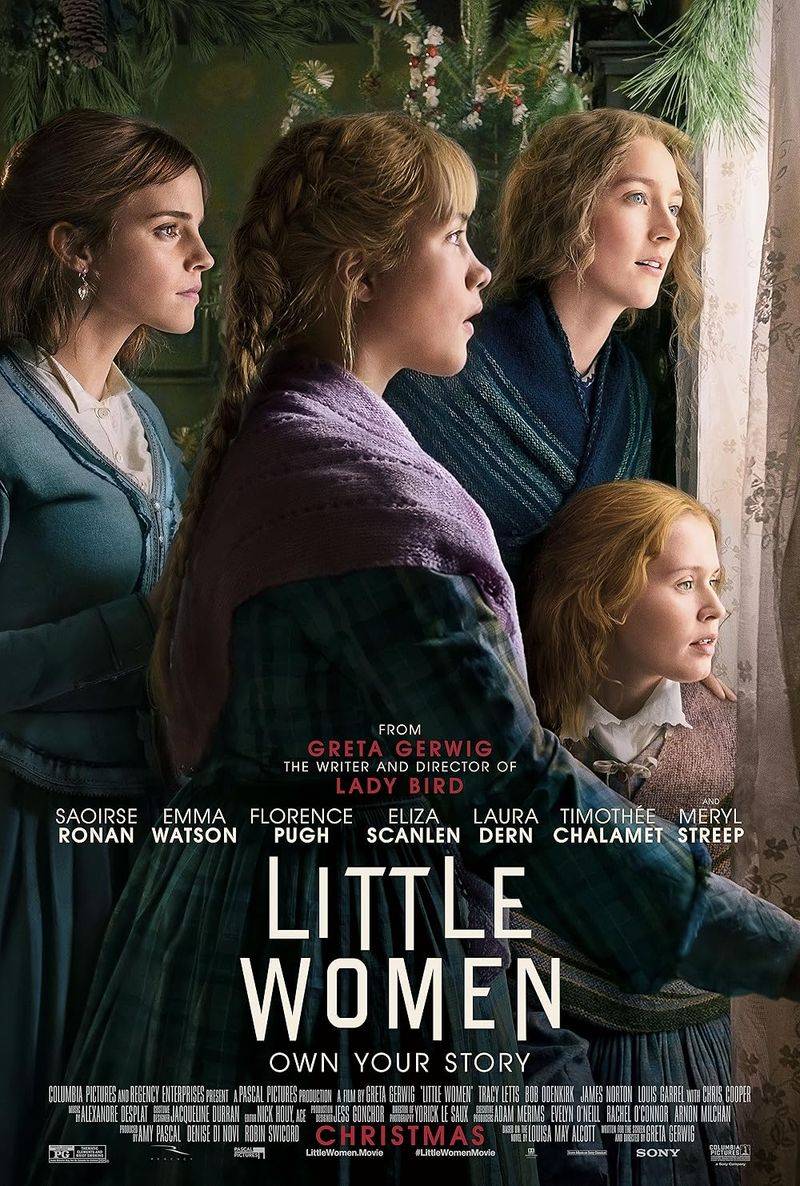
Greta Gerwig’s adaptation reimagines Louisa May Alcott’s classic by weaving past and present together in a nonlinear narrative.
The March sisters pursue their dreams during and after the Civil War, challenging expectations about what women’s lives should look like.
Saoirse Ronan brings fierce independence to Jo March, making her struggle between artistic ambition and societal pressure feel urgent and modern.
The film emphasizes the economic realities facing women writers, showing Jo negotiating with publishers who undervalue her work.
Florence Pugh transforms Amy from a spoiled younger sister into a pragmatic artist who understands marriage as an economic institution.
Gerwig’s ending subtly questions traditional romantic conclusions, leaving viewers to decide what really happened to Jo.
8. The Remains of the Day (1993)
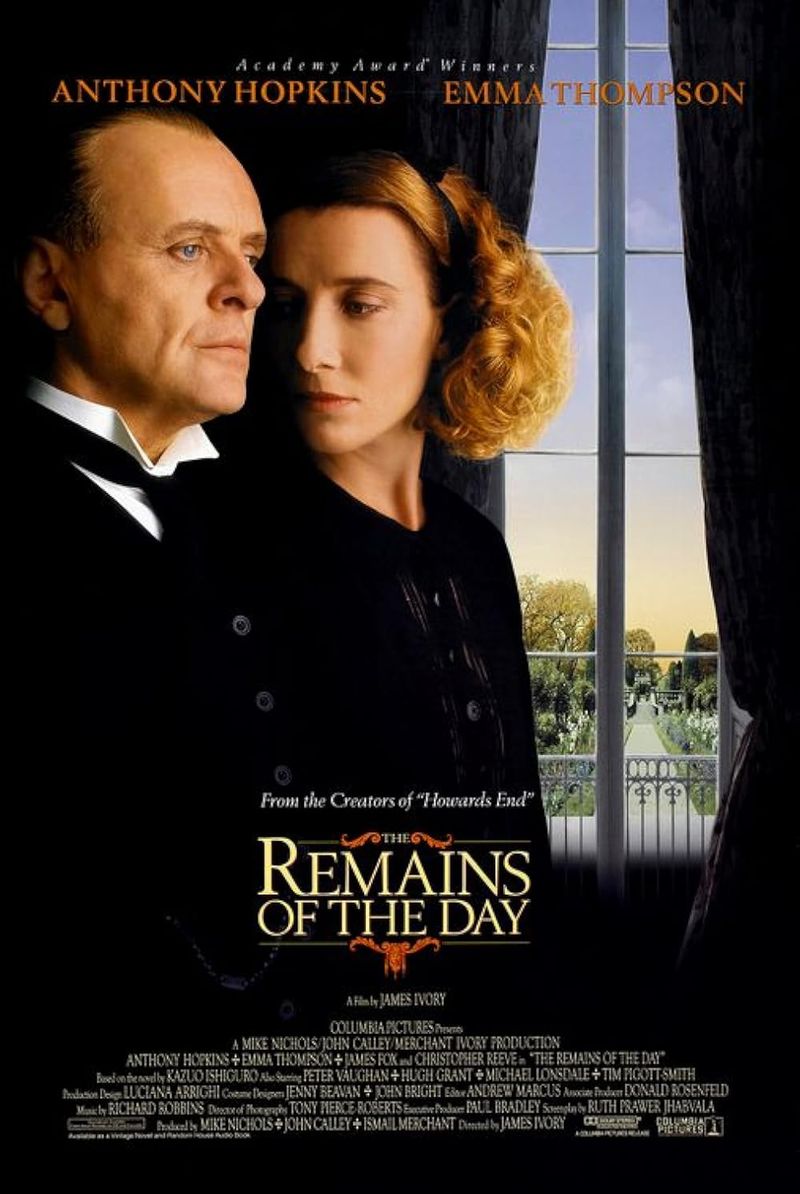
Ishiguro’s tale of repression and devotion comes alive in James Ivory’s adaptation.
Stevens, a lifelong butler in an English manor, contemplates his years of work and a subtle, never-fulfilled connection with the housekeeper.
Anthony Hopkins delivers a masterclass in restraint, showing emotion through the smallest gestures and pauses.
His Stevens has devoted himself so completely to professionalism that he’s lost the ability to express personal feelings or recognize his own desires.
The film also examines England’s political climate before World War II, showing how Stevens’s employer sympathized with Nazi Germany.
Stevens’s refusal to question his master’s judgment reflects broader themes about blind loyalty and the cost of never thinking for oneself.
9. Anna Karenina (2012)
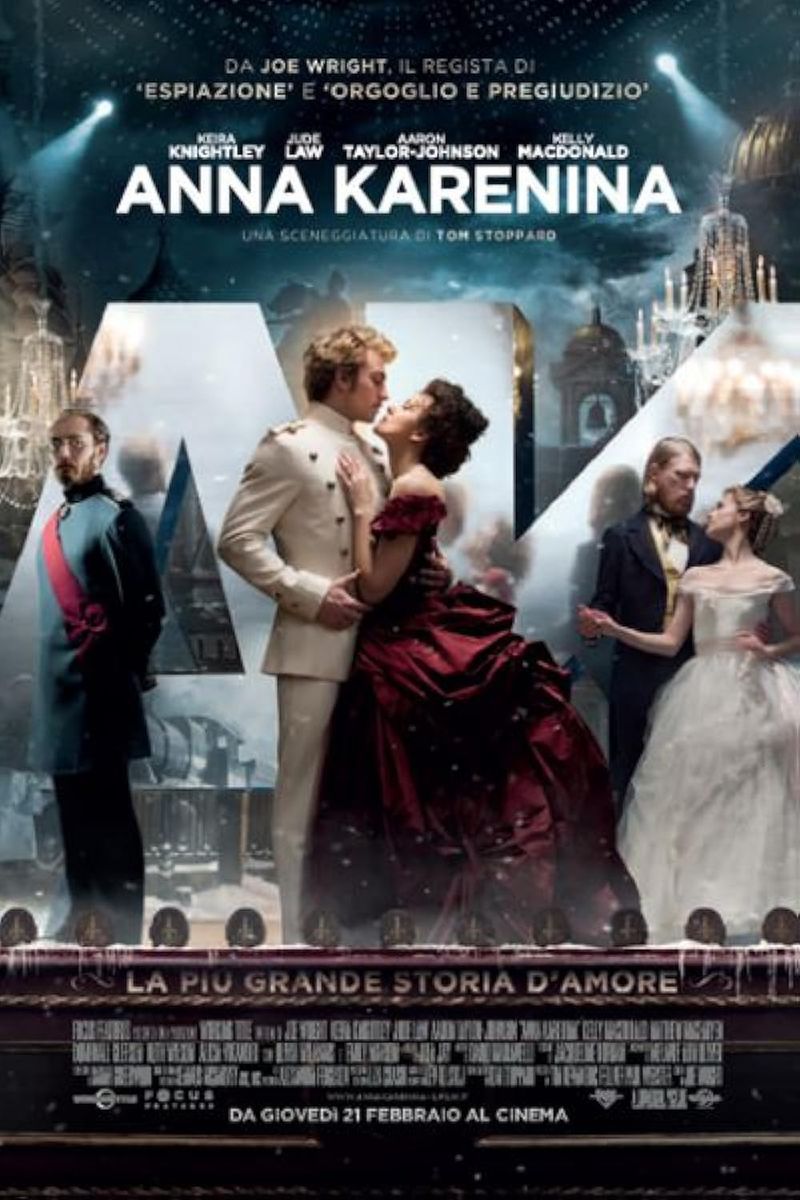
Joe Wright takes a bold theatrical approach to Tolstoy’s epic novel, staging much of the action on and around a theater stage.
Anna, trapped in a loveless marriage to a cold government official, risks everything for a passionate affair with Count Vronsky.
The stylized staging emphasizes how Russian high society functioned like a performance, with rigid rules about acceptable behavior.
Characters move between realistic outdoor scenes and obviously artificial stage sets, blurring the line between genuine emotion and social performance.
Keira Knightley captures Anna’s transformation from proper society wife to desperate outcast with heartbreaking intensity.
The film doesn’t judge Anna for her choices but shows how society’s double standards destroyed her while barely affecting Vronsky.
10. Phantom Thread (2017)
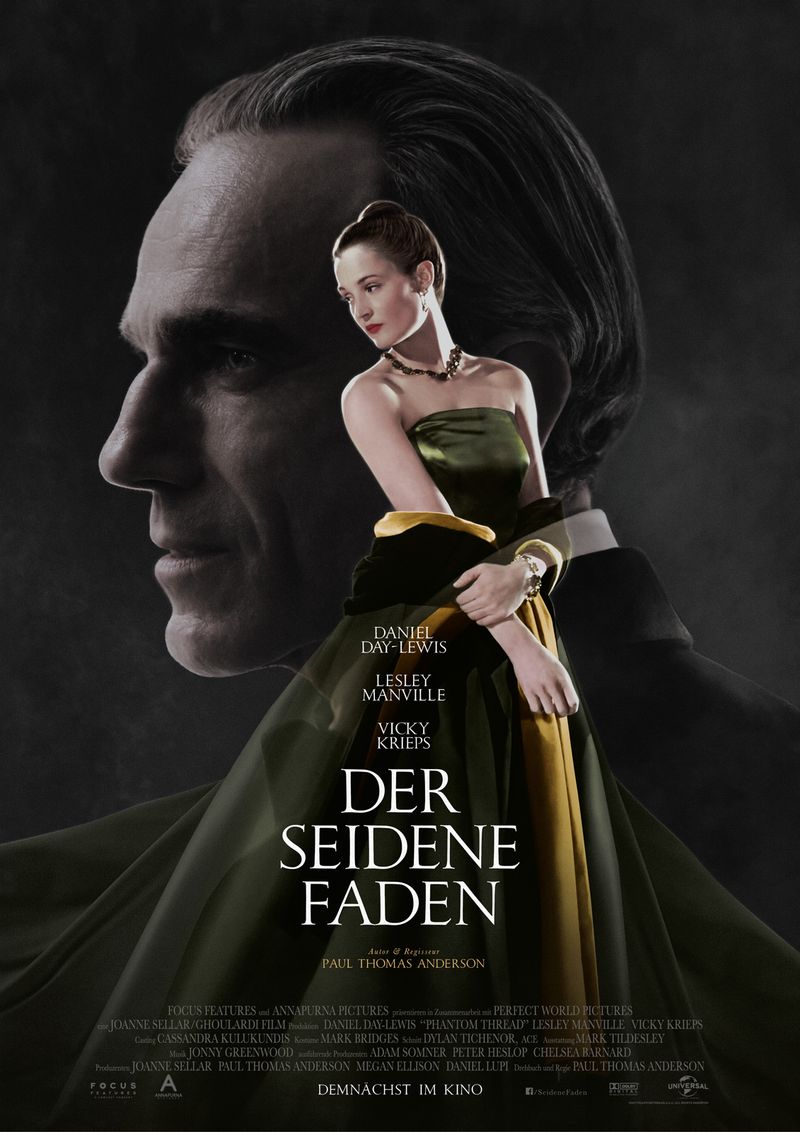
Set amid the glamour of 1950s London haute couture, Paul Thomas Anderson’s film tells the story of Reynolds Woodcock, a meticulous dressmaker whose routine is disrupted by Alma, a headstrong waitress who challenges his control.
Daniel Day-Lewis, in his final role, creates a character both fascinating and maddening in his perfectionism.
The film shows how Reynolds uses his art as a weapon of control, dressing women to his exact specifications while keeping emotional intimacy at bay.
What begins as a traditional romance evolves into something far stranger and more complex.
Vicky Krieps holds her own against Day-Lewis, showing Alma’s quiet determination to claim power in this relationship through increasingly unconventional means.
11. Hamnet (2025)
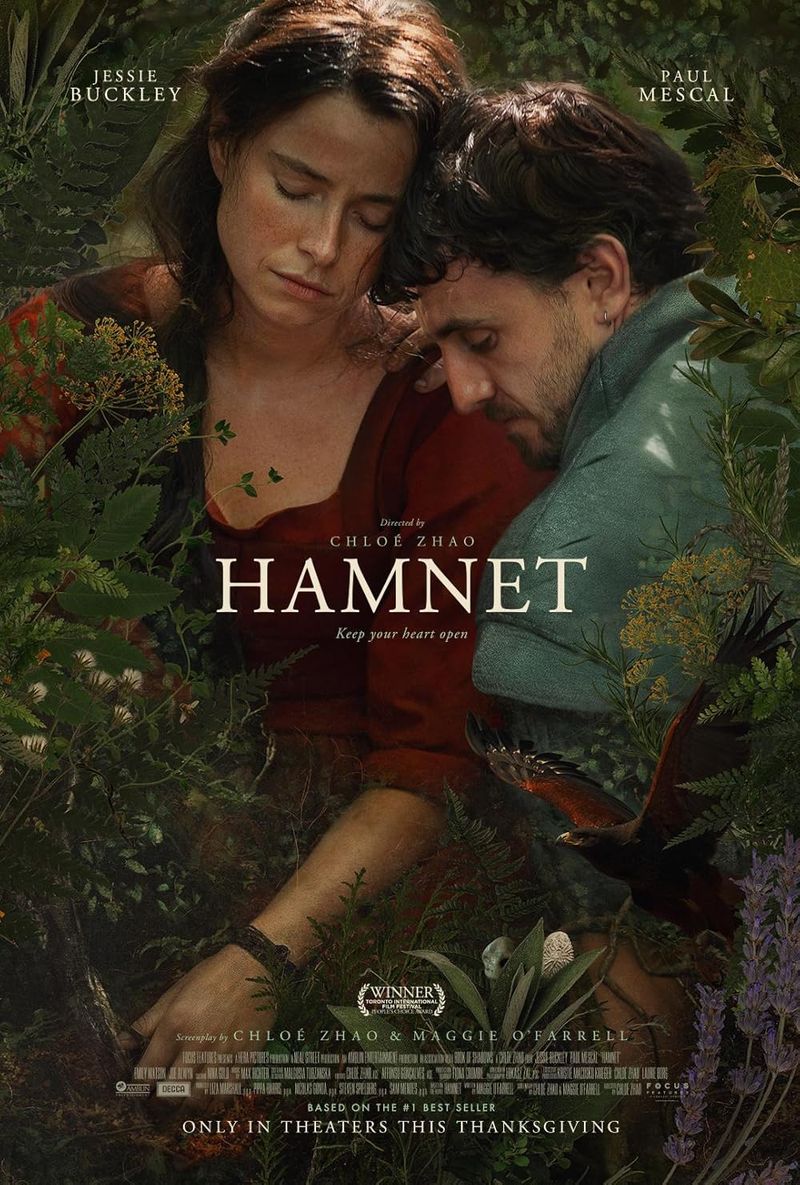
Based on Maggie O’Farrell’s award-winning novel, this adaptation focuses on Shakespeare’s family rather than the playwright himself.
Agnes, Shakespeare’s wife, possesses unusual healing abilities and an intuitive understanding of the natural world that sets her apart in Elizabethan Stratford-upon-Avon.
The film explores the devastating loss of the Shakespeares’ only son, Hamnet, and how this tragedy influenced the creation of “Hamlet.” Rather than centering the famous writer, the story honors Agnes’s grief and strength as she navigates loss while raising her daughters.
Early footage suggests a visceral, intimate approach to the period, emphasizing textures, smells, and the physical realities of 16th-century life.
The film promises to reveal the woman behind one of history’s most famous men.
12. Portrait of a Lady on Fire (2019)
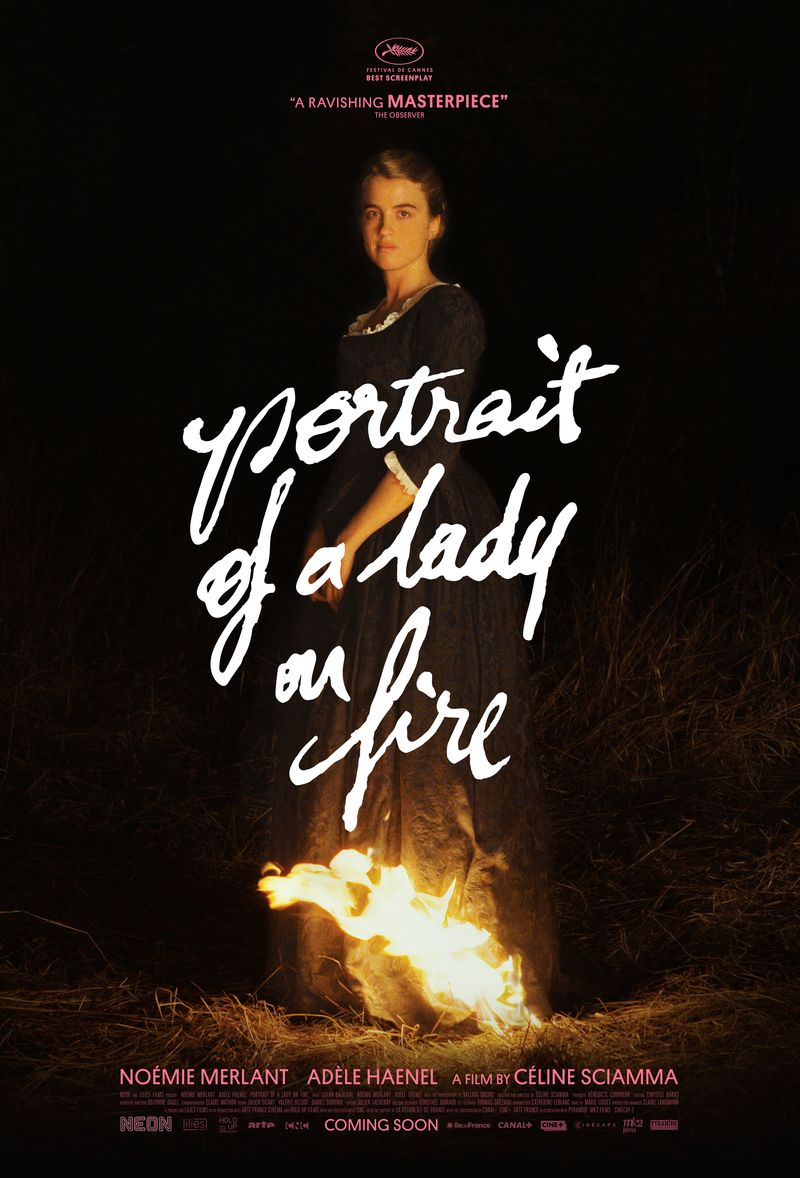
Céline Sciamma’s masterpiece unfolds on a remote island off the coast of Brittany in the late 18th century.
Marianne, a painter, arrives to secretly create a wedding portrait of Héloïse, a reluctant bride who refuses to pose.
Shot almost entirely by candlelight and natural light, the film creates an intimate world where these two women can exist outside society’s expectations.
Their developing relationship unfolds through stolen glances and careful observations, building to something profound and transformative.
The absence of a musical score makes every sound meaningful—crackling fires, rustling fabric, crashing waves.
Sciamma shows how art preserves memory and love, even when circumstances force separation.
The final scene delivers one of cinema’s most powerful emotional punches.
13. Marie Antoinette (2006)
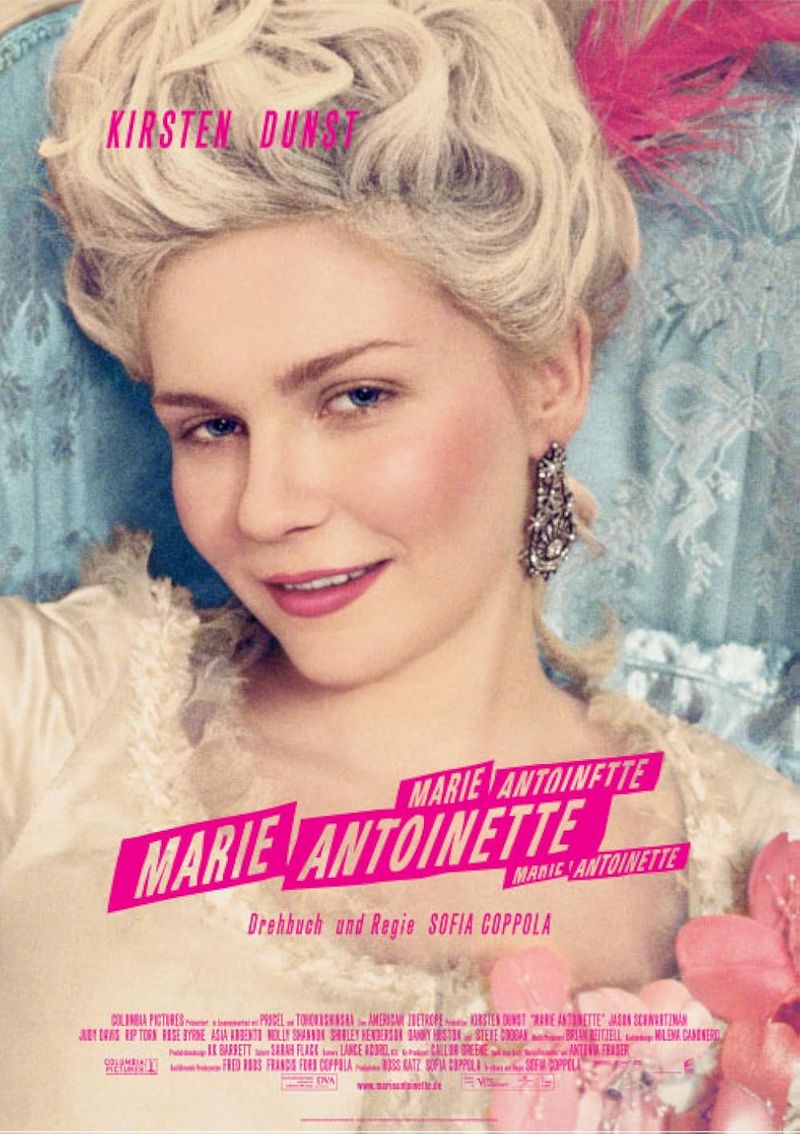
At fourteen, Marie Antoinette is married into a world of opulence and intrigue, where every glance carries judgment—Coppola shows us her human side.
The anachronistic soundtrack featuring modern rock music emphasizes how Marie was essentially a teenager dealing with problems any young person might face—just in ridiculous wigs and gowns.
Coppola focuses on the human story rather than political details, showing Marie’s isolation despite being surrounded by hundreds of courtiers.
Kirsten Dunst captures Marie’s evolution from naive girl to party-loving queen to finally, a mother facing revolution.
The film’s candy-colored visuals reflect Marie’s attempts to escape reality through excess and pleasure.
14. Carol (2015)
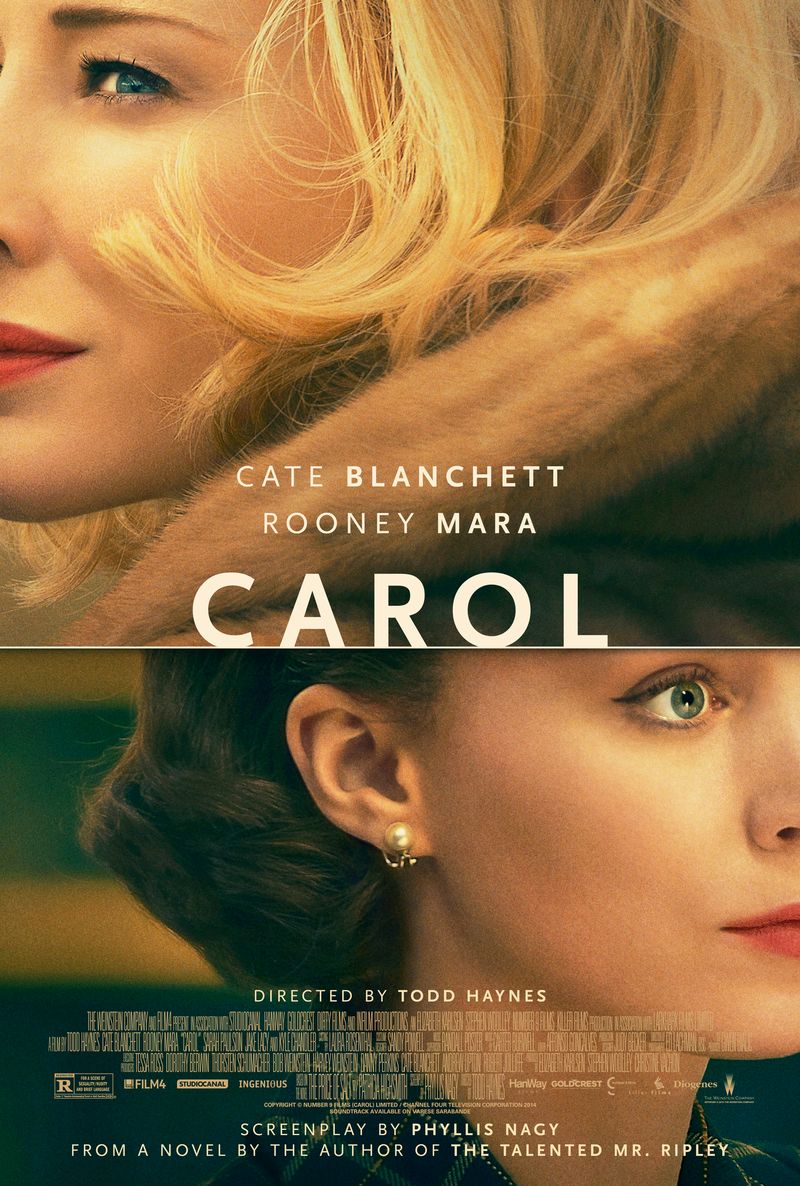
Todd Haynes adapts Patricia Highsmith’s novel about forbidden love in 1950s America.
Therese, a young photographer working in a department store, becomes entranced by Carol, an elegant older woman going through a difficult divorce.
The film captures the repressive atmosphere of the era through muted colors and careful composition, showing how these women must hide their relationship.
Every glance and touch carries weight because discovery could mean losing everything—Carol faces losing custody of her daughter.
Cate Blanchett and Rooney Mara create palpable chemistry despite the restraint required by the period setting.
The film refuses to treat their love as tragic simply because it’s between women, instead showing how they claim happiness despite society’s condemnation.
Comments
Loading…