
 Mary Murphy
12 Powerful Movies That Completely Change How You See Life
Movies have a way of sneaking into our hearts and quietly shifting how we think about the world.
Some films leave us questioning our choices, while others inspire us to chase dreams we never knew we had.
Whether it’s a story about friendship, courage, or simply refusing to give up, the right movie can change everything.
1. Good Will Hunting (1997)
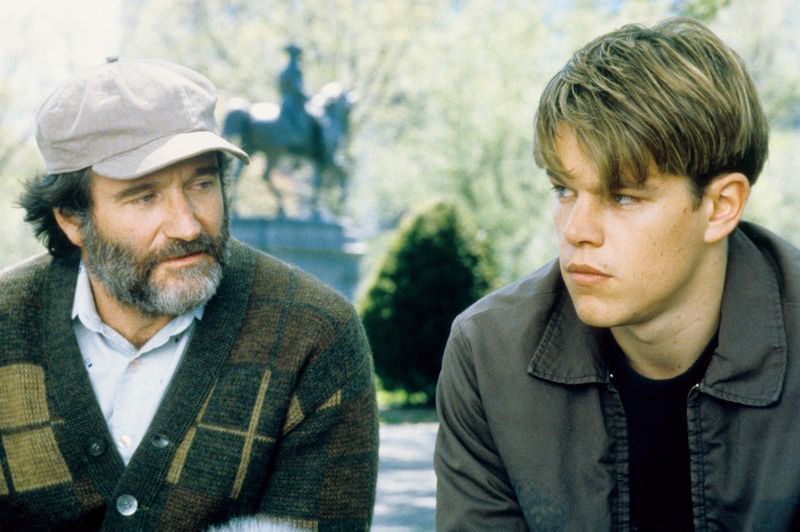
Will Hunting is a janitor at MIT who can solve complex math problems that stump even professors.
Yet his genius means nothing because he’s terrified of vulnerability and keeps everyone at arm’s length.
Matt Damon and Ben Affleck wrote this touching screenplay that won them an Oscar.
Robin Williams plays a therapist who refuses to give up on Will, even when the young man pushes him away repeatedly.
The film beautifully illustrates that being smart doesn’t automatically make life easier or relationships healthier.
Healing requires facing painful memories and learning to trust others, which can feel scarier than any equation or academic challenge ever could.
2. A Beautiful Mind (2001)
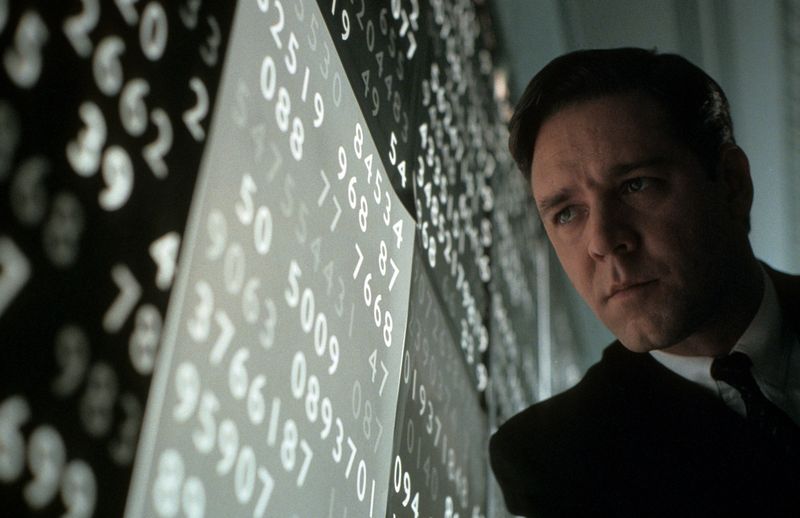
John Nash was a mathematical genius who revolutionized economics, but he also struggled with schizophrenia throughout his adult life.
Russell Crowe portrays Nash with raw honesty, showing both his brilliant achievements and his devastating hallucinations.
The film never sugarcoats mental illness or pretends it’s easy to overcome.
What makes this story remarkable is how it reframes success as something bigger than just professional accomplishments.
Nash’s wife stands by him through impossible circumstances, proving that love and support can coexist with serious challenges.
Audiences leave understanding that brilliance and mental health struggles aren’t opposites—they can live side by side in the same extraordinary person.
3. Hidden Figures (2016)
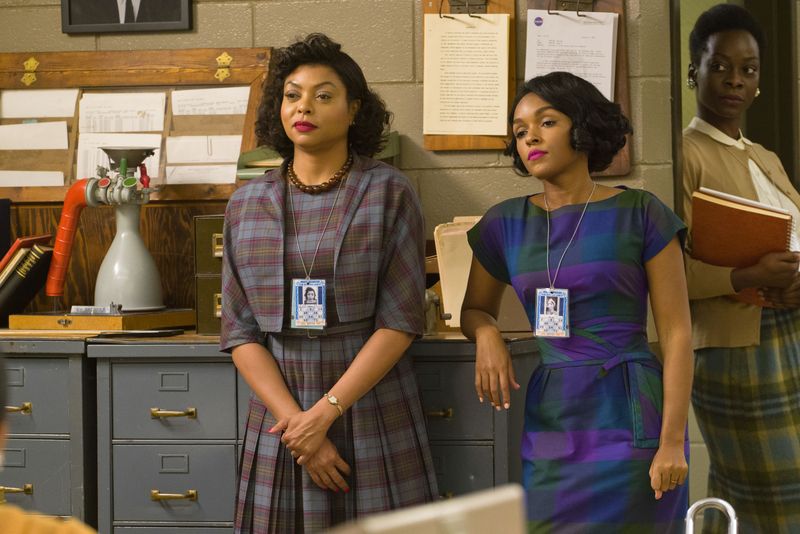
Three African American women worked as mathematicians for NASA during the Space Race, yet history barely mentioned their names until this film arrived.
Katherine Johnson, Dorothy Vaughan, and Mary Jackson faced both racial and gender discrimination while calculating rocket trajectories by hand.
Their contributions literally helped put astronauts into orbit.
Taraji P. Henson, Octavia Spencer, and Janelle Monáe bring these heroes to life with warmth and strength that feels deeply authentic.
The film forces audiences to confront how many brilliant people have been erased from history books simply because of their race or gender.
It’s a celebration of intelligence and perseverance that reminds us progress depends on recognizing everyone’s contributions, not just the familiar faces.
4. The Theory of Everything (2014)
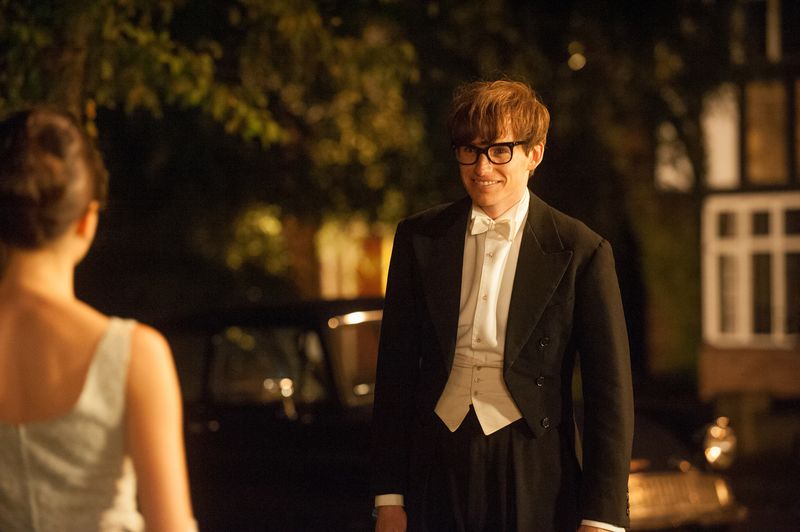
Stephen Hawking’s life gets the Hollywood treatment through Eddie Redmayne’s Oscar-winning performance that captures both his scientific genius and physical decline.
Diagnosed with ALS in his early twenties, Hawking was given just two years to live but survived for decades longer.
His relationship with his first wife Jane becomes the emotional core of the story.
The movie challenges viewers to rethink what disability means and what humans are truly capable of achieving despite limitations.
Hawking wrote groundbreaking theories about black holes while losing the ability to move or speak independently.
His story proves that resilience isn’t about avoiding hardship—it’s about continuing forward even when everything feels impossible and unfair.
5. The Man Who Knew Infinity (2015)

Srinivasa Ramanujan grew up in poverty in India but possessed an almost supernatural gift for mathematics that changed the field forever.
Dev Patel portrays Ramanujan’s journey to Cambridge University, where he faced intense prejudice despite his extraordinary talent.
Jeremy Irons plays the professor who recognized his genius when others dismissed him completely.
The film explores how cultural barriers and racism nearly prevented groundbreaking mathematical discoveries from reaching the world.
Ramanujan’s story proves that brilliance exists everywhere, not just in privileged circles with fancy degrees and family connections.
His collaboration with his mentor shows how mutual respect can transcend social divisions and create something beautiful that benefits all of humanity, regardless of background or origin.
6. The Big Short (2015)
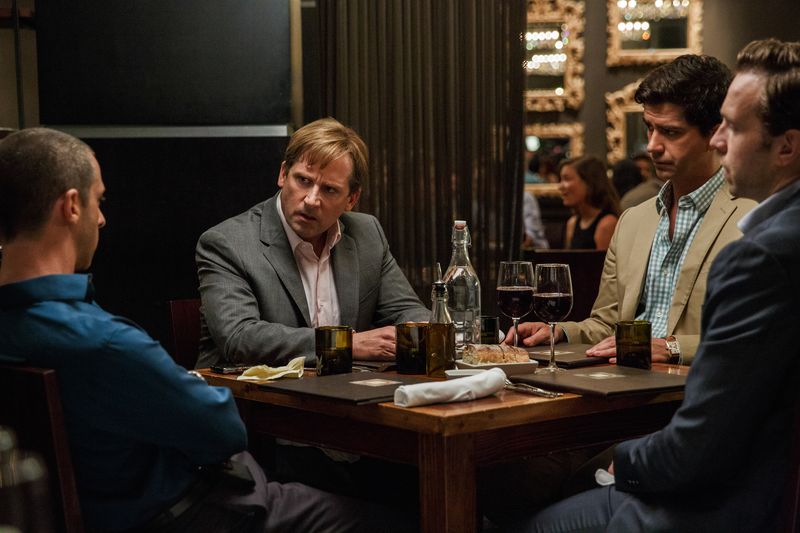
Ever wonder how the 2008 financial crisis actually happened?
This film breaks down complicated banking concepts using celebrity cameos and humor, making economics surprisingly entertaining.
Christian Bale, Steve Carell, and Ryan Gosling play real people who predicted the housing market collapse before anyone else believed them.
What starts as a story about smart investors becomes a disturbing look at greed, corruption, and systemic failure.
The movie reveals how ordinary people lost their homes and savings while banks got bailed out by taxpayers.
After watching, you’ll never think about mortgages, credit ratings, or Wall Street the same way again—it permanently changes your understanding of who really holds power in the financial system.
7. The Pursuit of Happyness (2006)

Chris Gardner’s real-life story of homelessness and single parenthood becomes an emotional powerhouse thanks to Will Smith’s heartbreaking performance.
Struggling to sell medical equipment while caring for his young son, Gardner faces rejection after rejection with quiet dignity.
Some nights they sleep in subway bathrooms because they have nowhere else to go safely.
The film never pretends poverty is noble or that hard work automatically guarantees success—it’s far more honest than that.
What it does show is how hope can survive even in the darkest circumstances when you refuse to completely give up.
Gardner eventually lands an unpaid internship at a stock brokerage, betting everything on a tiny chance at a better future for his child.
8. The Great Debaters (2007)

Denzel Washington directs and stars in this inspiring true story about a debate team from a small Black college in 1930s Texas.
The students face violence, discrimination, and constant reminders that society considers them inferior simply because of their skin color.
Yet their professor trains them to use words as weapons against injustice and ignorance.
The film climaxes with a debate against Harvard University, where the underdogs prove that eloquence and logic can challenge even the most prestigious institutions.
It’s a powerful reminder that education and articulate arguments can create change when physical power seems impossible to overcome.
Watching these young people find their voices and demand respect feels both historically important and urgently relevant to modern conversations about equality and justice.
9. 12 Angry Men (1957)
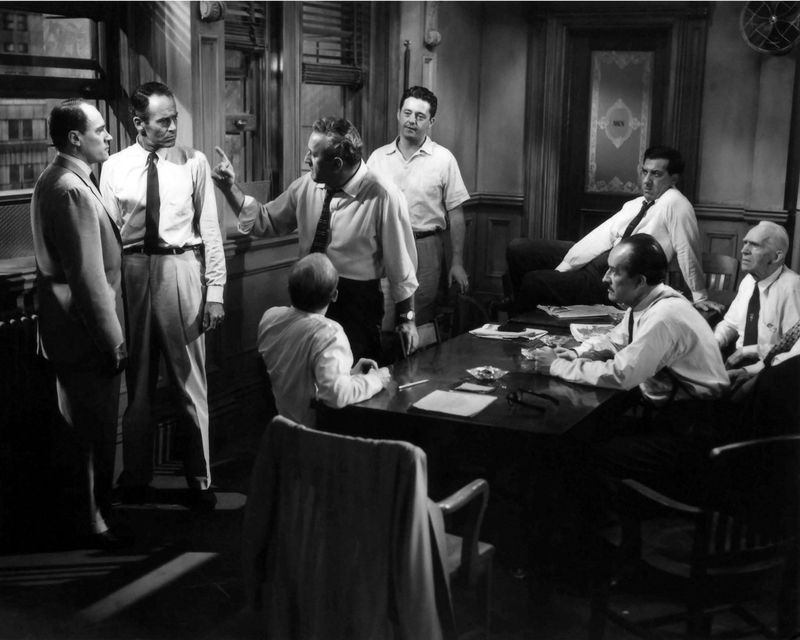
A jury room becomes a pressure cooker where twelve strangers must decide whether a young man lives or dies.
At first, eleven jurors vote guilty without much thought, ready to convict and go home quickly.
But one man, played by Henry Fonda, asks them to at least discuss the evidence before ending someone’s life forever.
Shot almost entirely in one room, the film proves you don’t need explosions or special effects to create intense drama.
As the jurors debate, their own prejudices and assumptions get exposed in uncomfortable ways that feel incredibly relevant today.
It’s a masterclass in critical thinking that demonstrates how one person’s willingness to question the majority can literally save lives and prevent terrible injustice.
10. The Shawshank Redemption (1994)
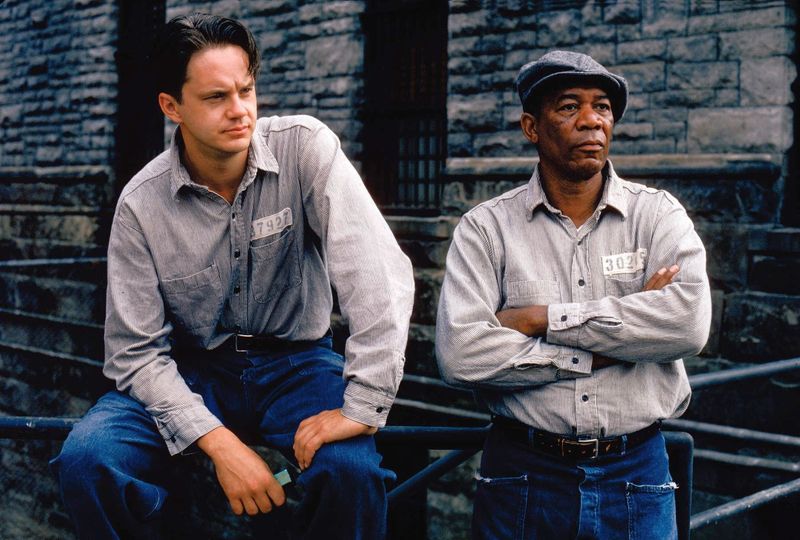
Andy Dufresne gets sentenced to life in prison for murders he didn’t commit, and the film follows his decades behind bars at Shawshank State Penitentiary.
Morgan Freeman narrates as Red, Andy’s closest friend, who’s been locked up so long he can barely remember life outside those walls.
What could be a depressing story becomes something surprisingly hopeful and uplifting instead.
The movie explores how people maintain their humanity in dehumanizing circumstances and why hope matters even when freedom seems impossible.
Andy’s quiet determination and refusal to let prison break his spirit inspire everyone around him, including hardened criminals who’d given up long ago.
It’s become a beloved classic because it reminds us that inner freedom exists regardless of external circumstances or physical limitations.
11. The Secret Life of Walter Mitty (2013)
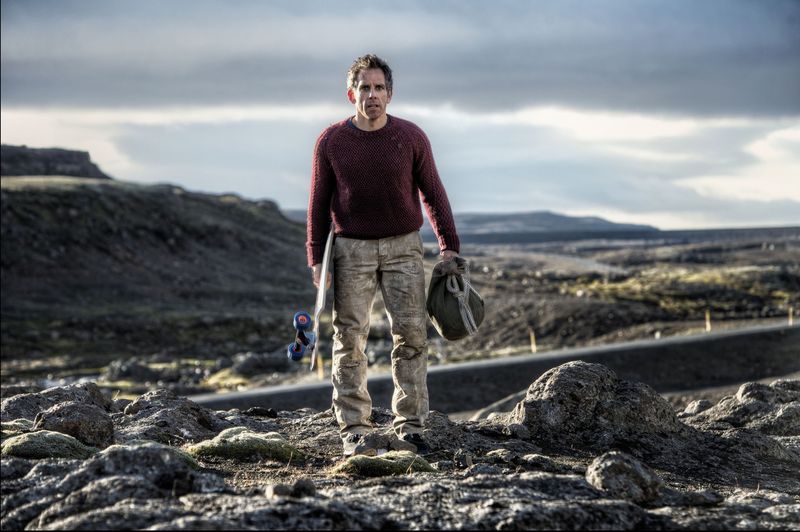
Walter Mitty works in the basement of Life magazine, developing photographs while daydreaming about adventures he’s too afraid to actually experience.
Ben Stiller directs and stars as Walter, creating a visually stunning film that takes viewers from New York City to Iceland, Greenland, and the Himalayas.
When a crucial photograph goes missing, Walter must step outside his comfort zone for the first time in years.
The film asks a simple but powerful question: Are you living your life or just watching it pass by from a safe distance?
Walter’s transformation from timid observer to brave participant feels genuine because it happens gradually through small acts of courage.
It’s a beautiful reminder that extraordinary experiences are possible when you finally stop making excuses and start taking risks, even when they feel terrifying.
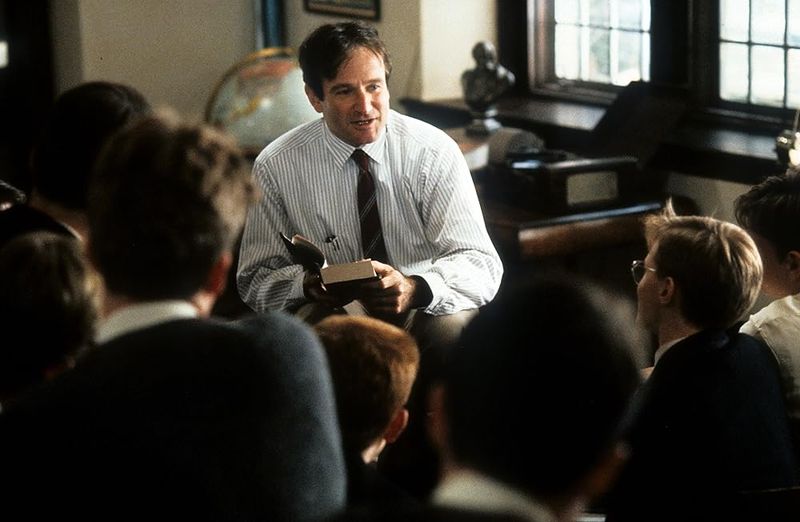
12. Dead Poets Society (1989)
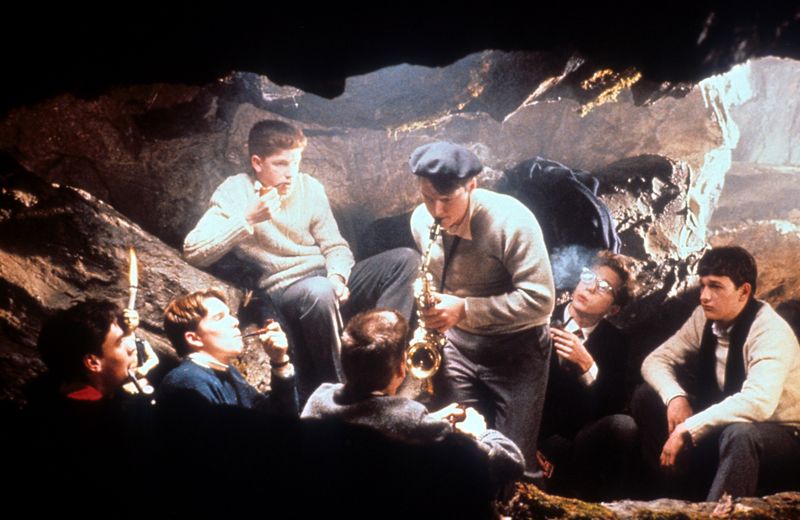
Robin Williams delivers an unforgettable performance as an English teacher who encourages his students to break free from rigid expectations.
Set in a conservative boarding school, the film explores what happens when young minds are taught to question everything instead of simply following rules.
The movie asks viewers to consider what truly matters in life—approval from others or living authentically.
Through poetry and unconventional lessons, it shows that conformity can quietly steal your voice if you let it.
Every scene reminds us that passion and individuality are worth fighting for, even when the world pushes back against them with force and judgment.
Comments
Loading…