
 Mila Ross
12 Great Sci-Fi Movies Where Women Carry the Whole Story

Science fiction has always been a playground for big ideas about survival, power, identity, and what humanity becomes next.
Too often, though, the genre used to treat women as a motivation, a prize, or a tragic footnote instead of the person steering the story.
The good news is that plenty of sci-fi films flipped that script and proved how electric the genre becomes when women take center stage.
Some of these movies are sleek blockbusters, while others are eerie slow burns that sit with you long after the credits roll.
What they share is a female lead whose choices shape the plot, raise the stakes, and give the film its emotional gravity.
If you want sci-fi that feels smarter, sharper, and more human, these picks are a perfect place to start.
1. Alien (1979)
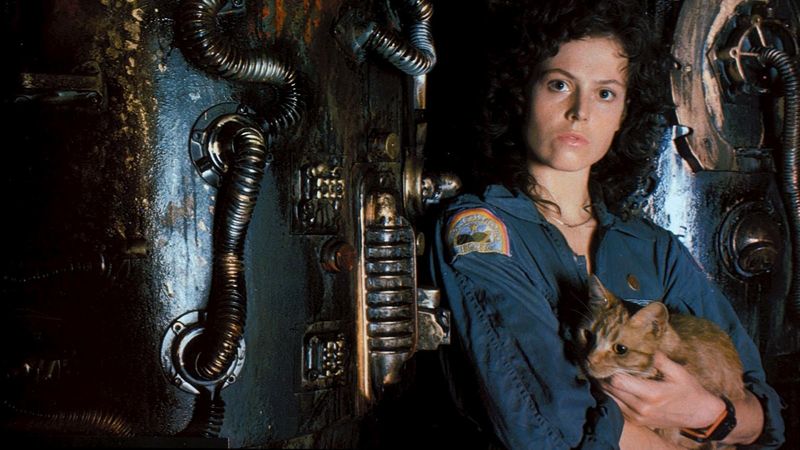
Long before “final girl” became a horror cliché, this movie gave us a heroine defined by competence under pressure.
Ripley earns authority in a way that feels startlingly modern because she’s practical, direct, and unwilling to gamble with lives.
Instead of leaning on romance or fate, the story builds tension around work, protocol, and the terrifying cost of being ignored.
When the crew’s decisions unravel, Ripley becomes the one person still thinking clearly, and that clarity turns into survival.
The film also captures a quiet truth about workplaces, where the voice warning everyone to slow down gets dismissed until it’s too late.
By the time the final act arrives, Ripley isn’t “lucky,” she’s prepared, and the camera treats that preparation like power.
Even decades later, the movie feels like a masterclass in how to write a woman lead without shrinking her or explaining her.
2. The Terminator (1984)

What makes this film hit so hard is watching an ordinary woman realize she has no choice but to become extraordinary.
Sarah Connor begins as someone just trying to get through the day, and the story brutally interrupts that normalcy.
The threat isn’t abstract, because it has a body, a mission, and an unstoppable focus that forces Sarah to adapt fast.
Instead of handing her strength for free, the movie lets fear, grief, and determination stack up into something fierce.
The romance thread never replaces her arc, because the point is her survival, her future, and her ownership of it.
Every chase scene doubles as character development, showing how quickly she learns to trust herself in a world that won’t.
By the end, the film has quietly transformed Sarah into the franchise’s heart, making her the reason the future matters at all.
3. Contact (1997)
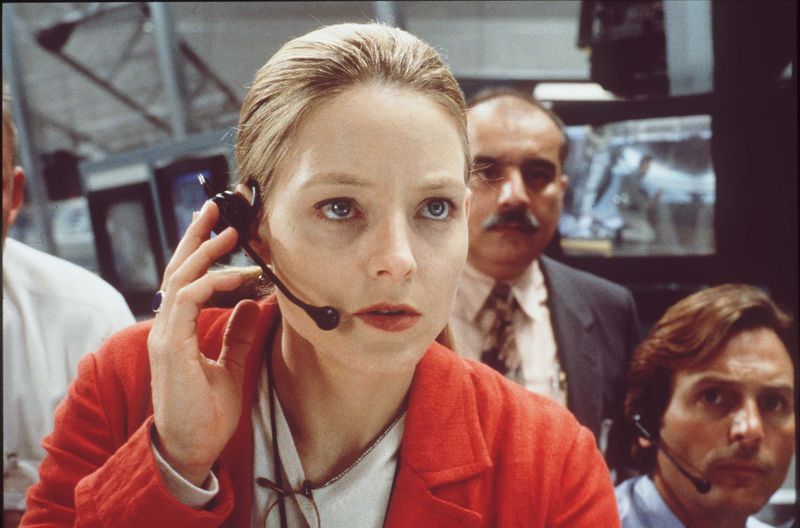
A woman scientist anchors this story with a kind of seriousness big studio sci-fi rarely allowed at the time.
Ellie Arroway isn’t framed as a quirky exception, because her intelligence is treated as the most natural thing in the world.
The plot’s excitement comes from questions she refuses to stop asking, even when institutions push her to stay polite and small.
Instead of turning discovery into a macho competition, the film makes wonder feel intimate, personal, and emotionally risky.
Ellie’s loneliness also matters, because it explains why the search for connection is both scientific and deeply human for her.
When the story reaches its most debated moment, it becomes less about proof and more about what it means to be believed.
The result is a thoughtful sci-fi classic where a woman’s curiosity, grief, and courage are the engine, not the decoration.
4. Gattaca (1997)

In a world obsessed with genetic perfection, this film gives us a woman who is quietly fighting her own internal war.
Irene’s presence isn’t just a love interest, because her fears and hopes reveal the cruelty baked into the system.
The story lets you see how deeply social ranking seeps into romance, work, and even the way people breathe around each other.
What’s compelling is that Irene doesn’t need a grand speech to show strength, since her bravery is in the risks she takes anyway.
Her relationship with Vincent gains weight because it’s built on vulnerability, not rescue, and that makes it feel unusually tender.
The movie also refuses to punish her for caution, because it understands why self-protection becomes a survival skill in rigid societies.
By centering Irene’s emotional reality alongside the thriller plot, the film becomes a sharper critique of who gets to feel “worthy.”
5. The Fifth Element (1997)
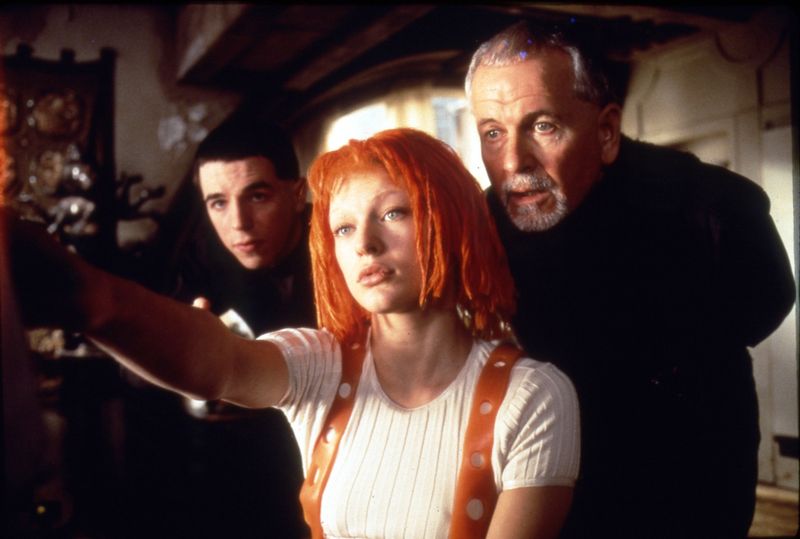
Instead of treating the savior as a generic chosen one, this movie makes the most important person in the universe a young woman.
Leeloo is powerful, but she’s also learning, and the film’s best scenes come from watching her process humanity in real time.
The story doesn’t pretend she needs to be “fixed,” because the point is that the world is chaotic, and she’s trying to understand it.
Her innocence isn’t weakness, since it becomes a moral lens that exposes how casually people accept violence and cruelty.
Even the film’s loud, colorful tone can’t hide that Leeloo’s agency is the plot’s center, because everyone else reacts to her choices.
The romantic beats work best when they feel like partnership rather than possession, which keeps her from turning into a trophy.
For a blockbuster that’s this playful, it’s surprisingly clear about one thing: the future is saved by a woman deciding to keep faith.
6. The Matrix (1999)

The emotional spark of this story isn’t just the hero’s journey, because the person who truly believes first is Trinity.
She’s introduced as capable and fearless, and the film never walks that back to make anyone else look better.
What makes her stand out is that her conviction isn’t naïve, since she’s seen the world’s ugliness and still chooses hope.
The romance thread matters because it amplifies her agency, showing that love can be a decision with consequences, not a reward.
Trinity also gets real narrative weight in the action, where her skill isn’t symbolic, it’s essential to every major turning point.
Even when the mythology expands, the story’s pulse still comes from the trust she builds with Neo under impossible circumstances.
If you want sci-fi where a woman isn’t “support,” but a catalyst, Trinity is one of the genre’s most iconic examples.
7. Pitch Black (2000)

A morally complicated woman leads this survival thriller in a way that feels refreshingly blunt and human.
Carolyn Fry isn’t written to be instantly likable, because the movie understands that leadership often starts with bad decisions and fear.
As the planet turns deadly, her arc becomes a reckoning with what she owes strangers, and what kind of person she wants to be.
The film lets her grow through action, not speeches, showing responsibility as something earned minute by minute.
What’s especially satisfying is that she isn’t overshadowed by the antihero energy around her, since her choices remain the story’s backbone.
The tension works because she’s balancing pragmatism and conscience, and neither side of her is treated as “wrong.”
By the final stretch, Fry becomes the one shaping the group’s survival, proving that female-led sci-fi can be gritty without losing heart.
8. Children of Men (2006)

In a collapsing world where hope feels like a rumor, the story’s most vital figure is a pregnant woman named Kee.
Her role isn’t a symbol placed on a pedestal, because she’s funny, sharp, and stubbornly alive in the middle of despair.
The film’s urgency comes from protecting her bodily autonomy in a society that wants to control, use, or mythologize her.
Kee’s bravery shows up in the moments when she refuses to be reduced to an “idea” and insists on being treated as a person.
Even though the camera follows Theo often, the plot’s meaning hinges on Kee’s choices and the future she’s carrying.
The movie’s most powerful sequences work because her vulnerability and strength exist together, without one canceling the other.
If you want sci-fi that centers womanhood as the literal turning point of history, this film delivers with devastating intensity.
9. Under the Skin (2013)

An eerie, hypnotic atmosphere makes this film feel like sci-fi as a psychological mirror rather than a traditional narrative.
The unnamed woman at its center moves through ordinary life like an observer, and that distance becomes the story’s tension.
As she interacts with men, the film flips the usual gaze, turning seduction into something unsettling and clinical.
What’s fascinating is how the character begins to change, because small moments of empathy start disrupting her programmed detachment.
The movie quietly asks what it means to inhabit a female body in public, and how quickly that body becomes a target.
Instead of offering easy explanations, the story uses silence, discomfort, and repetition to build a sense of creeping awareness.
By the end, the film feels like a dark meditation on identity, vulnerability, and transformation, all anchored by a woman’s evolving perception.
10. Gravity (2013)
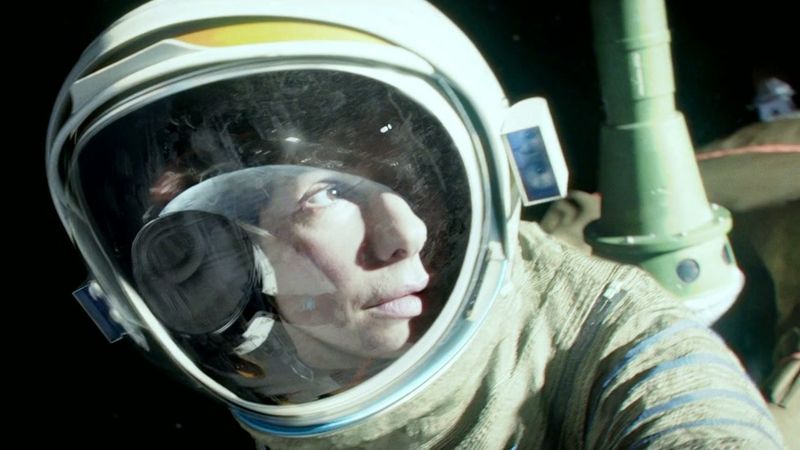
A disaster in orbit becomes an intimate portrait of grief, endurance, and the will to keep going.
Ryan Stone isn’t a superhero, and that’s what makes her compelling, because survival is shown as messy and brutally physical.
The film traps you with her in a vast silence, using isolation to amplify every breath, mistake, and split-second decision.
What elevates the story is that her fight isn’t only against space, since she’s also wrestling with the idea of giving up.
As she pushes through one impossible problem after another, the movie turns technical problem-solving into emotional catharsis.
The vulnerability never weakens her character, because her fear is honest, and her persistence becomes the bravest thing on screen.
If you want female-led sci-fi that feels visceral and deeply personal, this one is practically a masterclass in tension and resilience.
11. Arrival (2016)
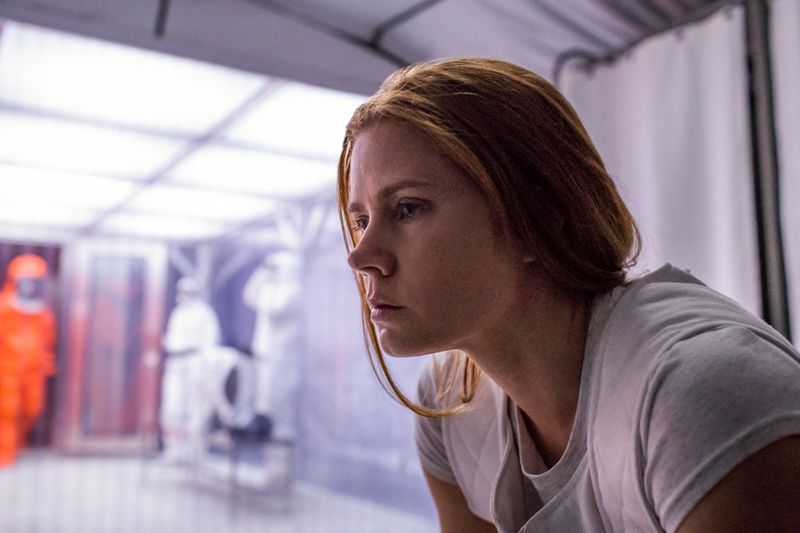
A linguist, not a soldier, drives this story, which instantly makes it feel like sci-fi with a different kind of courage.
Louise Banks is centered as the person who can change the outcome, because language and empathy become the real weapons here.
The plot builds suspense through translation, miscommunication, and institutional panic, rather than simple explosions or conquest.
Louise’s emotional life matters just as much as her intellect, and the film treats that blend as strength rather than distraction.
When the story reveals its full structure, it reframes what you thought you were watching, and her choices become even heavier.
The movie’s power comes from how it links global stakes to intimate ones, refusing to separate the future from personal loss.
Few modern sci-fi films place a woman’s mind and heart at the absolute center so confidently, and that’s why it’s unforgettable.
12. Annihilation (2018)
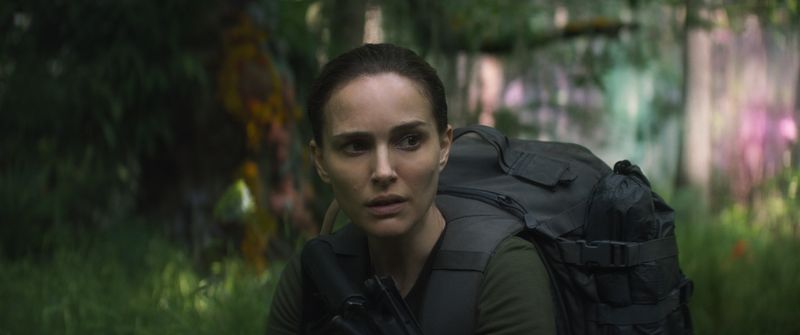
A team of women steps into a mysterious, mutating zone, and the film never acts like that needs explaining.
Lena’s perspective anchors the story with a calm intelligence that makes the surrounding horror feel even more surreal.
The mission isn’t just scientific, because each woman arrives carrying private pain that shapes how she confronts the unknown.
What’s refreshing is the lack of tired gender dynamics, since the group’s conflicts feel human and psychological, not stereotyped.
The “Shimmer” becomes a haunting metaphor for transformation, self-destruction, and the parts of ourselves we can’t control.
As the visuals grow stranger, the film keeps returning to Lena’s choices, forcing the question of what survives when you change completely.
If you want sci-fi that’s female-centered, emotionally sharp, and genuinely unsettling, this is one of the best modern examples.
Comments
Loading…